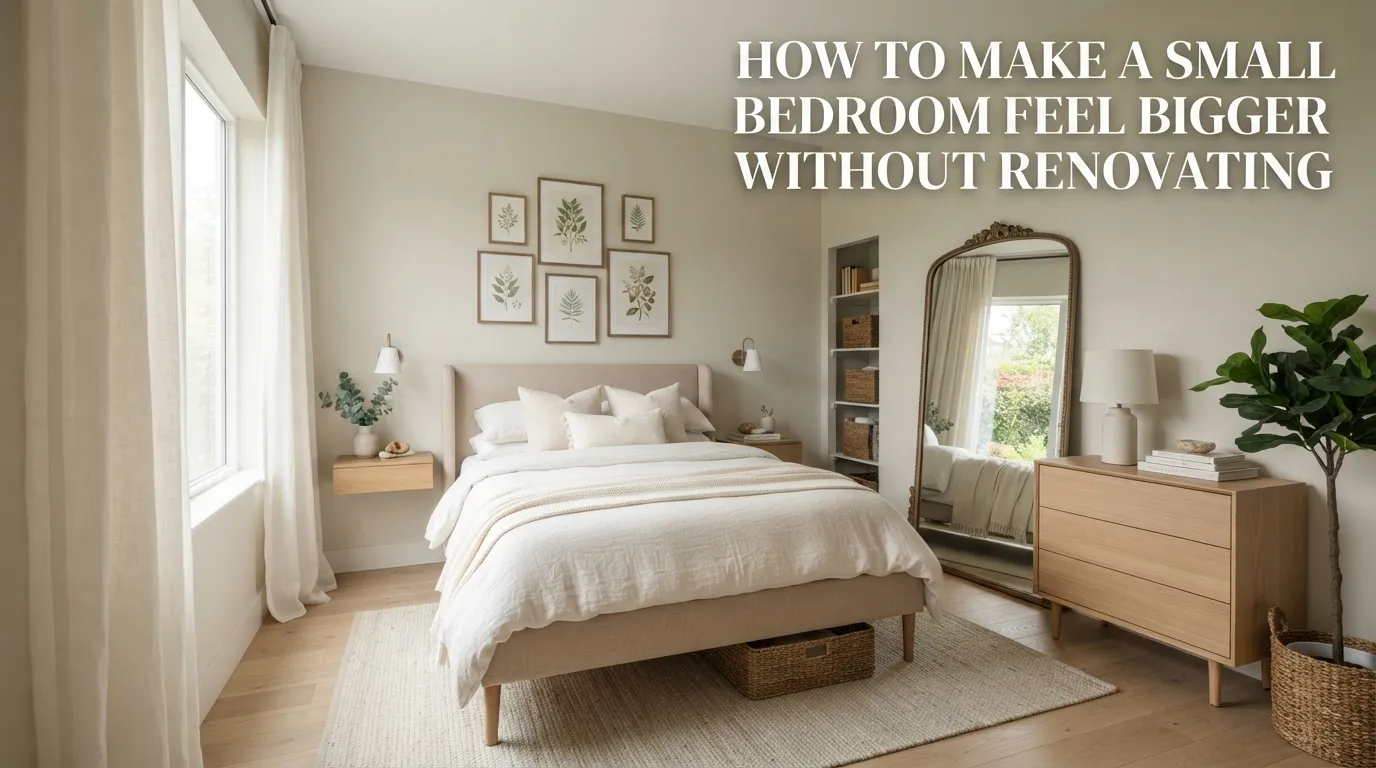
How to Make a Small Bedroom Feel Bigger Without Renovating
A small bedroom doesn’t have to feel cramped, dark, or difficult to decorate. In many cases, the room itself isn’t the problem. It’s the way furniture, color, lighting, storage, and visual space are being used.
The good news is that you don’t need to knock down walls, replace flooring, or start an expensive renovation to make a compact bedroom feel more spacious. A few thoughtful changes can alter the way your eye reads the room.
I’ve noticed that the biggest improvements often come from simple adjustments: moving furniture away from awkward corners, choosing lighter textiles, clearing visible clutter, hanging curtains strategically, or replacing one oversized piece with something more appropriately scaled.
The trick is to create the impression of openness while keeping the room comfortable and functional.
Light is especially important. Natural daylight makes a room feel more open, while layered artificial lighting can prevent dark corners from visually shrinking the space at night. Mirrors can also help reflect available light and create additional visual depth when positioned thoughtfully.
Furniture scale matters just as much. A small room filled with oversized furniture will almost always feel more crowded, even if everything is beautifully decorated. Choosing pieces with slimmer profiles and useful storage can leave more visible floor area.
Color can help, too. Light and coordinated shades tend to create a more continuous visual field, while carefully placed contrast keeps the room from feeling bland.
You can also make a bedroom feel larger by reducing visual interruptions. Too many patterns, exposed storage piles, scattered accessories, and bulky furniture arrangements can make the eye stop repeatedly around the room.
The following ideas focus on changes you can make without structural work. Some cost nothing, while others involve small upgrades that can make a noticeable difference.
Whether you’re working with a compact apartment bedroom, guest room, or primary bedroom, the goal is to make the space feel lighter, calmer, and easier to move through.
Table of Contents
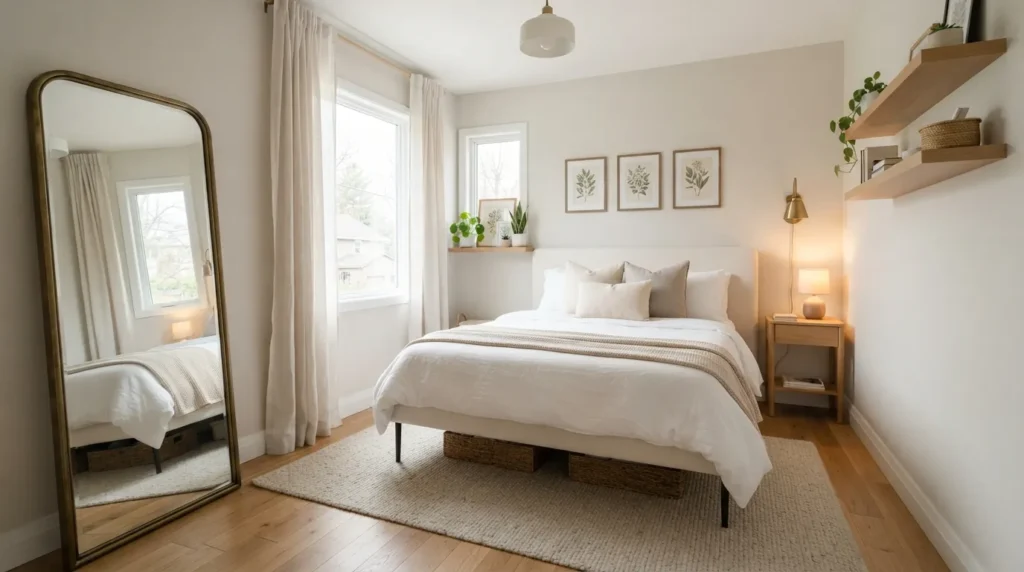
1. Lighten the Color Palette
Use coordinated light colors to create a more continuous visual effect.
2. Clear the Floor
Expose more visible flooring to make the room feel more open.
3. Use Strategic Mirrors
Reflect light and create additional visual depth.
4. Raise the Curtains
Use window treatments to emphasize vertical space.
5. Choose Slim Furniture
Replace bulky silhouettes with pieces that leave more breathing room.
6. Maximize Natural Light
Make the most of every available source of daylight.
7. Simplify Bedding Layers
Create a lighter-looking bed without sacrificing comfort.
8. Use Vertical Storage
Move storage upward to preserve valuable floor space.
9. Create Visual Continuity
Coordinate colors and materials to reduce visual interruptions.
10. Reduce Surface Clutter
Keep visible surfaces simple and intentional.
11. Improve Furniture Placement
Rearrange the room to create better flow and openness.
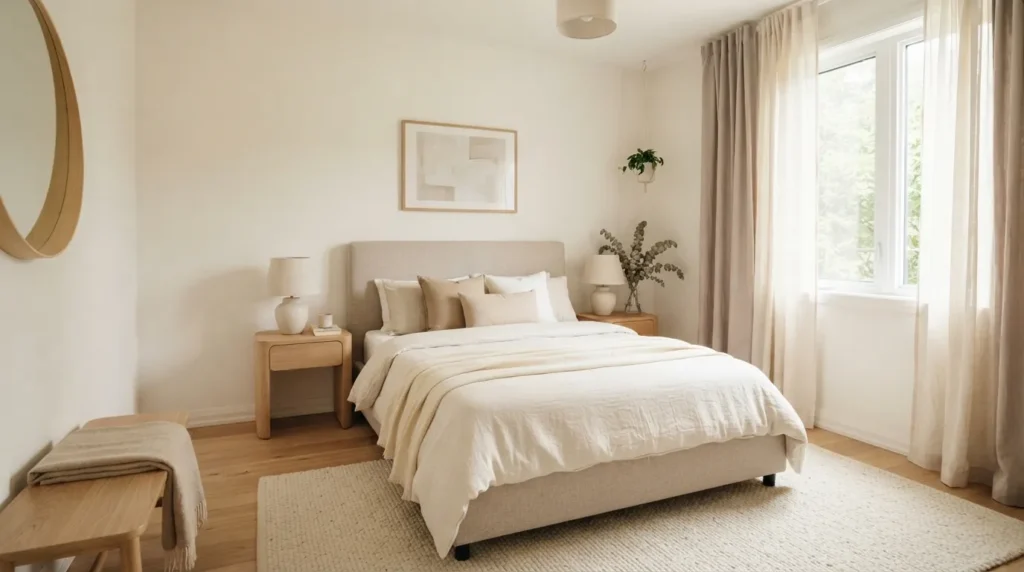
1. Lighten the Color Palette
Quick Benefits
- Makes the room feel brighter
- Creates visual continuity
- Reflects available light
- Makes furniture feel less heavy
- Provides a versatile decorating foundation
Why It Works
Color has a strong influence on how spacious a room feels. Light colors don’t physically increase the dimensions of a bedroom, but they can make walls and surfaces appear less visually heavy.
Warm white, ivory, pale beige, soft gray, muted blue, and other light shades can create an airy atmosphere. The most effective approach isn’t necessarily making everything stark white. Instead, choose a coordinated palette with gentle variations.
When the walls, bedding, curtains, and larger furniture pieces relate to one another, the eye moves more easily around the room.
Too many strong contrasts can divide a compact space into separate visual blocks.
That doesn’t mean you have to eliminate darker colors. A few carefully chosen accents can provide depth while keeping the overall room light.
How To Style It
Start with the largest visual surfaces.
If you’re not painting, work with the existing wall color and choose bedding and curtains that complement it.
For warm walls, consider ivory, cream, oatmeal, and light beige.
For cooler walls, soft gray, pale blue, or muted white can work well.
Use darker shades sparingly through picture frames, lamps, cushions, or small furniture.
If you want more personality, introduce color through one accent rather than using several unrelated colors throughout the room.
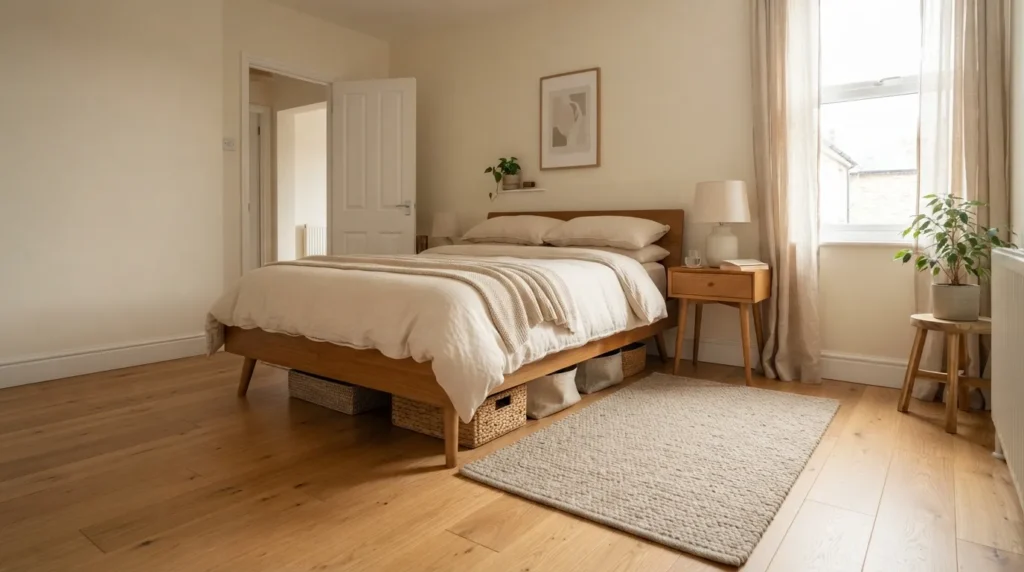
2. Clear the Floor
Quick Benefits
- Creates more visible floor area
- Improves movement
- Reduces visual clutter
- Makes furniture feel lighter
- Costs little or nothing
Why It Works
One of the easiest ways to make a small bedroom feel more spacious is to reveal as much floor as possible.
When the floor is covered with baskets, boxes, shoes, bags, and unnecessary furniture, the room’s visual boundaries become harder to read.
Open floor area gives the eye a clearer path through the room.
This is why furniture with exposed legs can sometimes feel lighter than bulky pieces that extend all the way to the floor.
You don’t have to eliminate every storage item. The goal is to move belongings into intentional locations and reduce unnecessary obstacles.
How To Style It
Start by removing anything that doesn’t belong on the floor.
Put shoes into a closet organizer or dedicated rack.
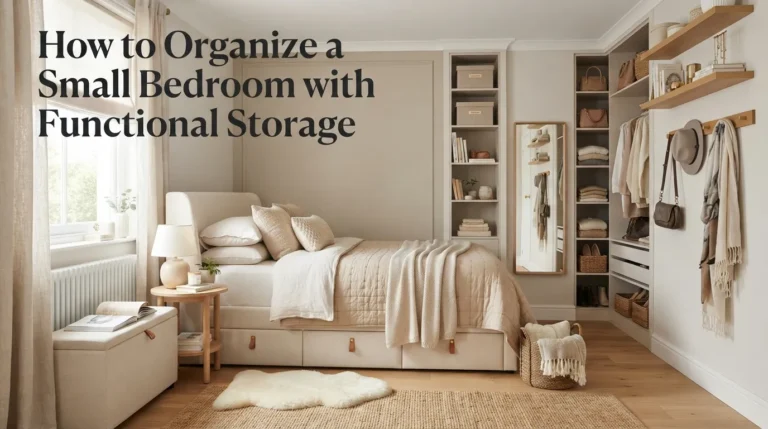
Move extra blankets into a basket or storage bench.
Use under-bed storage for seasonal items.
If you’re buying a new nightstand, consider a design with legs rather than a solid base.
Keep the primary walking path around the bed as clear as possible.
Even moving one storage basket or small chair can sometimes make a surprisingly noticeable difference.
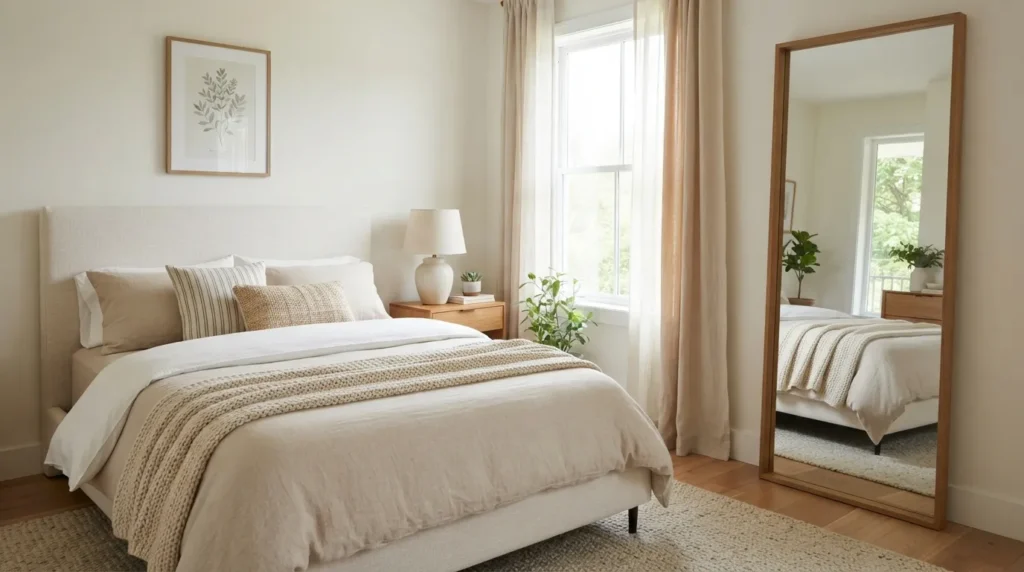
3. Use Strategic Mirrors
Quick Benefits
- Reflects natural light
- Adds visual depth
- Creates a sense of openness
- Can become a decorative focal point
- Works without structural changes
Why It Works
Mirrors are a classic small-space decorating tool because they can reflect what is already in the room.
When positioned opposite or near a window, a mirror can bounce daylight deeper into the space. A large mirror can also create the impression of another visual plane, making a wall feel less closed in.
However, placement matters.
A mirror reflecting a cluttered storage area can actually emphasize the problem rather than solve it.
The best location usually reflects something attractive, such as a window, artwork, light fixture, or open section of the room.
How To Style It
A large vertical mirror leaning securely against a wall can emphasize ceiling height.
A full-length mirror behind a bedroom door can provide useful function without consuming much visual space.
For a smaller wall, try a round or softly shaped mirror above a dresser.
Choose a frame that complements the room rather than introducing another unrelated material.
Keep safety in mind with heavy mirrors. Use appropriate hardware and installation methods for the wall type and mirror weight.
4. Raise the Curtains
Quick Benefits
- Emphasizes ceiling height
- Makes windows appear larger
- Creates a taller visual impression
- Adds softness
- Makes the room feel more finished
Why It Works
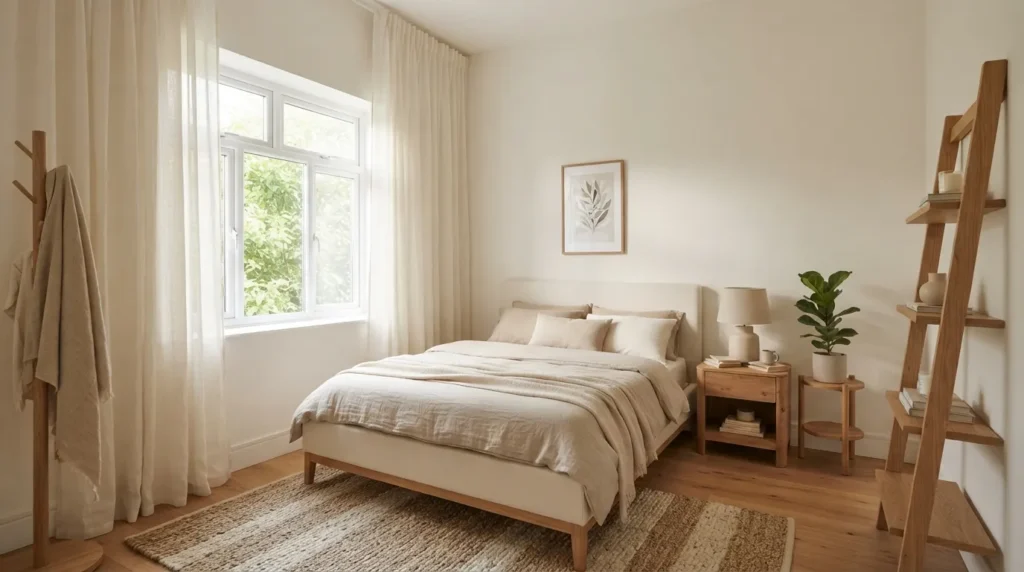
Curtains influence more than privacy and light control. Their placement can change how the proportions of a bedroom are perceived.
When curtain hardware is installed close to the ceiling and the panels extend toward the floor, the eye naturally follows the vertical lines.
This can make the room feel taller and more elegant.
The effect is especially useful in compact bedrooms where horizontal space is limited.
Lightweight curtains can also soften the room without creating a heavy visual barrier around the window.
How To Style It
If your window arrangement allows, position the curtain rod higher than the top of the window.
Extend the rod beyond the window frame so the curtains can open without blocking much of the glass.
Choose floor-length panels in a light or medium neutral.
Ivory, cream, beige, and soft gray are versatile choices.
Avoid very heavy curtains if the room already feels dark or crowded.
If privacy is a concern, combine decorative curtains with suitable blinds or shades.
5. Choose Slim Furniture
Quick Benefits
- Creates more breathing room
- Preserves walking space
- Makes the room feel less crowded
- Improves visual balance
- Provides flexibility
Why It Works
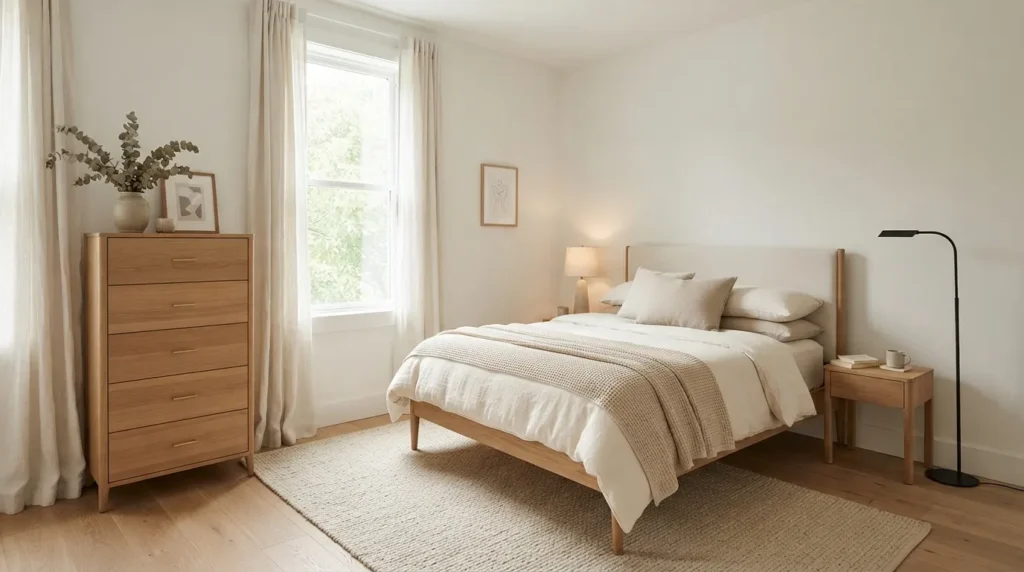
A small bedroom needs furniture that matches its scale.
A large dresser with deep drawers may provide excellent storage, but if it blocks movement and dominates an entire wall, it can make the room feel smaller.
Slim furniture with narrower proportions can provide useful function while leaving more visible space around it.
This doesn’t mean choosing uncomfortable or impractical furniture. It means paying attention to dimensions.
Furniture that has legs, open areas beneath it, or a visually lighter frame can also make more floor visible.
How To Style It
Measure the bedroom before purchasing replacement furniture.
Consider a narrow chest rather than a wide dresser.
Choose a compact nightstand with one or two useful storage areas.
Look for bed frames with simple silhouettes.
If you have a desk, consider a slim design or wall-mounted option.
Avoid filling every available wall with furniture.
Leaving even a small section of wall open can give the room more visual breathing space.
6. Maximize Natural Light
Quick Benefits
- Makes the room brighter
- Reduces dark visual areas
- Enhances light colors
- Creates an airy atmosphere
- Costs nothing when using existing daylight
Why It Works
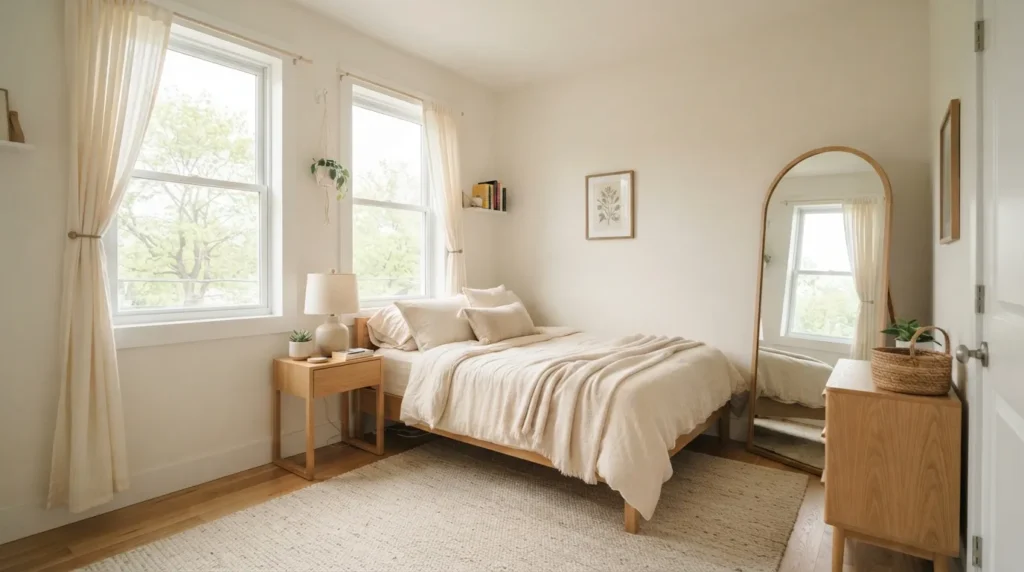
Natural light is one of the easiest ways to make a compact bedroom feel open.
Dark corners can visually compress a room, while daylight reveals surfaces and creates a stronger sense of depth.
You don’t necessarily need larger windows. The first step is making sure existing windows aren’t unnecessarily blocked by furniture, heavy curtains, or clutter.
Clean windows also allow more daylight into the room.
Reflective surfaces such as mirrors, light-colored walls, and pale textiles can help distribute that available light.
How To Style It
Keep furniture slightly away from windows when possible.
Use curtains that can fully open during the day.
Avoid placing tall storage pieces directly in front of the main source of daylight.
Keep the window area visually simple.
Use mirrors strategically to reflect the window rather than clutter.
If the room receives limited daylight, supplement it with multiple warm, appropriately placed light sources rather than relying on one ceiling fixture.
7. Simplify Bedding Layers
Quick Benefits
- Makes the bed look lighter
- Reduces visual bulk
- Creates a calmer focal point
- Maintains comfort
- Simplifies daily routines
Why It Works
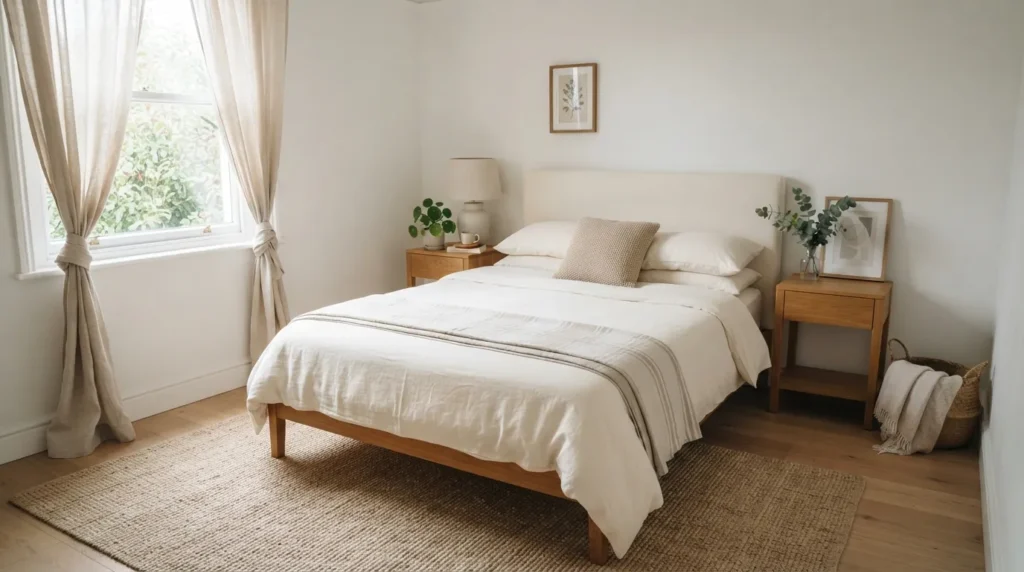
The bed is usually the largest object in a bedroom, which means bedding has a major effect on how spacious the room feels.
A bed covered with multiple heavy blankets, oversized pillows, decorative cushions, and contrasting patterns can become visually dominant.
A simpler arrangement allows the bed to remain comfortable without overwhelming the room.
This doesn’t mean your bedding needs to look plain. Texture can provide interest without adding visual clutter.
How To Style It
Start with simple sheets and a lightweight duvet or comforter.
Use two or three layers of pillows rather than filling the entire headboard.
Choose bedding that relates to the wall and curtain colors.
Add one folded throw at the foot or side of the bed if desired.
For texture, consider linen, cotton, quilted fabrics, or subtle woven patterns.
Avoid combining too many competing patterns in a compact room.
8. Use Vertical Storage
Quick Benefits
- Preserves floor space
- Uses unused wall height
- Keeps belongings organized
- Reduces bulky furniture
- Improves storage capacity
Why It Works
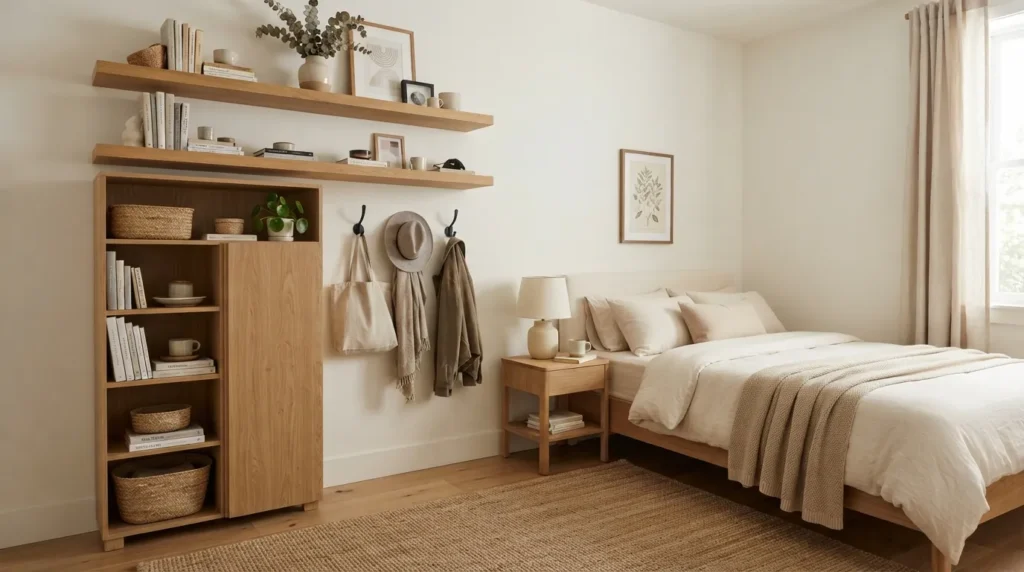
Small bedrooms often have more wall space than floor space.
Using vertical storage lets you take advantage of that unused height.
Floating shelves, tall cabinets, narrow bookcases, wall-mounted hooks, and vertical organizers can all move belongings upward.
This is particularly useful for items that don’t need to remain at floor level.
The goal is to keep storage organized without turning every wall into a collection of shelves.
How To Style It
Use tall, narrow furniture where appropriate.
Install floating shelves above a desk or dresser.
Use wall hooks for bags, robes, or frequently worn accessories.
Store less frequently used items on higher shelves.
Keep everyday belongings within easy reach.
For a more cohesive appearance, choose storage pieces that coordinate with the room’s main colors.
Don’t overload shelves. Leaving some wall visible helps preserve the feeling of openness.
9. Create Visual Continuity
Quick Benefits
- Makes the room feel cohesive
- Reduces visual interruptions
- Creates a calmer appearance
- Helps furniture blend together
- Makes small spaces easier to style
Why It Works
A small bedroom can feel crowded when every object demands attention.
Different colors, materials, patterns, and furniture styles create visual stopping points. When too many appear in a limited area, the room can seem busier than it actually is.
Visual continuity solves part of this problem.
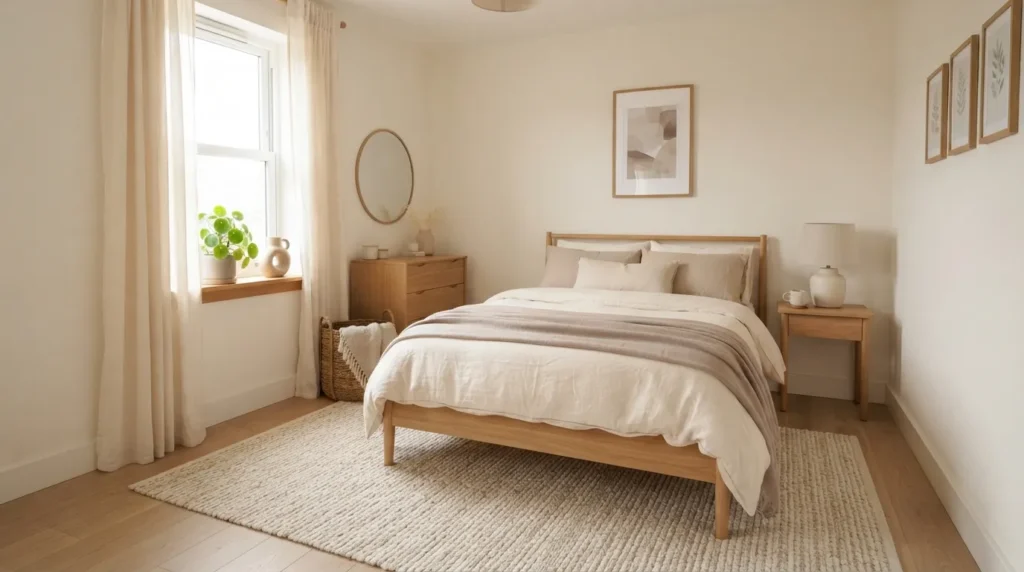
Repeating colors and materials helps different elements feel connected.
For example, warm wood on the bed can be echoed through a nightstand or picture frame. Cream bedding can relate to the curtains and rug.
This creates a more uninterrupted visual flow.
How To Style It
Choose three to five primary colors and use them consistently.
Repeat one or two materials, such as natural wood and woven fibers.
Coordinate the curtains with either the walls, bedding, or rug.
Keep large patterns to a minimum.
Use accent colors in small amounts.
The goal isn’t perfect matching. Instead, create relationships between the major elements so the room feels intentional.
10. Reduce Surface Clutter
Quick Benefits
- Creates visual calm
- Makes furniture look smaller
- Simplifies cleaning
- Highlights decorative pieces
- Makes the room appear more organized
Why It Works
Visible clutter can make a small bedroom feel significantly smaller.
Even when the floor is clear, a dresser covered with cosmetics, books, chargers, receipts, accessories, and miscellaneous objects creates visual noise.
Because these surfaces are at eye level, they attract attention.
Reducing the number of visible items gives the room more breathing space.
This doesn’t require minimalist living. It simply means giving everyday objects appropriate storage locations.
How To Style It
Keep the nightstand limited to genuine essentials.
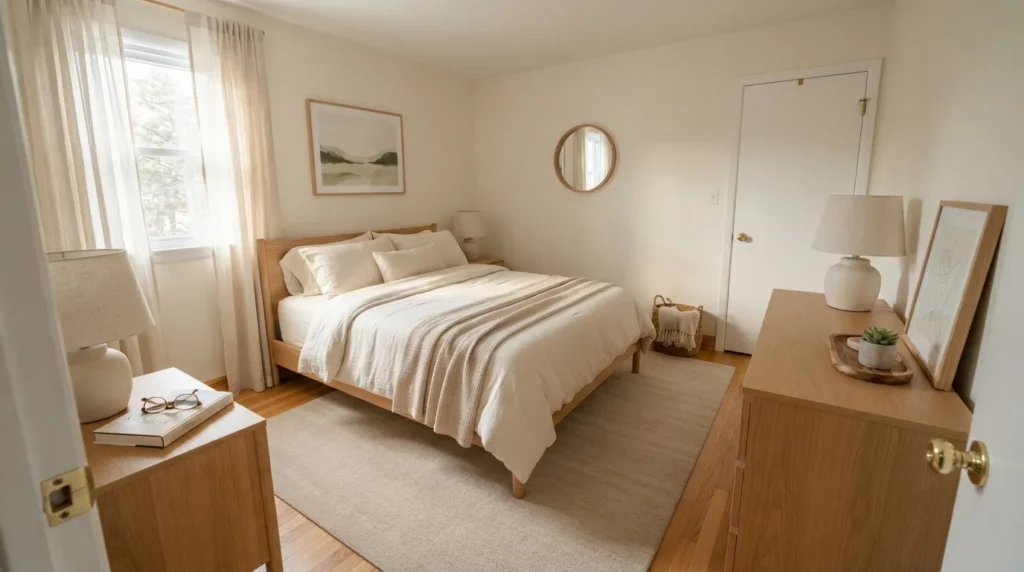
Use a tray to contain jewelry, watches, or small personal items.
Store chargers and cables inside a drawer when possible.
Keep a dresser display simple, perhaps using a lamp, framed artwork, and one decorative object.
If a surface repeatedly becomes cluttered, reconsider where the items are stored.
Convenient storage is more sustainable than a system that requires constant effort.
11. Improve Furniture Placement
Quick Benefits
- Creates better circulation
- Opens visual pathways
- Makes the room more functional
- Reduces awkward corners
- Costs nothing
Why It Works
Before buying anything new, reconsider the furniture you already own.
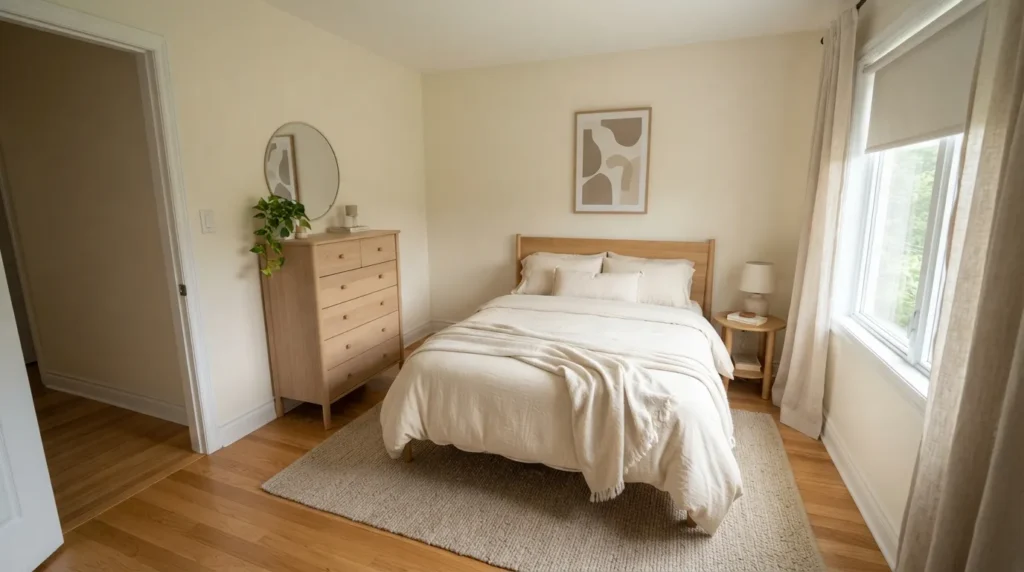
A bed positioned slightly differently can create a better walkway. Moving a dresser away from a doorway can improve the room’s flow. Relocating a chair may open a previously blocked visual path.
Small bedrooms often require experimentation.
Instead of automatically pushing everything against the walls, consider how the room is actually used.
The most important pathways should remain comfortable, and doors, drawers, and closets need enough clearance to operate properly.
How To Style It
Start with the bed because it is usually the largest piece.
Identify the main walking route from the entrance to the bed and closet.
Keep that pathway as open as possible.
Place dressers where drawers can open without blocking movement.
Avoid positioning tall furniture where it blocks natural light.
If you’re unsure, make a quick floor-plan sketch using approximate furniture measurements before moving everything.
Sometimes the best improvement costs absolutely nothing.
Related Articles
- How to Organize a Small Bedroom with Functional Storage
- 10 Small Bedroom Ideas That Make the Space Feel Bigger
- How to Decorate a Small Bedroom Without Making It Feel Crowded
- 10 Bedroom Storage Ideas for Small Spaces
- How to Make a Bedroom Feel Cozy and Spacious
Frequently Asked Questions
What colors make a small bedroom look bigger?
Light, coordinated colors such as warm white, cream, pale beige, soft gray, and muted blue can help a bedroom feel brighter and more open. You don’t need to use white everywhere. A consistent palette with subtle variations can create visual continuity while still providing warmth and personality.
Does a mirror make a small bedroom look bigger?
A strategically positioned mirror can make a bedroom feel more spacious by reflecting light and creating additional visual depth. Place it where it reflects a window, light source, or attractive part of the room. Avoid positioning a mirror where it reflects clutter, as this can make the room appear busier.
How do you make a small bedroom look bigger without buying anything?
Start by decluttering surfaces and floors, rearranging furniture, opening curtains fully during the day, and removing pieces that block natural light or walking paths. You can also simplify bedding, move unnecessary items into existing storage, and create more visual continuity by grouping similar colors and materials.
Should furniture be against the wall in a small bedroom?
Not necessarily. Although placing furniture against walls can preserve floor space, the most important consideration is circulation. Sometimes moving a piece slightly can create a better pathway or make the room feel more balanced. Test different layouts before deciding what works best for your specific room.
Do curtains make a small bedroom look bigger?
Curtains can help create the impression of greater height when they are hung higher and extend toward the floor. Lightweight panels can also soften the room without making it feel heavy. Keeping the curtain color close to the wall or bedding can further support a continuous visual effect.
What type of bed is best for a small bedroom?
A bed with a relatively simple silhouette and appropriate proportions usually works well. Storage beds can be particularly useful because they provide hidden capacity without requiring another large piece of furniture. A bed with visible legs can also expose more floor and create a visually lighter appearance.
How do you make a small bedroom feel less cluttered?
Reduce visible items, keep walking paths clear, use closed storage for everyday clutter, and limit the number of decorative objects on surfaces. Organize belongings by category and make frequently used items easy to reach. A simple, repeatable storage system is more effective than constantly tidying without changing where things live.
Conclusion
Making a small bedroom feel bigger doesn’t require a renovation.
Often, the most effective changes are the ones that alter how the room is visually experienced. Light colors can brighten the space, mirrors can reflect available light, and properly positioned curtains can emphasize ceiling height.
Furniture placement is equally important. Keep walking paths open, avoid oversized pieces, and look for opportunities to move storage upward instead of consuming valuable floor area.
Then pay attention to the details that are easy to overlook. Simplify the bedding, clear unnecessary objects from surfaces, coordinate colors, and make the most of natural daylight.
You don’t need to implement every idea at once.
Start with the area that bothers you most. If the room feels crowded, clear the floor. If it feels dark, work on the windows and lighting. If storage is the main problem, look upward or underneath the bed before adding another bulky piece of furniture.
The best small-bedroom solutions are usually a combination of several modest improvements rather than one dramatic change.
With thoughtful furniture placement, better storage, lighter visual layers, and less clutter, even a compact bedroom can feel comfortable, open, and relaxing.
And perhaps the best part is that many of these changes can be made today, without picking up a paintbrush or starting a renovation project.