10 Modern Bedroom Ideas That Feel Warm and Peaceful
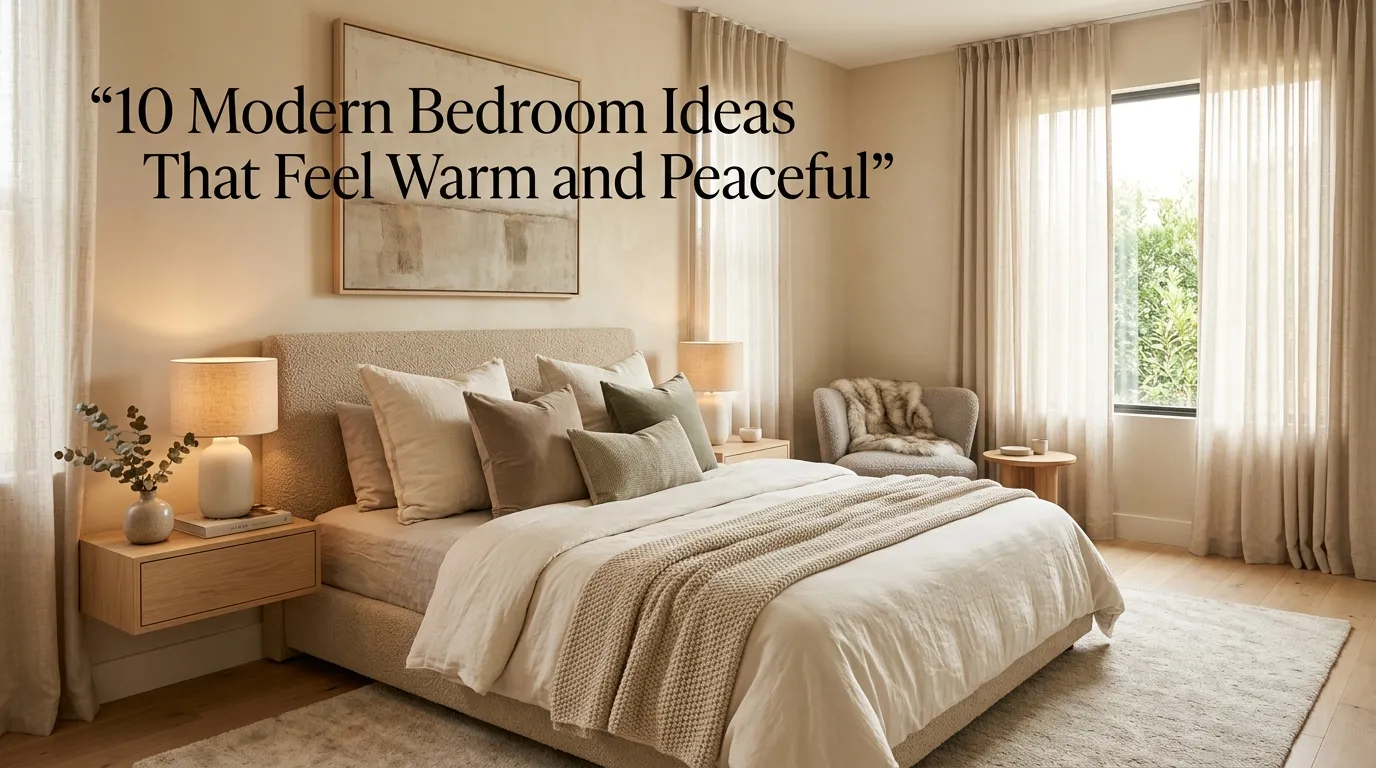
A modern bedroom can look beautiful without feeling cold, overly styled, or difficult to live in. The most inviting spaces combine clean lines with soft textures, warm colors, natural materials, and thoughtful lighting. That balance creates a bedroom that feels peaceful at night and still looks polished during the day.
Many modern bedrooms start with good intentions but end up feeling a little too stark. A perfectly matched furniture set, bright white walls, hard surfaces, and a single overhead light can make the room look tidy while doing very little to create comfort. The solution is not necessarily more decoration. It is better layering.
Warmth comes from the details that make a bedroom feel lived in: a softly upholstered headboard, natural wood nightstands, linen bedding, a textured rug, gentle lamps, artwork with muted tones, and curtains that filter morning light. These elements work together without making the room feel crowded.
In my experience, the easiest place to begin is with the visual foundation. Decide how you want the room to feel before choosing accessories. If your goal is peaceful and cozy, warm neutrals and tactile materials provide a reliable starting point. From there, lighting, furniture shape, and a few personal details can establish the character of the space.
These ideas are designed for real bedrooms rather than showroom displays. They work for primary bedrooms, guest rooms, apartments, and smaller spaces where every decorating choice matters. You can use one complete idea or combine several approaches to create a look that feels personal.
The goal is simple: a bedroom that feels calm when you walk in, comfortable when you settle down, and timeless enough to enjoy for years.
Table of Contents
1. Warm Neutral Layers
Build a peaceful bedroom foundation with creamy neutrals, beige, taupe, and soft brown.
2. Natural Wood Details
Use wood furniture and organic finishes to bring warmth into a streamlined modern bedroom.
3. Soft Upholstered Headboard
Create a comfortable focal point with an upholstered bed that adds softness and visual depth.
4. Layered Bedding
Combine breathable fabrics, subtle colors, and varied textures for a relaxed and inviting bed.
5. Ambient Bedroom Lighting
Use multiple sources of gentle illumination to make the room feel cozy throughout the evening.
6. Textured Accent Wall
Add depth behind the bed with subtle materials, paneling, plaster-inspired finishes, or wallpaper.
7. Minimal Nightstand Styling
Keep bedside surfaces functional and uncluttered while adding small details that feel personal.
8. Peaceful Earth Tones
Bring muted clay, sand, olive, brown, and warm beige into the room for a grounded atmosphere.
9. Soft Window Treatments
Use curtains and shades to control natural light while adding another layer of texture.
10. Calm Modern Layout
Arrange furniture with generous breathing room to create a restful and visually balanced bedroom.
1. Warm Neutral Layers
Quick Benefits
- Creates an instantly calming backdrop
- Makes modern furniture feel softer
- Works with many decorating styles
- Makes seasonal updates simple
- Helps the room feel visually cohesive
Why It Works
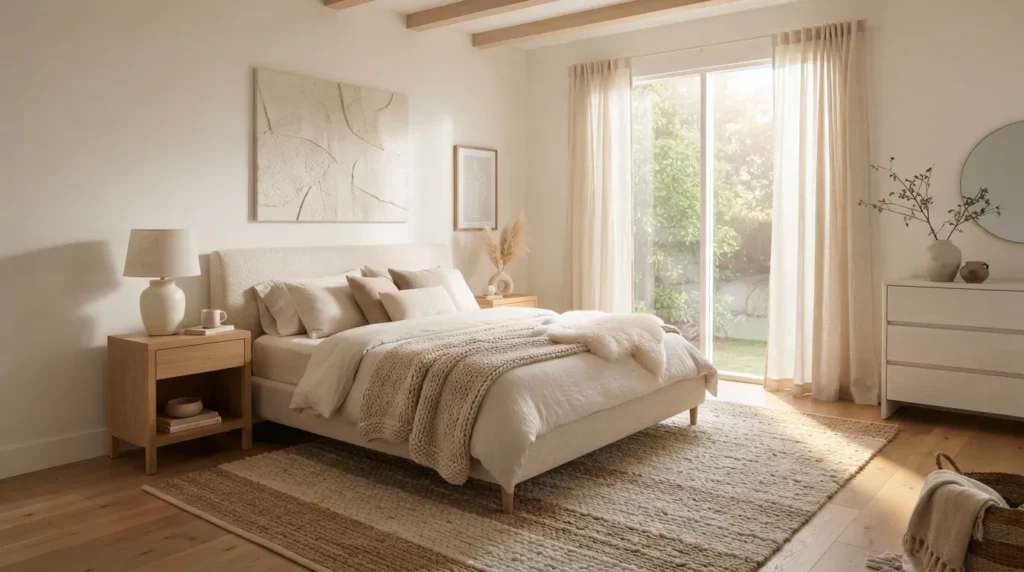
Warm neutrals are one of the easiest ways to make a modern bedroom feel peaceful. Cream, ivory, beige, oatmeal, mushroom, taupe, and soft brown provide enough variation to create depth without introducing visual noise.
The important part is layering different shades rather than choosing one beige and using it everywhere. A creamy wall can sit behind an oatmeal upholstered bed, while taupe bedding and a slightly darker rug create gentle contrast.
This approach works particularly well in bedrooms because the palette naturally supports a quieter atmosphere. There is less visual competition, so furniture, textiles, and architectural details can become the focus.
A neutral room also gives you flexibility. Small seasonal changes, such as adding a darker throw in winter or lighter linen in summer, can refresh the space without requiring a complete redesign.
How To Style It
Choose one light neutral as your foundation. Warm white or soft ivory works well on walls, while beige, taupe, or oatmeal can appear through bedding and upholstery.
Avoid making every item the exact same shade. Slight variations create dimension and prevent the room from looking flat.
Add one darker neutral for grounding. A walnut nightstand, medium-brown bench, charcoal picture frame, or taupe rug can provide enough contrast.
For a modern appearance, keep patterns subtle. Thin stripes, small checks, organic shapes, and tonal prints can add interest without disrupting the peaceful color scheme.
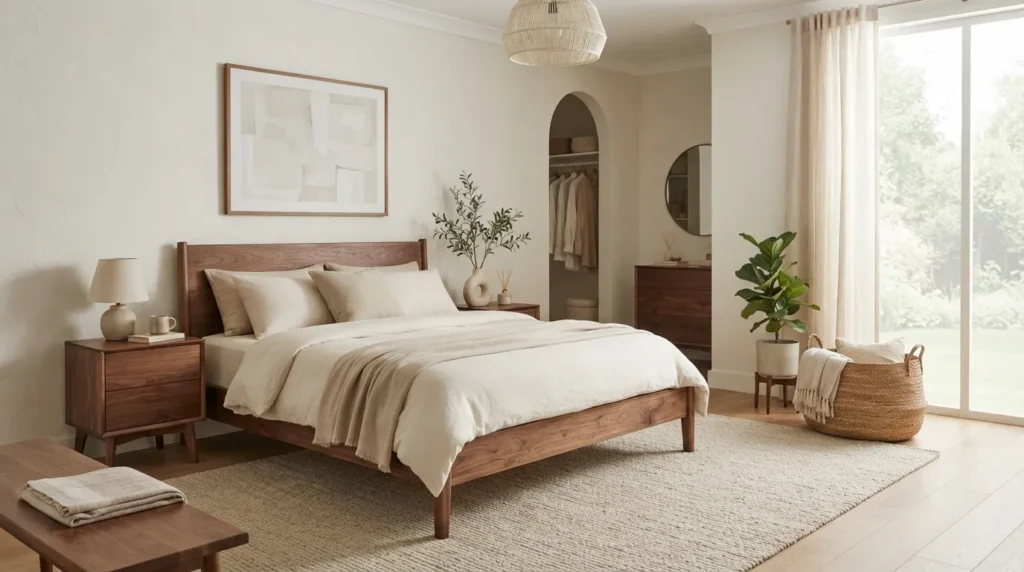
2. Natural Wood Details
Quick Benefits
- Adds warmth to clean-lined furniture
- Introduces natural texture
- Complements neutral colors
- Creates a timeless appearance
- Works in both large and small bedrooms
Why It Works
Modern bedrooms often contain smooth surfaces, straight edges, and neutral upholstery. Natural wood introduces an organic element that keeps those clean lines from feeling too severe.
A wood nightstand, bed frame, dresser, bench, or shelving unit can immediately change the temperature of the room visually. Pale oak creates a lighter Scandinavian-inspired appearance, while walnut and medium brown woods create a richer, more grounded look.
The goal is not to turn the bedroom into a rustic space. Keep the furniture profiles simple and let the wood grain provide the visual interest.
One thing that works especially well is repeating the same wood family in a few locations rather than matching every piece perfectly. This creates cohesion while maintaining a collected feel.
How To Style It
Start with one substantial wood piece. If your bed is upholstered, a pair of wood nightstands can introduce warmth without overwhelming the room.
If the bed frame is already wood, repeat the finish through a bench, picture frames, or a small stool.
Pair wood with soft textiles. A walnut nightstand looks especially inviting beside a cream upholstered bed and linen bedding. Pale oak can work beautifully with warm white walls and oatmeal textiles.
Avoid covering the wood with excessive decor. Let the natural grain remain visible. One ceramic lamp, a small book stack, or a simple vase is often enough for a nightstand.
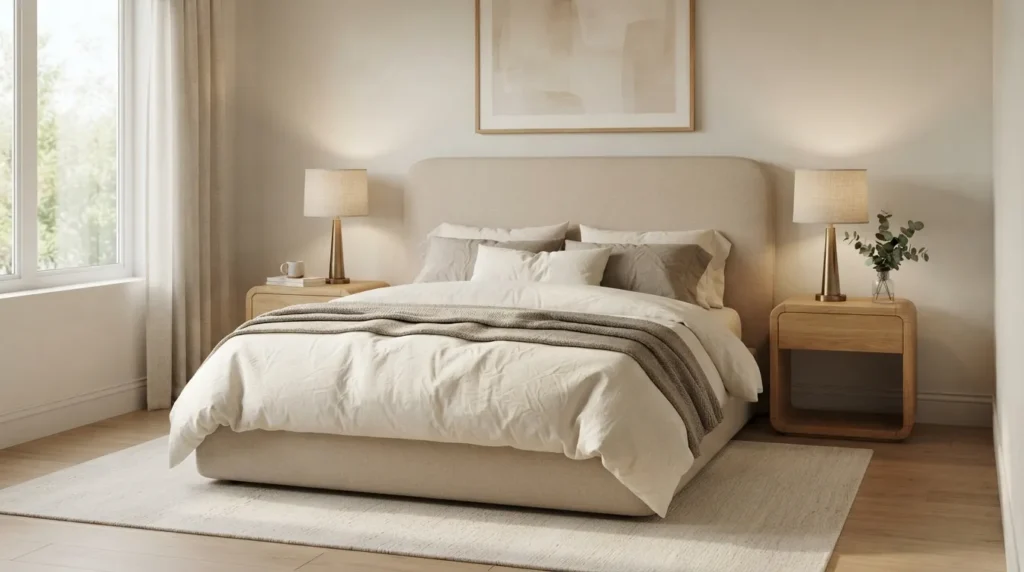
3. Soft Upholstered Headboard
Quick Benefits
- Creates a comfortable focal point
- Adds softness behind the bed
- Works well with modern furniture
- Provides subtle visual texture
- Makes the bed feel more inviting
Why It Works
The bed is usually the largest visual element in a bedroom, so its design has a major influence on the overall atmosphere. An upholstered headboard softens the strong geometry of a modern bed while adding a layer of comfort.
Cream, beige, oatmeal, warm gray, and muted taupe upholstery can blend naturally into a peaceful bedroom. Boucle, linen-look, textured woven fabric, and softly quilted materials can provide additional depth.
A tall headboard can create a dramatic focal point, while a lower profile feels more casual and understated.
For a room that already has plenty of texture, choose a relatively simple upholstered design. If the rest of the room is minimal, a softly curved or subtly channel-tufted headboard can provide additional character.
How To Style It
Keep the bedding relaxed rather than overly coordinated. A simple upholstered headboard can support white sheets, an oatmeal duvet, taupe cushions, and a contrasting throw.
For symmetry, place matching nightstands on either side of the bed. If the room is small, floating nightstands or narrow tables can preserve floor space.
A large piece of artwork above the bed can work, but avoid overcrowding the area. The headboard itself already provides substantial visual presence.
Choose fabrics that suit your lifestyle. Bedrooms used daily benefit from materials that are practical to maintain rather than purely decorative.
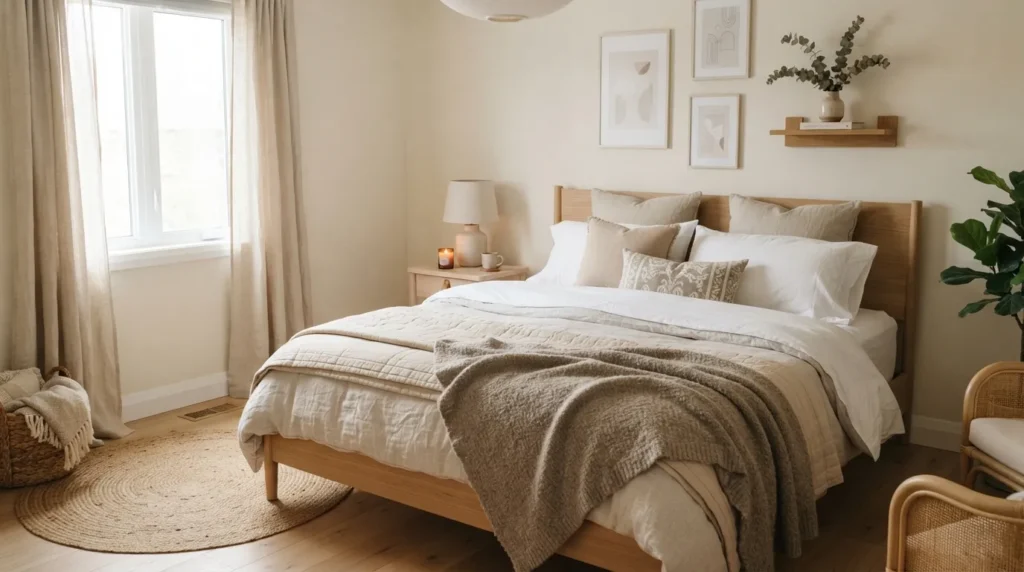
4. Layered Bedding
Quick Benefits
- Makes the bed look inviting
- Adds texture without clutter
- Creates visual depth
- Supports seasonal flexibility
- Enhances everyday comfort
Why It Works
The bed should look comfortable rather than perfectly staged. Layering different fabrics creates that relaxed feeling while keeping a modern bedroom visually interesting.
Start with the basics: breathable sheets, a duvet or comforter, pillows, and a throw. Then introduce texture through washed linen, cotton, quilted fabric, woven blankets, or subtle knits.
The trick is variation. If every layer is smooth cotton in the same shade, the bed can look flat. If every layer is heavily textured, it can look busy. A mixture of smooth and tactile materials creates balance.
A warm neutral palette also helps. Cream sheets, beige bedding, and a taupe or brown throw can feel luxurious without relying on bold patterns.
How To Style It
Begin with light-colored sheets. Add a duvet or quilt in a slightly deeper neutral, then fold a textured blanket across the lower third of the bed.
Use pillows in different sizes rather than arranging a huge collection. Two sleeping pillows, a pair of standard decorative pillows, and one or two smaller cushions can create a finished appearance without making the bed difficult to use.
For winter, add heavier texture through wool-look throws and deeper neutral tones. During warmer months, replace them with lightweight linen or cotton layers.
Let one layer appear slightly imperfect. A loosely folded throw often looks more inviting than a perfectly squared-off blanket.
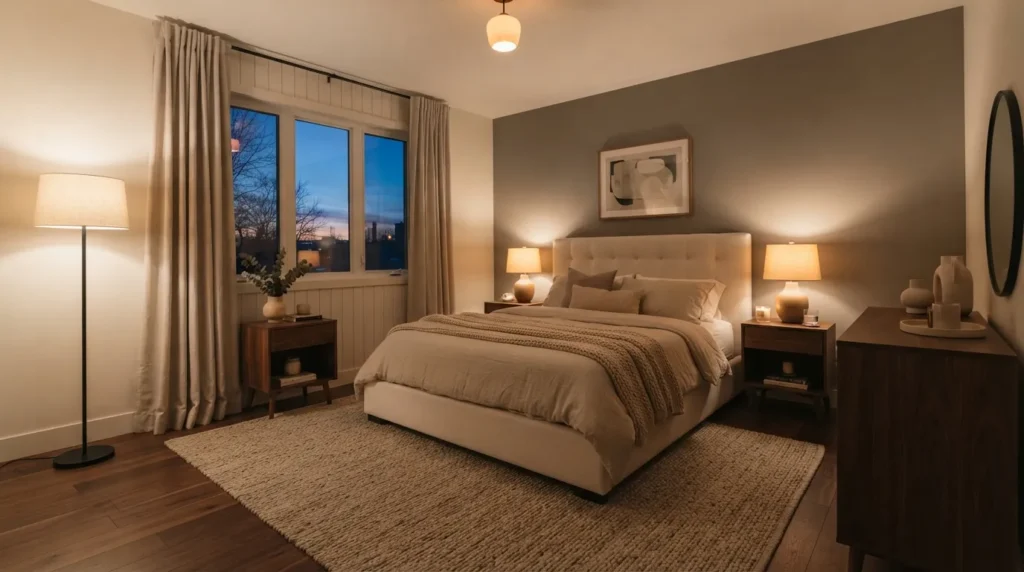
5. Ambient Bedroom Lighting
Quick Benefits
- Creates a peaceful evening atmosphere
- Adds warmth to neutral colors
- Provides practical bedside illumination
- Highlights architectural features
- Reduces dependence on harsh overhead lighting
Why It Works
Lighting has an enormous effect on how a bedroom feels. A single bright ceiling fixture can make even the softest bedding look clinical.
Multiple light sources create a more flexible environment. Bedside lamps provide focused light, a ceiling fixture offers general illumination, and a floor lamp or wall light can fill a darker corner.
Warm-toned illumination also works beautifully with wood, cream, beige, and earth-tone interiors. The room can feel completely different in the evening compared with daylight.
The goal is not to make the room dark. It is to create layers so the lighting can adapt to different moments.
How To Style It
Place matching lamps on symmetrical nightstands for a classic modern arrangement. If space is limited, wall-mounted reading lights can free up valuable bedside surface area.
Choose simple shades in linen, fabric, frosted glass, or matte finishes. These materials soften the light and complement the bedroom’s relaxed atmosphere.
Use dimmable fixtures whenever possible. Bright light can be useful for getting ready, while lower illumination creates a quieter evening environment.
Do not forget secondary areas. A small lamp on a dresser or a floor lamp beside a reading chair can make the entire room feel more balanced.
6. Textured Accent Wall
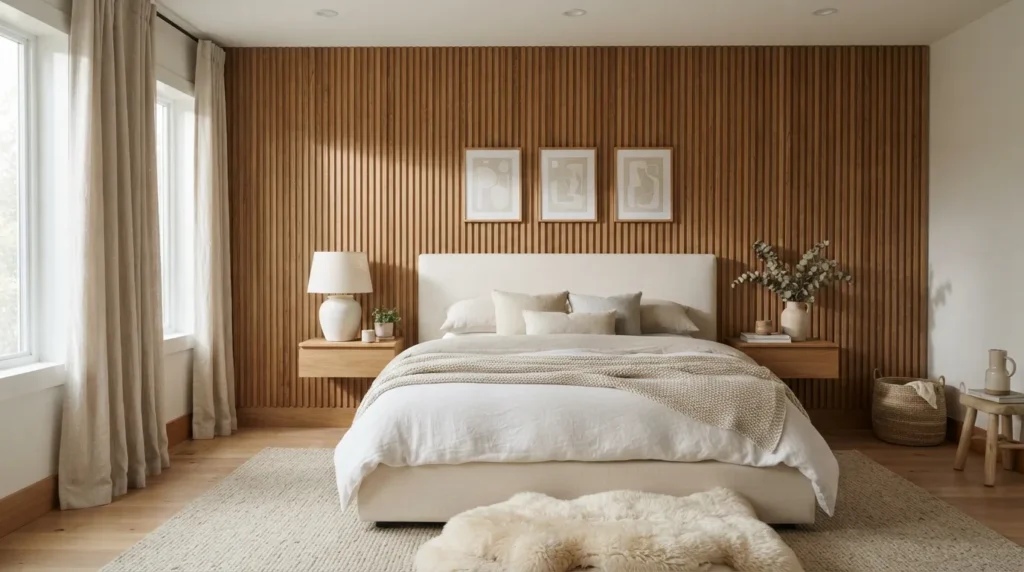
Quick Benefits
- Creates a focal point behind the bed
- Adds architectural interest
- Reduces the need for excessive artwork
- Works with neutral color palettes
- Gives modern rooms more depth
Why It Works
A bedroom does not need a dramatic painted feature wall to create visual interest. Texture can provide the focal point while maintaining the calm quality of a modern interior.
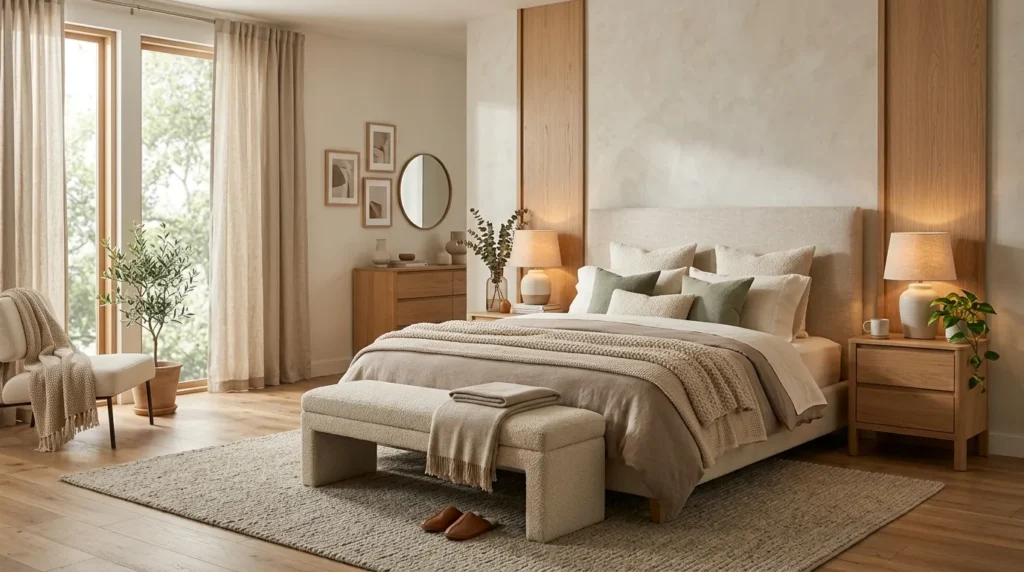
Vertical wood slats, subtle wall paneling, limewash-inspired finishes, textured wallpaper, plaster-look surfaces, or simple molding can all create depth.
The best accent walls support the furniture instead of competing with it. If the bed has a strong shape or upholstered headboard, a subtle finish may be enough. If the furniture is very simple, more noticeable paneling can add character.
Texture also changes how light moves across the wall. During the day, natural light creates gentle shadows, while evening lamps can emphasize the material.
How To Style It
Use the wall behind the bed as the natural focal point. Choose a material or finish that complements the existing floor and furniture.
Warm oak paneling pairs well with cream bedding and soft beige walls. Painted molding can create a more traditional-modern transition. A textured wallpaper can introduce subtle pattern without requiring artwork.
Keep the surrounding decor restrained. If the wall already has substantial texture, avoid filling it with numerous frames and shelves.
For renters, removable wallpaper or temporary wall treatments can provide a similar visual effect without permanent construction.
7. Minimal Nightstand Styling
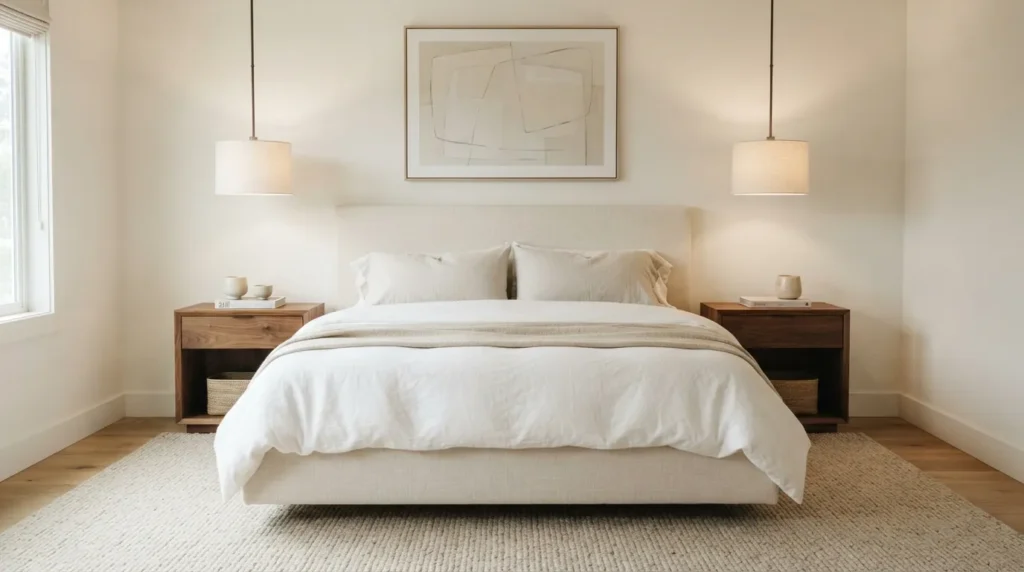
Quick Benefits
- Keeps the bedroom visually calm
- Makes bedside surfaces easier to use
- Reduces nighttime clutter
- Highlights beautiful furniture
- Supports a modern aesthetic
Why It Works
Bedside tables are small spaces, but they have an outsized impact on how organized a bedroom feels. A crowded nightstand can make the entire room appear busier.
Modern bedrooms benefit from editing. Instead of filling the nightstand with decorative objects, choose a few items that are useful and visually pleasing.
A lamp, small tray, book, ceramic vessel, or tiny plant can be enough. The negative space between these objects becomes part of the styling.
This is particularly important in a peaceful bedroom because visual clutter can make the room feel less restful.
How To Style It
Start with the practical essentials. A lamp provides useful light, while a small tray can corral glasses, jewelry, or other personal items.
Add one decorative element, such as a ceramic vase or small framed photograph. If you enjoy reading before bed, include one book rather than a tall stack.
Keep cords organized and choose furniture with drawers when hidden storage is useful.
For an asymmetrical arrangement, use a floor lamp on one side and a smaller table lamp on the other. The room can remain balanced without every object matching.
8. Peaceful Earth Tones
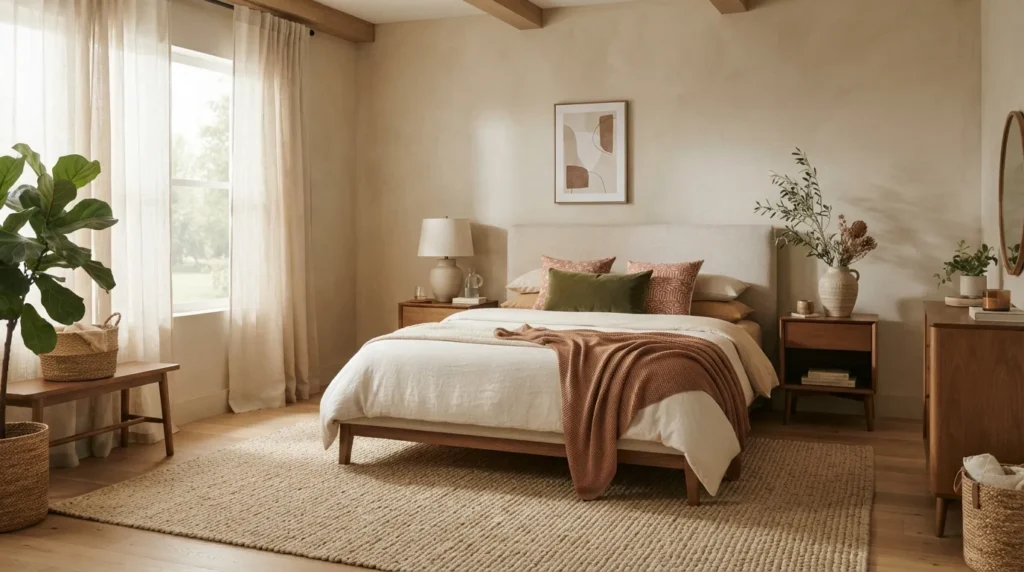
Quick Benefits
- Creates a grounded atmosphere
- Adds warmth without bright colors
- Works with natural materials
- Provides subtle visual depth
- Feels comfortable year-round
Why It Works
Earth tones can make a modern bedroom feel more connected to nature. Muted clay, warm brown, sand, olive, terracotta, mushroom, and soft tan add personality while maintaining the room’s peaceful character.
These colors are especially effective when used sparingly. A muted olive cushion, clay-colored throw, or warm brown bench can create enough contrast against cream walls and bedding.
The beauty of earth tones is their versatility. They work with wood, stone, linen, woven materials, and metal, making them easy to incorporate into an existing bedroom.
Instead of using several strong colors, select one or two earth tones and let them appear in different materials.
How To Style It
Keep your largest surfaces relatively neutral. Use warm white, cream, or beige for the walls and major bedding pieces.
Then introduce earth tones through smaller layers. A muted terracotta blanket, olive cushion, brown wood nightstand, or sandy rug can create depth.
For a more sophisticated look, choose dusty versions of these colors rather than highly saturated shades.
Natural materials reinforce the palette. Linen, wood, rattan, ceramic, and stone-look accessories can all support the grounded feeling.
9. Soft Window Treatments
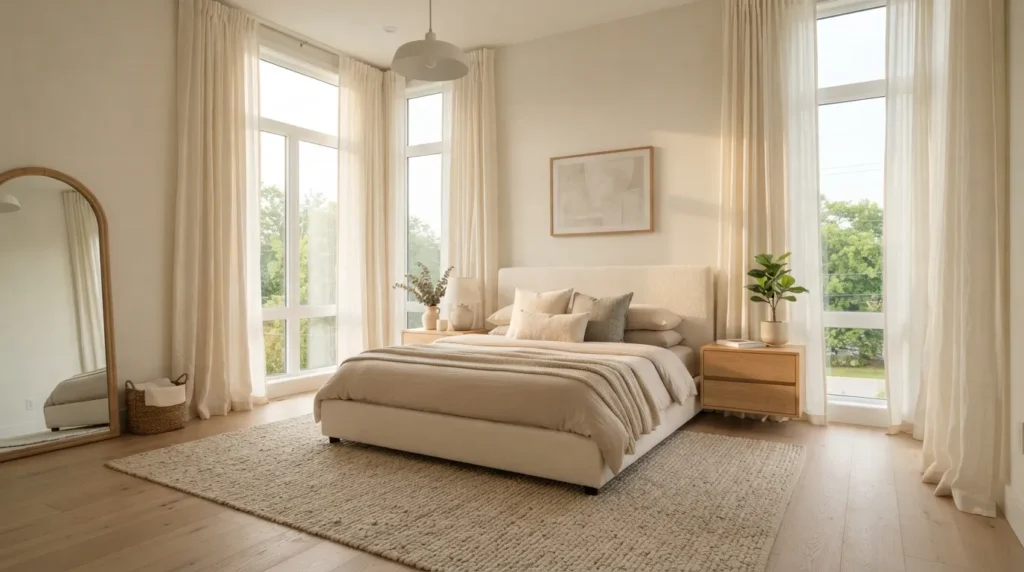
Quick Benefits
- Softens hard architectural lines
- Controls natural light
- Adds privacy
- Creates visual height
- Introduces another layer of texture
Why It Works
Windows are often overlooked when decorating bedrooms, yet curtains can dramatically change the room’s proportions and atmosphere.
Soft, full-length curtains make a modern bedroom feel more finished. Linen-look panels, cotton curtains, or lightly textured fabrics can introduce softness without becoming overly formal.
The right window treatment also helps manage natural light. A bedroom that receives strong morning sun may benefit from layered shades and curtains, while a darker room can use lighter, more translucent fabrics to preserve daylight.
Hanging curtains higher and wider than the window can also create the impression of a larger opening, provided the room’s architecture allows it.
How To Style It
For a peaceful modern look, choose curtains in cream, ivory, warm beige, or light taupe. These shades blend with the walls while adding subtle texture.
Use blackout or room-darkening options where sleeping conditions require greater control of light. Layering a practical shade beneath decorative curtains gives you more flexibility.
Let curtains reach the floor for a softer appearance. Avoid overly short panels that stop several inches above the floor unless the room’s layout requires it.
Keep curtain hardware simple. Matte black, brushed metal, or warm wood finishes can complement the existing furniture.
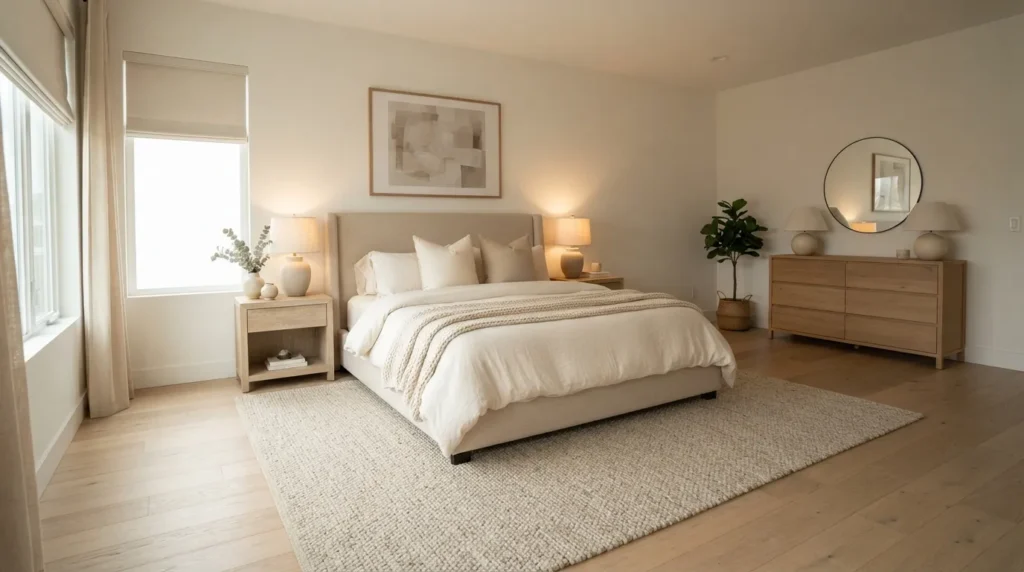
10. Calm Modern Layout
Quick Benefits
- Makes the bedroom easier to move through
- Creates visual breathing room
- Highlights the bed as a focal point
- Makes furniture feel intentional
- Supports a more peaceful atmosphere
Why It Works
A peaceful bedroom depends as much on the layout as the decor. Even beautiful furniture can feel stressful when pathways are blocked or large pieces overwhelm the room.
Start with the bed because it is the primary visual and functional anchor. From there, consider how you move between the door, closet, bathroom, windows, and other frequently used areas.
Symmetry can create a particularly calm appearance. Matching nightstands and lamps on either side of the bed establish visual balance, although small rooms often require more flexible arrangements.
Leave enough open space around major furniture. The goal is not to fill the floor plan but to make every piece feel intentional.
How To Style It
Place the bed where it has a comfortable relationship with the room’s entrance and focal wall. Avoid blocking windows unless the room’s architecture leaves few alternatives.
Use a large enough rug to visually connect the bed and nightstands. In a smaller bedroom, a runner or strategically placed rug can provide softness without overwhelming the floor.
Keep dressers and tall furniture away from crowded pathways.
Before purchasing new furniture, measure the room and use painter’s tape to mark approximate dimensions on the floor. This simple step can reveal whether a piece fits comfortably before you commit to it.
How To Make A Modern Bedroom Feel Warm
The easiest way to warm up a modern bedroom is to combine soft texture, warm color, natural material, and layered lighting.
If the room currently feels cold, look at what is missing rather than immediately buying more decor.
Hard flooring can be softened with a large rug. A plain bed can feel more inviting with layered bedding. White walls can become warmer through cream curtains and wood furniture. A bright overhead light can be balanced with bedside lamps.
Texture is especially important. Linen, cotton, wool-look blankets, boucle upholstery, woven baskets, and natural wood create visual warmth without adding clutter.
Color temperature also matters. Warm white, cream, beige, tan, muted brown, and soft earth tones generally feel more welcoming than a room dominated by bright white and cool gray.
The most successful modern bedrooms often use only a few colors but several textures.
How To Keep A Peaceful Bedroom From Looking Boring
A calm bedroom does not have to be plain. The trick is to create interest through variation rather than visual noise.
Use different shades of the same color family. Combine smooth cotton bedding with a nubby throw, a woven rug, wood furniture, and matte ceramic accessories.
Shape is another useful tool. A curved lamp beside a rectangular nightstand, a round mirror above a dresser, or softly rounded bedding can prevent a room filled with straight lines from feeling rigid.
Artwork can provide another layer of personality. Choose pieces that reflect the room’s palette instead of introducing an unrelated color scheme.
Finally, use contrast carefully. A dark wood nightstand, charcoal frame, or muted brown cushion can provide enough definition against a pale room.
Peaceful design comes from editing, not eliminating character.
Modern Bedroom Ideas For Small Spaces
A small bedroom benefits from thoughtful proportions.
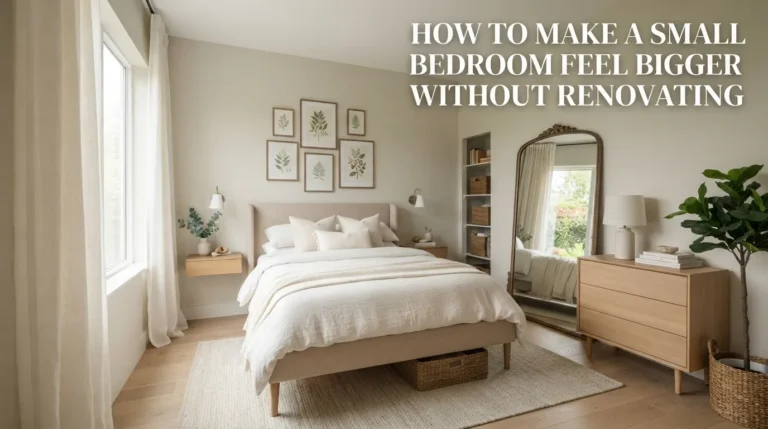
Choose furniture that fits the room rather than automatically selecting the largest pieces available. A lower-profile bed can create more visual openness, while wall-mounted lighting can preserve bedside space.
Use vertical space carefully. Tall curtains can emphasize ceiling height, while narrow shelving can provide storage without consuming much floor area.
Mirrors can reflect light and create a greater sense of depth. Place one where it reflects a window, attractive artwork, or another bright part of the room.
Keep the color palette cohesive. Too many contrasting colors can visually divide a small bedroom into separate areas.
Storage is equally important. A bed with drawers, a dresser with closed storage, or built-in shelving can help keep everyday belongings out of sight.
Most importantly, leave some surfaces empty. Negative space is one of the simplest tools for making a small bedroom feel calmer.
A Simple Bedroom Refresh Plan
You do not need to complete a full renovation to change the atmosphere of your bedroom. A weekend refresh can begin with a careful edit.
First, clear the clutter. Remove items that do not belong in the bedroom and temporarily clear the nightstands, dresser, and floor.
Next, adjust the layout. Move furniture if the current arrangement blocks pathways or makes the bed feel disconnected from the rest of the room.
Then, soften the foundation. Add a rug, curtains, or upholstered elements where the room feels visually hard.
Layer the bedding. Introduce two or three complementary textures instead of buying a completely new matching set.
Improve the lighting. Add bedside lamps or a floor lamp and use softer illumination in the evening.
Introduce natural materials. Wood, woven baskets, ceramic pieces, and greenery can add warmth without clutter.
Finish with personality. Choose one artwork, photograph, or meaningful object that makes the room feel like yours.
This gradual method gives you a chance to see what the room actually needs before spending more money.
Common Modern Bedroom Decorating Mistakes
One common mistake is making everything match too closely. A complete matching bedroom set can sometimes make a space feel flat. Mixing complementary finishes creates more character.
Another issue is relying on cool white. Bright white can be beautiful, but when combined with cool gray furniture and bright overhead lighting, the room can lose its sense of warmth.
Too many decorative pillows can also work against comfort. The bed looks inviting when it can actually be used without removing half a dozen accessories.
Scale matters as well. A small rug beneath a large bed can make the furniture feel disconnected. A tiny lamp on a large nightstand can look equally disproportionate.
Finally, avoid decorating only for photographs. A peaceful bedroom needs practical storage, comfortable bedding, usable lighting, and clear pathways.
The most beautiful room is one that still feels good after the styling is finished.
FAQ
How do you make a modern bedroom feel warm and cozy?
Use warm neutrals, natural wood, layered bedding, textured rugs, soft curtains, upholstered furniture, and multiple light sources. These elements add warmth without compromising a modern aesthetic. Focus on combining different textures and slightly varied shades rather than adding large amounts of decor.
What colors make a bedroom feel peaceful?
Warm white, cream, beige, oatmeal, taupe, soft brown, muted green, sand, and dusty earth tones can create a peaceful atmosphere. Choose a restrained palette and vary the shades through bedding, walls, furniture, rugs, and accessories.
How do you make a modern bedroom look less cold?
Introduce natural materials and softer textures. Wood furniture, linen bedding, a textured rug, upholstered elements, warm curtains, greenery, and bedside lamps can soften a room dominated by smooth surfaces and cool colors.
What bedding looks best in a modern bedroom?
Simple layered bedding in neutral colors works particularly well. Combine breathable sheets with a duvet, quilt, textured throw, and a few pillows in complementary shades. Linen, cotton, and subtle woven fabrics can provide depth while keeping the overall look relaxed.
How can I make a small bedroom feel peaceful?
Keep the layout open, choose appropriately scaled furniture, reduce visual clutter, and use a cohesive color palette. Wall-mounted lighting, multifunctional storage, light curtains, and a strategically placed rug can also make a compact bedroom feel more comfortable and organized.
Is wood furniture good for a modern bedroom?
Yes. Natural wood adds warmth and organic texture to modern furniture. Pale oak creates a light appearance, while walnut and medium brown woods offer richer contrast. Pair wood with soft textiles and neutral colors to keep the room contemporary rather than overly rustic.
How do you decorate a bedroom without making it cluttered?
Prioritize function and choose fewer, more meaningful pieces. Keep nightstands and dressers relatively clear, use closed storage for everyday items, and introduce texture through bedding and rugs instead of adding many small decorations.
Conclusion
A warm and peaceful modern bedroom comes from balance. Clean furniture creates structure, while soft textiles, natural wood, warm neutrals, gentle lighting, and thoughtful accessories keep the space comfortable.
You do not need a dramatic renovation to achieve that feeling. A new rug can soften hard flooring. Layered bedding can make the bed more inviting. Wood furniture can warm up a cool palette. Better lighting can change the atmosphere after sunset. Even clearing a crowded nightstand can make the room feel calmer.
The most important part is choosing elements that support the way you actually use the room. A bedroom is not simply a place to display beautiful furniture. It is where the day slows down, so comfort and practicality matter as much as appearance.
Start with the foundation, then build slowly. Choose a restrained palette, add natural textures, improve the lighting, and leave enough breathing room around the furniture.
The result can be a modern bedroom that feels polished without becoming impersonal—a space that looks beautiful, feels restful, and remains comfortable long after the decorating project is finished.
Related Articles
- 10 Modern Bedroom Ideas with Elegant Simplicity
- 10 Cozy Bedroom Ideas for a Warm and Relaxing Retreat
- 10 Neutral Bedroom Ideas with Timeless Style
- How to Decorate a Bedroom with Elegant Decor
- 10 Bedroom Wall Decor Ideas with Modern Wood Panels