How to Decorate a Living Room with Comfortable Elegance
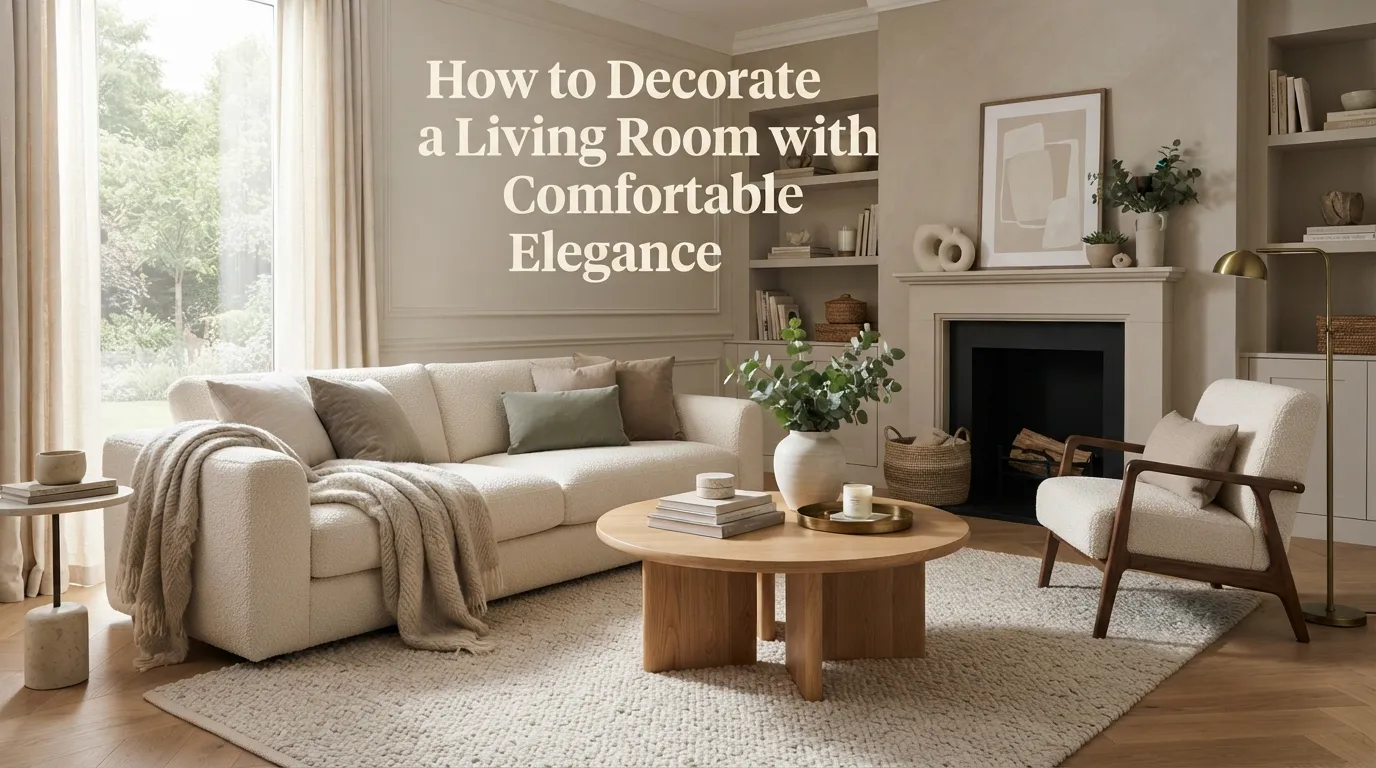
A beautiful living room doesn’t have to feel formal, fragile, or overly decorated. The most inviting spaces often combine elegant details with the things that make everyday life comfortable: soft seating, practical surfaces, warm lighting, useful storage, and fabrics that can handle real living.
That’s the idea behind comfortable elegance.
Instead of filling a room with expensive-looking furniture and decorative accessories, focus on creating balance. A tailored sofa can feel relaxed when surrounded by soft throws and textured pillows. A sophisticated coffee table becomes more inviting when paired with a casual ceramic bowl. Even simple neutral walls can feel luxurious when layered with thoughtful lighting, natural materials, and well-chosen artwork.
I’ve noticed that one of the biggest decorating mistakes is treating elegance and comfort as opposites. They don’t have to be. A room can look polished while still being the place where you put your feet up after a long day.
The secret is choosing pieces that are both visually refined and genuinely useful.
For a living room that feels elegant without becoming stiff, start with the largest elements first. Consider the sofa, area rug, curtains, lighting, and main furniture arrangement. Once those pieces feel balanced, smaller details become much easier to choose.
Color also matters. Soft neutrals, warm whites, taupe, muted greens, dusty blues, and natural wood can create an understated foundation. From there, metallic accents, sculptural lighting, artwork, and layered textures can add sophistication without making the room feel overly styled.
You don’t need to replace everything at once, either. A few strategic changes can make an existing living room feel more intentional.
These ideas will help you create a space that looks polished enough to impress guests but comfortable enough for everyday life.
Table of Contents
1. Layered Neutral Tones
Build an elegant foundation using several related neutral shades.
2. Tailored Comfortable Seating
Choose sofas and chairs that combine polished shapes with everyday comfort.
3. Textured Area Rugs
Use rugs to add softness, warmth, and visual depth.
4. Warm Layered Lighting
Create an inviting atmosphere with multiple sources of soft light.
5. Natural Wood Details
Introduce warmth and character through carefully selected wood pieces.
6. Refined Window Treatments
Frame the windows with simple fabrics that make the room feel finished.
7. Curated Art Displays
Use artwork to bring personality and sophistication to neutral interiors.
8. Elegant Everyday Accessories
Style the room with useful objects that also look beautiful.
9. Balanced Furniture Layout
Arrange furniture around conversation, comfort, and natural movement.
10. Soft Metallic Accents
Add subtle shine through carefully chosen brass, bronze, or silver details.
11. Fresh Organic Elements
Bring life into the room with plants, flowers, and natural textures.
1. Layered Neutral Tones
Quick Benefits
- Creates a calm foundation
- Makes the room feel cohesive
- Works with many decorating styles
- Allows furniture to stand out
- Makes seasonal updates easier
Why It Works
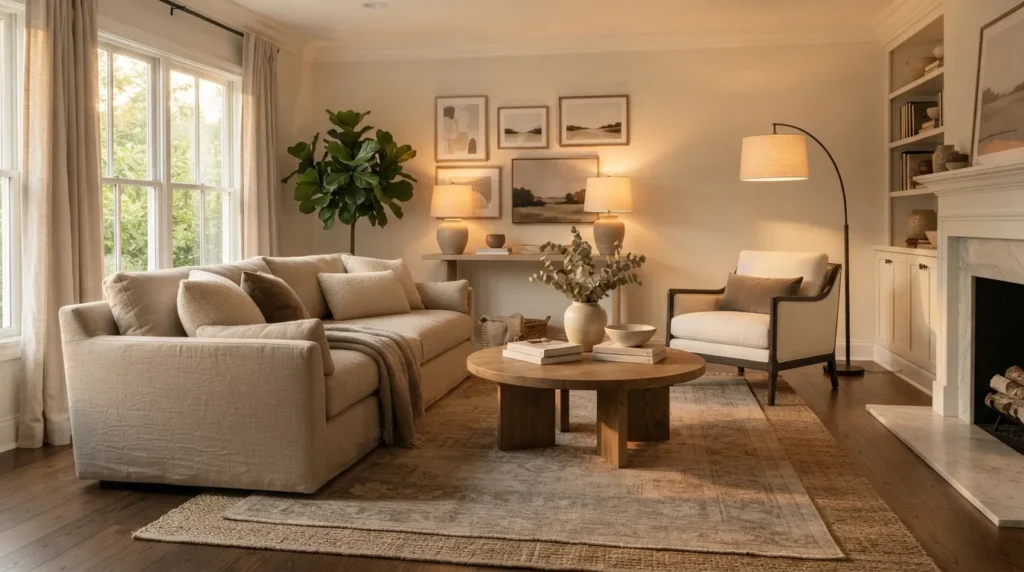
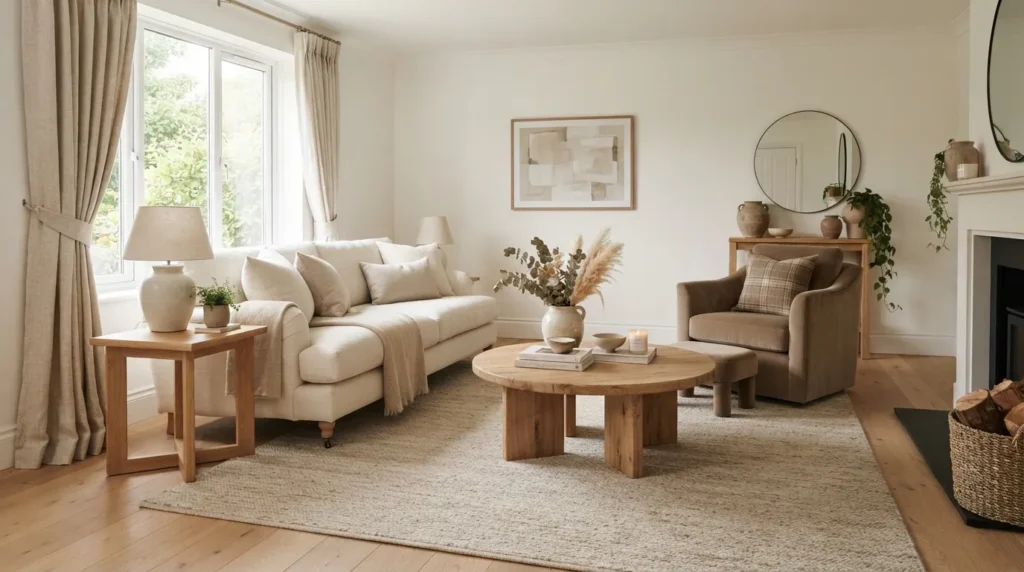
A neutral living room doesn’t have to mean an entirely beige space. The most sophisticated neutral rooms usually contain several shades and textures that create subtle contrast.
Think warm white walls, oatmeal upholstery, taupe cushions, light beige rugs, medium-toned wood, and perhaps a deeper brown or charcoal accent. Each color may be quiet on its own, but together they create depth.
The important distinction is between a flat neutral palette and a layered one. When everything is exactly the same shade, the room can feel unfinished. When several related tones are combined, the eye has more to discover.
This approach also creates flexibility. You can change accent pillows, artwork, or decorative objects later without redesigning the entire room.
How To Style It
Start with one dominant neutral, such as warm white, beige, or soft taupe. Use it for the walls or largest upholstered piece.
Add two or three supporting shades through the rug, curtains, pillows, and occasional furniture.
Then introduce texture. Linen, wool, boucle, cotton, natural wood, woven baskets, and ceramics can all add visual interest without requiring bold colors.
Avoid making every item match perfectly. Slight variations in tone generally make the room feel more collected and natural.
For contrast, add one deeper shade through a coffee table, picture frame, floor lamp, or accent chair.
2. Tailored Comfortable Seating
Quick Benefits
- Combines style and practicality
- Makes the room inviting
- Establishes the decorating style
- Supports everyday relaxation
- Provides a strong visual anchor
Why It Works
The sofa is usually the largest piece of furniture in a living room, so it has an enormous influence on how the space feels.
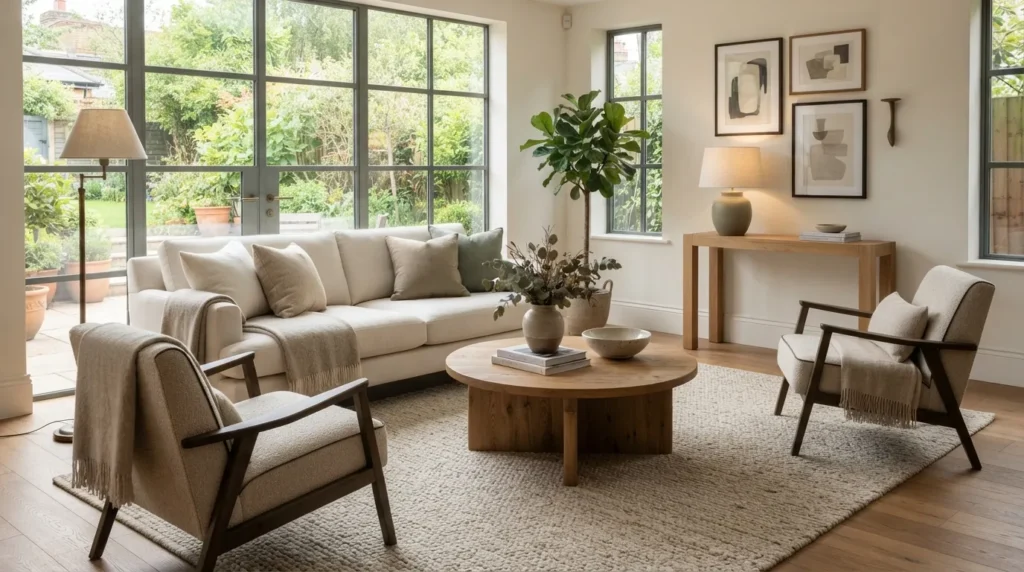
For comfortable elegance, look for upholstery with a polished shape but enough softness for everyday use. A sofa doesn’t need to look oversized or slouchy to be comfortable.
Clean lines, quality-looking fabric, supportive cushions, and well-proportioned arms can create a sophisticated silhouette. Then comfort can be added through pillows, throws, ottomans, and an appropriately sized rug.
The goal is to avoid extremes. Furniture that is too formal can make the room feel untouchable, while furniture that is overly casual can make an otherwise refined room feel unfinished.
How To Style It
Choose a sofa based on the room’s actual dimensions first.
Leave enough space for people to move around the seating area comfortably.
For a classic look, consider a neutral sofa in cream, oatmeal, taupe, or soft gray.
Add pillows in different sizes and textures rather than using a large collection of identical cushions.
A lightweight throw casually placed over one arm can soften a tailored sofa.
Accent chairs should complement the sofa without creating a matching furniture set. A contrasting fabric, wood frame, or slightly different silhouette can make the arrangement feel more thoughtfully designed.
3. Textured Area Rugs
Quick Benefits
- Defines the seating area
- Adds warmth
- Softens hard flooring
- Creates visual depth
- Makes furniture feel connected
Why It Works
An area rug can make a dramatic difference in how finished a living room feels.
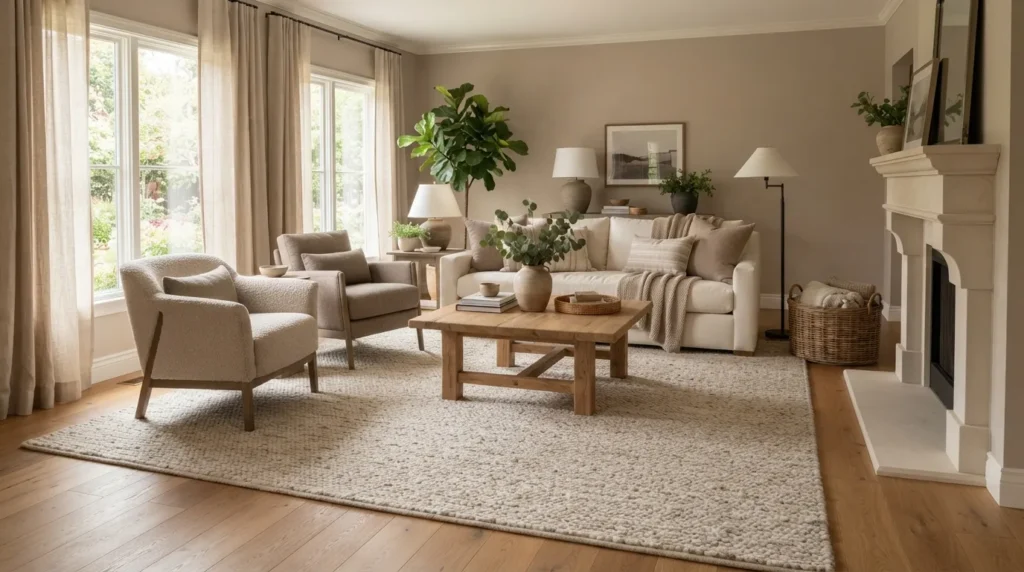
Without a properly sized rug, furniture can look like separate objects scattered around the room. A large enough rug visually connects the sofa, chairs, and coffee table, creating one cohesive conversation area.
Texture also contributes to comfort. A soft wool, cotton, or high-pile rug can make a room feel warmer and more inviting, while a flatter woven design may create a cleaner appearance.
For an elegant room, the rug doesn’t necessarily need a dramatic pattern. Subtle variation in texture or tone can provide plenty of interest.
How To Style It
Whenever possible, choose a rug large enough for at least the front legs of the main seating pieces to sit on it.
For a neutral room, consider ivory, beige, taupe, or muted gray.
If the furniture is very simple, a subtle geometric or vintage-inspired pattern can add character.
Layering a smaller decorative rug over a larger natural-fiber rug can also create depth, but make sure the layers remain stable and don’t interfere with doors or walkways.
A rug should support the room rather than become the only thing people notice.
4. Warm Layered Lighting
Quick Benefits
- Creates a relaxing atmosphere
- Highlights architectural features
- Makes evening entertaining easier
- Adds decorative interest
- Prevents the room from feeling flat
Why It Works
Good lighting can make even a beautifully decorated living room feel unfinished if it is overlooked.
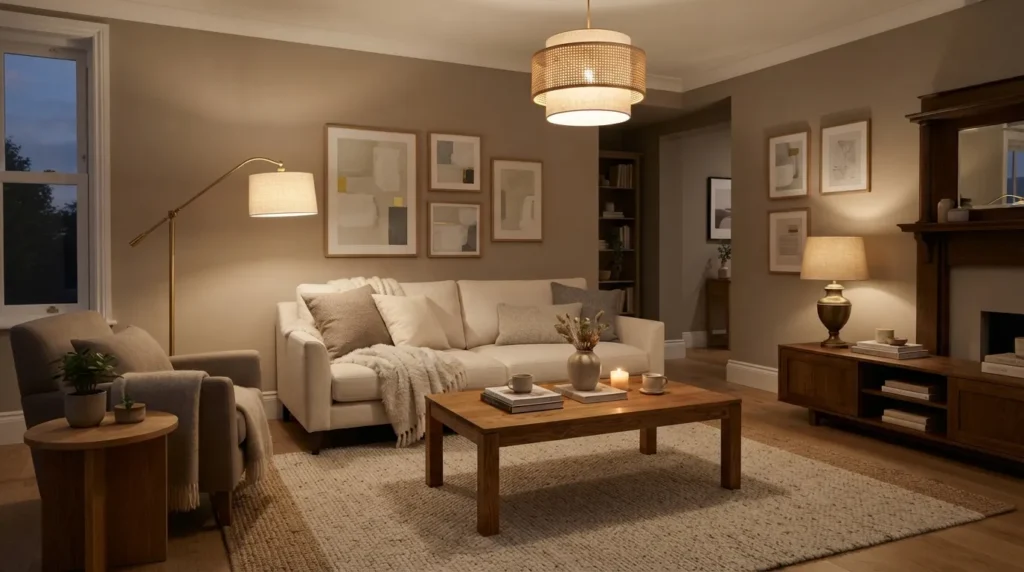
Elegant living rooms rarely rely on a single overhead light. Instead, they combine several sources at different heights.
A ceiling fixture provides general illumination. Floor and table lamps create pools of softer light. Wall sconces or accent lighting can highlight artwork or architectural details.
This layered approach gives you control over the atmosphere. Bright lighting can work for cleaning or entertaining, while lower levels can create a more relaxed evening environment.
Warm-toned bulbs are generally useful for creating a comfortable residential atmosphere, but the exact color temperature should suit the room and fixtures.
How To Style It
Start with your primary ceiling fixture.
Then add a floor lamp beside a sofa or reading chair.
Place a table lamp on a console, side table, or cabinet.
If the architecture allows, wall sconces can add an especially refined touch.
Avoid placing all light sources at the same height.
The fixtures themselves should complement the room. Brass can add warmth, black can provide contrast, and ceramic or fabric shades can soften the appearance.
Use dimmers where practical so the room can adapt to different activities and times of day.
5. Natural Wood Details
Quick Benefits
- Adds warmth
- Prevents neutral rooms from feeling cold
- Introduces organic texture
- Works with many styles
- Provides visual contrast
Why It Works
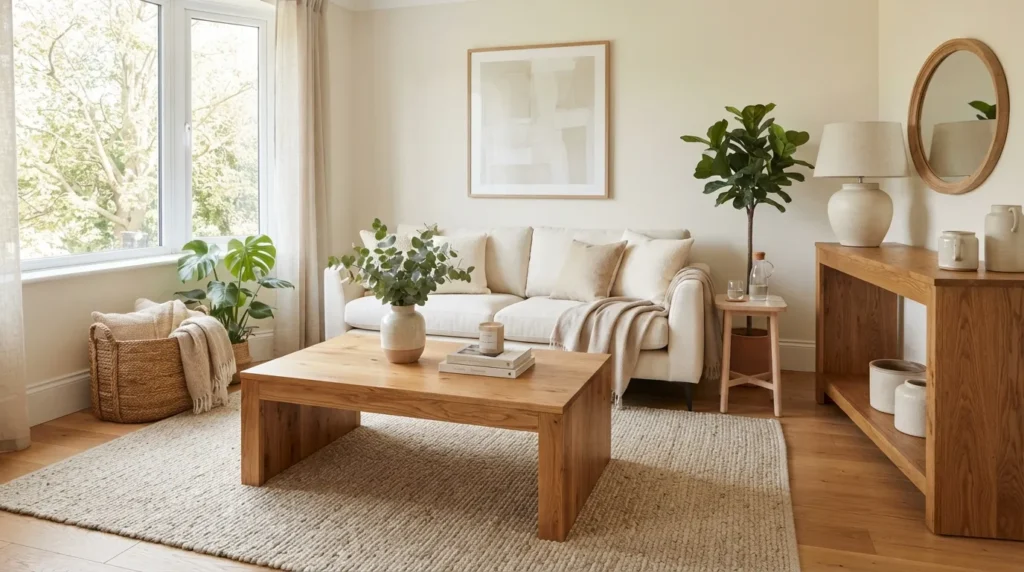
Natural wood is one of the easiest ways to make an elegant living room feel comfortable rather than overly formal.
Wood brings variation in grain, tone, and texture that manufactured surfaces often lack. A coffee table, console, side table, shelving, or exposed architectural detail can give a neutral room a stronger sense of character.
The key is coordination rather than exact matching.
A living room doesn’t need every wood piece to come from the same collection. In fact, slightly different wood tones can make the space feel more naturally collected.
Warm oak, walnut, ash, and medium-toned woods can all work depending on the surrounding colors.
How To Style It
Choose one primary wood tone for larger furniture.
Then repeat related wood tones in smaller pieces.
For example, pair a walnut coffee table with a lighter oak side table and a woven basket made from natural fibers.
If your room already has dark wood flooring, lighter furniture can create useful contrast.
Don’t hide beautiful wood grain beneath excessive accessories. Let the material become part of the room’s decoration.
Natural wood also pairs especially well with cream upholstery, linen fabrics, stone, ceramic, and greenery.
6. Refined Window Treatments
Quick Benefits
- Makes windows look finished
- Adds softness
- Can visually enhance ceiling height
- Improves privacy
- Complements elegant furniture
Why It Works
Window treatments are easy to overlook, but they can significantly change the perceived quality of a living room.
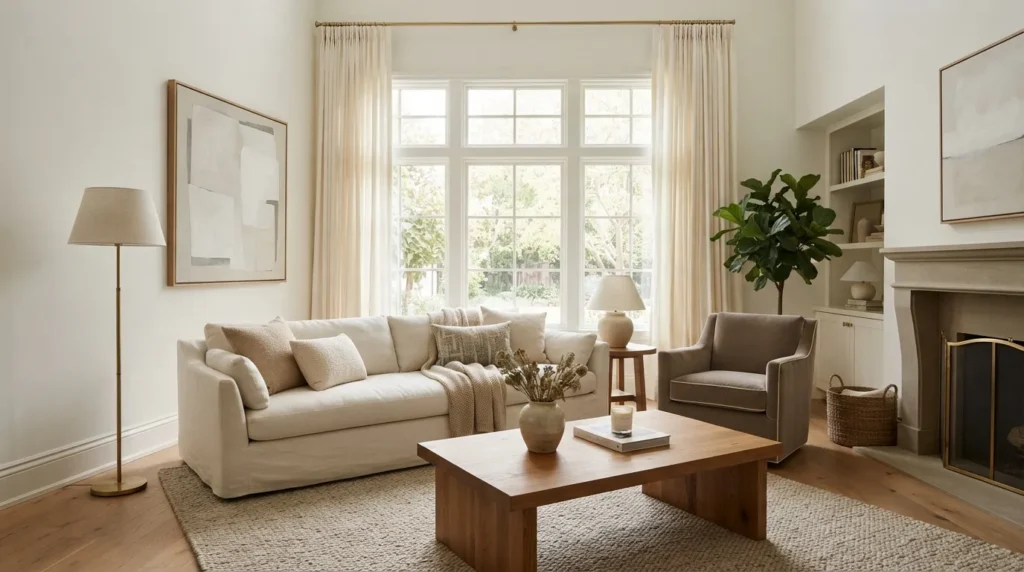
Curtains soften architectural lines and add another layer of texture. When installed thoughtfully, they can also make windows appear larger and ceilings feel taller.
For a comfortable yet elegant room, lightweight linen-look fabrics, cotton blends, or softly textured neutral curtains can work beautifully.
The goal isn’t necessarily heavy drapery. Simple, well-proportioned panels can have a greater impact than ornate treatments.
How To Style It
When appropriate, mount curtain hardware higher and wider than the window frame to create a more generous visual effect.
Choose curtains that complement the wall and upholstery rather than competing with them.
Warm white, ivory, beige, and soft taupe are versatile options.
Allow enough fabric for the curtains to appear full when closed.
If privacy is important, layer decorative curtains with appropriate shades or blinds.
Avoid curtains that stop awkwardly above the floor. Floor-length panels generally create a more finished appearance when the room allows for them.
7. Curated Art Displays
Quick Benefits
- Adds personality
- Creates a focal point
- Makes the room feel collected
- Supports the color palette
- Prevents neutral spaces from feeling generic
Why It Works
Artwork gives an elegant living room something that furniture alone can’t provide: personality.
A room can contain beautiful neutral furniture and still feel generic if there is nothing on the walls that reflects the people who live there.
The artwork doesn’t need to be expensive. What matters most is scale, placement, color, and how the piece interacts with the surrounding furniture.
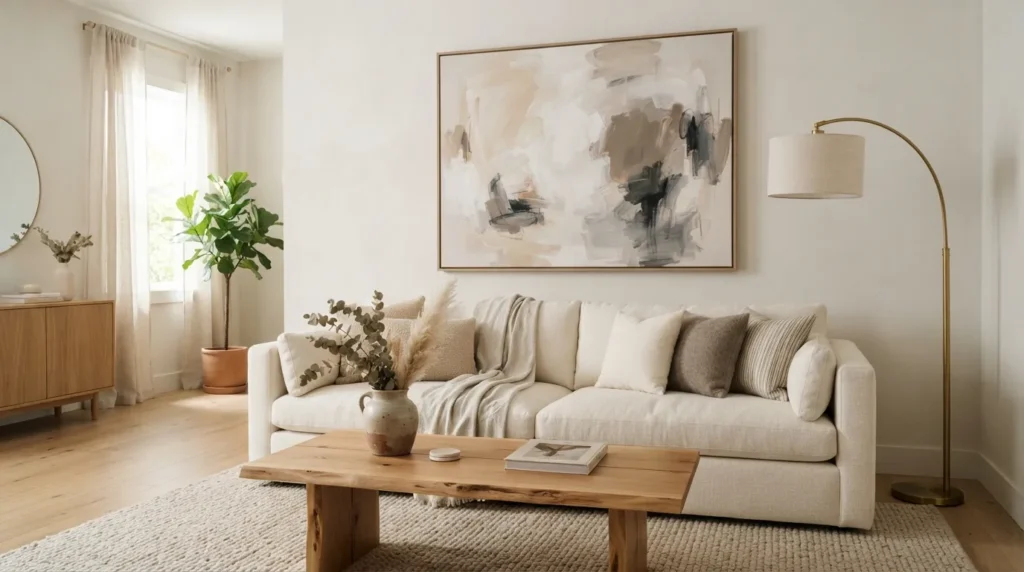
One large artwork can create a strong focal point, while a carefully arranged gallery wall can provide a more collected feeling.
How To Style It
Choose artwork that repeats one or two colors already present in the room.
For a neutral space, abstract landscapes, botanical artwork, photography, or subtle line drawings can all work.
Make sure the artwork is appropriately scaled for the wall and furniture beneath it.
A common mistake is choosing artwork that is too small for a large wall or sofa.
If using several pieces, keep some consistency in either the frames, color palette, subject matter, or spacing.
The goal is intentionality rather than perfect symmetry.
8. Elegant Everyday Accessories
Quick Benefits
- Adds personality
- Makes surfaces feel finished
- Keeps styling practical
- Creates visual layers
- Allows easy seasonal updates
Why It Works
Elegant decorating doesn’t mean filling every surface with expensive-looking objects. In fact, restraint often creates a more sophisticated result.
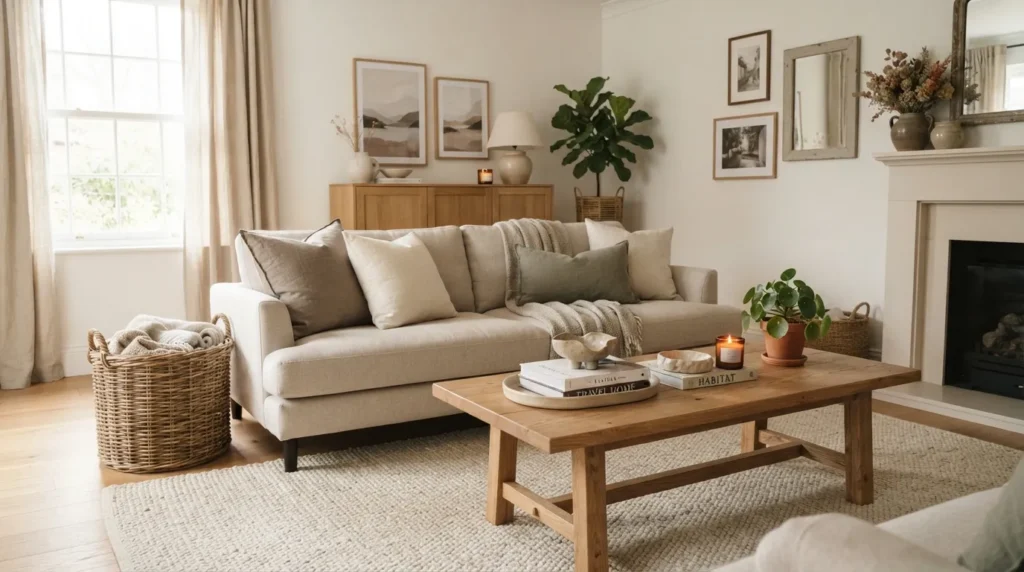
The best accessories usually combine beauty and function. A ceramic bowl can hold keys or remotes. A decorative tray can organize everyday objects. A woven basket can store blankets while adding texture.
This approach keeps the living room looking styled without making it feel like a showroom.
A few larger objects generally have more visual impact than dozens of tiny decorations.
How To Style It
Begin with practical pieces.
Place a tray on the coffee table, a lamp on a side table, and a basket near the sofa for throws.
Then add decorative layers.
Books, ceramic vessels, candles, framed photographs, and greenery can introduce personality.
Vary the height of objects so surfaces don’t appear completely flat.
Leave some empty space. Negative space is part of good styling and allows your favorite objects to stand out.
Rotate smaller accessories seasonally rather than constantly adding more.
9. Balanced Furniture Layout
Quick Benefits
- Improves conversation
- Makes movement easier
- Helps the room feel organized
- Creates visual balance
- Makes furniture more functional
Why It Works
No amount of beautiful furniture can compensate for a poor layout.
A comfortable living room should make it easy for people to sit, talk, move around, and reach everyday surfaces.
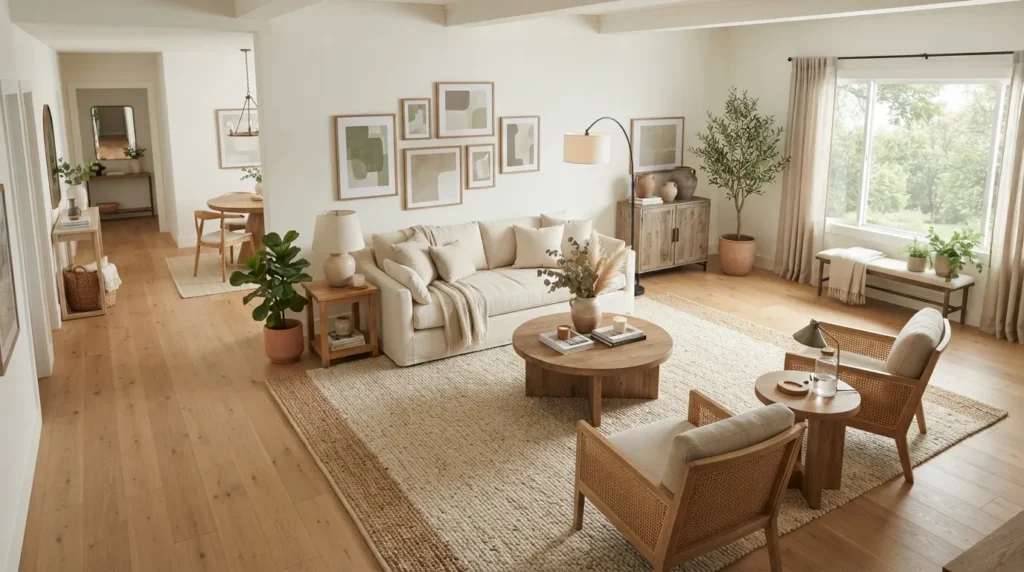
Instead of pushing every piece against the walls, consider creating a defined seating arrangement when the room allows it.
The coffee table should be accessible from the primary seating, while side tables should provide convenient places for drinks and lamps.
The exact spacing depends on the room, furniture dimensions, and walkways. Function should always come before following a rigid decorating formula.
How To Style It
Start by identifying the room’s focal point. This might be a fireplace, television, large window, artwork, or architectural feature.
Arrange the main seating around that focal point.
Then add a coffee table and side tables based on how people will actually use them.
Maintain clear pathways through the room.
If the space is large, use an area rug to define the seating zone.
If the room is small, choose furniture with appropriate scale rather than trying to fit too many pieces.
A simple floor plan sketch can help before moving heavy furniture.
10. Soft Metallic Accents
Quick Benefits
- Adds subtle sophistication
- Creates contrast
- Reflects light
- Works with neutral palettes
- Updates simple furniture
Why It Works
Metallic finishes can add elegance without requiring dramatic color.
The trick is using them selectively. Brass, bronze, brushed nickel, and softer champagne finishes can all introduce a small amount of shine.
In a comfortable living room, metallic accents work best as supporting details rather than the main feature.
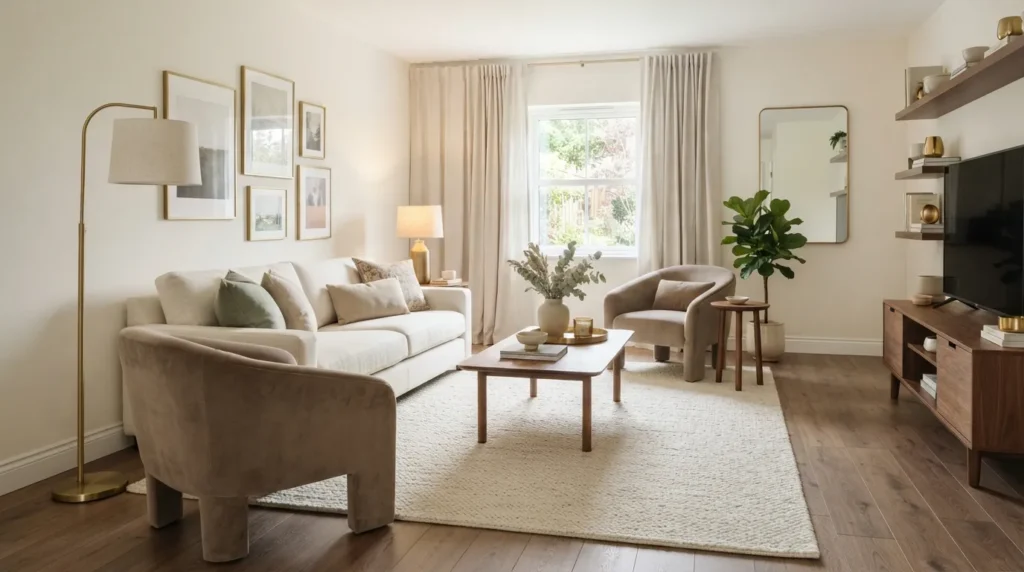
A brass lamp, bronze picture frame, or metallic side table can catch light and add refinement without making the space feel formal.
How To Style It
Choose one dominant metal finish and repeat it several times.
For example, pair a brass floor lamp with brass picture frames and small decorative hardware.
If you prefer a cooler palette, brushed nickel or silver can work beautifully.
Mixing metals is also possible, particularly when one finish is clearly dominant.
Avoid using metallic objects on every surface.
A few carefully placed accents will generally look more sophisticated than a room filled with shiny finishes.
11. Fresh Organic Elements
Quick Benefits
- Brings life into the room
- Adds natural color
- Softens formal furniture
- Improves visual variety
- Complements neutral palettes
Why It Works
Plants and fresh flowers can make a carefully decorated living room feel immediately more relaxed.
Organic elements introduce irregular shapes, natural color, and texture. They also prevent neutral interiors from becoming visually predictable.
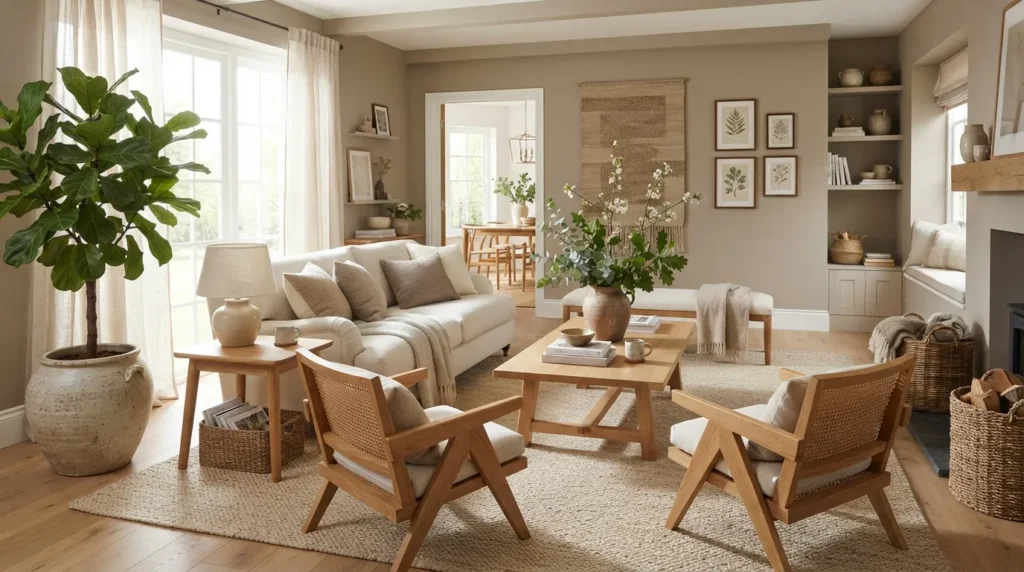
You don’t need a jungle of houseplants. One substantial plant in an attractive planter can have more impact than several tiny pots scattered around the room.
Fresh branches or seasonal flowers can provide another option if you prefer changing arrangements throughout the year.
How To Style It
Place a larger plant near a window where its light requirements can be met.
Use ceramic, terracotta, woven, or stone planters that complement the room’s materials.
For coffee tables and consoles, try small arrangements of branches or seasonal flowers.
Choose greenery that fits your ability to maintain it. A beautiful plant that cannot thrive in the room will quickly become more work than decoration.
Natural elements can also include woven baskets, stone accessories, dried branches, and wood.
The result should feel fresh and organic rather than overly coordinated.
Related Articles
- 10 Small Living Room Ideas That Make the Space Feel Bigger
- How to Make a Living Room Look More Expensive
- 10 Neutral Living Room Ideas for a Timeless Home
- 10 Cozy Living Room Decor Ideas for Everyday Comfort
- How to Style a Coffee Table Like an Interior Designer
Frequently Asked Questions
How do you make a living room look elegant but comfortable?
Start with comfortable furniture in refined shapes, then layer neutral colors, quality-looking textures, warm lighting, natural wood, and carefully chosen accessories. Avoid making everything overly formal or perfectly matched. A mixture of tailored furniture and relaxed textiles usually creates a room that feels polished while remaining practical for everyday living.
What colors make a living room look elegant?
Warm whites, cream, taupe, beige, soft gray, muted green, dusty blue, and warm brown can all create an elegant foundation. The most important factor is layering. Combining several related shades and textures usually produces more depth than relying on one color throughout the entire room.
How can I make my living room look expensive without spending a lot?
Focus on scale, lighting, textiles, and organization. Properly sized curtains, a large area rug, coordinated pillows, attractive lamps, and uncluttered surfaces can make a noticeable difference. You can also use natural materials such as wood, linen-look fabrics, woven baskets, and ceramics to add texture without relying on expensive decorative pieces.
Should living room furniture match?
No. Matching furniture sets can sometimes make a room feel predictable. Instead, choose pieces that share complementary proportions, colors, or materials. A neutral sofa with contrasting accent chairs, different wood tones, and coordinated lighting can create a more collected and sophisticated appearance.
How many decorative items should be in a living room?
There is no fixed number. The right amount depends on the size of the room and the surfaces available. Start with practical pieces, then add a few decorative objects in different heights and textures. Leave some surfaces partially empty so the room doesn’t feel crowded.
What type of lighting makes a living room cozy?
A combination of ceiling lighting, floor lamps, table lamps, and accent lighting usually creates the most flexible atmosphere. Use multiple sources rather than relying entirely on one overhead fixture. Dimmable lighting can also help you adjust the room for reading, entertaining, relaxing, or everyday activities.
How do you add warmth to a neutral living room?
Natural wood, woven materials, warm lighting, textured rugs, linen fabrics, plants, and warmer neutral shades can all make a neutral living room feel more inviting. Adding contrast through medium or dark wood tones is especially effective when the walls and upholstery are very light.
Conclusion
Comfortable elegance is less about buying expensive furniture and more about making thoughtful choices.
Start with a practical furniture layout that supports conversation and everyday movement. Choose seating that feels good to use while maintaining a refined silhouette. Then build the room with layered neutral colors, a properly sized rug, warm lighting, natural wood, and soft window treatments.
From there, add personality through artwork, plants, ceramics, books, and a few metallic accents.
The most successful elegant living rooms aren’t necessarily the most decorated ones. They are the rooms where every major piece has a purpose and where comfort has been considered alongside appearance.
You don’t have to change everything at once. Try replacing one tired light fixture, adding a larger rug, introducing natural wood, or rearranging the furniture before investing in major pieces. Small changes can reveal what your room is missing.
Most importantly, let the room work for the way you actually live. A beautiful sofa that nobody wants to sit on isn’t a successful decorating choice, and a perfectly styled coffee table isn’t useful if it leaves no room for everyday life.
Aim for a living room that feels polished when guests arrive and genuinely comfortable when everyone is home.
That balance is what makes comfortable elegance last.