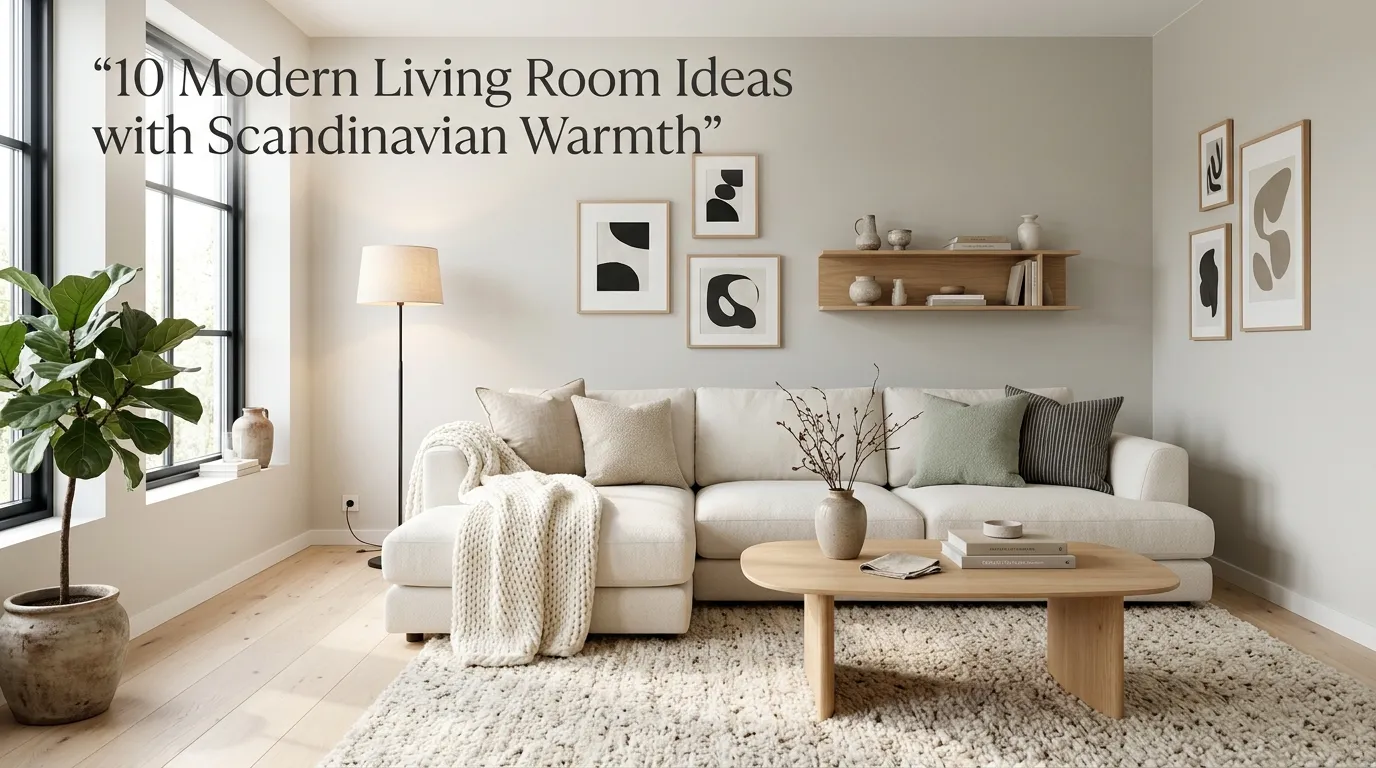
10 Modern Living Room Ideas with Scandinavian Warmth
A modern living room can look polished without feeling cold. That balance is where Scandinavian-inspired decorating becomes especially appealing. Clean lines, natural materials, soft textiles, practical furniture, and warm neutrals create a room that feels organized while still inviting enough for everyday life.
The challenge is that “modern” decorating can sometimes lean too far toward hard surfaces, stark white walls, or furniture that looks beautiful but does not feel comfortable. Scandinavian warmth takes a different approach. It keeps the simplicity of modern design while adding wood, layered textures, soft lighting, organic shapes, and relaxed seating.
If your living room feels unfinished, overly plain, or visually disconnected, a few thoughtful changes can make a noticeable difference. You do not need to replace every piece of furniture. Often, the right combination of materials and proportions creates more impact than buying more decor.
In my experience, one of the easiest ways to achieve this look is to begin with the foundation. Think about the sofa, rug, coffee table, curtains, and lighting first. Once those elements work together, smaller details such as cushions, baskets, artwork, and greenery become much easier to coordinate.
These ideas focus on creating a comfortable modern room that works for real American homes, from compact apartments to open-concept family spaces. Each approach can also be adapted to different budgets and existing furniture.
Whether you prefer a pale neutral palette or a richer combination of beige, brown, cream, and charcoal, the goal remains the same: create a living room that feels calm, functional, warm, and effortlessly put together.
Table of Contents
1. Warm Wood Foundation
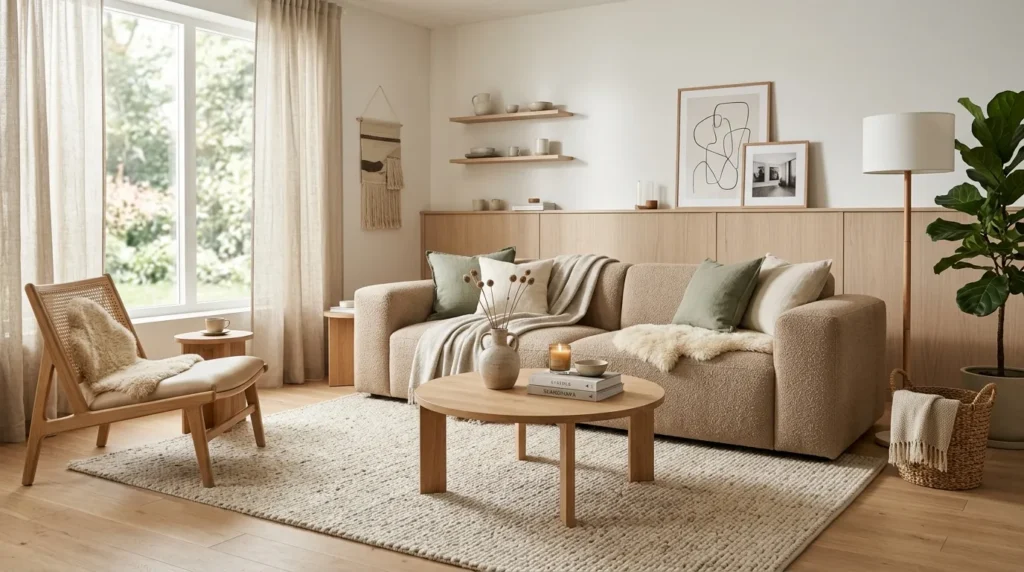
Use natural wood furniture and architectural details to soften a streamlined modern living room.
2. Soft Neutral Palette
Combine creamy neutrals, beige, taupe, and warm gray for a peaceful Scandinavian-inspired backdrop.
3. Textured Layering
Bring depth to simple furniture through wool, linen, boucle, cotton, and other tactile materials.
4. Cozy Low Seating
Create a relaxed atmosphere with comfortable seating, simple silhouettes, and an inviting furniture arrangement.
5. Organic Curved Shapes
Balance modern straight lines with rounded coffee tables, lamps, chairs, and decorative forms.
6. Minimal Fireplace Style
Turn the fireplace into a calm architectural focal point with restrained materials and simple styling.
7. Scandinavian Gallery Wall
Add personality through carefully selected artwork arranged around a cohesive color story.
8. Natural Greenery
Use indoor plants and organic elements to introduce freshness without overwhelming the clean design.
9. Layered Ambient Lighting
Combine ceiling fixtures, floor lamps, table lamps, and candlelight-inspired accents for warmth.
10. Calm Open Layout
Arrange furniture with breathing room so the living room feels spacious, practical, and visually balanced.
1. Warm Wood Foundation
Quick Benefits
- Adds warmth to clean modern furniture
- Creates natural visual contrast
- Works with neutral color schemes
- Makes a room feel more inviting
- Complements Scandinavian simplicity
Why It Works
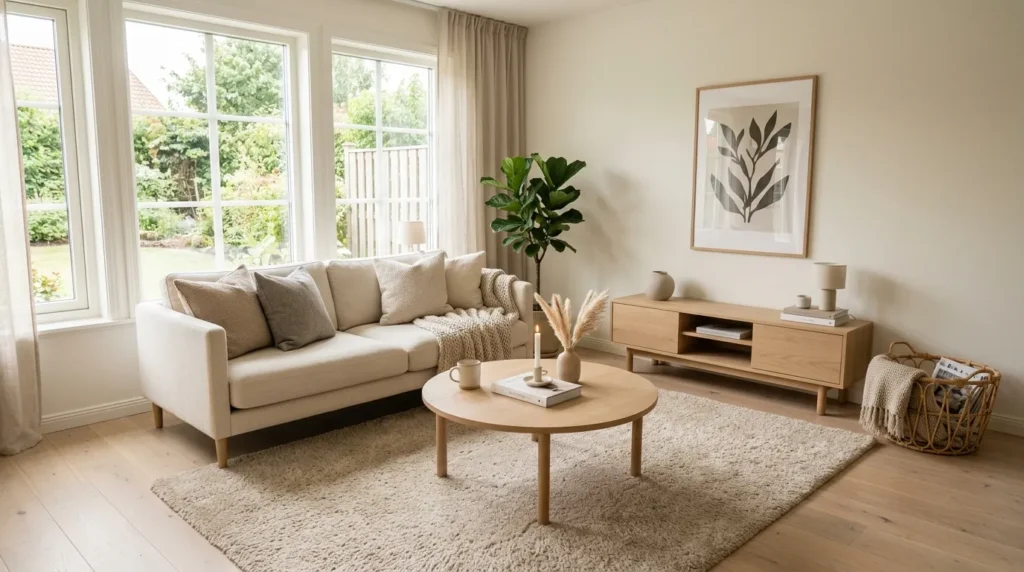
Natural wood is one of the easiest ways to prevent a modern living room from feeling sterile. Scandinavian interiors frequently use wood because it introduces warmth, texture, and visual character without adding unnecessary ornamentation. Pale oak, ash, maple, and warm walnut tones can all work beautifully depending on the existing finishes in your home.
A wood coffee table can soften a large contemporary sofa, while a wooden media console can give an otherwise minimal wall more depth. The beauty comes from allowing the grain and natural variation to remain visible rather than covering every surface with accessories.
A mistake many homeowners make is matching every wood finish perfectly. A room often looks more collected when two or three complementary wood tones appear naturally throughout the space.
How To Style It
Start with one substantial wood element, such as a coffee table, console, side table, or exposed shelving. Then repeat the material in smaller doses through picture frames, trays, stools, or decorative bowls.
For a light Scandinavian atmosphere, pair pale oak with cream upholstery and warm white walls. If your room already has darker floors, walnut or medium-toned wood can create a richer look.
Keep the furniture silhouettes simple. A rectangular oak coffee table with gently rounded edges can feel modern without appearing severe. Add a woven basket nearby for another natural texture.
If you rent, use freestanding furniture rather than permanent wood treatments. A substantial wooden console can create much of the same visual warmth without altering the room itself.
2. Soft Neutral Palette
Quick Benefits
- Creates a calm backdrop
- Makes natural materials stand out
- Keeps modern spaces visually light
- Makes seasonal decorating easier
- Helps small rooms feel more open
Why It Works
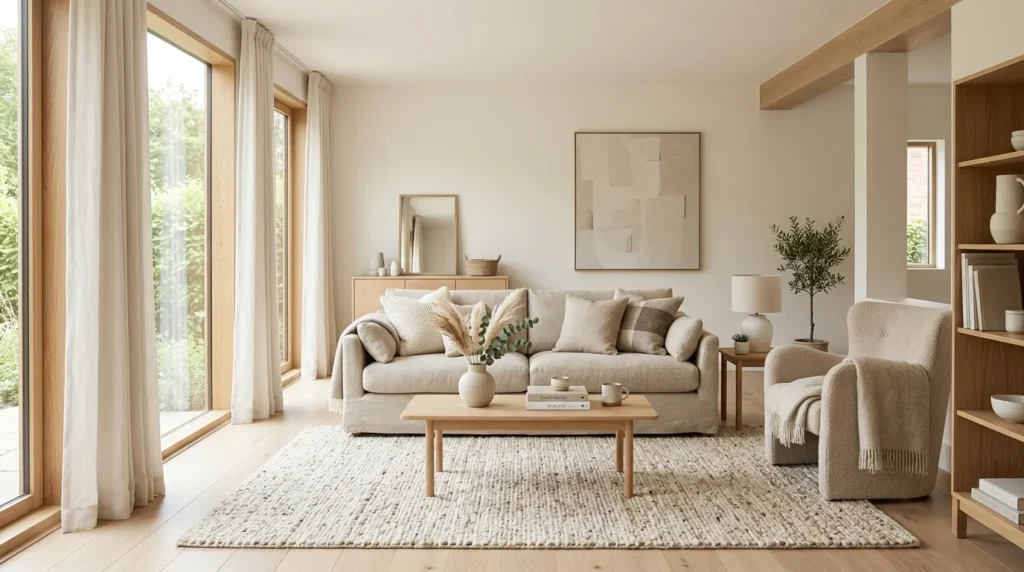
Scandinavian-inspired rooms often rely on restrained colors, but restrained does not mean completely white. Warm cream, oatmeal, sand, mushroom, taupe, soft beige, and muted gray can create considerably more depth while preserving the airy quality associated with Nordic interiors.
The key is temperature. Cool gray paired with bright white can sometimes make a room feel flat or chilly. Warm neutrals create a softer transition between walls, upholstery, flooring, and accessories.
A neutral palette also gives you flexibility. Instead of relying on bold color to create interest, you can build visual variation through texture, shape, and material. A linen curtain beside a boucle chair and a wool rug can feel much richer than a room filled with colorful accessories.
How To Style It
Choose one dominant neutral for the room and two or three supporting shades. For example, warm white walls can work with a beige sofa, oatmeal rug, medium wood furniture, and muted taupe cushions.
Do not make every surface the same shade. Slight differences create dimension. A cream sofa against a warmer ivory wall looks more sophisticated than trying to match both exactly.
For a family living room, consider slightly darker upholstery or washable neutral textiles. A Scandinavian-inspired space can still be practical.
If you want a little contrast, introduce charcoal through picture frames, a floor lamp, or a small accent chair. Keep the darker elements intentional rather than scattering black throughout the room.
3. Textured Layering
Quick Benefits
- Adds depth without clutter
- Makes neutral rooms feel richer
- Creates a comfortable atmosphere
- Helps simple furniture feel intentional
- Works beautifully in every season
Why It Works
When a room uses mostly neutral colors, texture becomes one of the most important decorating tools. Without it, cream, beige, and white surfaces can blend together and leave the room looking unfinished.
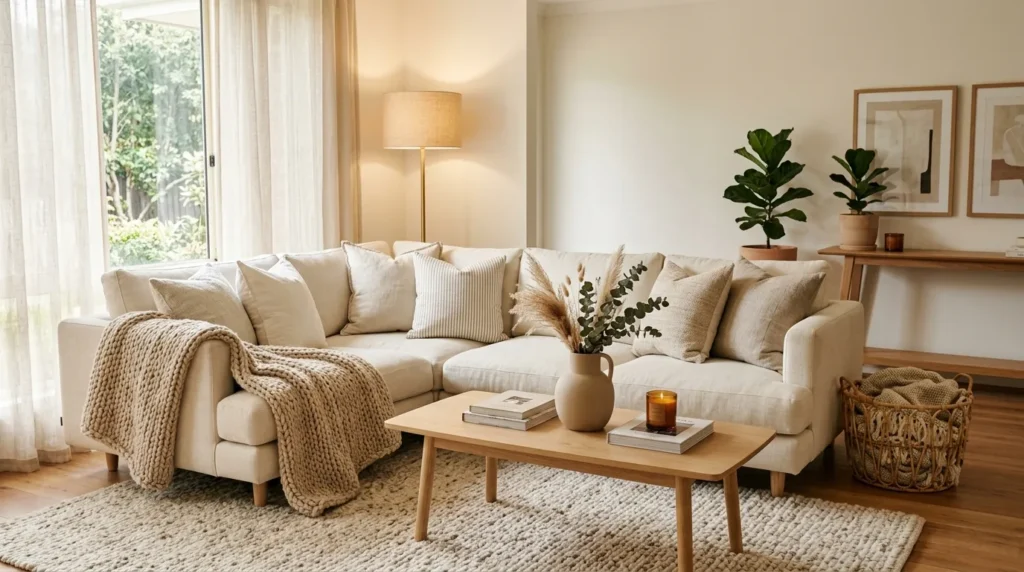
Scandinavian decorating handles this beautifully by combining tactile materials. Think chunky wool, woven fibers, linen, cotton, soft rugs, natural wood, matte ceramics, and subtly nubby upholstery.
The important distinction is that texture does not require excessive decoration. A single woven throw across a sofa can add more character than a collection of small objects spread across the room.
I’ve noticed that textured rooms tend to feel more inviting because the eye has several surfaces to explore. The space remains visually simple while becoming more interesting up close.
How To Style It
Begin with the floor. A wool-look or textured area rug immediately adds softness beneath modern furniture. From there, layer a few fabrics across the seating area.
Try linen or cotton cushions in different weaves rather than using five identical pillows. Add a soft throw over one corner of the sofa instead of folding several blankets across the furniture.
Natural materials can continue onto the coffee table. A matte ceramic vase, wooden tray, stone bowl, or woven container adds subtle contrast.
Keep patterns understated. Small checks, thin stripes, simple geometric designs, and organic patterns can work well, particularly when their colors remain within the room’s neutral palette.
The result should feel tactile rather than busy.
4. Cozy Low Seating
Quick Benefits
- Makes the room feel relaxed
- Encourages conversation
- Complements modern architecture
- Creates a grounded appearance
- Works well with large rugs
Why It Works
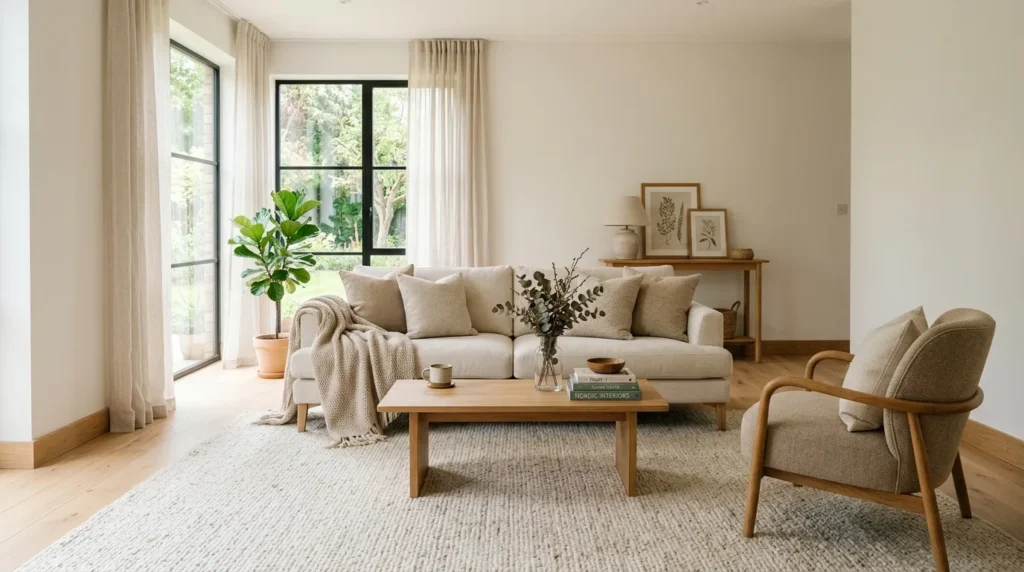
Comfort is essential to Scandinavian-inspired living rooms. A beautiful sofa loses much of its appeal if nobody wants to sit on it. Low-profile furniture helps create the relaxed, grounded feeling associated with this style while maintaining a modern silhouette.
A streamlined sofa with generous cushions can become the anchor of the room. Pairing it with a low coffee table creates a horizontal visual rhythm that makes the space feel calm rather than overly formal.
This approach works particularly well in rooms with large windows, because lower furniture leaves more of the wall and window area visible. The result can feel open without requiring an enormous floor plan.
The goal is not to fill the room with oversized furniture. Instead, choose fewer pieces that provide genuine comfort and leave enough circulation space around them.
How To Style It
Position the sofa so it relates naturally to the room’s main focal point. That could be a fireplace, television, large window, artwork, or conversation area.
A large area rug can connect the sofa, coffee table, and accent chairs into one cohesive zone. Ideally, the main seating pieces have enough of their footprint on the rug to look connected rather than scattered.
Choose accent chairs with simple profiles. A curved lounge chair, wooden-framed chair, or upholstered occasional chair can add another seating option without making the room feel crowded.
For smaller living rooms, consider a compact sofa paired with one movable chair instead of forcing a second full-size sofa into the space.
5. Organic Curved Shapes
Quick Benefits
- Softens straight architectural lines
- Creates visual movement
- Adds contemporary character
- Makes furniture arrangements feel less rigid
- Pairs well with natural materials
Why It Works
Modern interiors often feature strong horizontal and vertical lines. While those lines create a crisp appearance, too many can make a room feel rigid. Rounded forms provide a simple counterpoint.
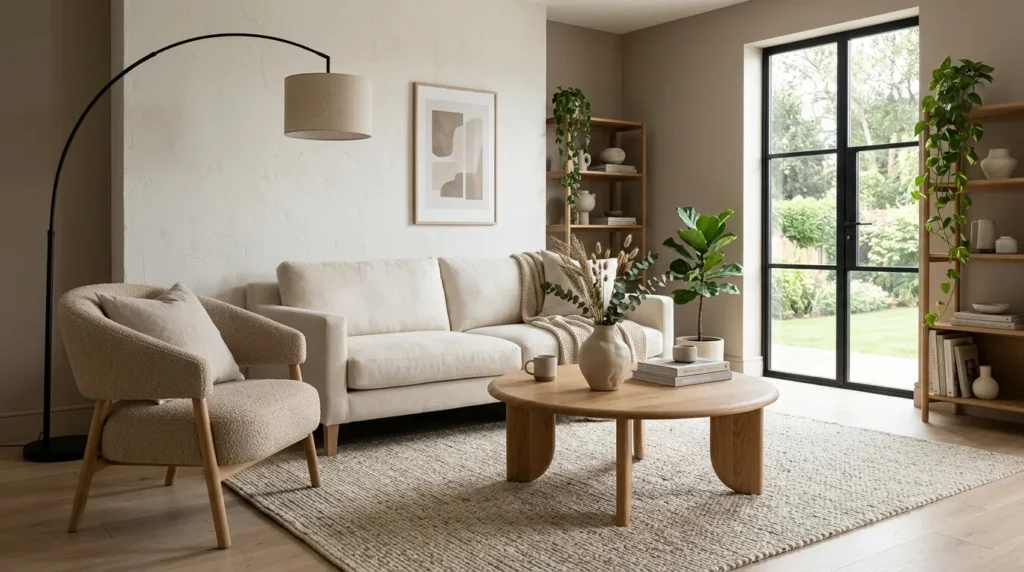
A circular coffee table, curved chair, arched floor lamp, rounded mirror, or sculptural vase can introduce softness without changing the overall modern aesthetic.
This is particularly effective in Scandinavian-inspired spaces because the organic shapes work naturally with wood, linen, wool, and other relaxed materials. The result feels contemporary but approachable.
You do not need curves everywhere. In fact, using too many rounded pieces can make the design feel intentionally themed. One substantial curved element and a few smaller echoes are often enough.
How To Style It
If your sofa has a straight, rectangular silhouette, try a round or oval coffee table. This creates contrast while improving movement around the seating area.
Another option is a curved accent chair positioned beside a straight sofa. Add a rounded floor lamp or circular artwork nearby to repeat the shape without overdoing it.
Look for natural curves rather than highly decorative forms. A rounded oak table, softly arched chair, or organic ceramic vase fits the aesthetic more naturally than elaborate sculptural pieces.
Leave some negative space around curved furniture. The shape becomes more noticeable when it has room to breathe.
6. Minimal Fireplace Style
Quick Benefits
- Creates a strong focal point
- Adds architectural interest
- Supports cozy gatherings
- Works with neutral interiors
- Keeps the room visually uncluttered
Why It Works
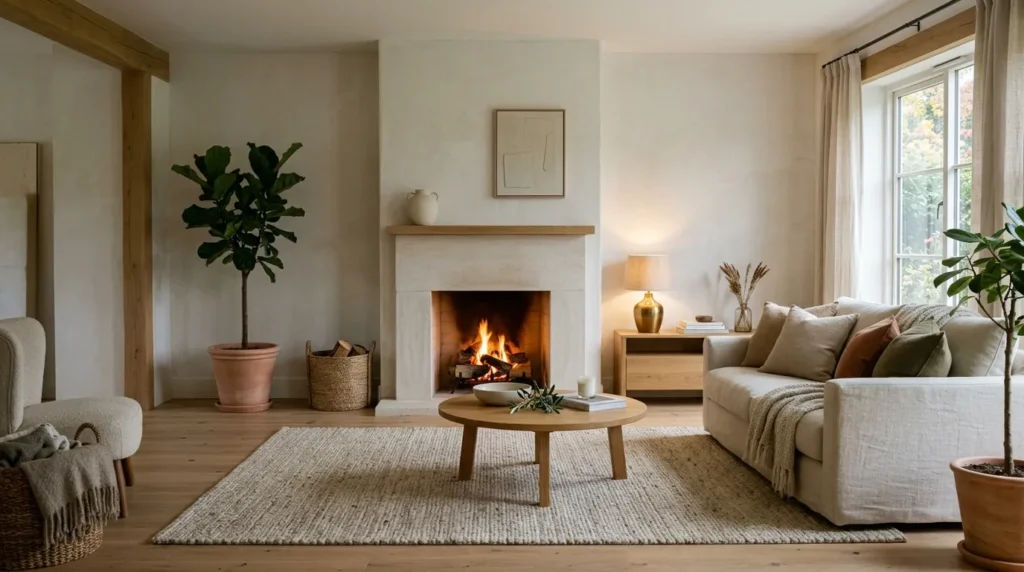
A fireplace naturally attracts attention, so it does not require a heavily decorated mantel. Scandinavian-inspired styling often lets architectural features speak for themselves.
If your fireplace has a simple surround, treat it as part of the room’s overall composition rather than an opportunity to display dozens of objects. Natural stone, light plaster, brick, or warm-toned tile can complement the relaxed modern aesthetic.
Even homes without a traditional fireplace can borrow this idea. A media wall, low console, or large artwork can serve as the central focal point.
The strongest arrangement usually has one dominant feature and a few supporting details. This creates visual calm while giving the eye somewhere to settle.
How To Style It
Keep the mantel relatively open. A single ceramic vessel, small branch arrangement, or framed artwork can provide enough decoration.
For a more contemporary look, pair a simple fireplace surround with a low wood console and minimal accessories. Avoid arranging every object at the same height. A little variation keeps the composition natural.
If the fireplace is surrounded by white or light materials, add warmth through wood furniture, woven textiles, and soft lighting nearby.
For safety, follow the manufacturer’s clearance requirements for fireplaces and heat-producing appliances. Decorative choices always come after safe installation and proper operation.
7. Scandinavian Gallery Wall
Quick Benefits
- Adds personality to neutral rooms
- Creates a personalized focal point
- Uses wall space effectively
- Works with modern furniture
- Can be updated gradually
Why It Works
Minimal does not mean impersonal. Artwork is one of the best ways to give a Scandinavian-inspired living room a sense of identity.
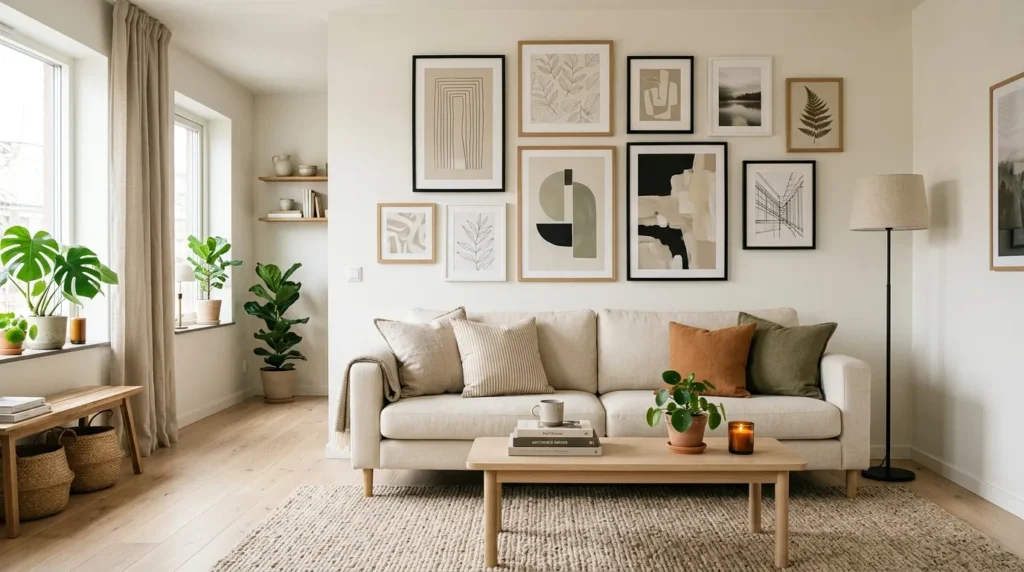
Instead of creating a gallery wall filled with unrelated colors and styles, use a limited visual language. Black-and-white photography, muted landscapes, simple line drawings, abstract forms, and natural botanical imagery can all complement a warm neutral interior.
The frames also matter. Light oak, natural wood, white, and slim black frames can work beautifully depending on the room. The goal is cohesion rather than perfect matching.
A thoughtfully arranged gallery wall can also make a simple sofa feel more intentional. The artwork provides vertical interest while the furniture keeps the lower portion of the room grounded.
How To Style It
Start by choosing three to seven pieces with a shared color connection. Lay them on the floor first and experiment with spacing before putting anything on the wall.
For a relaxed look, use slightly different frame sizes. A perfectly symmetrical arrangement feels more formal, while varied dimensions create a collected appearance.
Keep enough breathing room between the artwork and nearby furniture. The gallery should feel connected to the seating area without visually sitting on top of it.
If you prefer a quieter approach, use one oversized piece above the sofa instead. A large neutral landscape or abstract print can make the same impact with fewer visual elements.
8. Natural Greenery
Quick Benefits
- Adds freshness to neutral interiors
- Introduces organic color
- Softens hard furniture edges
- Brings height into the room
- Complements natural materials
Why It Works
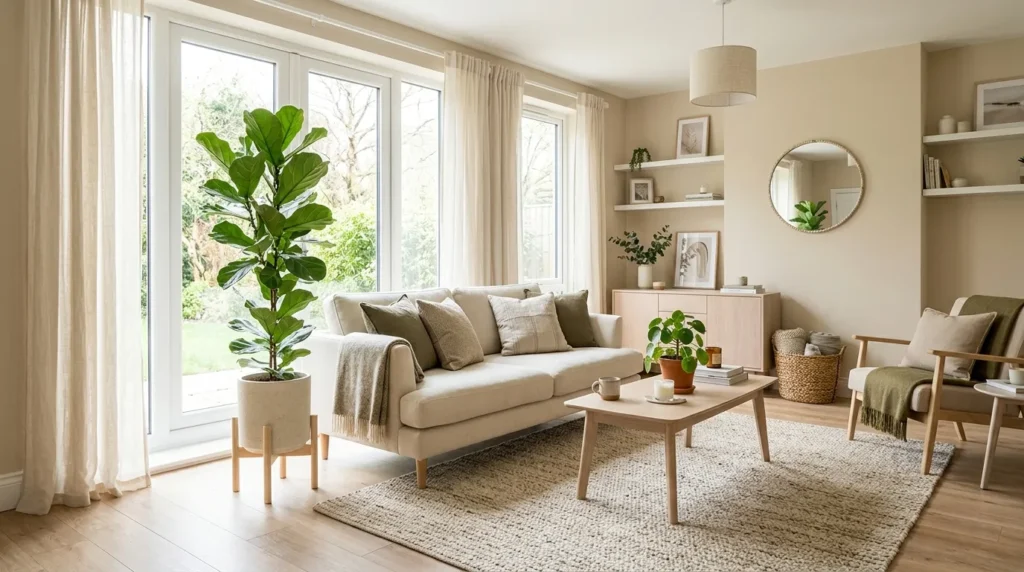
Plants add an organic quality that works exceptionally well with Scandinavian-inspired decorating. Their irregular shapes contrast with clean furniture while their green tones provide just enough color to keep a neutral room from looking flat.
The best part is that greenery does not require a major redesign. One tall plant can fill an empty corner, while a small plant can bring life to a bookshelf or console.
If maintaining live plants is difficult, choose varieties suited to your home’s available light and your routine. The most beautiful plant is one that can realistically thrive in its location.
Greenery also works with other natural materials. A leafy plant beside an oak cabinet, woven basket, and linen sofa creates a cohesive organic composition.
How To Style It
Use plant height strategically. A taller floor plant can balance a low sofa or fill a visually empty corner. Smaller plants work well on shelves, side tables, and consoles.
Choose simple planters in ceramic, stone-look finishes, terracotta, or woven materials. Avoid filling every surface with plants. One or two strong placements usually create more impact than a crowded collection.
If the room has abundant greenery outside the windows, echo those colors indoors with muted olive, sage, or natural green accessories.
For artificial greenery, prioritize realistic shapes and restrained placement. The goal is an organic accent rather than a decorative theme.
9. Layered Ambient Lighting
Quick Benefits
- Makes evenings feel warmer
- Creates visual depth
- Reduces dependence on one overhead fixture
- Highlights architectural details
- Improves the room’s atmosphere
Why It Works
Lighting can completely change the feeling of a living room. Even an expertly furnished space can feel uncomfortable when it relies entirely on a bright ceiling fixture.
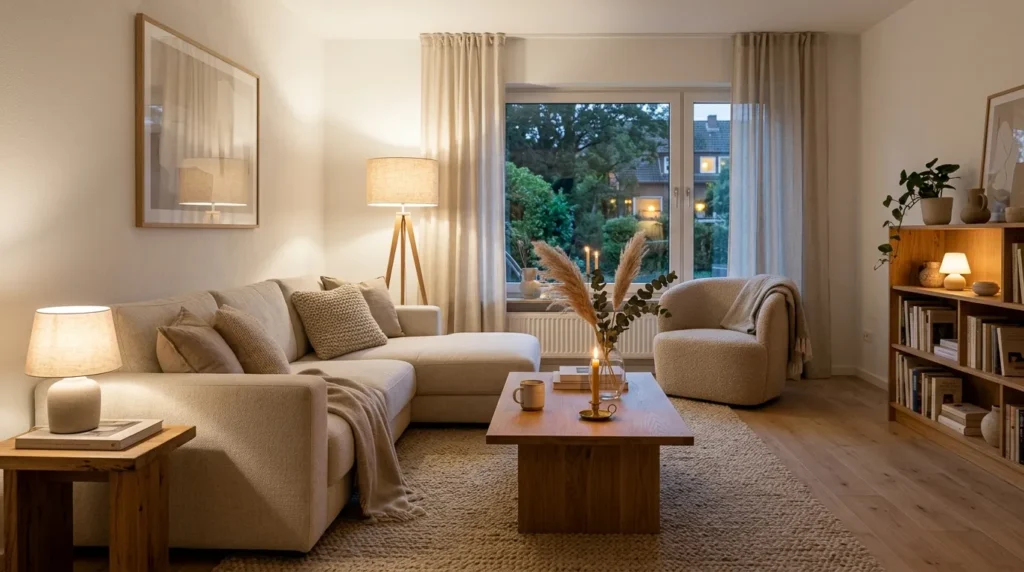
Scandinavian interiors place particular value on cozy illumination, especially during darker seasons. Multiple low-level light sources create a softer environment and allow you to adjust the room for different activities.
Think of lighting as a layer rather than a single object. A ceiling fixture provides general illumination, while floor lamps, table lamps, wall lights, and smaller accent lights create localized pools of warmth.
This also gives the room flexibility. Bright light can support cleaning or reading, while softer illumination can create a more relaxed atmosphere for an evening at home.
How To Style It
Aim for at least three lighting points when the room allows. A floor lamp beside a sofa can provide reading light, while a table lamp on a console adds a warm glow farther across the room.
Choose fixtures with simple shapes and materials such as wood, linen, frosted glass, or matte metal. These finishes integrate naturally with Scandinavian-inspired furniture.
Avoid positioning every lamp on one side of the room. Spread illumination across the seating area so the room feels balanced.
Use dimmable fixtures where possible. Being able to adjust brightness is particularly useful in a multifunctional living room.
Candles can also provide a cozy decorative glow when used safely. Keep them away from curtains, upholstery, children, pets, and other flammable materials.
10. Calm Open Layout
Quick Benefits
- Makes circulation easier
- Gives furniture room to breathe
- Supports conversation
- Helps small rooms feel less crowded
- Creates a polished modern appearance
Why It Works
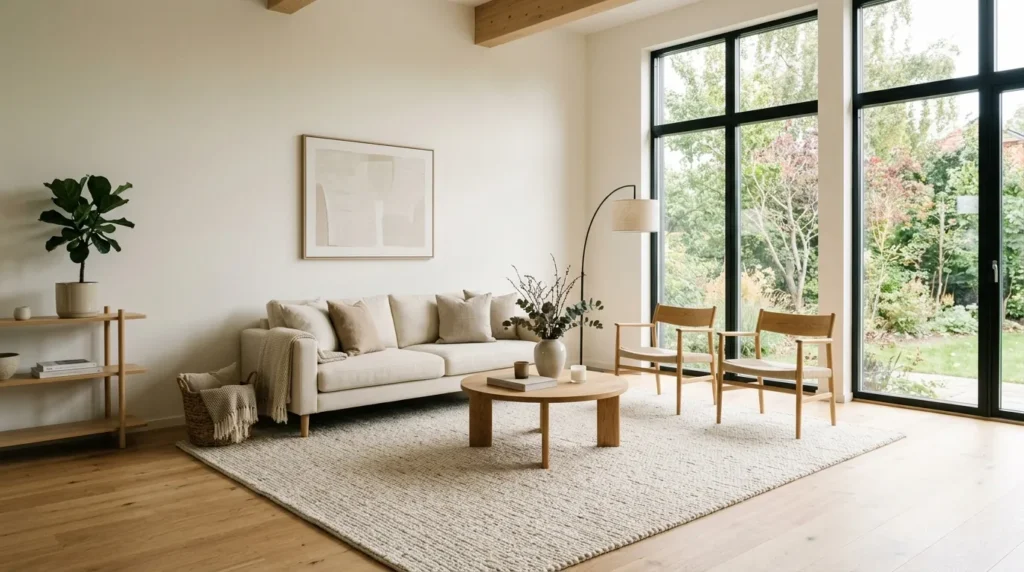
One of the most important parts of a Scandinavian-inspired living room is not a particular piece of furniture. It is the space between the furniture.
A room can contain beautiful objects and still feel uncomfortable when everything is pushed together. Leaving intentional negative space allows each piece to contribute to the overall design.
Open layouts also support everyday life. People can walk through the room without navigating around unnecessary furniture, and seating can remain focused on conversation rather than simply lining the walls.
A common mistake is pushing every piece against the perimeter to create more open floor space in the center. In many rooms, pulling the sofa slightly away from the wall and grounding it with a rug creates a more intimate and finished arrangement.
How To Style It
Start with the largest piece, usually the sofa. Place it in relation to the room’s focal point and then build outward.
Use the area rug to define the seating zone. Place the coffee table within comfortable reach while maintaining enough walking space around it.
Add one or two accent chairs where they improve conversation rather than simply filling an empty corner. A side table can connect the chair to the rest of the arrangement.
Keep pathways clear between major entrances, hallways, windows, and frequently used furniture. The room should feel effortless to move through.
Before buying new pieces, try rearranging what you already own. Sometimes the warm, modern living room you want is hidden inside your existing layout.
Creating Scandinavian Warmth on a Realistic Budget
A Scandinavian-inspired living room does not require an expensive furniture overhaul. In fact, the style works especially well when you focus on a few high-impact changes.
Start by evaluating the room as it exists. Look at the sofa, flooring, wall color, natural light, and largest furniture pieces. These elements establish the foundation, so there is little value in buying small accessories before deciding whether the larger pieces work together.
If the sofa is comfortable but visually plain, add a textured rug, a few neutral cushions, and a soft throw. If the room lacks warmth, introduce wood through a coffee table or console. If the walls feel empty, artwork can create a focal point without changing the furniture.
Lighting is another relatively simple upgrade. Adding one floor lamp and one table lamp can change the atmosphere considerably.
When shopping for decor, think in terms of materials rather than trends. Natural wood, linen, wool-look textiles, woven fibers, ceramic, glass, and stone-inspired finishes have enough versatility to remain useful as your style evolves.
A good rule is to buy slowly. Live with each change for a few days before adding another. This prevents the room from becoming crowded and helps you recognize which elements genuinely improve the space.
How To Mix Scandinavian Warmth With Modern Style
The two styles complement each other because they share an appreciation for simplicity. The difference is that modern interiors can sometimes emphasize sleek surfaces and sharper geometry, while Scandinavian decorating adds softness through natural materials and comfort.
To combine them successfully, allow one style to provide the structure and the other to provide the warmth.
For example, a modern sofa can sit on a textured wool-style rug beside a warm wood coffee table. A streamlined media console can be softened with greenery and ceramic accessories. A contemporary floor lamp can stand beside a linen chair.
Color also helps bridge the styles. Warm white, beige, taupe, oatmeal, soft gray, charcoal, muted green, and natural wood tones create a sophisticated middle ground.
Avoid turning every element into a Scandinavian statement. A few intentional details are enough. The room should look like a modern American home influenced by Scandinavian principles rather than a themed showroom.
Making The Look Work In Small Living Rooms
Small spaces can benefit enormously from this decorating approach because Scandinavian interiors prioritize function and visual breathing room.
Begin with appropriately scaled furniture. A compact sofa with exposed legs can make more floor visible, while a round coffee table can improve movement through a tight seating arrangement.
Use a lighter neutral palette on larger surfaces. Warm white walls, a light rug, and medium-tone wood can help the room feel connected rather than visually fragmented.
Choose storage carefully. A low cabinet with closed doors can hide everyday clutter while providing a clean visual line.
Mirrors can also increase the sense of openness by reflecting light, but they do not need to cover an entire wall. One strategically placed mirror can be enough.
Most importantly, resist filling every available corner. Small rooms often look larger when a little empty space remains visible.
Designing For Family Life
A beautiful living room also has to work when people actually use it. For households with children, pets, frequent guests, or busy schedules, practical choices matter.
Choose upholstery that can handle everyday use. Performance fabrics, washable covers, durable rugs, and easy-clean surfaces can make a warm neutral room considerably easier to maintain.
Storage helps preserve the minimalist appearance. Baskets can hold blankets and toys, while closed cabinetry can conceal electronics, games, and other daily necessities.
Rounded furniture edges can also be useful in busy rooms, particularly around frequently used walking paths.
You can maintain the Scandinavian feeling without making the space precious. The best version of this style is comfortable enough for a quiet morning, a family movie night, a weekend gathering, or an ordinary Tuesday evening.
Common Mistakes To Avoid
The most common problem with Scandinavian-inspired decorating is taking simplicity too literally.
An all-white room with no texture can feel cold rather than warm. A room filled with identical beige furniture can look flat. Too many small accessories can undermine the uncluttered feeling. On the other hand, removing too much personality can make the room feel like a temporary rental rather than a home.
Another mistake is focusing entirely on appearance while ignoring comfort. A sculptural chair that nobody wants to sit in does not contribute much to an everyday living room.
Scale is equally important. A tiny rug beneath a large sectional can make the entire arrangement feel disconnected. Similarly, a very small coffee table can look lost between substantial seating pieces.
Finally, do not chase perfection. Scandinavian warmth comes from simplicity, natural variation, and practical comfort. A little imperfection often makes the room feel more authentic.
Simple Weekend Refresh Plan
If your living room needs an update but a complete redesign is not realistic, approach the project in stages.
Step 1: Remove visual clutter.
Clear surfaces and temporarily remove accessories that do not serve a purpose.
Step 2: Reconsider the furniture arrangement.
Try moving the sofa, chairs, and coffee table into a more conversational layout.
Step 3: Add warmth.
Introduce natural wood, woven materials, or warm neutral textiles.
Step 4: Improve the lighting.
Add a floor lamp or table lamp where the room feels visually dark.
Step 5: Layer texture.
Use a rug, cushions, and one soft throw to make the room more inviting.
Step 6: Add greenery.
Place one appropriately sized plant in an empty corner or on a console.
Step 7: Edit the accessories.
Keep the pieces that add personality and remove those that make the room feel crowded.
This gradual approach makes the transformation easier to manage and helps you see which changes make the biggest difference.
FAQ
What colors work best for a Scandinavian-inspired modern living room?
Warm white, cream, beige, oatmeal, taupe, soft gray, muted green, and natural wood tones work especially well. These colors create a calm foundation while allowing texture and furniture shapes to provide visual interest. Charcoal or black can be used sparingly for contrast through lighting, frames, hardware, or small decorative accents.
How do you make a modern living room feel warmer?
Natural wood, layered textiles, warm neutral colors, soft rugs, greenery, and multiple light sources can make a modern living room feel warmer. Focus on adding texture instead of simply adding more decorations. A wood coffee table, linen cushions, a textured rug, and a warm floor lamp can have a stronger effect than many small accessories.
Is Scandinavian decor good for small living rooms?
Yes. Scandinavian principles work particularly well in smaller spaces because they emphasize function, uncluttered surfaces, simple furniture, and visual breathing room. Choose appropriately scaled seating, use a cohesive color palette, and avoid filling every corner. A light rug and furniture with visible legs can also help maintain an open appearance.
Can Scandinavian style work with dark furniture?
Absolutely. Dark wood and charcoal furniture can create a beautiful contrast with cream walls, light textiles, and warm natural materials. The key is balance. If several major pieces are dark, introduce lighter rugs, curtains, cushions, and artwork so the room does not become visually heavy.
How do you mix modern furniture with Scandinavian decor?
Use modern furniture as the structural foundation and add Scandinavian warmth through natural wood, soft textiles, neutral colors, organic shapes, greenery, and cozy lighting. A sleek sofa can work beautifully with a textured rug and oak coffee table. The combination feels contemporary while remaining relaxed and comfortable.
What makes a living room look Scandinavian?
A Scandinavian-inspired living room typically combines simplicity, functionality, natural materials, restrained colors, comfortable furniture, and abundant texture. Instead of relying on ornate decoration, the room gets its character from wood grain, textiles, lighting, artwork, greenery, and thoughtful proportions.
How can I make my living room cozy without adding clutter?
Focus on high-impact elements rather than numerous accessories. Add one substantial rug, a few textured cushions, a soft throw, warm lighting, natural wood, and perhaps a plant. Keep tabletops and shelves relatively open. Cozy design comes from comfort and atmosphere, not from filling every surface.
Conclusion
Creating a warm modern living room is less about following a strict decorating formula and more about finding the right balance between simplicity and comfort.
Natural wood can soften contemporary furniture. Warm neutrals can create a peaceful foundation. Textured fabrics add depth without visual clutter, while curved shapes prevent clean-lined furniture from feeling too rigid. Plants, artwork, and layered lighting bring personality and atmosphere to the finished space.
The most successful Scandinavian-inspired rooms also make practical sense. They provide comfortable seating, clear walking paths, useful storage, and lighting that works throughout the day. That balance is what makes the style so appealing for everyday American homes.
You do not have to change everything at once. Start with the element that bothers you most. If the room feels cold, add wood and texture. If it feels cluttered, edit the accessories and reconsider the layout. If it feels flat, introduce lighting, greenery, or artwork.
The goal is a room that looks beautiful in a Pinterest image but feels even better when you actually live in it. Start with one or two ideas, build gradually, and let your living room reflect your own sense of comfort and style.
Related Articles
- 10 Cozy Living Room Ideas for a Warm and Inviting Home
- 10 Small Living Room Ideas with Modern Comfort
- 10 Neutral Living Room Ideas for a Timeless Look
- 10 Modern Home Decor Ideas with Natural Materials
- 10 Scandinavian Bedroom Ideas for a Calm and Cozy Retreat