Can You Cut Geogrid Around Large Tree Roots Behind the Retaining Wall?
Deciding whether you can cut geogrid around large tree roots behind the retaining wall is a common dilemma for homeowners facing landscape conflicts. While the instinct is often to prioritize the health of a mature tree, compromising the structural integrity of your wall can lead to costly failures. Understanding the mechanics of soil reinforcement is essential to balancing your garden’s aesthetics with long-term safety.
This article explores the trade-offs involved in modifying geosynthetic materials and how to handle roots without jeopardizing the stability of your hardscape. You will learn the specific risks of cutting geogrid and how to manage root encroachment effectively.
The Direct Answer: Can You Cut Geogrid?
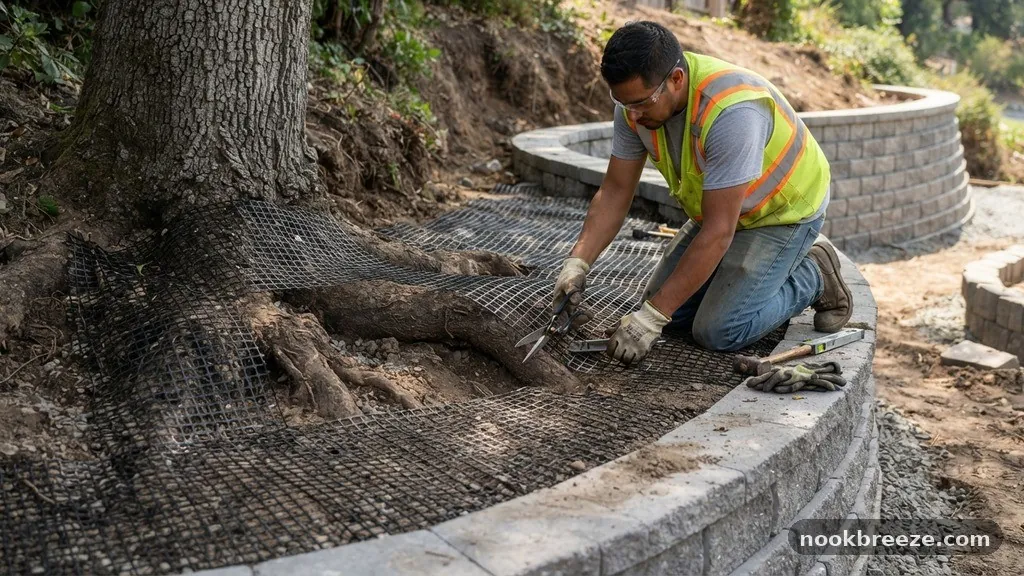
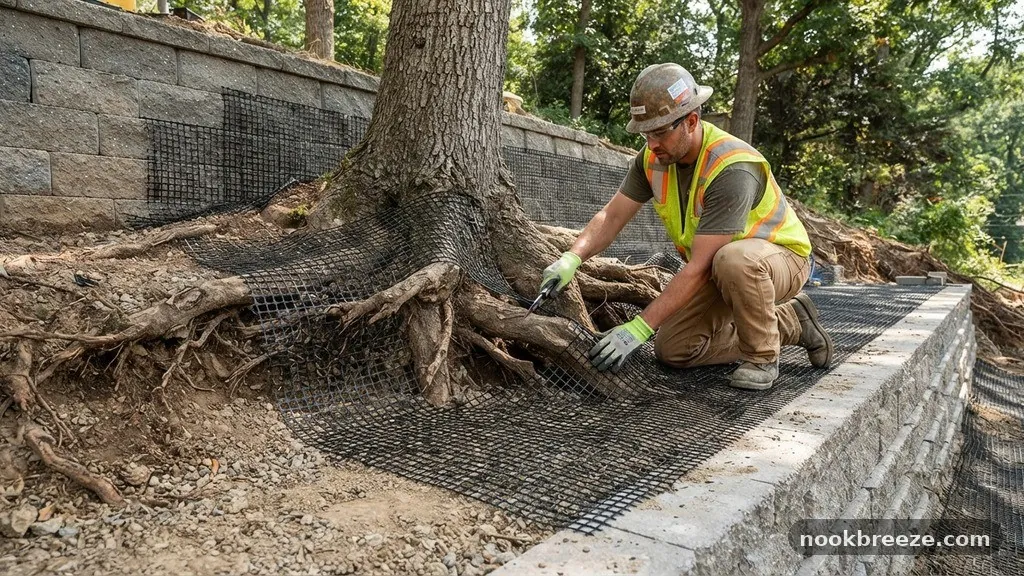
Technically, you can cut geogrid, but doing so near a structural retaining wall is generally discouraged because it creates a weak point in the reinforcement zone. Geogrid works by creating a mechanical interlock with the soil, effectively turning the backfill into a coherent, gravity-defying mass. When you slice through these high-tensile polymer sheets to accommodate a large tree root, you are effectively severing the “anchor” that holds your wall upright.
If you cut through the grid, the load-bearing capacity of that specific section drops significantly. This can lead to bulging, tilting, or even a localized collapse of the wall face.
While small, isolated snips might be manageable in low-stress, non-load-bearing situations, they are high-risk maneuvers behind any wall taller than three feet. If you find yourself asking, “Can you cut geogrid around large tree roots behind the retaining wall?” the safest engineering answer is almost always to avoid it if possible.
Why Geogrid Stability Matters
Retaining walls rely on the interaction between the wall face, the soil, and the reinforcement layers to resist lateral earth pressure. The geogrid acts as a tension member, pulling back against the pressure of the earth and holding the wall units together. Without this continuous reinforcement, the soil behind the wall can exert enough force to push individual blocks forward.
When you introduce a large tree into this system, you are adding a dynamic element that changes over time. Roots expand, push against the soil, and can even exert force directly against the wall units or the grid itself.
If the grid has been cut, it cannot redistribute these pressures, leading to a loss of structural cohesion. The wall may appear stable for a season, but the lack of continuous tensile strength often manifests as a slow, creeping failure.
The Impact of Tree Roots on Wall Integrity
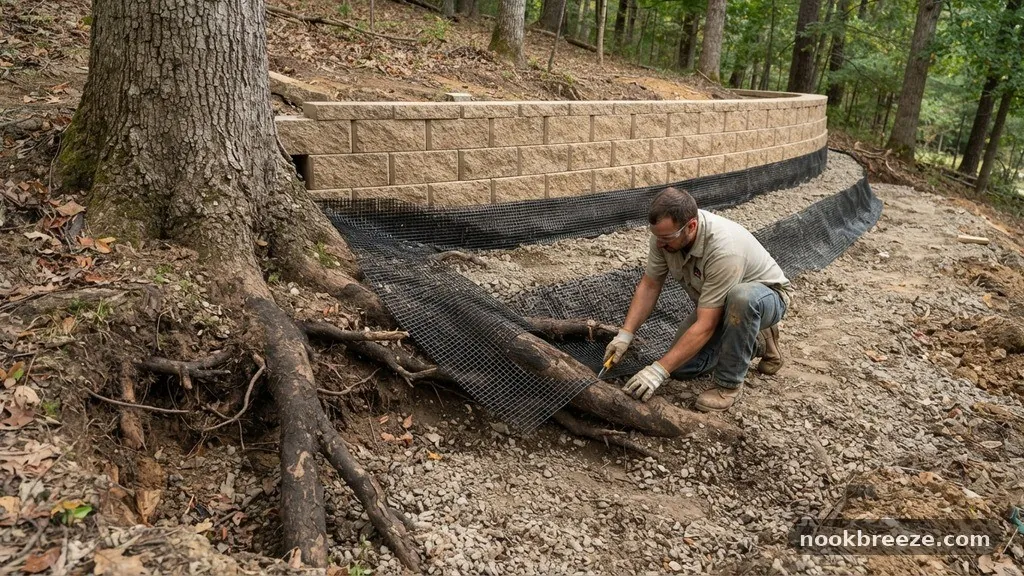
Trees are opportunistic, and their roots will naturally seek out the path of least resistance, which often includes the loose, well-draining soil used as backfill behind a wall. As roots grow, they thicken, exerting significant hydraulic and physical pressure on surrounding structures. If a root pushes against a section of geogrid that has been compromised by a cut, the grid will likely tear further.
This creates a cycle of degradation where the wall’s structural support diminishes as the tree grows. Furthermore, large tree roots can lift blocks or cause the wall to bow outward as they expand within the reinforced zone.
This is why professional landscapers often recommend a “buffer zone” between the back of the wall and any significant woody plants. When the plant is too close, the long-term maintenance of the wall becomes a losing battle against biological growth.
Assessing the Risk of Your Specific Wall
Not all walls face the same level of risk when it comes to root interference. A short, decorative garden wall under two feet tall exerts very little lateral pressure and may tolerate minor modifications to the reinforcement. Conversely, a tall wall supporting a driveway or a house foundation requires strict adherence to engineering standards.
You should consider the following factors when determining the danger level:
Alternative Solutions to Cutting Geogrid
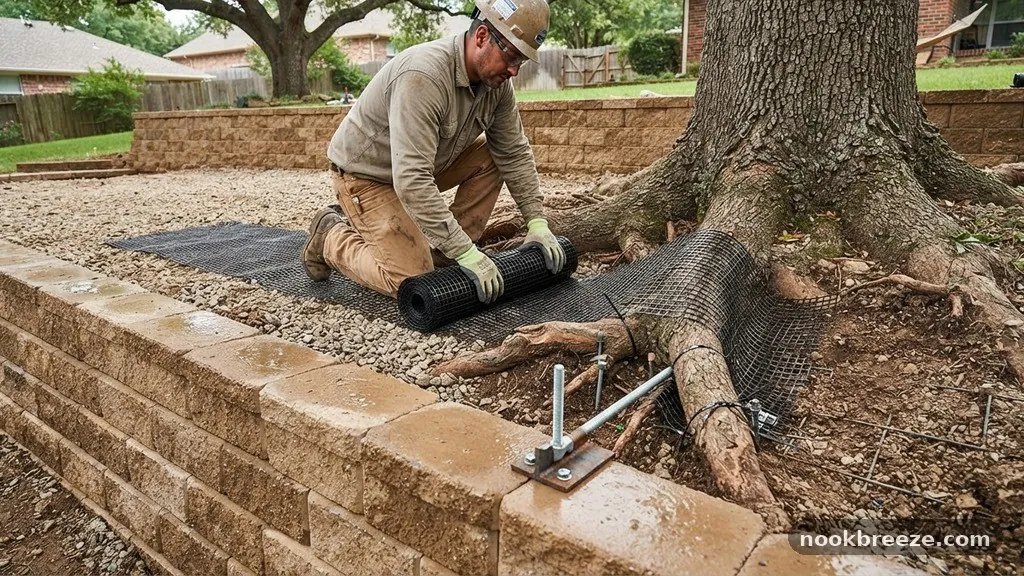
Before taking a blade to your geogrid, look for ways to work around the roots without compromising the material. Sometimes, you can weave the grid around the root system rather than cutting through it, though this is difficult during the initial construction phase. If the wall is already built, this is not an option, and you may need to look into root barriers.
A root barrier is a vertical, impenetrable wall made of high-density polyethylene that forces roots to grow downward rather than horizontally toward your structure. Installing a root barrier between the tree and the wall can prevent the roots from reaching the geogrid in the first place.
This is a much more effective strategy than trying to cut the grid after the fact. You can find more information on proper tree care and root management through organizations that provide expert arborist advice.
When You Absolutely Must Cut
There are rare instances where a conflict is unavoidable, such as when a large, heritage-status tree must be preserved alongside a necessary wall installation. If you absolutely must cut the geogrid, you need to compensate for the loss of strength. This usually involves installing “bridging” layers or additional geogrid segments that overlap the cut area by several feet.
You should consult with a structural engineer who specializes in segmental retaining walls before attempting this. They can calculate how much overlap is required to regain the lost tensile capacity.
Simply cutting the grid and hoping for the best is a recipe for a structural failure that will cost much more to repair than the original wall construction. Never assume that a “quick fix” or a patch will hold the weight of the soil behind your wall.
Comparing Traditional vs. Modified Reinforcement
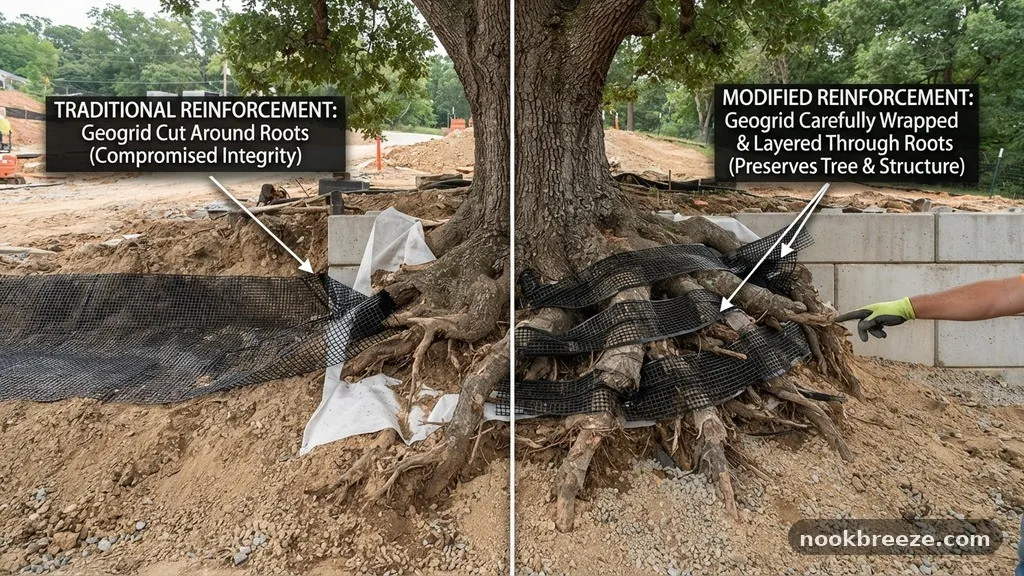
Understanding how different reinforcement strategies compare helps you see why keeping the grid intact is the standard. The following table highlights the difference between a standard installation and one where grid integrity has been compromised by cutting.
| Feature | Standard Intact Grid | Modified/Cut Grid |
|---|---|---|
| Structural Integrity | High; maximum tensile strength | Reduced; susceptible to bulging |
| Long-term Stability | Stable for decades | Prone to creeping failure |
| Maintenance Needs | Minimal | High; requires monitoring |
| Risk of Wall Collapse | Negligible | Significant in high-load areas |
Managing Drainage and Soil Moisture
Roots are attracted to water, and the backfill behind a retaining wall is often the wettest area in the garden. If your wall has poor drainage, you are essentially inviting roots to grow there to access the trapped moisture. Ensuring your drainage system is functioning perfectly can actually reduce the likelihood of aggressive root growth behind the wall.
If you are dealing with existing roots, check if the drainage pipes are clogged or if water is pooling behind the wall. A dry, well-drained backfill is less hospitable to large, thirsty roots than a damp, nutrient-rich one.
By improving your drainage, you might find that the roots stop expanding into the reinforced zone as aggressively. This simple mitigation strategy can often save you from having to perform risky modifications to the geogrid.
The Role of Professional Consultation
If you are currently planning a project and anticipate a conflict between a tree and your wall, bring in a professional before you start digging. A landscaper or civil engineer can help you design a layout that respects the root zones of existing trees while maintaining the structural integrity of the wall. Sometimes, moving the wall by even a few feet can save you from having to choose between the life of a tree and the stability of your hardscape.
If the wall is already in place and you are concerned about roots, an arborist can provide an assessment of the tree’s health and root spread. They can tell you if the tree is likely to continue growing toward the wall or if the root system is relatively stable. This professional insight is invaluable for making an informed decision about whether to leave things alone or take remedial action.
FAQ: Common Questions About Geogrid and Roots
Will geotextile fabric stop tree roots?
Geotextile fabric is generally not a root barrier. While it might provide a temporary obstacle, most aggressive tree roots will eventually grow through or around standard geotextile fabrics.
How close can a tree be to a retaining wall?
Ideally, trees should be planted at a distance at least equal to the expected mature root spread, which is often several feet away from the wall. For large trees, a distance of 10 to 15 feet is often recommended to prevent future structural conflicts.
What is the best tool to cut through tree roots?
If you must cut a root, use a clean, sharp saw to ensure a clean cut that heals quickly. Avoid using heavy machinery like backhoes near a wall, as the vibration and uncontrolled pulling can cause significant damage to the wall face and the geogrid layers.
Does a 4-foot retaining wall need geogrid?
In most cases, yes. A 4-foot wall is tall enough to exert significant earth pressure, and building codes in many areas require geogrid reinforcement for walls of this height or taller to ensure long-term safety.
Conclusion
Navigating the intersection of landscape design and structural engineering requires careful planning. When you ask, “Can you cut geogrid around large tree roots behind the retaining wall?” you are addressing a fundamental concern for the longevity of your wall. While it is physically possible to cut the grid, the structural cost is high and often leads to long-term issues like bulging or wall failure.
Prioritize the integrity of your retaining wall by avoiding cuts whenever possible and using root barriers or proper design spacing to manage tree growth. If you find yourself in a situation where modification seems necessary, consult with a professional to ensure your wall remains safe and secure for years to come. Reach out to a local structural engineer or a certified arborist to evaluate your specific site and protect your investment.