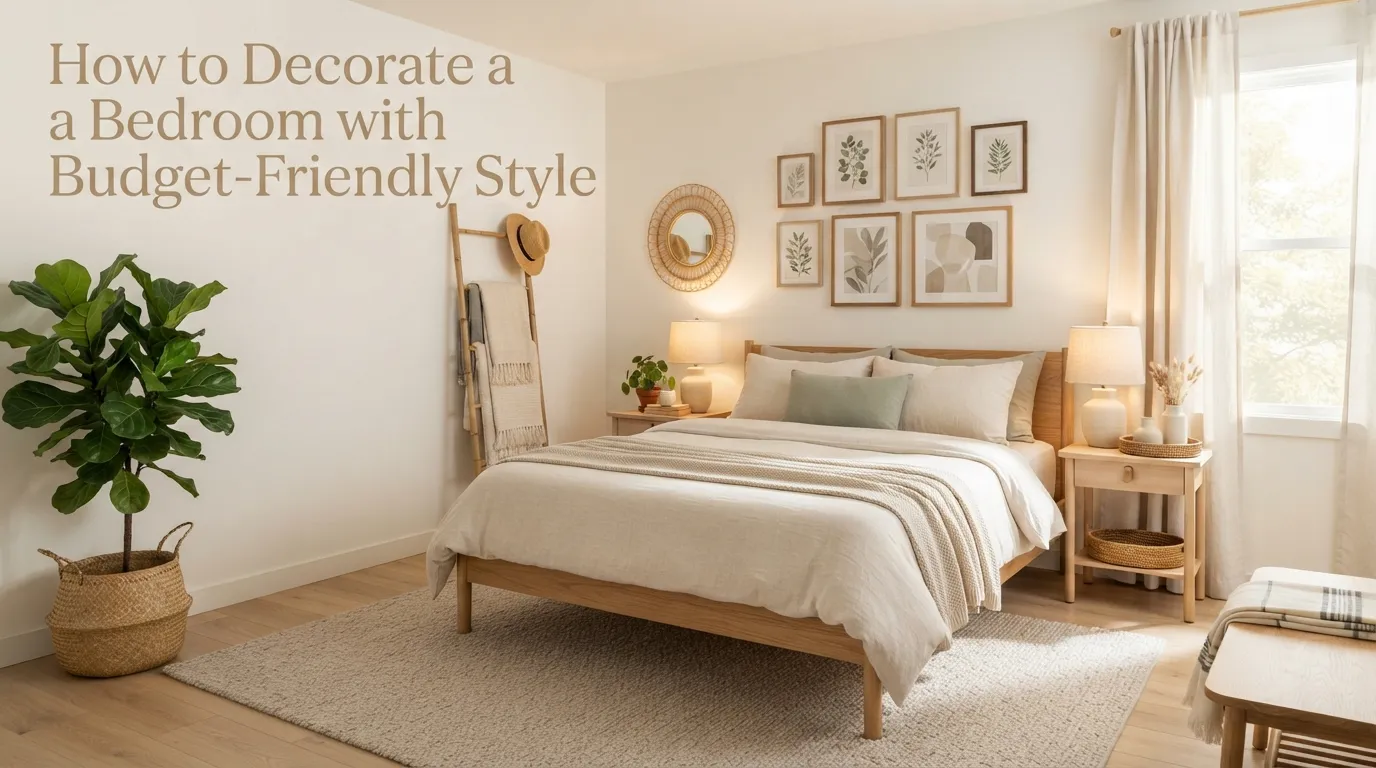
How to Decorate a Bedroom with Budget-Friendly Style
A bedroom doesn’t have to come with a large decorating budget to feel beautiful, comfortable, and personal. In fact, some of the most inviting bedrooms are created by making a few thoughtful changes rather than buying an entirely new set of furniture.
The key is knowing where to spend, where to save, and how to make inexpensive pieces look intentional. A fresh set of pillow covers, rearranged furniture, better lighting, artwork from an affordable source, or a carefully chosen throw can completely change the atmosphere without requiring a major makeover.
I’ve noticed that decorating on a budget often produces better results when you start with what you already own. Before buying anything, look at your bedroom with fresh eyes. Could the nightstand move to another wall? Could an old lamp get a new shade? Could artwork from another room work above the bed? Could a simple basket solve the clutter that makes the room feel unfinished?
The most successful budget bedrooms also have something in common: they don’t try to imitate a showroom. They feel lived-in, layered, and connected to the person who sleeps there.
Whether you’re furnishing your first apartment, refreshing a primary bedroom, updating a guest room, or simply tired of looking at the same decor, you can create a noticeable transformation with affordable changes.
From rearranging furniture and layering bedding to using removable wallpaper and adding thrifted accents, these ideas focus on practical ways to make your bedroom feel more polished while keeping spending under control.
Table of Contents
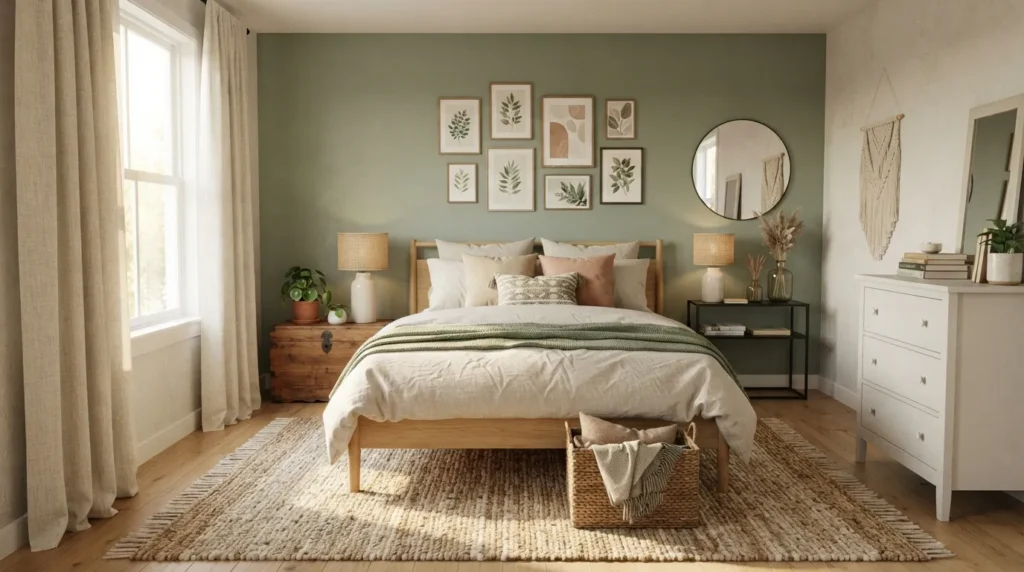
1. Rearrange Existing Furniture
Refresh the entire room by changing the layout before spending money on new pieces.
2. Layer Affordable Bedding
Create a comfortable, styled bed with inexpensive bedding layers and coordinated textures.
3. Refresh With Paint
Use an affordable coat of paint to give the bedroom a completely different atmosphere.
4. Style Thrifted Finds
Give secondhand furniture and accessories a curated look with simple updates and thoughtful placement.
5. Upgrade Soft Textiles
Use curtains, rugs, cushions, and throws to introduce warmth without replacing major furniture.
6. Create Simple Wall Art
Decorate empty walls with affordable artwork, photographs, prints, and creative DIY displays.
7. Improve Bedroom Lighting
Use affordable lamps and softer bulbs to make the bedroom feel warmer and more comfortable.
8. Add Affordable Greenery
Bring life and natural color into the room with low-maintenance plants and budget-friendly planters.
9. Organize Visible Clutter
Make inexpensive storage part of the decor so the bedroom feels calmer and more finished.
10. Add Personal Details
Finish the room with meaningful objects and small decorative touches that reflect your style.
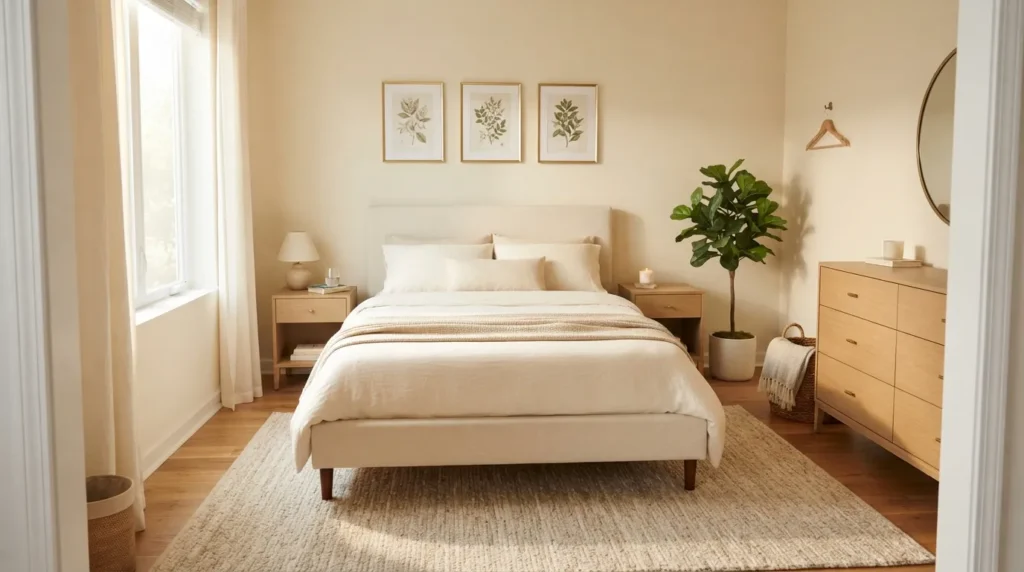
1. Rearrange Existing Furniture
Quick Benefits
- Costs nothing
- Can improve room flow
- Makes familiar furniture feel new
- Creates more usable space
- Helps identify what you actually need
Why It Works
One of the easiest ways to decorate a bedroom on a budget is to stop shopping and start rearranging. Furniture placement has a huge effect on how spacious, comfortable, and balanced the room feels.
A bed positioned awkwardly can make an otherwise attractive bedroom feel cramped. A nightstand blocking a walkway or a dresser placed directly in front of a busy visual area can create unnecessary clutter.
Before buying anything, consider how you naturally use the room. Is there enough space to walk around the bed? Can you open drawers comfortably? Does the morning light come directly into your eyes? Is there a better wall for the bed?
Sometimes moving just one large piece changes the entire room.
If you’re anything like me, it’s easy to become accustomed to furniture simply because it has been in the same position for years. Stepping back and experimenting with different layouts can reveal possibilities you hadn’t noticed.
How To Style It
Start by measuring the room and identifying the main walking paths. Keep enough clearance around the bed and make sure doors and drawers can open without obstruction.
Try positioning the bed on the strongest wall, often the wall directly opposite the bedroom entrance or the most visually balanced wall. However, windows, heating vents, outlets, and architectural features should guide the final decision.
Move smaller furniture after the bed is positioned. Place nightstands where they’re useful rather than automatically matching both sides.
If the room feels crowded, remove one piece temporarily. Living with less furniture for a few days can help you determine whether it was actually necessary.
Take photographs from the doorway after each arrangement. Seeing the room through a photograph often makes balance and clutter much easier to evaluate.
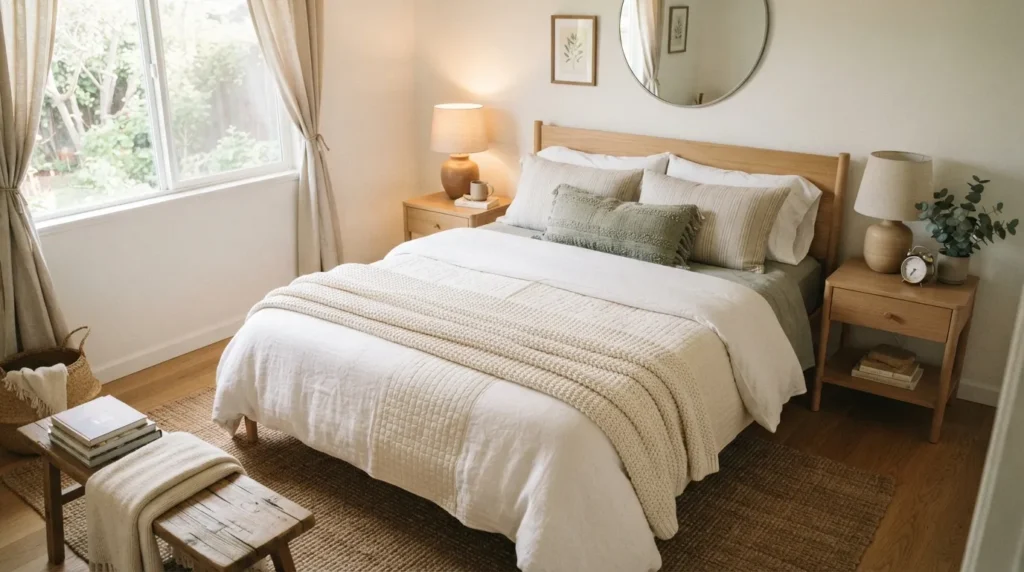
2. Layer Affordable Bedding
Quick Benefits
- Creates an instant visual update
- Makes the bed more inviting
- Adds color and texture
- Doesn’t require new furniture
- Allows easy seasonal changes
Why It Works
The bed is usually the largest visual element in a bedroom, so changing its appearance can have an outsized effect. Fortunately, you don’t need expensive designer bedding to create a polished look.
Instead of buying an entire matching set, build layers. Start with simple sheets, add a duvet or comforter, then introduce a quilt, blanket, or textured throw. Finish with a few coordinated pillows.
The trick is variation. A bed covered in several identical fabrics can look flat, while a mixture of cotton, linen-look fabric, waffle texture, or knitted materials creates depth.
Color is another affordable way to refresh the room. You can keep the main bedding neutral and change accent pillow covers or a throw whenever you want a different look.
I’ve found that simple bedding often looks more sophisticated when the colors are coordinated but not perfectly matched.
How To Style It
Choose one main bedding color and two supporting shades. For example, a white duvet can work with oatmeal pillowcases and a muted sage throw.
Instead of purchasing many decorative pillows, use a few different sizes. Two sleeping pillows, two larger accent pillows, and one smaller lumbar pillow can be enough for a layered appearance.
Fold a lightweight blanket across the lower third of the bed. This creates a visual horizontal line and adds texture.
If your existing comforter is still in good condition, don’t replace it simply because you’re bored with it. Add a new duvet cover, throw, or pillow covers instead.
For an even more affordable update, rotate textiles from other rooms when the colors work together. A blanket from the living room may become a bedroom accent during colder months.
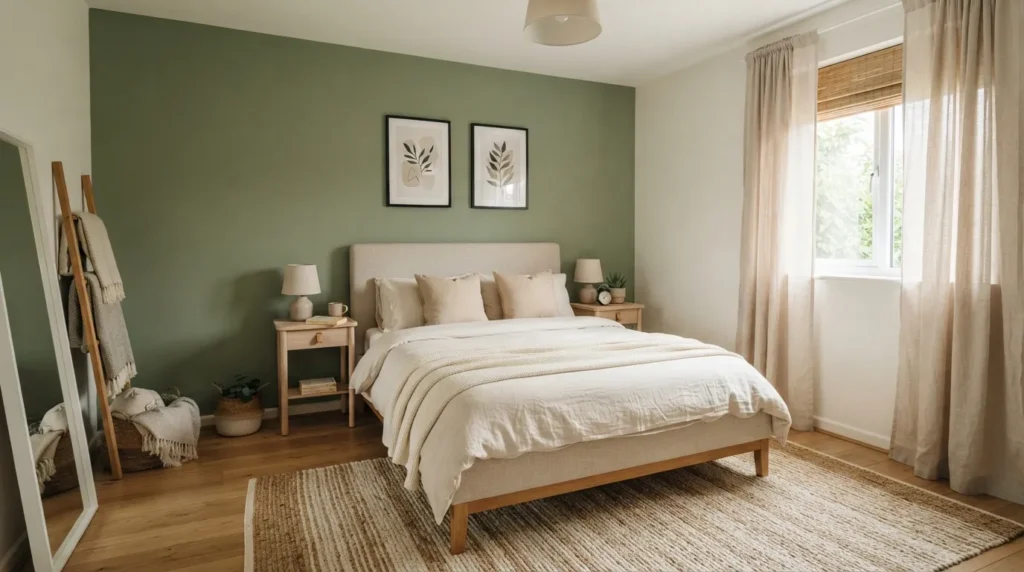
3. Refresh With Paint
Quick Benefits
- Creates a major visual change
- Can highlight architectural features
- Relatively affordable compared with furniture
- Helps establish a color palette
- Works in many decorating styles
Why It Works
Paint remains one of the most effective ways to change the feeling of a room without replacing everything inside it. A new wall color can make old furniture feel more intentional and provide a fresh backdrop for artwork and textiles.
Soft neutrals such as warm white, beige, light taupe, and muted gray can create a calm bedroom. If you prefer more personality, dusty blue, sage green, muted terracotta, or a deep accent shade can make the room feel distinctive.
You don’t necessarily need to paint every wall. A single accent wall behind the bed can create a focal point while reducing both cost and effort.
Before committing to a color, test a sample on the actual wall. Paint can look dramatically different depending on natural light and the surrounding furnishings.
How To Style It
Choose paint after considering the furniture and textiles you already own. If your bedding is warm beige and your furniture is honey-toned wood, a cool blue-gray may create an unwanted contrast.
For a calming bedroom, use a soft neutral across the room and introduce stronger color through artwork or bedding.
If you want a more dramatic look, paint the wall behind the bed in a deeper version of the room’s main color.
Prepare the walls carefully before painting. Clean surfaces, fill visible holes, and use the appropriate primer when needed. A neat paint job will make even an inexpensive bedroom feel more finished.
If you’re renting, don’t assume painting is allowed. Check your lease first. Removable wallpaper, large fabric panels, or temporary wall decor can provide alternatives where painting isn’t permitted.
4. Style Thrifted Finds
Quick Benefits
- Can reduce furniture costs
- Adds character
- Creates a collected appearance
- Supports sustainable decorating
- Offers unique pieces
Why It Works
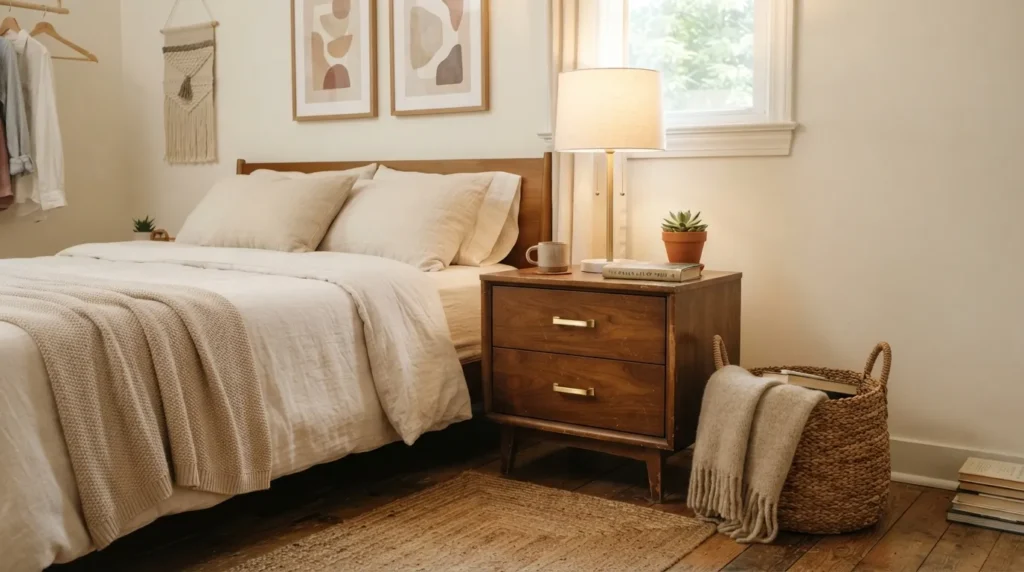
Secondhand stores, estate sales, flea markets, and online resale marketplaces can be excellent sources for bedroom furniture and accessories. Older pieces often have shapes and materials that are difficult to find at low prices in mainstream stores.
The secret is not buying everything simply because it is inexpensive. Look for pieces with useful proportions, solid construction, attractive details, or a finish that can easily be refreshed.
A dated wooden nightstand might look completely different after cleaning and replacing its hardware. An old frame can become affordable artwork. A simple bench can work at the foot of the bed.
The most successful thrifted rooms usually mix old and new rather than trying to make every piece look vintage.
How To Style It
Start with one secondhand item rather than filling the room with thrifted furniture.
Clean the piece thoroughly and assess whether it actually needs painting. Sometimes the original finish is the most attractive feature.
Replace outdated knobs or handles with simple hardware if the furniture needs a refresh. For painted pieces, choose a finish appropriate for the material and follow preparation instructions carefully.
Mix a thrifted wood nightstand with modern bedding and a contemporary lamp. This contrast keeps the room from feeling like a themed space.
When shopping secondhand, measure before buying. A bargain dresser isn’t a bargain if it makes the bedroom difficult to navigate.
5. Upgrade Soft Textiles
Quick Benefits
- Adds warmth without major spending
- Makes the room feel finished
- Can improve acoustics
- Offers easy seasonal updates
- Creates texture and softness
Why It Works
Textiles are one of the easiest budget decorating tools because they cover large visual areas without requiring expensive structural changes.
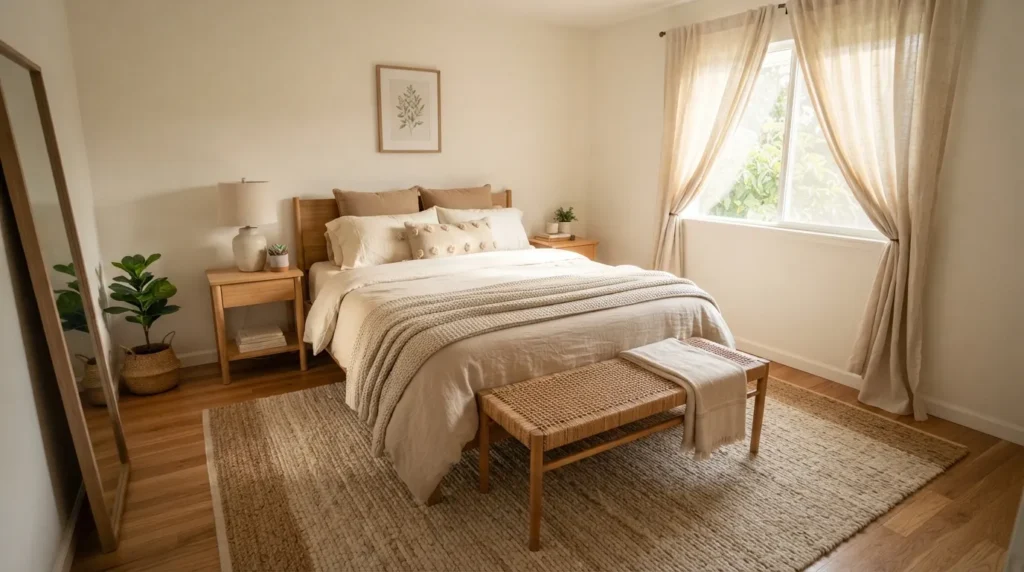
Curtains can soften windows, rugs can define the sleeping area, and throws can add color to the bed or chair. Even changing pillow covers can make an older bedroom feel noticeably different.
You don’t need every textile to match. In fact, rooms often look more sophisticated when materials coordinate rather than perfectly match.
A simple cotton bedding set can look much more inviting with a textured throw and a soft rug underneath. Likewise, plain curtains can become more interesting when paired with natural woven shades or simple decorative hardware.
How To Style It
Start with the textile that has the biggest visual impact. In many bedrooms, that’s the bedding or rug.
If you have hardwood or laminate flooring, a medium-sized rug placed partially under the bed can add warmth. Make sure it doesn’t create a tripping hazard and that doors can open properly.
For curtains, choose panels long enough to reach the floor. Hanging them slightly wider and higher than the window can create a more finished appearance.
Use pillow covers rather than buying complete pillows when possible. They’re easier to store and inexpensive to change.
For a cohesive room, repeat one or two colors across the curtains, rug, bedding, and accent pillows.
6. Create Simple Wall Art
Quick Benefits
- Fills empty walls affordably
- Adds personality
- Creates a focal point
- Can be DIY-friendly
- Easy to change later
Why It Works
Blank walls can make a bedroom feel unfinished, but artwork doesn’t have to be expensive.
You can use downloadable prints, personal photographs, thrifted frames, postcards, fabric, children’s artwork, pressed botanicals, or simple DIY pieces. The important part is presentation.
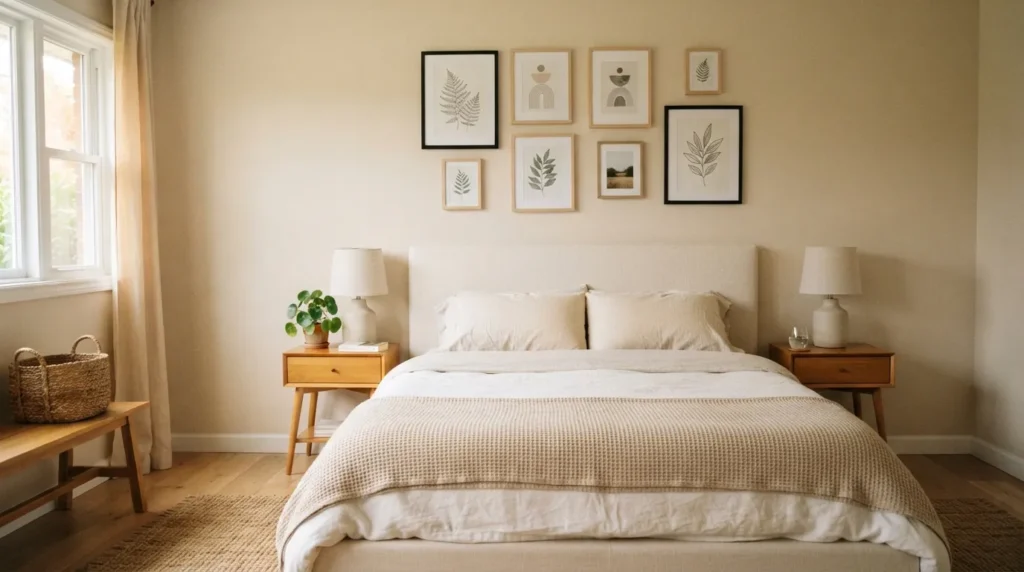
A group of inexpensive prints can look more cohesive when displayed in matching frames. Alternatively, a collection of mismatched vintage frames can create a relaxed, collected appearance.
Artwork above the bed is a natural focal point, but don’t overlook the wall opposite the bed. It’s often the first thing you see when lying down, making it an excellent location for something meaningful or visually calming.
How To Style It
Choose artwork that complements your bedroom’s color palette rather than trying to match every object exactly.
For an inexpensive gallery wall, select three to five prints with a common theme. Botanical illustrations, landscapes, abstract shapes, or black-and-white photography can all work well.
Use inexpensive frames in a consistent finish for a polished look. If you enjoy a more collected style, combine wood and simple metal frames.
Before hanging a gallery wall, arrange the frames on the floor and photograph the layout.
For renters, use hanging solutions designed for the weight of the artwork and the wall type. Lightweight prints can also be displayed on shelves or picture ledges.
7. Improve Bedroom Lighting
Quick Benefits
- Creates a warmer atmosphere
- Makes evenings more comfortable
- Highlights decor
- Improves reading conditions
- Can be updated without replacing furniture
Why It Works
Lighting can make inexpensive decor look considerably more polished. A room with beautiful furniture but harsh overhead lighting rarely feels as comfortable as one with several softer light sources.
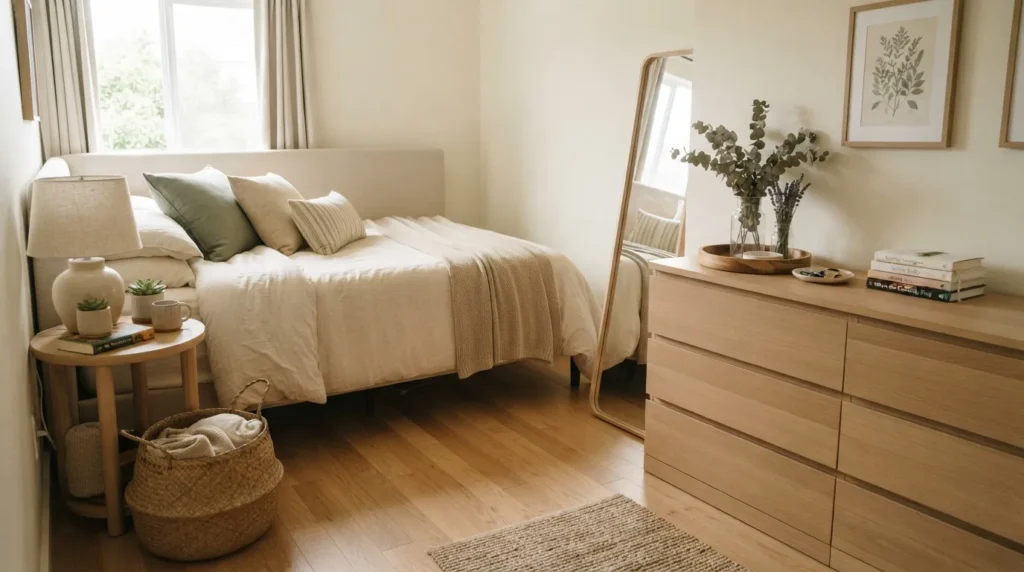
Bedroom lighting works best when it serves different purposes. A ceiling fixture provides general illumination, bedside lamps support reading, and accent lighting can create a softer evening atmosphere.
You don’t have to spend much. Affordable table lamps, plug-in sconces, rechargeable lights, and simple floor lamps can provide useful layers.
The color temperature of the bulbs matters too. Warmer light is generally more relaxing in bedrooms than very cool, bright light.
How To Style It
Place a lamp on each side of the bed if the layout allows, but don’t feel obligated to create perfect symmetry. One lamp and a wall-mounted reading light can work just as well.
Choose lamp shades that diffuse light rather than producing harsh glare.
A small lamp on a dresser can create another pool of light across the room. Turn on several lamps in the evening instead of relying entirely on the ceiling fixture.
If you’re renting, plug-in sconces can create a built-in appearance without permanent electrical work. Follow installation instructions carefully and keep cords safely secured.
For a very low-cost update, simply replace old bulbs with appropriately rated warmer bulbs and clean dusty shades.
8. Add Affordable Greenery
Quick Benefits
- Adds natural color
- Softens furniture lines
- Makes the room feel more alive
- Can fill empty corners
- Works with many decorating styles
Why It Works
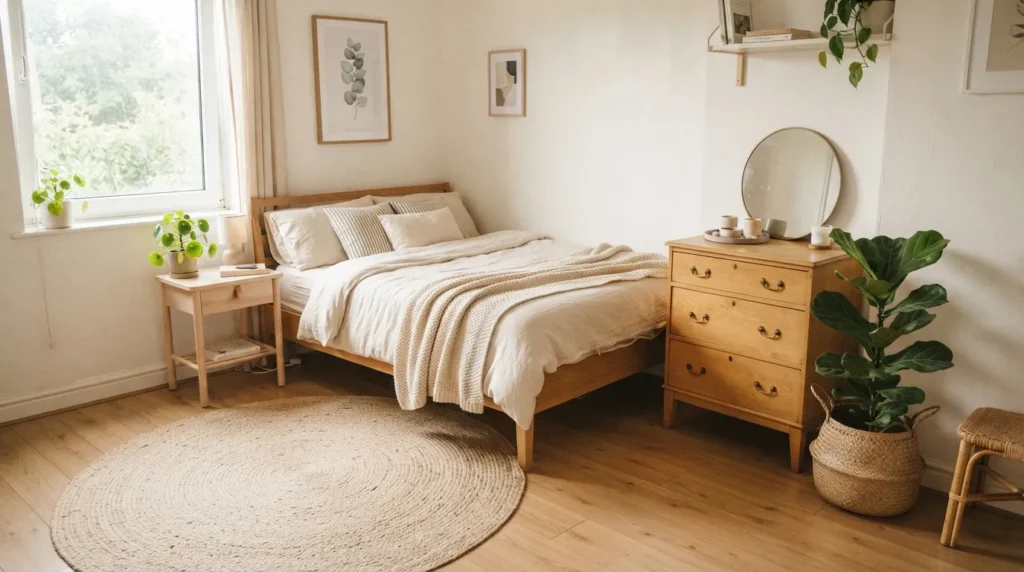
Plants can make a bedroom feel more inviting without requiring a large decorating budget. Their natural shapes contrast with the straight lines of furniture and architecture.
The best plant is one that matches the actual conditions of your room and your maintenance habits. A beautiful plant that requires more care than you can provide will quickly become a source of frustration.
You don’t need dozens of plants. One medium-sized plant on a dresser or a larger plant in a corner can be enough.
If your room has limited natural light, choose plants appropriate for those conditions or use realistic faux greenery.
Planters don’t have to be expensive either. Simple ceramic pots, woven baskets, or repurposed containers can work beautifully when their proportions and colors fit the room.
How To Style It
Place a taller plant beside a dresser or in an empty corner if the available light is suitable.
Use a small plant on a nightstand only if there is enough space to keep your essential items accessible.
For a budget-friendly approach, purchase simple nursery plants and place them inside decorative cachepots you already own.
Repeat natural materials elsewhere in the room through wood frames, woven baskets, or a rattan accent.
Avoid crowding the room with greenery. One thoughtfully positioned plant usually creates more impact than several small plants scattered across every surface.
9. Organize Visible Clutter
Quick Benefits
- Makes the bedroom feel calmer
- Improves daily routines
- Uses inexpensive storage solutions
- Makes existing furniture look better
- Creates more usable space
Why It Works
Sometimes a bedroom doesn’t need more decoration. It needs less visual noise.
Clothing piles, charging cables, beauty products, books, paperwork, and miscellaneous objects can make even attractive rooms feel chaotic. Organizing these items is one of the most affordable ways to improve the appearance of the space.
The goal isn’t creating an empty room. A comfortable bedroom should still contain books, blankets, personal objects, and things you use every day.
The difference is giving those items designated homes.
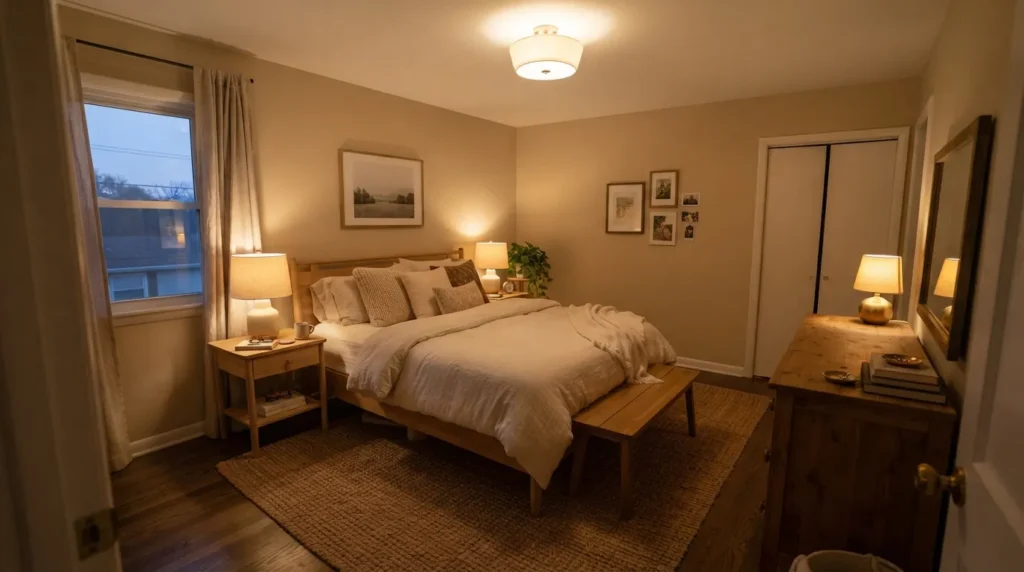
Baskets under a bench, boxes inside a wardrobe, drawer dividers, hooks, and simple trays can all help. Many storage solutions are inexpensive and can be repurposed from other rooms.
How To Style It
Start with the surfaces you see most often: the nightstand, dresser, floor, and chair.
Remove anything that doesn’t belong in the room. Then group remaining items by how frequently you use them.
Use a small tray on the nightstand for everyday essentials such as a watch, glasses, or charging accessories.
Place a basket near the bed for extra blankets or pillows. Use matching or coordinating containers on open shelves when possible.
If your closet is crowded, consider rotating seasonal clothing instead of trying to store everything in the same space.
A simple rule can help: if an item doesn’t have a convenient home, either create one or reconsider whether it belongs in the bedroom.
10. Add Personal Details
Quick Benefits
- Makes the room feel unique
- Costs little or nothing
- Adds emotional value
- Prevents the room from feeling generic
- Completes the decorating process
Why It Works
The final layer of a beautiful bedroom isn’t necessarily another purchase. It’s personality.
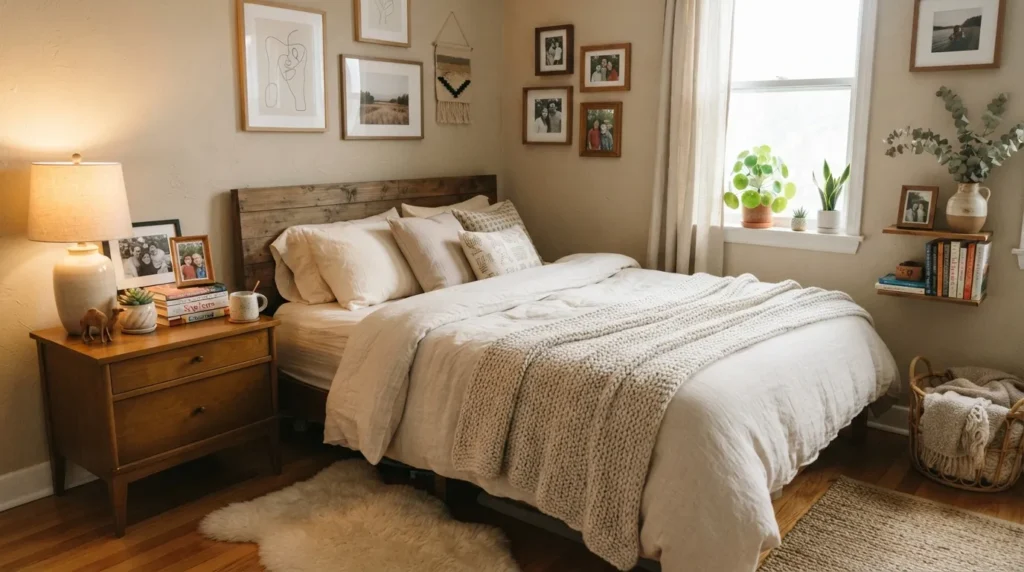
A bedroom should reflect the person who uses it. Family photographs, travel souvenirs, favorite books, handmade objects, artwork from a local artist, or a meaningful piece of furniture can make the room feel much more personal than a perfectly coordinated collection of store-bought accessories.
Personal items also create visual interest because they tend to have different shapes, ages, and textures.
A budget-friendly bedroom becomes much more successful when it doesn’t look like everything came from the same shopping trip.
This is where restraint matters. Choose objects that genuinely mean something to you instead of adding accessories simply to fill empty surfaces.
How To Style It
Choose a few meaningful objects and give them space.
Display a favorite photograph in a simple frame on the nightstand or dresser. Stack a few books you actually enjoy reading. Place a travel souvenir on a shelf alongside a plant or ceramic object.
If you have a collection, edit it rather than displaying every item. Three carefully chosen objects often have more impact than ten small pieces.
Use repetition to connect personal items with the rest of the room. A wooden frame can relate to a wood nightstand, while a muted blue object can connect with the bedding.
The goal is not perfection. A bedroom should feel comfortable and lived-in while still having enough order to feel restful.
Related Articles
- Cozy Bedroom Ideas for a Warm and Relaxing Retreat
- Small Bedroom Decorating Ideas That Maximize Space
- Neutral Bedroom Ideas for a Calm Home
- DIY Bedroom Decor Ideas You Can Make on a Budget
- Bedroom Organization Ideas for a Clutter-Free Space
Frequently Asked Questions
How can I decorate my bedroom without spending much money?
Start with what you already own. Rearrange the furniture, declutter visible surfaces, change the bedding arrangement, move artwork from another room, and improve the lighting. When you do shop, prioritize high-impact items such as pillow covers, curtains, rugs, lamps, and paint rather than replacing large furniture pieces.
What is the cheapest way to make a bedroom look better?
Decluttering and rearranging are completely free and can have a noticeable impact. After that, consider affordable changes such as new pillow covers, a fresh throw, warm light bulbs, inexpensive artwork, or a small plant. These items can change the room’s color, texture, and atmosphere without requiring a major investment.
How do I make inexpensive bedroom decor look expensive?
Choose a limited color palette, avoid excessive accessories, and focus on texture and proportion. Hang curtains at an appropriate height, keep surfaces organized, layer bedding, and coordinate inexpensive pieces with existing furniture. A room usually looks more polished when there is visual consistency rather than when every item is expensive.
Should I buy new furniture when decorating on a budget?
Not necessarily. Existing furniture can often be improved through rearranging, cleaning, replacing hardware, or changing surrounding textiles and accessories. If you do need a new piece, measure carefully and consider secondhand furniture before purchasing new. Buying fewer quality pieces can be more practical than filling the room with inexpensive items.
What colors work well for a budget bedroom makeover?
Warm white, cream, beige, soft gray, sage green, dusty blue, and muted terracotta are versatile choices. The best color depends on your existing furniture, flooring, and natural light. Keeping the main palette simple also makes it easier to update the room later with affordable pillows, throws, and artwork.
How can I make my bedroom cozy without buying lots of decor?
Focus on texture, lighting, and organization. Layer your existing bedding with a throw, use warm lighting instead of harsh overhead light, add a rug if needed, and keep clutter under control. A comfortable bed, soft textiles, and a few meaningful objects can create a cozy atmosphere without filling the room with accessories.
Is thrifted furniture good for bedroom decorating?
Yes. Secondhand furniture can be a practical way to add character while controlling costs. Look for pieces with good proportions and solid construction. Clean them thoroughly, update hardware when appropriate, and only paint or refinish them when necessary. Mixing one or two thrifted pieces with newer textiles can create a balanced, collected bedroom.
Conclusion
Decorating a bedroom on a budget is less about finding the cheapest version of everything and more about making thoughtful choices with what you already have.
Start by rearranging the furniture, clearing visual clutter, and identifying the parts of the room that bother you most. Then make small changes with the biggest visual impact. Layering affordable bedding, adding a fresh coat of paint, improving lighting, or introducing a few soft textiles can make the entire room feel different.
Don’t overlook secondhand furniture, DIY artwork, simple greenery, and personal objects. These details often give a bedroom more character than expensive matching decor.
Most importantly, don’t feel pressured to finish the room in one weekend. A bedroom can evolve gradually. Add pieces when you find something useful, meaningful, or genuinely beautiful.
A comfortable bedroom doesn’t depend on a large budget. With a little editing, creativity, and attention to scale, texture, color, and lighting, you can create a space that feels polished, personal, and restful while keeping your spending under control.