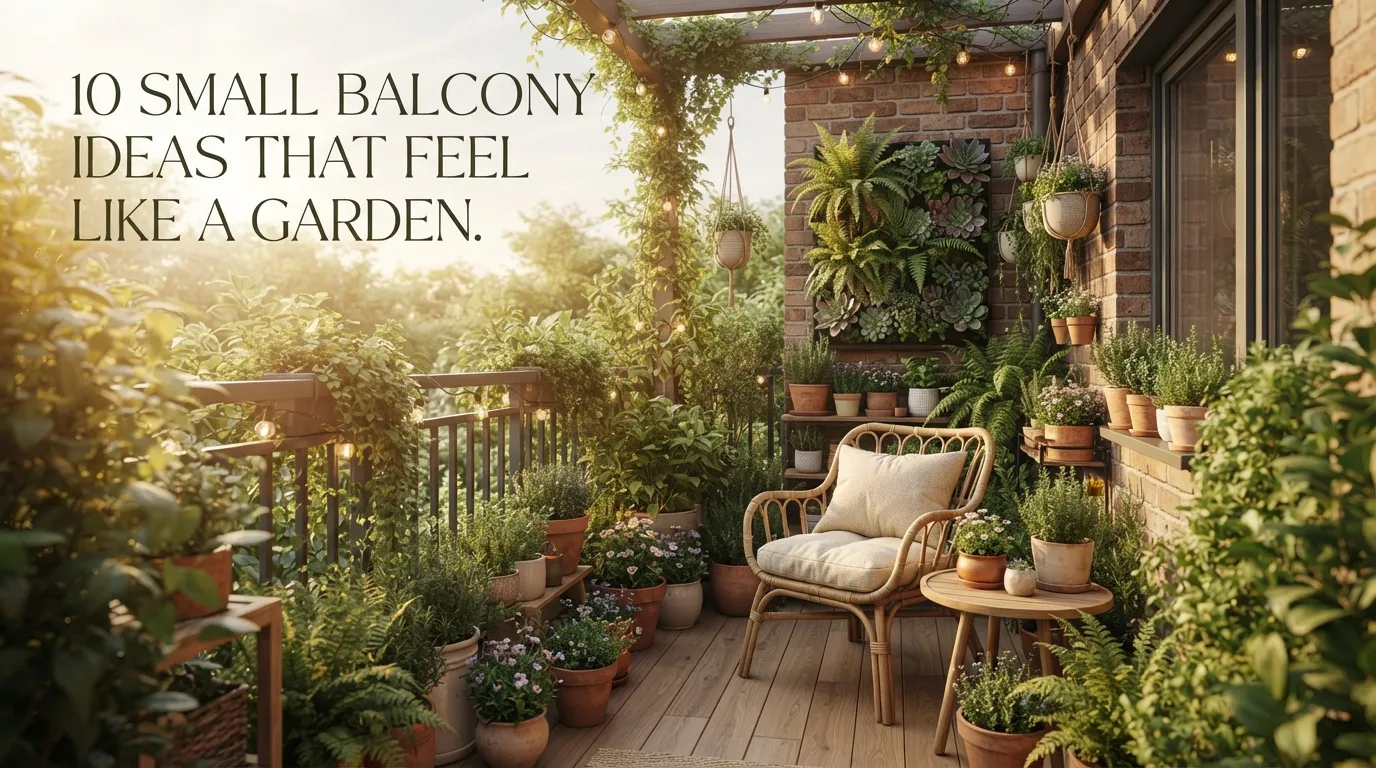
10 Small Balcony Ideas That Feel Like a Garden
A small balcony can become one of the most enjoyable spaces in a home when it is treated like a tiny garden rather than simply a place to store a chair or two.
Even a narrow apartment balcony can hold greenery, comfortable seating, soft lighting, and a few thoughtful decorative details. The trick is making every element work harder. Vertical plants can replace bulky garden beds. Rail planters can add greenery without taking up floor space. A compact bistro table can create a dining area without overwhelming the balcony.
You also do not need dozens of plants to create a garden-like atmosphere. A few carefully selected varieties at different heights can create layers that make the space feel much fuller. Combining trailing plants, upright greenery, and larger leafy plants creates visual depth without requiring a large footprint.
In my experience, the most successful small balconies feel intentional rather than crowded. There is enough greenery to create a lush mood, but enough open space to move comfortably. A comfortable chair, a small side table, and warm lighting can sometimes make more difference than adding another planter.
Your balcony can also reflect the style of your interior. Natural wood, woven textures, ceramic pots, linen cushions, and neutral colors can make the transition from indoors to outdoors feel seamless.
Whether you have a tiny city balcony, a narrow apartment terrace, or a compact outdoor landing, these ideas focus on practical ways to bring the feeling of a garden into a limited space.
The goal is simple: create a small outdoor retreat where plants become the main character and every square foot has a purpose.
Table of Contents
1. Vertical Plant Wall
Use walls and vertical surfaces to create layers of greenery without sacrificing floor space.
2. Layered Container Garden
Combine planters at different heights to create the feeling of a miniature garden.
3. Rail Planter Display
Turn the balcony railing into a practical growing and decorating zone.
4. Compact Seating Nook
Create a comfortable garden retreat with furniture scaled specifically for small spaces.
5. Hanging Greenery
Use overhead space for trailing plants that add softness and movement.
6. Herb Garden Corner
Grow useful herbs in a compact arrangement that brings fragrance and greenery outdoors.
7. Natural Wood Accents
Introduce warm wood furniture and details to create a relaxed garden atmosphere.
8. Cozy Evening Lighting
Use soft outdoor lighting to make the balcony feel inviting after sunset.
9. Garden Privacy Screen
Combine plants and lightweight screening to create a more secluded outdoor space.
10. Miniature Garden Retreat
Bring the elements together into one cohesive balcony designed for everyday relaxation.
1. Vertical Plant Wall
Quick Benefits
- Saves valuable floor space
- Creates a lush backdrop
- Adds height and visual depth
- Works on narrow balconies
- Makes greenery the focal point
Why It Works
When floor space is limited, look upward.
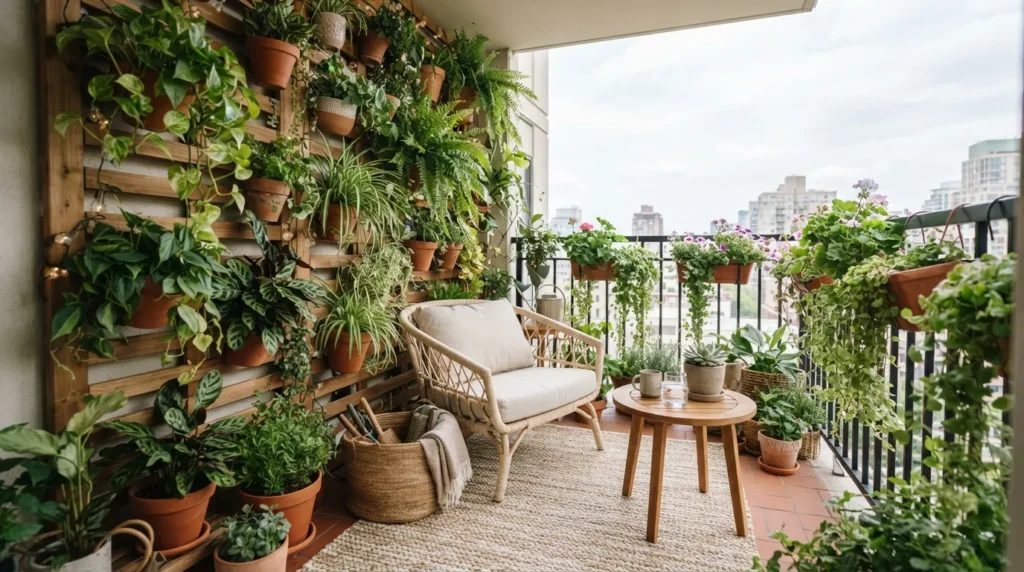
Vertical gardening is one of the most effective ways to make a small balcony feel like a garden because it transforms an unused wall into a living backdrop.
Instead of arranging every plant along the floor, use wall-mounted planters, trellises, hanging pockets, or freestanding vertical structures. The greenery becomes part of the architecture.
The variety of plant heights also creates depth. A wall covered with foliage can make a compact balcony feel more immersive and separated from the surrounding buildings.
You do not need to cover the entire wall. Even one carefully designed green section can create a strong garden effect.
How To Style It
Choose one wall or corner as the main planting zone.
Use a combination of upright and trailing plants to create different silhouettes.
A simple wooden trellis can support suitable climbing plants while adding warmth to the space. Wall-mounted planters work well when you want a more organized appearance.
Keep the planter colors coordinated. Terracotta, natural wood, matte ceramic, and neutral finishes can create a cohesive look.
Leave enough open wall space to prevent the arrangement from feeling visually heavy.
Always consider the wall surface, drainage, weight, sunlight, wind exposure, and building rules before installing permanent planters or structures.
2. Layered Container Garden
Quick Benefits
- Creates garden-like depth
- Works without planting beds
- Allows flexible arrangements
- Makes greenery easier to reorganize
- Adds visual interest at different heights
Why It Works
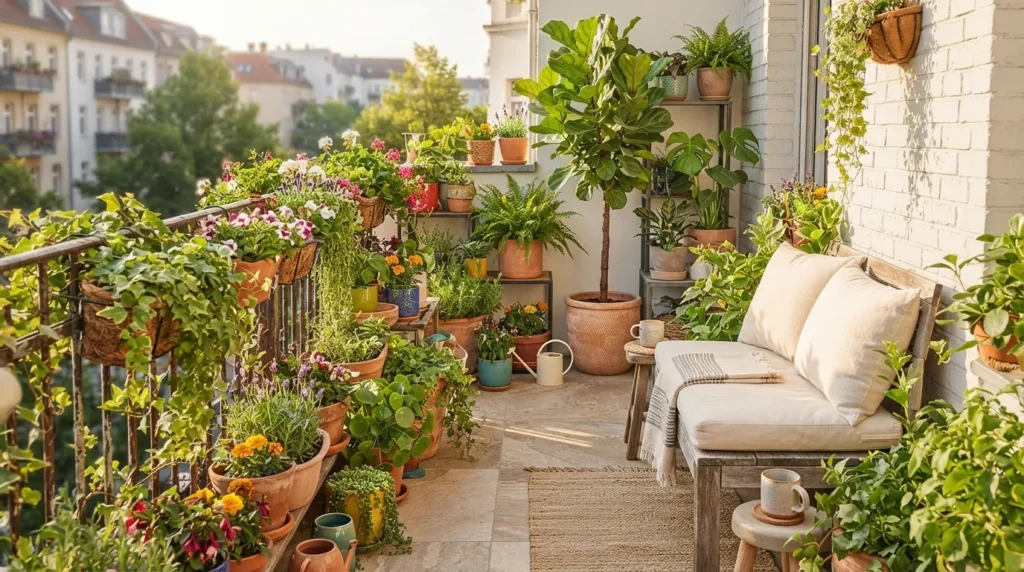
A balcony filled with plants at one height can still feel flat. The easiest way to create a more garden-like appearance is to layer the containers.
Use larger plants toward the back, medium-sized pots around the seating area, and smaller plants toward the front.
Trailing plants can soften the edges, while taller foliage creates a sense of enclosure.
This approach mimics the structure of a garden border, where plants naturally occupy different levels.
It also gives you flexibility. Containers can be moved as seasons change or when you want to rearrange the balcony.
How To Style It
Begin with one or two larger containers.
Choose plants appropriate for your balcony’s sunlight and climate, then add medium and smaller pots around them.
Use different pot shapes while keeping the materials coordinated.
For example, combine terracotta with natural wood or matte ceramic with stone-colored planters.
Avoid placing every container against the railing. Pull some plants inward to create layers.
Leave clear walking space between the entrance and seating area.
A few larger containers usually create a more intentional effect than many tiny pots.
3. Rail Planter Display
Quick Benefits
- Uses unused railing space
- Keeps the floor clear
- Adds greenery at eye level
- Works well for herbs and flowers
- Creates an instant garden border
Why It Works
Balcony railings are often overlooked as gardening space.
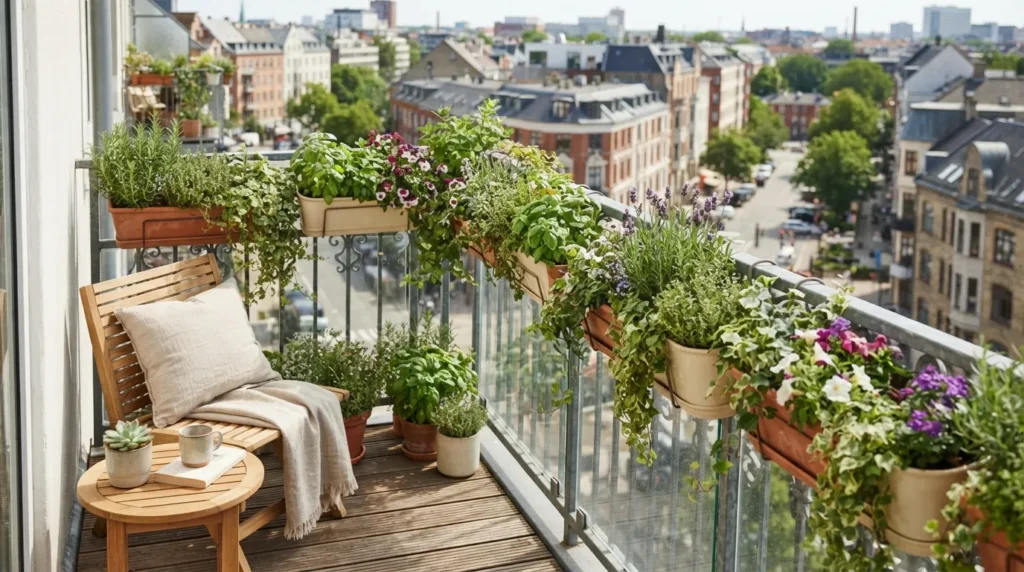
Rail planters can create a green edge around the balcony while leaving valuable floor area available for furniture.
They are particularly useful for small balconies because they bring plants outward and visually soften hard architectural lines.
A row of greenery along the railing can also make the balcony feel more connected to the surrounding landscape.
The arrangement does not have to be perfectly uniform. Repeating similar planter styles while varying the plants can create a relaxed garden appearance.
How To Style It
Choose planters designed specifically for your railing type and make sure they are securely installed.
Use plants suited to the amount of sunlight and wind exposure at the railing.
Herbs, compact flowers, trailing greenery, and suitable ornamental plants can all work depending on local conditions.
Keep the planter colors consistent with the rest of the balcony.
If the balcony is very narrow, use the railing for most of your smaller plants and reserve floor space for one larger statement planter.
Check drainage carefully so excess water does not create problems below.
4. Compact Seating Nook
Quick Benefits
- Creates a destination for relaxation
- Makes the balcony more functional
- Adds comfort without requiring much space
- Encourages everyday outdoor use
- Complements surrounding greenery
Why It Works
Plants create the garden atmosphere, but seating makes the balcony useful.
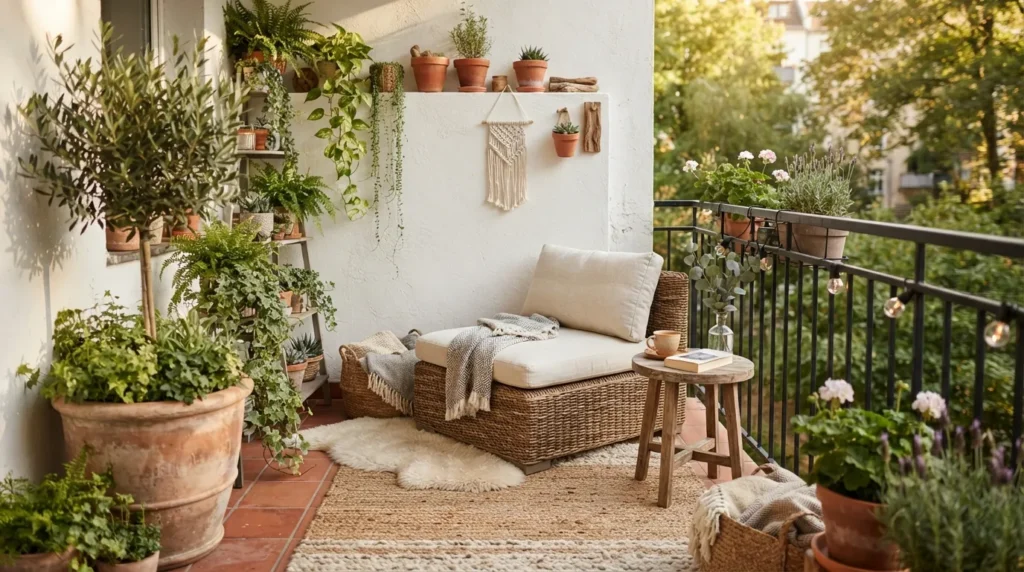
A compact chair, bench, or bistro set can turn the balcony into a place for morning coffee, reading, or an evening break.
The most important thing is choosing furniture that fits the scale of the space. Oversized outdoor furniture can quickly make a small balcony feel crowded.
A simple arrangement with one comfortable chair and a small side table can be enough.
If you have slightly more room, a narrow bench can provide seating while doubling as a visual anchor.
How To Style It
Measure the available floor space before buying furniture.
Choose pieces that leave enough room to walk comfortably.
Natural wood, woven materials, and neutral outdoor fabrics can reinforce the garden atmosphere.
Add one weather-resistant cushion for comfort.
Place greenery around the seating rather than directly in the walking path.
A small round table can often be easier to move around than a square table in a narrow balcony.
Keep the furniture palette simple so the plants remain the visual focus.
5. Hanging Greenery
Quick Benefits
- Uses overhead space
- Adds movement
- Softens balcony edges
- Creates a lush appearance
- Works well with small footprints
Why It Works
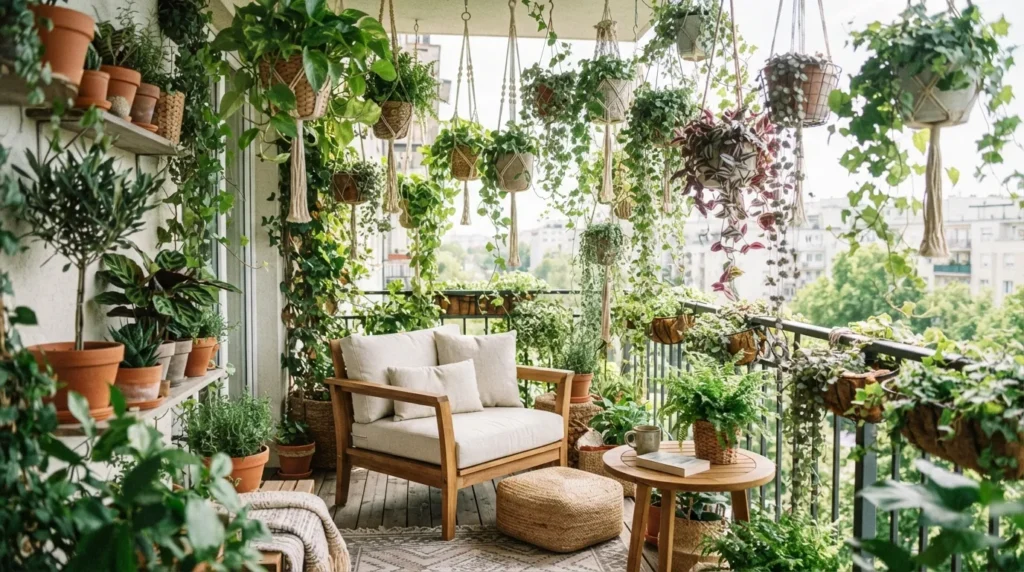
When floor and wall space are limited, the ceiling can become another planting zone.
Hanging plants introduce greenery from above, creating a layered effect that makes the balcony feel more immersive.
Trailing foliage is particularly useful because the leaves naturally extend downward and soften railings, walls, and hard architectural surfaces.
Hanging plants can also create a visual transition between the balcony and the sky, helping the space feel less enclosed.
How To Style It
Use secure hanging systems rated for the weight of the planter and plant.
Choose lightweight containers where appropriate.
Group plants at different heights instead of hanging everything at exactly the same level.
Trailing varieties can create beautiful movement along the balcony’s edge.
Keep hanging planters away from doors and walking paths.
If you rent, look for removable hanging solutions that are appropriate for the building and surface.
The goal is to add vertical greenery without creating obstacles.
6. Herb Garden Corner
Quick Benefits
- Adds useful greenery
- Introduces fragrance
- Works in small containers
- Provides fresh herbs for cooking
- Creates a practical garden feature
Why It Works
A small herb garden can make a balcony feel genuinely garden-like because it combines beauty with everyday usefulness.
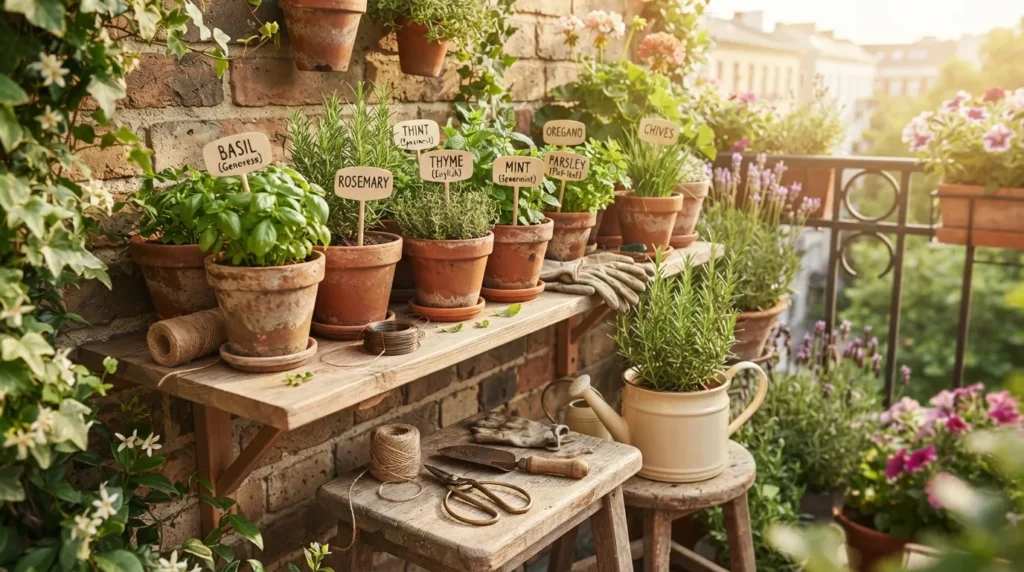
Basil, mint, rosemary, thyme, parsley, chives, and other herbs can be grown in suitable containers depending on climate, light, and growing conditions.
The scent of herbs can also make the outdoor space feel more sensory.
A dedicated herb corner keeps the arrangement organized instead of scattering small pots everywhere.
How To Style It
Choose a location with the amount of sunlight required by your selected herbs.
Use a narrow shelf, tiered planter, or compact collection of containers.
Labeling the herbs can add a charming decorative detail while making them easier to identify.
Terracotta pots can create a classic garden look. Wooden planters offer a warmer modern appearance.
Keep herbs accessible if you plan to cook with them regularly.
Make sure containers have appropriate drainage and that the selected plants suit your balcony’s conditions.
7. Natural Wood Accents
Quick Benefits
- Adds warmth
- Complements greenery
- Softens hard surfaces
- Creates a natural garden mood
- Works with many decor styles
Why It Works
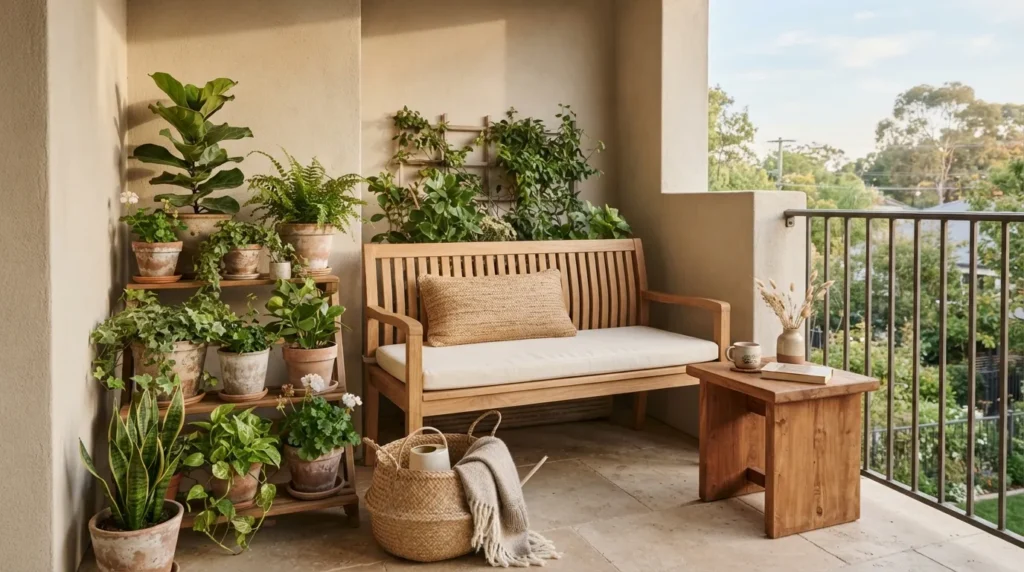
Greenery looks particularly inviting against natural wood.
Wood introduces warmth that can balance concrete, metal railings, glass, and painted walls commonly found on apartment balconies.
You do not need a large wooden structure. A small bench, folding chair, plant stand, side table, or vertical trellis can be enough.
Natural wood also connects the balcony visually with the organic character of plants.
How To Style It
Choose one primary wood tone.
A light oak or natural finish can create a Scandinavian-inspired garden mood, while darker wood creates a richer appearance.
Use a wooden plant stand to elevate smaller pots and create different heights.
A narrow bench can provide both seating and visual structure.
If the balcony already contains several materials, keep the wood accents simple.
Use outdoor-appropriate finishes and maintain the material according to the manufacturer’s recommendations.
8. Cozy Evening Lighting
Quick Benefits
- Creates a welcoming atmosphere
- Extends balcony use into the evening
- Highlights plants
- Adds warmth without taking floor space
- Makes a small balcony feel more intimate
Why It Works
A balcony can look completely different after sunset.
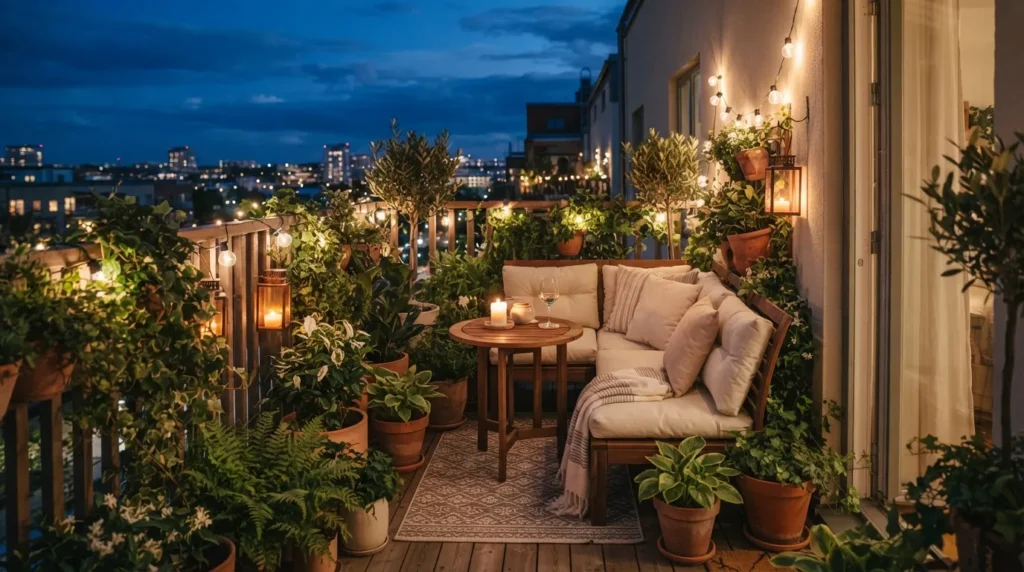
Soft lighting reveals the shapes of plants, creates gentle shadows, and makes the seating area feel more inviting.
Instead of relying on one bright overhead light, use several small sources.
String lights, lanterns, wall-mounted fixtures, and suitable rechargeable outdoor lights can create layers.
The goal is illumination that supports relaxation rather than turning the balcony into a brightly lit room.
How To Style It
Start with practical lighting near the door or entrance.
Then add decorative light around the seating area.
String lights can be wrapped around a suitable railing or trellis. Small lanterns can sit on a table or shelf.
Choose warm illumination for a softer evening mood.
Avoid placing lights where they create glare into neighboring homes or apartments.
Keep electrical connections and fixtures suitable for outdoor use and local weather conditions.
9. Garden Privacy Screen
Quick Benefits
- Creates a more secluded atmosphere
- Softens surrounding buildings
- Adds vertical interest
- Provides a backdrop for plants
- Makes seating feel more private
Why It Works
A balcony can feel less relaxing when it is completely exposed to neighboring apartments or busy streets.
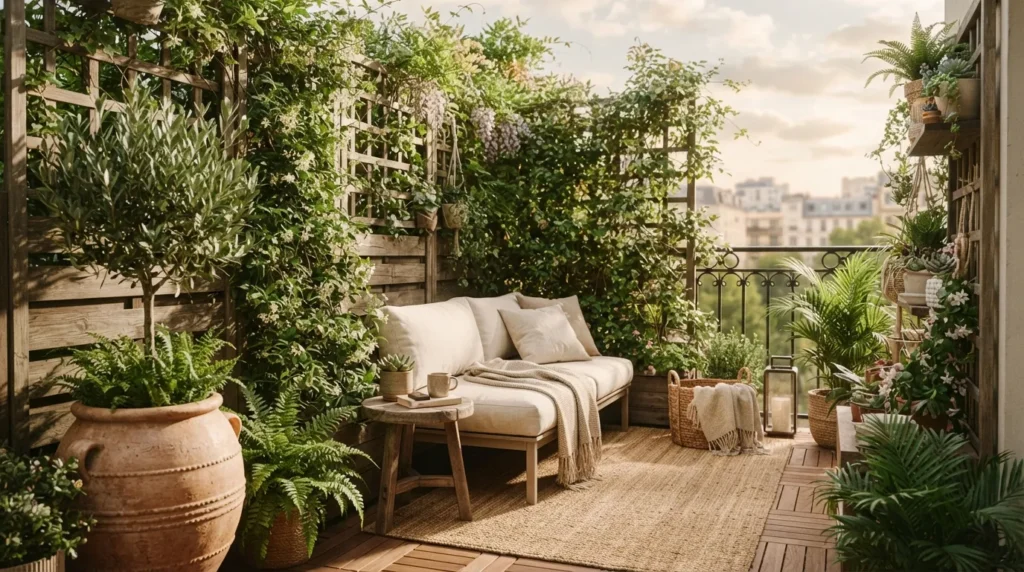
A privacy screen can help define the space while also creating a background for greenery.
Instead of using a completely solid barrier, consider combining screening with plants. This creates a softer and more garden-like result.
Bamboo-style screens, trellises, outdoor fabric panels, and suitable vertical plant structures can all provide different levels of privacy.
How To Style It
Identify the direction where privacy is most important.
Use a narrow screen along that side rather than enclosing the entire balcony.
Add climbing plants or trailing greenery where appropriate.
Natural wood or neutral-colored screens tend to blend well with plants.
Keep the screen proportional to the balcony. A very tall or visually heavy structure can make a small space feel smaller.
Check building rules before attaching anything permanently to exterior walls or railings.
10. Miniature Garden Retreat
Quick Benefits
- Combines multiple small-space strategies
- Creates a cohesive outdoor room
- Maximizes functionality
- Makes the balcony feel intentional
- Supports relaxation and everyday use
Why It Works
The strongest small balconies usually do not rely on one decorating trick. They combine several ideas into a cohesive composition.
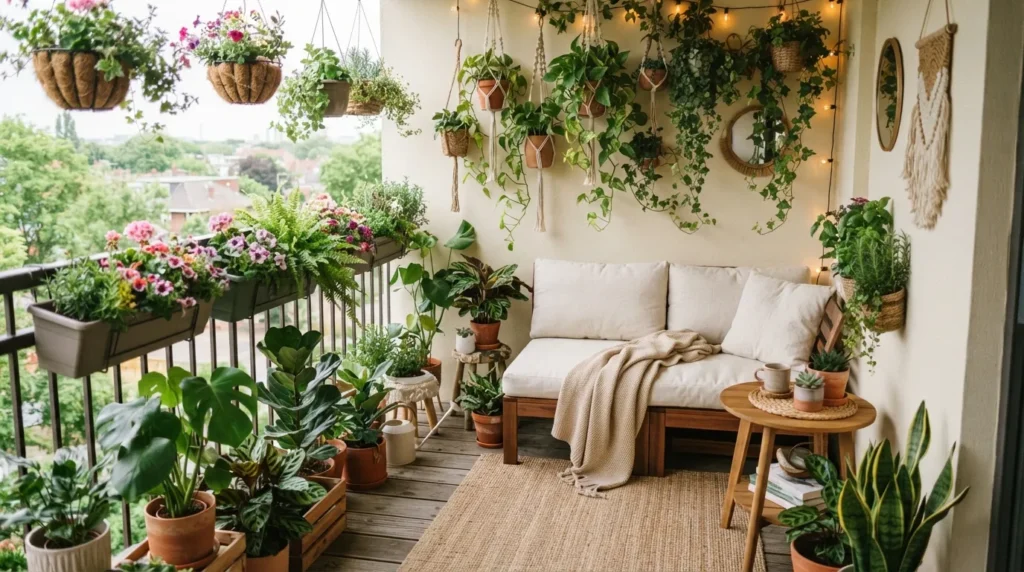
Imagine a compact balcony with a narrow wood bench, a few layered containers, trailing greenery along the railing, a small herb planter, and warm lights overhead.
None of these elements needs to be large.
Together, they create the sensory qualities of a garden: greenery, texture, fragrance, natural materials, shade, and soft light.
The important part is maintaining enough empty space so the balcony remains comfortable.
How To Style It
Begin with the largest functional piece, usually seating.
Then establish your main planting zone.
Add greenery at three levels: floor, railing, and overhead or wall height.
Introduce one natural material, such as wood or woven fiber, and repeat it once or twice.
Finish with soft lighting and one or two decorative accessories.
Avoid filling every corner.
The open areas are part of the design because they allow the greenery and seating to stand out.
How To Make A Small Balcony Feel Like A Garden
The easiest way to create a garden atmosphere is to think in layers.
Start at floor level with one or two substantial plants. Add medium containers around the seating area. Use railing planters to create a green edge, then introduce vertical or hanging plants for additional height.
Texture is just as important as plant quantity. Combine broad leaves with delicate foliage, trailing growth, wood, ceramic, and woven materials.
Color can remain simple. Greenery paired with terracotta, cream, beige, natural wood, and stone tones creates a calm garden palette.
Finally, make the balcony comfortable. A garden-inspired space becomes much more enjoyable when there is a chair, bench, or small table where you can actually sit.
Best Plants For A Small Balcony
The best plants depend on sunlight, temperature, wind, container size, and your local climate.
Instead of choosing plants simply because they look beautiful in photographs, consider the conditions your balcony actually provides.
For sunny balconies, suitable herbs, flowering plants, grasses, and sun-loving foliage may work well.
For shaded balconies, look for plants that tolerate lower light.
Wind exposure also matters. Tall, delicate plants can struggle on exposed balconies, while compact and sturdy varieties may perform better.
Think about maintenance too. If you travel frequently, choose plants that fit your watering routine.
Always check the mature size of a plant before putting it into a small container. A plant that looks compact at the garden center can eventually outgrow a tiny balcony.
Small Balcony Ideas For Renters
Renters can create a beautiful garden atmosphere without making permanent changes.
Use freestanding planters, lightweight plant stands, movable furniture, railing planters designed for your balcony, and removable outdoor lighting where permitted.
A folding chair or compact bistro set can make the space flexible.
Freestanding trellises can provide vertical greenery without requiring permanent wall installation.
Outdoor rugs can soften concrete floors and help define the seating area.
Before installing hooks, brackets, screens, or other attached items, check your lease and building requirements.
A renter-friendly balcony can still feel highly personalized when the furniture, plants, textiles, and containers work together.
Small Balcony Color Ideas
Greenery naturally provides the main color, so the rest of the palette can remain simple.
Natural wood and terracotta create a warm Mediterranean-inspired feeling.
Cream, beige, light gray, and pale wood create a softer contemporary look.
Black planters and charcoal furniture can provide stronger contrast against green plants.
Muted blue or sage can introduce a subtle accent without overpowering the garden atmosphere.
Try repeating one or two non-green colors throughout the balcony. Matching every piece is unnecessary, but some visual repetition creates cohesion.
How To Create Privacy With Plants
Plants can create privacy gradually without making the balcony feel boxed in.
Use taller plants at the areas where you need screening, then place lower plants in front of them.
Trellises can support suitable climbing plants and create vertical coverage without taking much floor space.
Large planters can also function as visual dividers around seating.
For balconies exposed to strong wind, choose sturdy plants and secure containers properly.
Remember that added weight can matter on balconies. Avoid creating a large collection of heavy containers without considering the balcony structure and building requirements.
Common Small Balcony Decorating Mistakes
One of the biggest mistakes is using furniture that is too large.
Another is putting every plant on the floor. This uses valuable space and prevents the greenery from creating visual height.
Too many small pots can also make a balcony feel cluttered. A few larger containers often create a stronger composition.
Poor drainage is another common issue. Containers need appropriate drainage, and runoff should be managed responsibly.
Finally, avoid choosing plants based only on appearance. Sunlight, wind, temperature, watering needs, mature size, and local conditions all affect whether a plant is appropriate.
FAQ
How do I make a tiny balcony look like a garden?
Use plants at different heights rather than placing everything on the floor. Combine large containers, rail planters, hanging greenery, and vertical plants. Add one compact seating area, natural materials, and warm lighting to create the atmosphere of a miniature garden without overcrowding the space.
What plants are best for a small balcony?
The best plants depend on your balcony’s sunlight, wind, temperature, and watering conditions. Compact herbs, suitable flowering plants, trailing greenery, grasses, and container-friendly foliage can all work. Check the mature size and care requirements before choosing plants.
How can I decorate a small balcony without making it crowded?
Choose furniture designed for small spaces and limit the number of large pieces. Use vertical and railing planters to move greenery upward. Keep a clear walking path and choose a cohesive color palette. A few substantial plants often create more impact than many tiny containers.
How can I make my balcony feel private?
Use tall plants, large containers, trellises, climbing plants, or appropriate outdoor privacy screens along the most exposed side. Combining greenery with screening usually creates a softer garden effect than using a completely solid barrier.
How can I create a cozy balcony at night?
Use several low-intensity sources rather than one bright light. Warm string lights, lanterns, and suitable outdoor fixtures can illuminate seating and plants while creating a relaxed atmosphere. Keep electrical equipment outdoor-rated and follow local safety requirements.
What furniture works best on a small balcony?
Compact bistro sets, folding chairs, narrow benches, and small lounge chairs are practical choices. Measure the balcony before buying and leave enough room for comfortable movement. Furniture with slim profiles can help preserve the feeling of openness.
How do I create a balcony garden if I rent?
Use movable planters, freestanding plant stands, lightweight trellises, portable furniture, and removable decor where permitted. Avoid permanent modifications unless your lease allows them. Renter-friendly pieces can create a lush atmosphere while allowing you to take the garden with you.
Conclusion
A small balcony can feel remarkably garden-like when plants, furniture, lighting, and materials are arranged with intention.
You do not need a large outdoor area. Use vertical surfaces, railings, hanging space, and layered containers to bring greenery into every available dimension. Then add one comfortable place to sit and a few natural materials to make the space feel welcoming.
Start with the conditions of your balcony. Notice how much sunlight it receives, how exposed it is to wind, and how much maintenance you can realistically manage. Choose plants that suit those conditions rather than forcing a particular garden style.
Then build gradually.
A single large planter can become the foundation. A small chair can create a destination. A trellis can add height. A few herbs can bring fragrance. Warm lights can transform the atmosphere after sunset.
The result does not have to look like a traditional garden. It simply needs to provide the qualities you enjoy about one: greenery, texture, natural beauty, privacy, and a peaceful place to pause.
With the right balance, even the smallest balcony can become a little outdoor retreat that feels connected to nature and comfortable enough to enjoy every day.
Related Articles
- 10 Small Balcony Ideas with Beautiful Greenery
- 10 Garden Decor Ideas That Feel Like a Luxury Retreat
- 10 Small Garden Ideas for Beautiful Outdoor Spaces
- 10 Outdoor Dining Area Ideas for Cozy Entertaining
- 10 DIY Garden Projects That Anyone Can Try