

Can You Park a Heavy Truck Within 4 Feet of a Retaining Wall Top?
Determining whether you can park a heavy truck within 4 feet of a retaining wall top is a critical safety consideration for fleet operators and independent drivers alike. Parking too close to a wall, especially one not engineered for heavy structural loads, risks catastrophic failure of the earth-retention system. You should generally avoid parking heavy vehicles near the top of such walls because the surcharge load can exceed the wall’s design capacity.
This article breaks down the engineering, legal, and safety risks involved in positioning your vehicle in these high-pressure zones. By understanding the physics of soil pressure, you can prevent costly property damage and avoid significant liability issues.
The Direct Verdict on Proximity
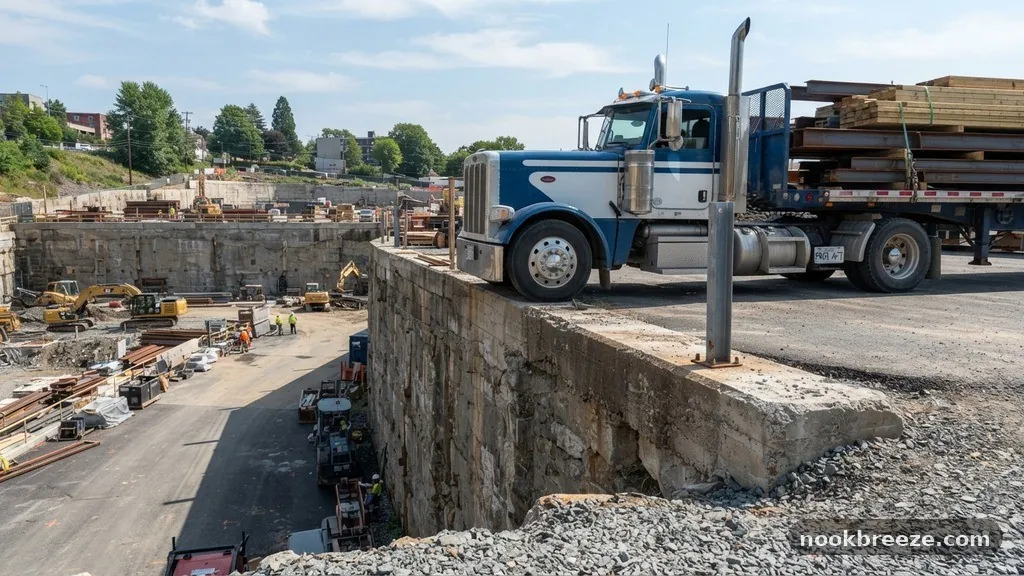
You should not park a heavy truck within 4 feet of a retaining wall top unless the wall has been specifically engineered to support that exact surcharge load. Most standard retaining walls, including those found in residential areas or basic parking lots, are designed only to hold back soil and the weight of light passenger vehicles.
A heavy truck, which can weigh upwards of 80,000 pounds when fully loaded, introduces a massive vertical and horizontal force component. This force is transferred directly into the soil behind the wall, significantly increasing the pressure against the structure.
When a heavy vehicle is parked near the edge, the weight creates a “surcharge” that acts on the wall like a wedge. If the wall is not reinforced to handle this, the added pressure can cause it to tilt, crack, or collapse suddenly.
Professional engineers typically use a “zone of influence” calculation to determine how far away a heavy load must stay from the back of the wall. In many jurisdictions, that distance is significantly greater than 4 feet, often requiring a buffer zone that mirrors the height of the wall itself.
Understanding Surcharge Loads and Soil Pressure
Surcharge loads are essentially any extra weight placed on the ground surface near a retaining wall. When you park a heavy vehicle, you are applying a concentrated point load to the soil behind the wall’s face.
This weight travels through the soil in a pressure bulb, expanding as it moves downward and outward. If that pressure bulb intersects with the wall, the wall must be strong enough to resist that specific force.
The soil type also plays a massive role in how much pressure the wall feels. Loose, sandy soil transmits pressure differently than compacted clay or engineered backfill.
If you park a heavy truck on wet or saturated soil near a wall, the risk of failure increases exponentially. Water trapped in the soil adds hydrostatic pressure, which, when combined with the weight of your truck, can overwhelm even a well-built wall.
Risk Factors for Wall Failure
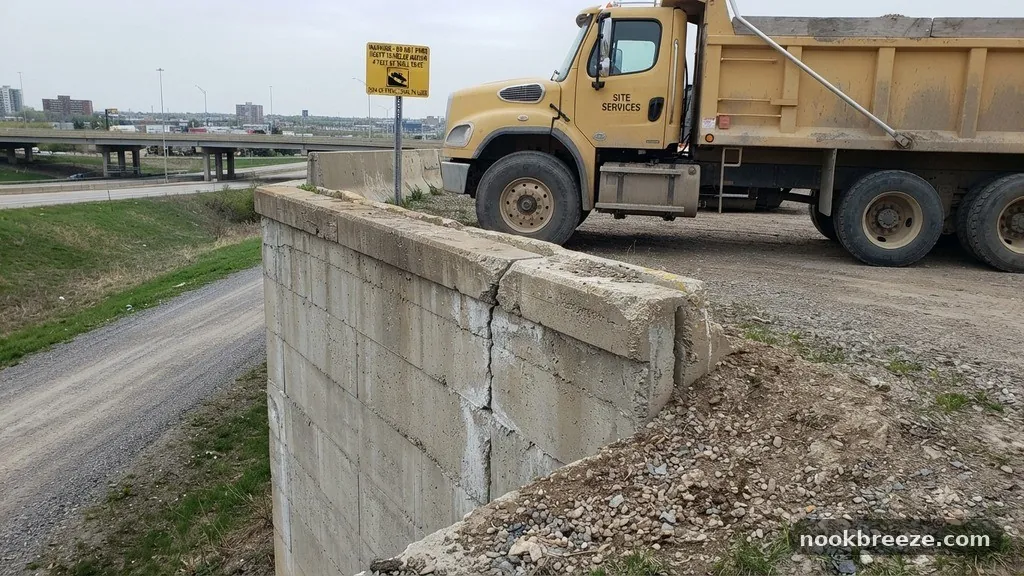
Several variables contribute to the likelihood of a retaining wall failing when subjected to heavy vehicle traffic or parking. Structural integrity is the first concern, as many older walls were built without accounting for modern heavy vehicle standards.
If you see signs of bowing, vertical cracking, or efflorescence (white mineral deposits) on the wall face, it is already under stress. Parking a heavy truck near such a wall is an invitation for a structural collapse.
The foundation of the wall is another critical piece of the puzzle. If the wall is a gravity-style structure—meaning it relies solely on its own weight to stay upright—it is particularly vulnerable to horizontal forces.
Mechanical stabilized earth (MSE) walls with geogrid reinforcement are slightly more resilient, but they still have limits. A heavy truck parked too close can pull on the grid layers or shift the blocks out of alignment.
Legal and Zoning Implications
Navigating local ordinances is just as important as understanding the engineering. Many cities, including New York City’s Department of Buildings, have strict regulations regarding vehicle parking near structural elements.
Zoning laws often restrict where commercial trucks can park, especially in residential or mixed-use districts. These rules aren’t just about traffic flow; they are often designed to protect public infrastructure and private property.
If you park a truck in a prohibited zone or too close to a wall, you may face heavy fines or be held liable for damages. In some cases, property owners may have specific easements or agreements that dictate how the land behind a wall can be used.
If you are a fleet manager, you need to verify these restrictions before designating parking spots for your drivers. Ignorance of the law will not protect you if a wall collapses under one of your vehicles.
Comparing Wall Types and Their Load Limits
Not all retaining walls are created equal, and their ability to withstand heavy loads varies significantly based on their construction method. Understanding these differences can help you determine if a specific parking area is safe for your vehicle.
| Wall Type | Typical Load Capacity | Risk Level for Heavy Trucks |
|---|---|---|
| Gravity (Stone/Concrete) | Low (Soil weight only) | High Risk (Prone to sliding) |
| MSE (Geogrid/Blocks) | Moderate (Engineered backfill) | Moderate (Needs specific design) |
| Cantilever (Reinforced Concrete) | High (Structural steel) | Low (If designed for traffic) |
| Timber/Wood Sleeper | Very Low | Critical Risk (Rapid decay) |
Safety Protocols for Fleet Managers

Fleet managers must establish clear guidelines regarding where drivers can park their vehicles. Creating a policy that prohibits parking within a certain distance of retaining walls is a simple way to mitigate risk.
You should also conduct site surveys of any location where your trucks frequently park or wait for service. If a site looks questionable, it is better to find an alternative location than to risk an accident.
Communication is key when it comes to site safety. Ensure that your drivers are trained to recognize the signs of a failing wall, such as tilting or crumbling mortar.
If a driver reports a potential issue, take it seriously and restrict parking in that area immediately. Documentation of these safety protocols can also be vital for insurance purposes should an incident occur.
Physical Signs of Potential Collapse
Before a wall fails, it often displays warning signs that are visible to a trained eye. You should inspect the wall for any of the following indicators before deciding to park a heavy vehicle nearby:
- Vertical cracks that widen toward the top of the wall.
- Horizontal displacement or “bowing” of the wall face.
- Ground subsidence or sinkholes appearing directly behind the wall.
- Water pooling at the base of the wall, suggesting drainage failure.
- Loose mortar joints or shifting capstones on top of the structure.
If you see any of these signs, stay well away. The cost of moving your truck to a safer spot is negligible compared to the cost of a structural failure. Always prioritize the stability of the ground before setting your parking brake.
The Role of Drainage in Wall Stability
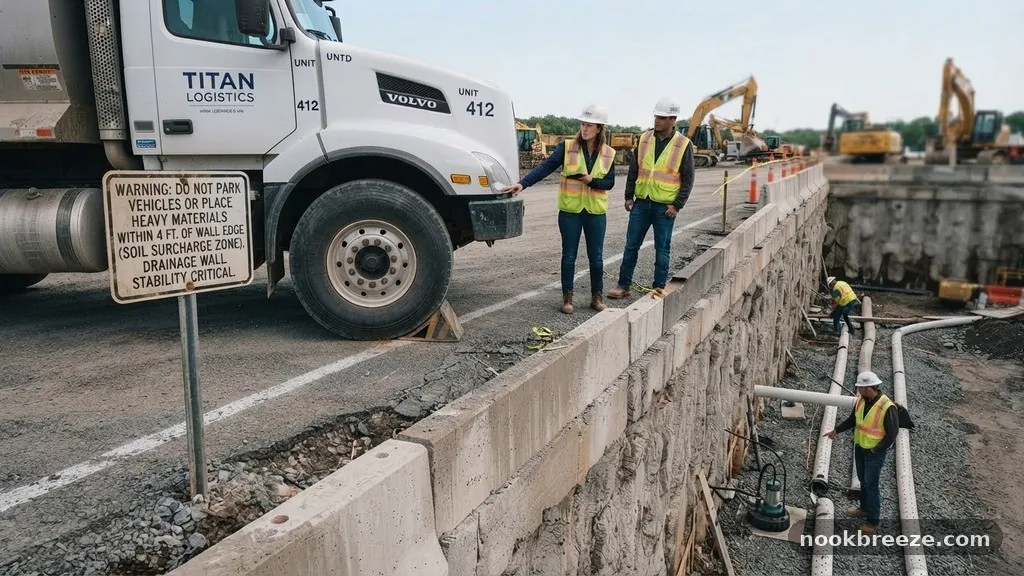
Water is the enemy of any retaining wall. When you park a heavy truck near a wall, you might also be blocking natural drainage paths or creating new ones.
If the soil behind the wall becomes saturated, its internal friction decreases, and the weight of your truck can act as a catalyst for a landslide. Proper drainage, such as weep holes and gravel backfill, is essential for keeping the soil dry and stable.
If you notice that the ground near a wall is consistently muddy or soft, avoid parking there entirely. The combination of heavy vehicle weight and water-logged soil is a recipe for disaster.
Even a wall that appears strong can fail if the soil behind it turns into a slurry. Always check the ground condition before you decide to park your vehicle.
Professional Engineering Assessments
If you are a property owner or a fleet manager who needs to park heavy vehicles near a wall regularly, you should hire a structural engineer to perform an assessment. An engineer can calculate the exact surcharge load the wall can handle and provide a safe distance for parking. They can also recommend reinforcements if the current wall is insufficient for your needs.
Do not rely on visual inspections alone for high-stakes parking decisions. An engineer will look at the original design documents, the soil reports, and the current state of the structure.
They can provide a written report that clarifies exactly how close you can park. This documentation is essential for liability protection and peace of mind.
Common Misconceptions About Parking Near Walls
There is a common belief that if a wall is made of concrete, it can handle any weight. This is a dangerous misconception.
Concrete, while strong in compression, can be brittle and prone to failure if the ground behind it shifts. Just because a wall looks solid does not mean it has the necessary foundation or reinforcement to support the weight of a commercial truck.
Another myth is that parking a truck parallel to a wall is safer than parking perpendicular to it. While the orientation can change how the weight is distributed, the total surcharge load remains significant in either case.
Never assume that your parking angle makes a dangerous spot safe. Always defer to the distance requirements established by the site’s engineering design.
Frequently Asked Questions
How far away should I park from a wall if there are no signs?
If there is no posted signage or engineering guidance, a safe rule of thumb is to maintain a distance at least equal to the height of the wall. If the wall is 6 feet tall, stay at least 6 feet away. When in doubt, increase that distance to be as far as the property allows.
What should I do if I notice a wall starting to tilt?
If you see a wall tilting, you should immediately notify the property owner or the facility manager. Move your vehicle to a safe location away from the structure and warn others to do the same. Do not attempt to repair or stabilize the wall yourself, as this is a job for structural engineers.
Are there specific types of trucks that are more dangerous to park near walls?
Yes, any heavy vehicle that exerts a high point load is dangerous. Concrete mixers, dump trucks, and fully loaded tractor-trailers are particularly risky. The higher the gross vehicle weight, the larger the pressure bulb they create in the soil.
Does the time of year affect the risk of parking near a wall?
Seasonal changes can significantly increase the risk of wall failure. In the spring, heavy rains can saturate the soil, making it unstable. In the winter, freeze-thaw cycles can expand the soil and push against the wall, making it much more susceptible to the additional weight of a parked truck.
Can parking stops help prevent wall damage?
Parking stops are designed to prevent vehicles from rolling into walls, but they do not account for the surcharge load transmitted through the soil. Even if your bumper hits the parking stop, the weight of the vehicle is still being applied to the ground behind the wall. They are a good physical barrier, but they do not replace the need for proper distance.
Conclusion
Parking a heavy truck within 4 feet of a retaining wall top is a significant risk that should be avoided in almost every circumstance. The structural integrity of these walls is rarely designed to support the immense surcharge loads associated with commercial vehicles. By maintaining a safe distance and paying attention to the physical condition of the site, you can prevent dangerous collapses and protect your fleet from unnecessary liability.
Always prioritize safety by inspecting your parking environment and respecting the engineering limits of the structures around you. When in doubt, find a parking spot on level, stable ground far away from any retaining walls.
If you have specific needs for parking near these structures, consult with a professional engineer to ensure your operations remain safe and compliant. Stay aware of your surroundings and keep your vehicle at a distance that guarantees stability.