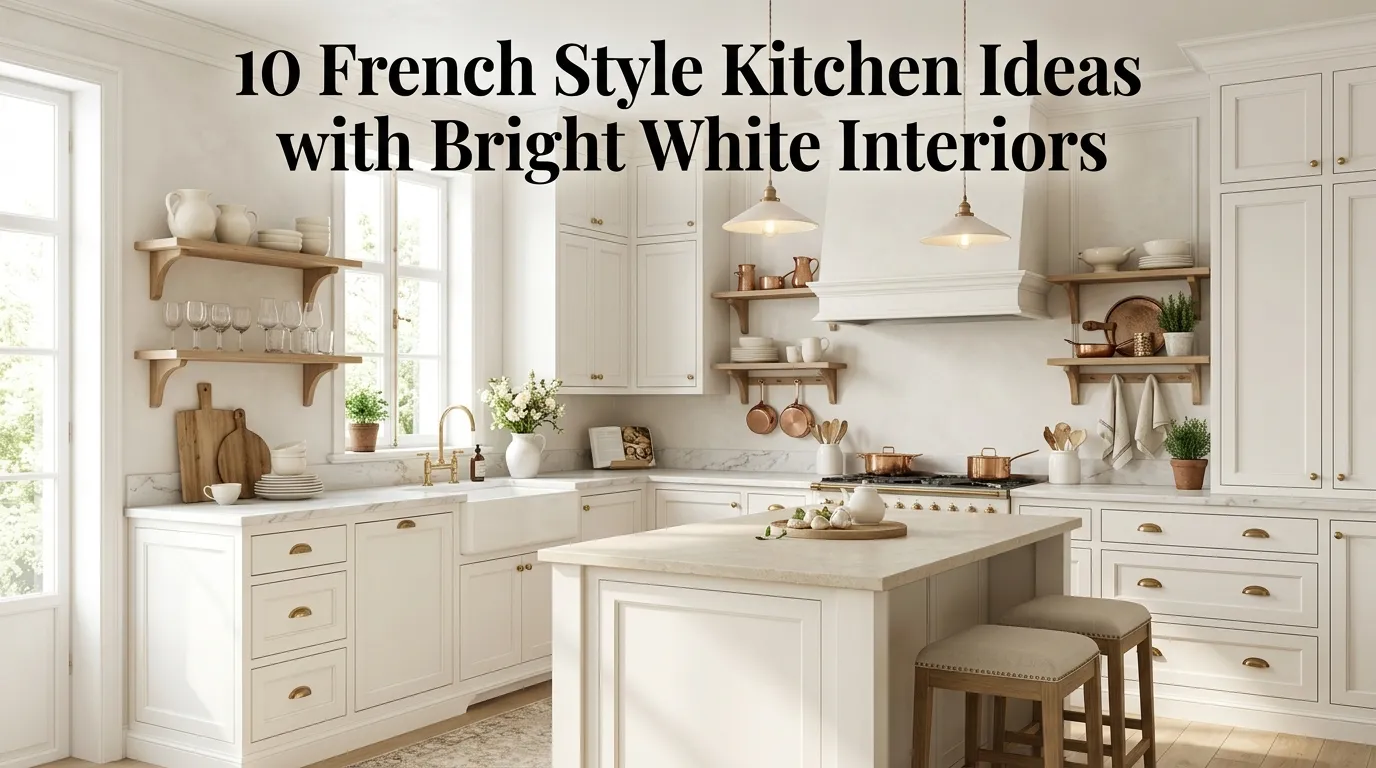
10 French Style Kitchen Ideas with Bright White Interiors
A bright white kitchen can feel timeless, welcoming, and surprisingly warm when French-inspired details are introduced thoughtfully. The style is less about creating a perfectly decorated room and more about combining classic architecture, natural materials, aged finishes, and everyday pieces that feel collected over time.
French-style kitchens often balance elegance with practicality. You might see white cabinetry alongside warm wood, antique-inspired hardware, natural stone countertops, vintage lighting, open shelving, or a farmhouse-style sink. None of these elements has to look overly formal. The charm comes from how they work together.
White is especially effective because it creates a light foundation for those details. Instead of making the room feel stark, warm whites can allow wood grain, brass, ceramics, woven textures, and greenery to become part of the visual story.
A common mistake is assuming that an all-white kitchen needs to be completely minimal. French interiors often have personality through texture and subtle variation. A slightly aged cabinet finish, handmade-looking tile, an old-world pendant, or a wooden stool can make the room feel much more inviting.
In my experience, the most successful French-inspired kitchens usually mix polished and imperfect elements. Crisp cabinetry might sit beside a rustic cutting board. Elegant brass hardware can appear above a worn wood floor. A refined marble-inspired surface can be paired with simple ceramic dishes.
That contrast keeps the kitchen from feeling like a showroom.
Whether you are renovating a kitchen, updating a rental, or simply looking for ways to introduce French character into an existing space, these ideas focus on achievable details that create a bright, graceful, and comfortable atmosphere.
Table of Contents
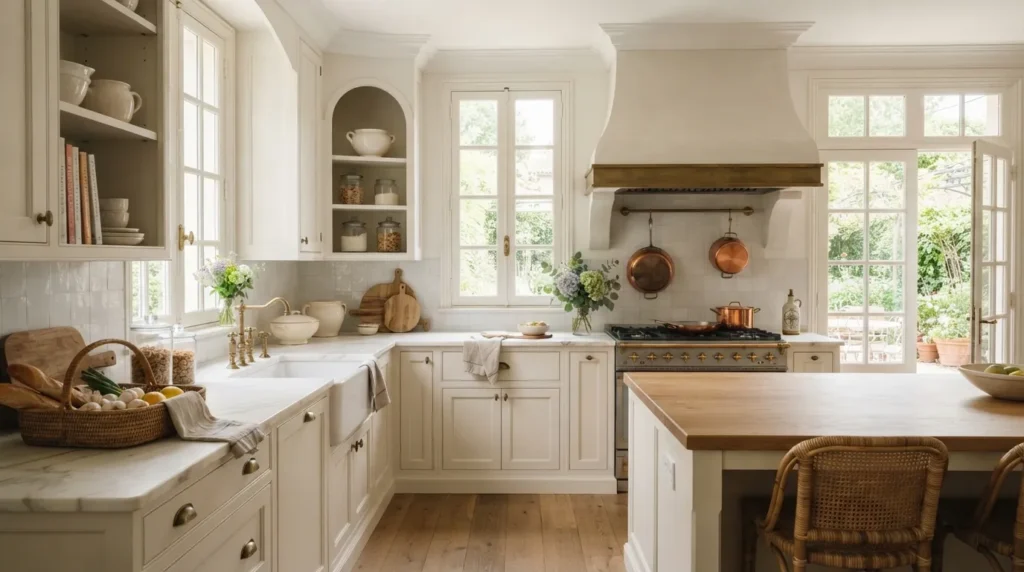
1. Classic White Cabinetry
Create a timeless foundation with bright cabinetry, traditional profiles, and understated hardware.
2. Warm Wood Accents
Balance white surfaces with natural wood for warmth, texture, and a relaxed French-country feeling.
3. Marble Inspired Surfaces
Use elegant stone-inspired countertops and backsplashes to add subtle luxury without overwhelming the room.
4. Vintage Brass Hardware
Introduce aged brass knobs, pulls, and fixtures for warmth and old-world character.
5. Farmhouse Sink
Make the sink a practical focal point with a classic apron-front silhouette and timeless materials.
6. Open Kitchen Shelving
Display everyday ceramics and natural materials through simple, thoughtfully styled shelves.
7. Elegant Pendant Lighting
Use classic lighting silhouettes to bring architectural interest and warm illumination.
8. Patterned Tile Details
Add understated French character with small-format tile, subtle patterns, or handcrafted-looking surfaces.
9. Rustic Kitchen Island
Anchor the room with a wood or painted island that combines preparation space with visual warmth.
10. Collected French Decor
Complete the kitchen with ceramics, textiles, greenery, and vintage-inspired details that feel naturally gathered.
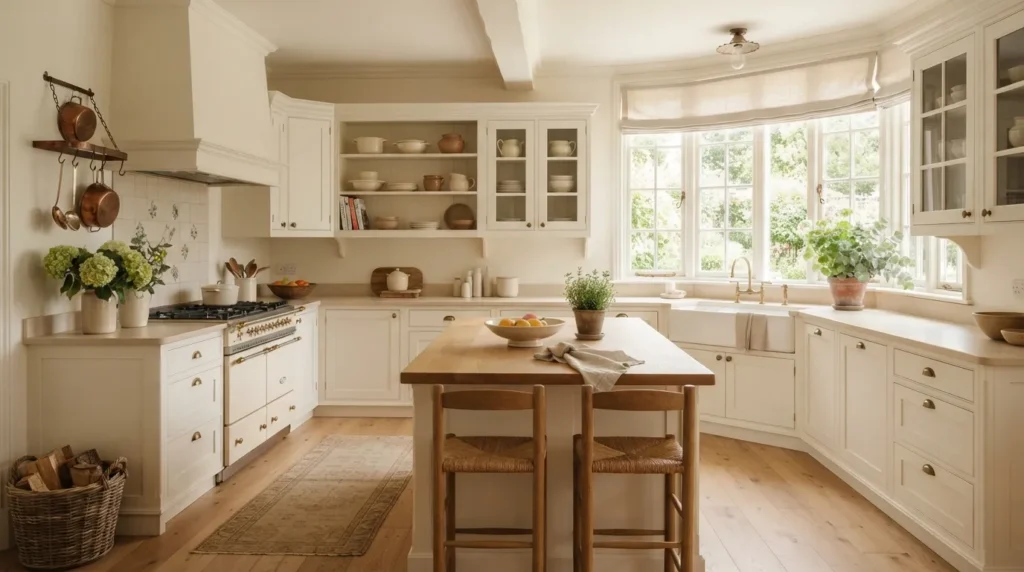
1. Classic White Cabinetry
Quick Benefits
- Creates a bright foundation
- Works with traditional architecture
- Makes smaller kitchens feel open
- Provides flexibility with accessories
- Supports both French-country and modern French styles
Why It Works
White cabinetry is one of the easiest ways to establish a French-inspired kitchen because it creates a clean backdrop for architectural and decorative details.
The important distinction is the type of white and the cabinet profile. A very cool, stark white can make a kitchen feel contemporary and clinical. Warmer whites, creamy whites, and soft ivory shades tend to feel more welcoming.
Traditional cabinet details also help. Shaker-style doors, framed cabinetry, subtle raised panels, furniture-like legs, and classic crown molding can give the room a more established appearance.
You do not need every cabinet to look ornate. French interiors often benefit from restraint. Simple cabinetry can feel elegant when paired with the right flooring, hardware, lighting, and natural materials.
How To Style It
Start with a warm white rather than a blue-based white if the goal is a softer French atmosphere.
Pair the cabinets with brushed or aged brass hardware. Natural stone or stone-inspired countertops can provide subtle contrast.
If the kitchen has tall ceilings, consider extending cabinetry upward with crown molding. This gives the room a more architectural appearance.
For a contemporary interpretation, use simple white cabinets with slim hardware and minimal decorative details.
For a French-country approach, introduce beadboard, traditional trim, a furniture-style island, or glass-front cabinet doors.
Keep the countertop relatively uncluttered. A ceramic vessel, wooden cutting board, or small bowl of fruit can add enough everyday character.
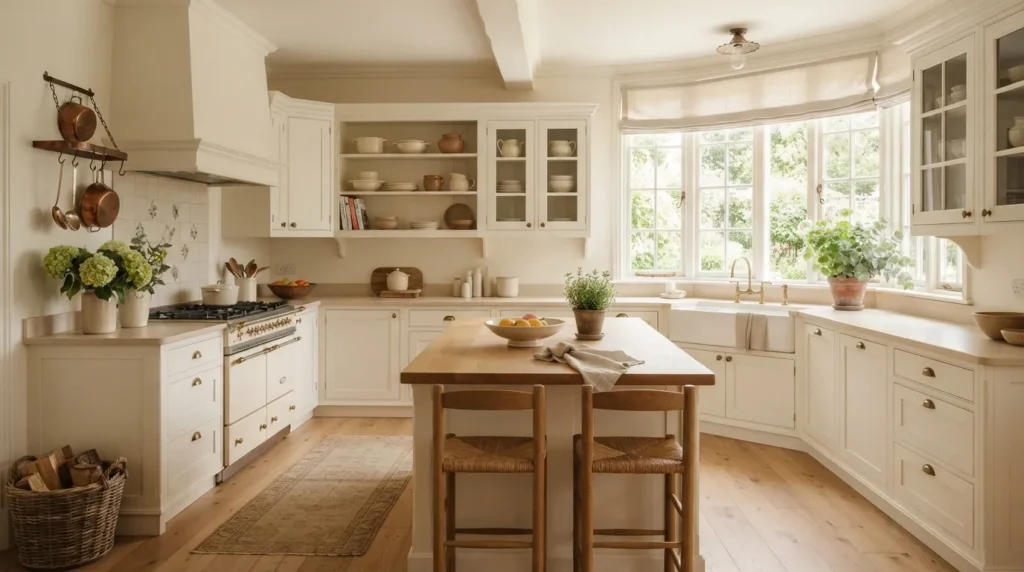
2. Warm Wood Accents
Quick Benefits
- Prevents an all-white kitchen from feeling cold
- Adds natural texture
- Creates visual contrast
- Complements traditional cabinetry
- Works across multiple French-inspired styles
Why It Works
White and natural wood create one of the most versatile combinations for a French-inspired kitchen. The white keeps the space bright, while wood introduces warmth and visual softness.
Wood can appear in many forms. A reclaimed-looking island, exposed beams, butcher-block surface, wooden stools, cutting boards, floating shelves, or hardwood flooring can all add character.
The goal is not to make everything match perfectly. Slight variations in wood tone can actually make the room feel more collected.
A warm wood island against white cabinetry is especially effective because it gives the kitchen a substantial focal point without requiring a bold paint color.
How To Style It
Choose one or two main wood tones and repeat them naturally throughout the room.
For example, a medium oak island can connect with oak flooring and a few wooden accessories.
If your kitchen already has wood floors, use lighter wood for shelves or furniture to create variation without introducing another strong color.
Wooden stools with curved or traditional silhouettes can soften a modern island.
A simple antique-style wooden table can also replace a conventional island in a larger kitchen.
Keep the surrounding accessories simple. The natural grain itself provides plenty of texture.
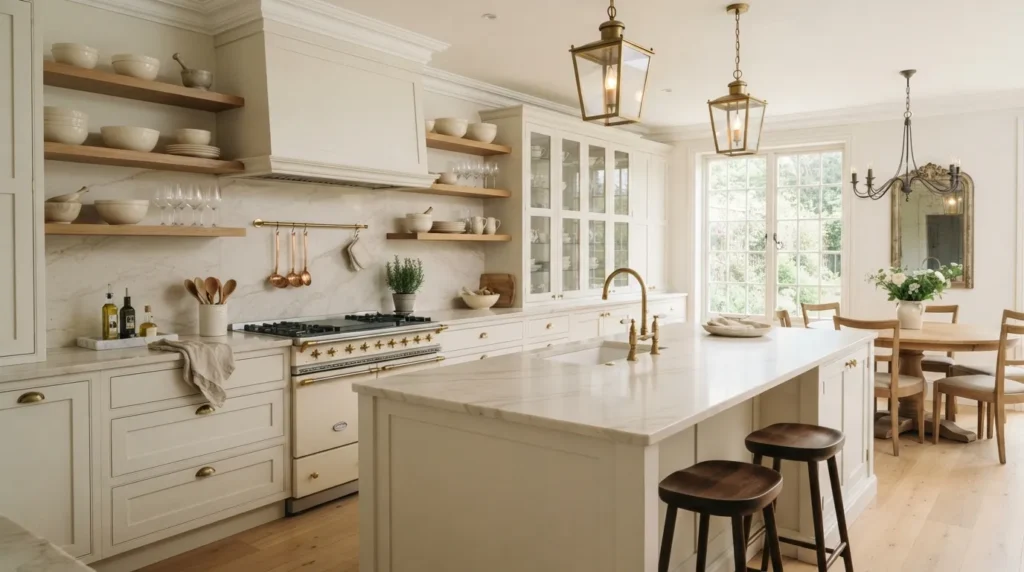
3. Marble Inspired Surfaces
Quick Benefits
- Adds timeless elegance
- Creates contrast against white cabinets
- Reflects natural light
- Works with traditional architecture
- Provides a refined backdrop
Why It Works
Stone surfaces have long been associated with classic European kitchens because they combine beauty with practical functionality.
A marble-inspired countertop can create a graceful transition between bright cabinetry and darker or warmer elements in the room. Veining adds subtle movement without introducing a strong pattern.
If natural marble is outside your renovation plans, other stone surfaces can create a similar visual effect. The important part is choosing a finish that looks appropriately understated.
A very dramatic stone with heavy veining can shift the kitchen toward a more contemporary luxury aesthetic. Softer veining tends to feel more timeless and works particularly well with French-inspired cabinetry.
How To Style It
Pair a pale stone surface with warm white cabinets and aged brass fixtures.
For a classic appearance, consider continuing the countertop material partially up the backsplash.
A simple backsplash with restrained veining can make the kitchen feel cohesive.
Balance the stone with natural materials such as oak, linen, rattan, or ceramic.
Avoid introducing too many competing patterns. Let the stone provide the main visual movement.
If the countertop has noticeable veining, keep cabinet colors and decorative accessories relatively quiet.
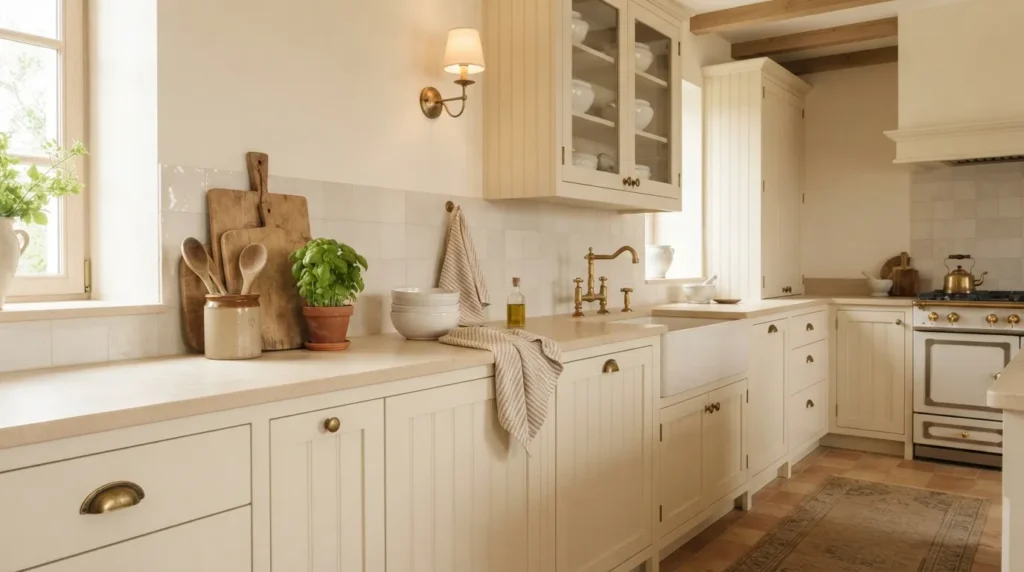
4. Vintage Brass Hardware
Quick Benefits
- Adds warmth to white cabinetry
- Introduces old-world character
- Creates subtle contrast
- Works with traditional architecture
- Provides an easy update
Why It Works
Hardware is a small detail with a surprisingly large visual effect. Brass knobs and pulls can instantly make white cabinets feel warmer and more traditional.
For a French-inspired kitchen, aged, antique, brushed, or unlacquered-looking brass generally feels more natural than highly polished yellow gold.
The finish does not need to look perfectly uniform. A slightly aged appearance can reinforce the collected character associated with classic European interiors.
Brass also connects beautifully with warm lighting, natural wood, cream ceramics, and stone.
How To Style It
Use knobs on cabinet doors and pulls on larger drawers for a classic combination.
Cup pulls can add a subtle farmhouse influence, while long traditional pulls create a slightly more refined appearance.
Coordinate the hardware with other visible metal elements such as faucets and lighting when possible, but exact matching is not essential.
Aged brass works particularly well against creamy white cabinets.
If your kitchen has modern cabinetry, changing the hardware can be one of the simplest ways to introduce French-inspired character without replacing the cabinets.
5. Farmhouse Sink
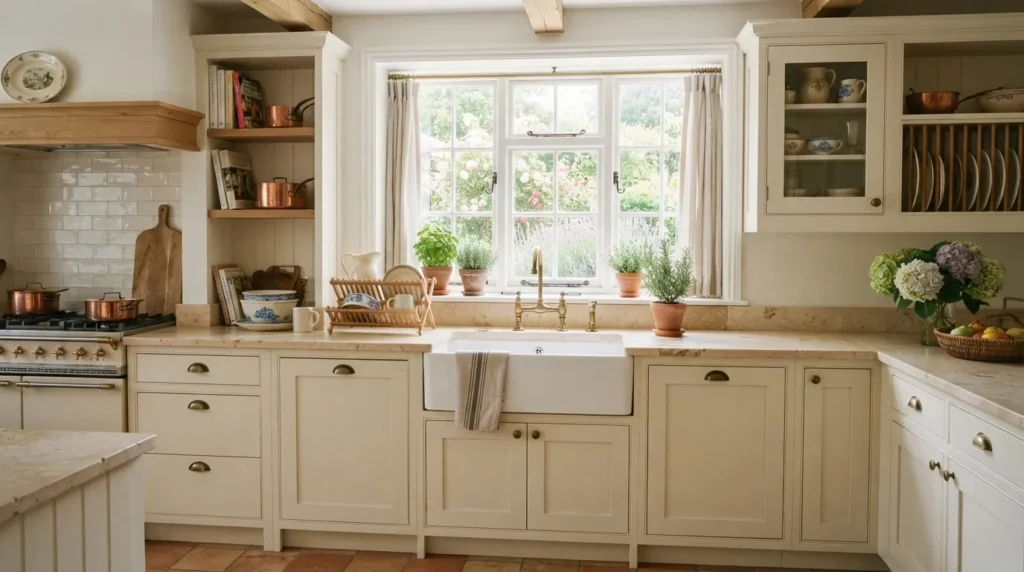
Quick Benefits
- Creates a recognizable focal point
- Adds traditional character
- Works with white cabinetry
- Supports practical kitchen use
- Complements natural materials
Why It Works
An apron-front sink can immediately reinforce the traditional character of a bright kitchen. Its broad front-facing shape provides architectural interest while remaining highly practical for everyday tasks.
White fireclay or ceramic-style sinks create a classic appearance and blend beautifully with white cabinetry.
The surrounding materials determine whether the sink feels rustic, traditional, or contemporary. A farmhouse sink paired with reclaimed wood feels more relaxed, while the same sink with marble-inspired surfaces and brass fixtures feels refined.
The sink also becomes an opportunity to introduce a beautiful faucet. A curved bridge or traditional pull-down silhouette can complement the overall aesthetic.
How To Style It
Pair a white apron-front sink with a warm brass or aged-metal faucet.
Use a simple ceramic soap dispenser or small vessel nearby rather than filling the counter with accessories.
Natural wood cutting boards can soften the white surfaces.
If the sink is positioned beneath a window, use the opening to frame greenery or a simple view of the garden.
For a smaller kitchen, choose a sink proportionate to the available cabinet space. A traditional detail works best when it feels naturally scaled to the room.
6. Open Kitchen Shelving
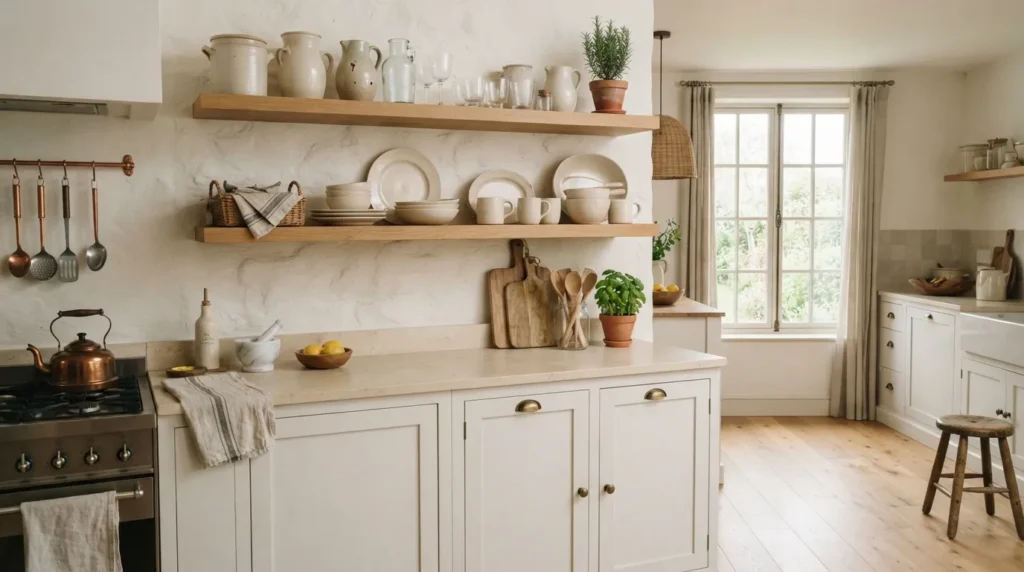
Quick Benefits
- Adds visual warmth
- Provides accessible storage
- Creates opportunities for styling
- Breaks up rows of cabinetry
- Highlights ceramics and natural materials
Why It Works
Open shelving can give a white kitchen a more relaxed, lived-in feeling. Instead of hiding everything behind cabinet doors, a few carefully selected everyday pieces become part of the decor.
This approach works especially well with French-inspired design because collected ceramics, wooden boards, glassware, and woven baskets can contribute to the room’s character.
The secret is avoiding overcrowding. Open shelves look elegant when there is enough space around each item.
They also work best when the objects have some relationship to one another. Similar colors and natural materials create cohesion without requiring identical pieces.
How To Style It
Use two or three shelves rather than covering an entire wall.
Begin with the largest pieces, such as serving bowls, pitchers, or cutting boards. Then add smaller ceramics and glasses around them.
Cream, white, beige, pale blue, soft green, and natural wood are easy colors for a French-inspired kitchen.
Add one small plant or a few fresh herbs for organic color.
Keep frequently used pieces within easy reach. Shelves that contain only decorative objects can feel staged, while useful items make the kitchen feel authentic.
7. Elegant Pendant Lighting
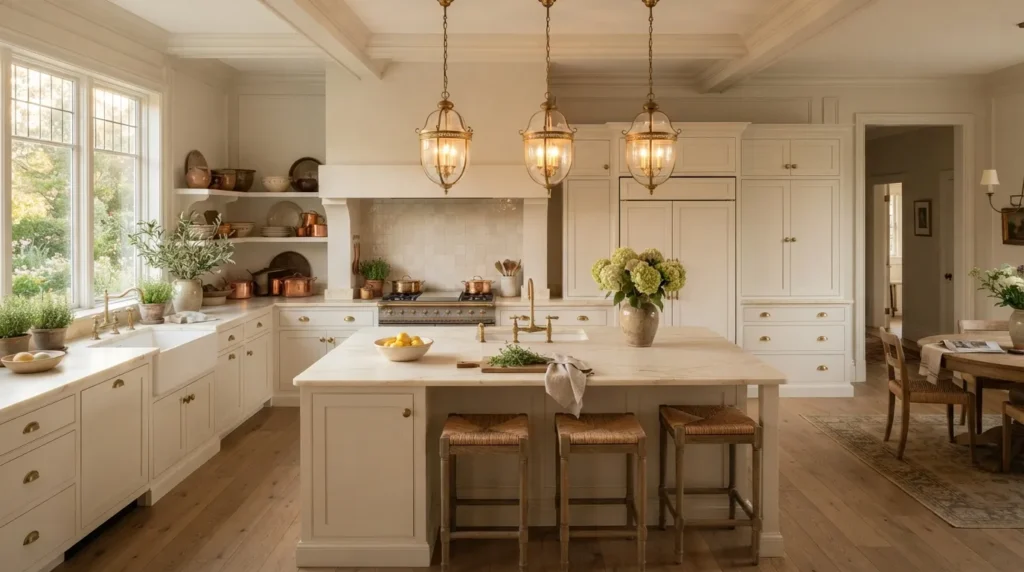
Quick Benefits
- Adds a focal point
- Provides practical illumination
- Introduces architectural character
- Helps define an island
- Enhances the evening atmosphere
Why It Works
Lighting is often the detail that gives a kitchen its final layer of personality. A beautiful pendant can make a simple white kitchen feel much more intentional.
French-inspired kitchens can accommodate many lighting styles, including aged brass pendants, traditional lanterns, glass globes, ceramic fixtures, and vintage-inspired sconces.
The right choice depends on the rest of the room. A lantern-style fixture feels traditional, while a simple opal-glass pendant can create a softer modern interpretation.
Lighting also adds warmth after sunset, when a white kitchen can otherwise lose some of its daytime brightness.
How To Style It
Hang pendants above an island or peninsula where they can provide both practical and decorative illumination.
Choose fixtures with proportions appropriate to the island. Oversized lights can create drama in a large kitchen, while smaller fixtures suit compact spaces.
Warm light generally creates a more inviting atmosphere.
Consider wall sconces near open shelving or a sink if the layout allows.
Repeat the fixture’s metal finish subtly elsewhere, such as through cabinet hardware or faucet details.
8. Patterned Tile Details
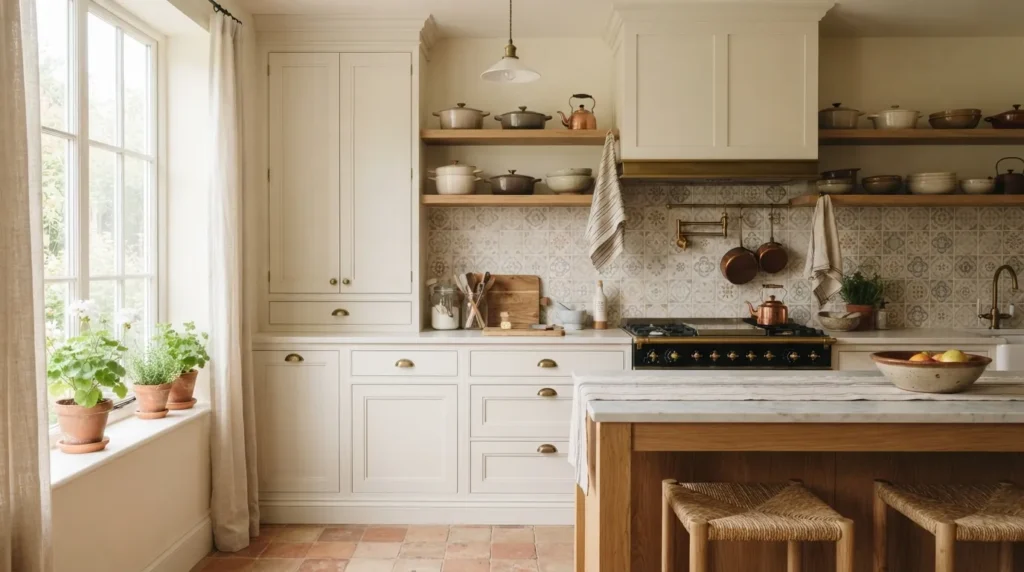
Quick Benefits
- Adds visual interest
- Introduces European character
- Protects kitchen walls
- Works with white cabinetry
- Creates an opportunity for subtle color
Why It Works
Tile can introduce personality without requiring bold cabinetry or colorful walls. Small-format tile, handmade-looking surfaces, geometric patterns, and softly irregular edges can give a white kitchen a distinctly European quality.
The most timeless approach is usually subtle. A creamy tile with a gentle shape can add texture while maintaining the bright appearance of the room.
Patterned tile can also help define one area, such as the backsplash behind a range.
French-inspired kitchens often benefit from materials that look slightly imperfect. Variations in glaze, texture, or tone can create the feeling of craftsmanship rather than mass production.
How To Style It
Choose a tile palette that works with the cabinetry and countertops.
Cream, warm white, pale gray, muted blue, and soft green are particularly versatile.
For a simple look, use white tile with an interesting shape or handmade surface.
For more character, introduce a restrained geometric or floral-inspired pattern behind the range.
Keep the surrounding surfaces relatively quiet so the tile remains the focal point.
Use a simple grout color that supports the overall design rather than creating excessive contrast.
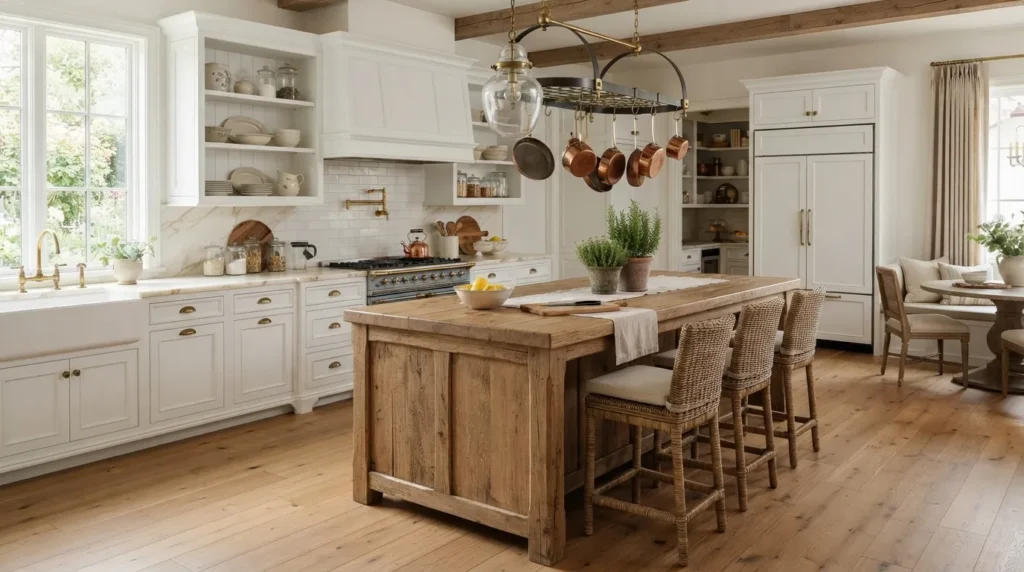
9. Rustic Kitchen Island
Quick Benefits
- Creates a central focal point
- Adds warmth
- Provides additional workspace
- Introduces furniture-like character
- Balances bright cabinetry
Why It Works
A kitchen island can do more than provide counter space. In a French-inspired kitchen, it can resemble a piece of furniture.
A painted island in a muted cream, gray-green, or soft blue can create subtle contrast against white perimeter cabinetry. A natural wood island offers an even warmer effect.
The island also helps prevent a bright kitchen from becoming visually flat. Its different material, color, or shape creates another layer.
A substantial island can anchor a large kitchen, while a compact worktable can provide the same feeling in a smaller room.
How To Style It
Choose an island proportionate to the room and maintain comfortable circulation around it.
For a traditional look, consider furniture-style legs, paneled sides, or a slightly aged finish.
Add simple stools in natural wood or woven materials.
Keep the island countertop functional. A large cutting board, ceramic bowl, or vase with greenery can provide styling without interfering with preparation space.
If using a wood island, repeat the wood tone elsewhere through flooring, shelves, or accessories.
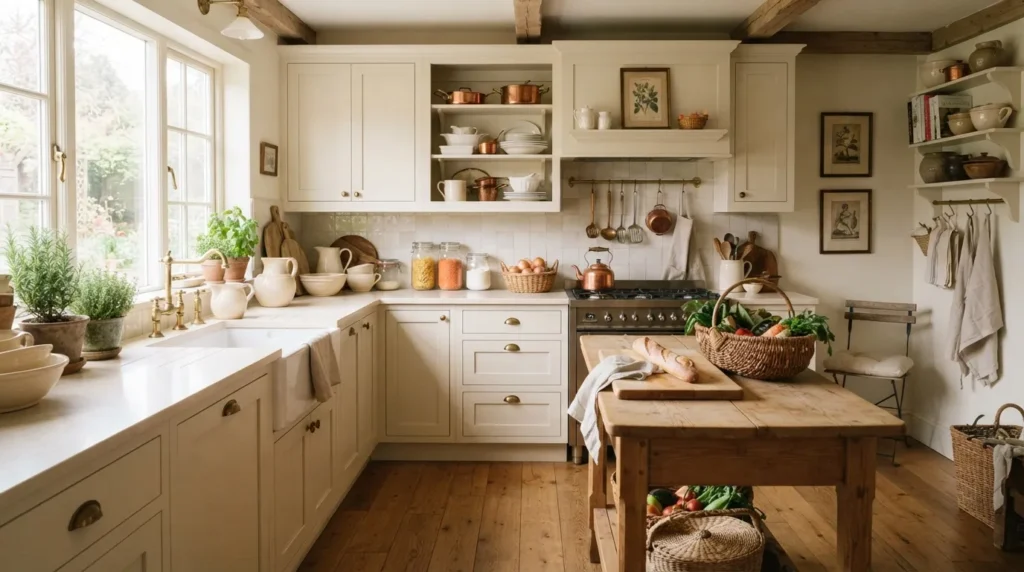
10. Collected French Decor
Quick Benefits
- Adds personality
- Makes the kitchen feel lived-in
- Introduces texture
- Softens an all-white palette
- Creates a collected appearance
Why It Works
The final layer of a French-inspired kitchen often comes from small details rather than major renovations.
Ceramic pitchers, woven baskets, linen towels, wooden boards, vintage-inspired clocks, fresh herbs, glass jars, and simple artwork can give the kitchen a sense of history.
The important word is collected. The room should not look like every accessory was purchased from the same place on the same afternoon.
Slight variations in material and finish create personality.
A white kitchen provides an ideal background for these objects because the accessories remain visible without competing with a strong wall or cabinet color.
How To Style It
Choose a restrained selection of practical and decorative pieces.
Place a ceramic pitcher near the sink, stack wooden boards against the backsplash, and use a woven basket for towels or produce.
Add greenery through fresh herbs or a small potted plant.
A vintage-style framed print can work on a wall with open space.
Use linen tea towels in cream, beige, faded blue, or muted green.
The goal is to make the kitchen feel like a space that has developed naturally over time rather than a room designed around a single trend.
How To Make A White Kitchen Feel Warm
A white kitchen feels warm when the palette includes enough variation in texture and material.
Start with the cabinets, then introduce natural wood through flooring, an island, shelving, stools, or cutting boards. Warm metal hardware can add another layer.
Textiles also matter. Linen towels, woven runners, and natural-fiber rugs can soften hard surfaces.
Lighting has an equally important role. Warm illumination creates a different atmosphere from cool overhead lighting, particularly in the evening.
Finally, avoid using the exact same white everywhere. Slight differences between cabinetry, walls, tile, and countertops can create subtle depth.
Choosing The Right White
Not all whites look the same.
Cool whites often have blue or gray undertones and can create a crisp contemporary appearance. Warm whites usually contain cream, beige, or yellow undertones and tend to feel softer.
The amount of natural light in the kitchen also affects the result.
A north-facing room may benefit from a warmer white, while a sun-filled kitchen can handle a broader range.
Always test paint or cabinet samples in the actual kitchen. Look at them in morning, afternoon, and evening light before making a final decision.
This simple step can prevent a white that looks beautiful in a showroom from appearing too cold or too yellow at home.
French Style Kitchen Materials To Mix
French-inspired kitchens rarely depend on one material.
A thoughtful combination might include:
- Warm white cabinetry
- Natural oak
- Aged brass
- Marble-inspired stone
- Ceramic tile
- Linen
- Woven fibers
- Clear or lightly tinted glass
The trick is giving each material a role.
Stone can provide durability and visual weight. Wood adds warmth. Brass provides contrast. Ceramics add handmade character. Linen softens the room.
Repeating materials in small amounts creates cohesion.
For example, brass cabinet hardware can connect with pendant lighting, while oak shelves can connect with a wood island.
French Kitchen Ideas For Small Spaces
A small kitchen can still have plenty of French character.
Start with bright cabinetry to maximize the feeling of openness. Use a warm white rather than an extremely stark shade.
Open shelving can replace one section of upper cabinetry and provide visual breathing room. A narrow wood shelf can introduce warmth without taking up much space.
Choose a compact farmhouse-style sink if the cabinetry allows it, or simply use a classic faucet and brass hardware to introduce traditional character.
A small rolling island or furniture-style worktable can provide useful workspace without visually overwhelming the room.
Keep accessories limited. One ceramic pitcher, a small plant, and a few wooden boards can create more charm than a crowded countertop.
Common French Kitchen Decorating Mistakes
One common mistake is using too many decorative details. French style is layered, but it is not necessarily cluttered.
Another is choosing only cool white surfaces. Without warm wood, brass, textiles, or natural materials, the room can lose the inviting quality associated with the style.
Overmatching is another issue. A kitchen can feel artificial when every metal finish, wood tone, and accessory looks identical.
Scale is important too. A large pendant or oversized island may overwhelm a small kitchen, while tiny decorative pieces can disappear in a large room.
Finally, avoid choosing finishes only because they look attractive in photographs. A kitchen is a working space. Materials need to suit cooking habits, cleaning routines, household needs, and the amount of maintenance you are comfortable with.
FAQ
What colors work best in a French-style white kitchen?
Warm white, cream, ivory, beige, muted blue, soft sage, pale gray, and natural wood tones work beautifully. These colors create subtle contrast without taking attention away from the bright cabinetry. A restrained palette usually feels more timeless than using several strong accent colors.
How do I make a white kitchen look French?
Focus on traditional details and natural materials. Shaker or framed cabinetry, aged brass hardware, a farmhouse sink, natural wood, stone-inspired surfaces, ceramic accessories, vintage-style lighting, and subtle tile can all introduce French character without requiring a complete renovation.
What type of hardware looks French on white cabinets?
Aged brass, antique brass, brushed brass, and other softly weathered finishes work particularly well. Cup pulls can add a farmhouse influence, while traditional knobs and pulls create a more classic appearance. Choose hardware that feels warm rather than highly polished.
Can a French-style kitchen be modern?
Absolutely. A modern French kitchen can combine simple white cabinetry, clean countertops, natural wood, understated brass, classic lighting, and a few traditional details. The goal is to balance contemporary simplicity with timeless materials and architectural character.
What backsplash works best with white French kitchen cabinets?
Subtle ceramic tile, handmade-looking tile, marble-inspired stone, and classic rectangular tile can all work. Warm white, cream, pale gray, muted blue, and soft green are versatile choices. A backsplash with gentle texture often creates more character than a highly dramatic pattern.
How can I add French style without remodeling my kitchen?
Change smaller details first. Replace cabinet hardware, add warm lighting, introduce natural wood accessories, display ceramics, use linen towels, add a woven runner, and bring in fresh herbs or greenery. These updates can shift the atmosphere without replacing cabinetry or countertops.
Does French kitchen style require antique furniture?
No. Antique or vintage pieces can add character, but they are not required. A new kitchen can achieve a French-inspired appearance through warm whites, traditional silhouettes, natural materials, aged-looking hardware, and collected accessories.
Conclusion
A bright French-inspired kitchen does not have to feel formal or overly decorated. Its beauty comes from the balance between classic details and everyday comfort.
Start with a warm white foundation, then introduce natural wood, stone-inspired surfaces, aged brass, ceramics, linen, and greenery. These materials create depth while allowing the kitchen to remain bright.
If you are working with an existing kitchen, focus on the details that make the greatest difference. Hardware, lighting, shelving, textiles, and accessories can change the character of a room without requiring a complete renovation.
For a larger project, consider architectural elements such as framed cabinetry, a farmhouse sink, traditional molding, patterned tile, or a furniture-style island.
The most convincing French-style kitchens are not perfectly coordinated. They feel collected, practical, and comfortable. A beautiful ceramic pitcher can sit beside everyday utensils. Natural wood can soften bright white cabinets. Brass can age gracefully. A little greenery can make the entire room feel more alive.
Choose the details that suit your home and your daily routine, then allow the room to develop naturally. The result can be a bright kitchen that feels elegant enough for entertaining and comfortable enough for everyday life.
Related Articles
- 10 French Style Kitchen Ideas with Charming Vintage Details
- 10 Modern Kitchen Ideas with Warm Neutral Cabinets
- 10 Blue Gray Kitchen Cabinets with Timeless Design
- 10 Kitchen Decor Ideas for a Warm and Inviting Space
- 10 Small Kitchen Ideas with Beautiful Storage Solutions