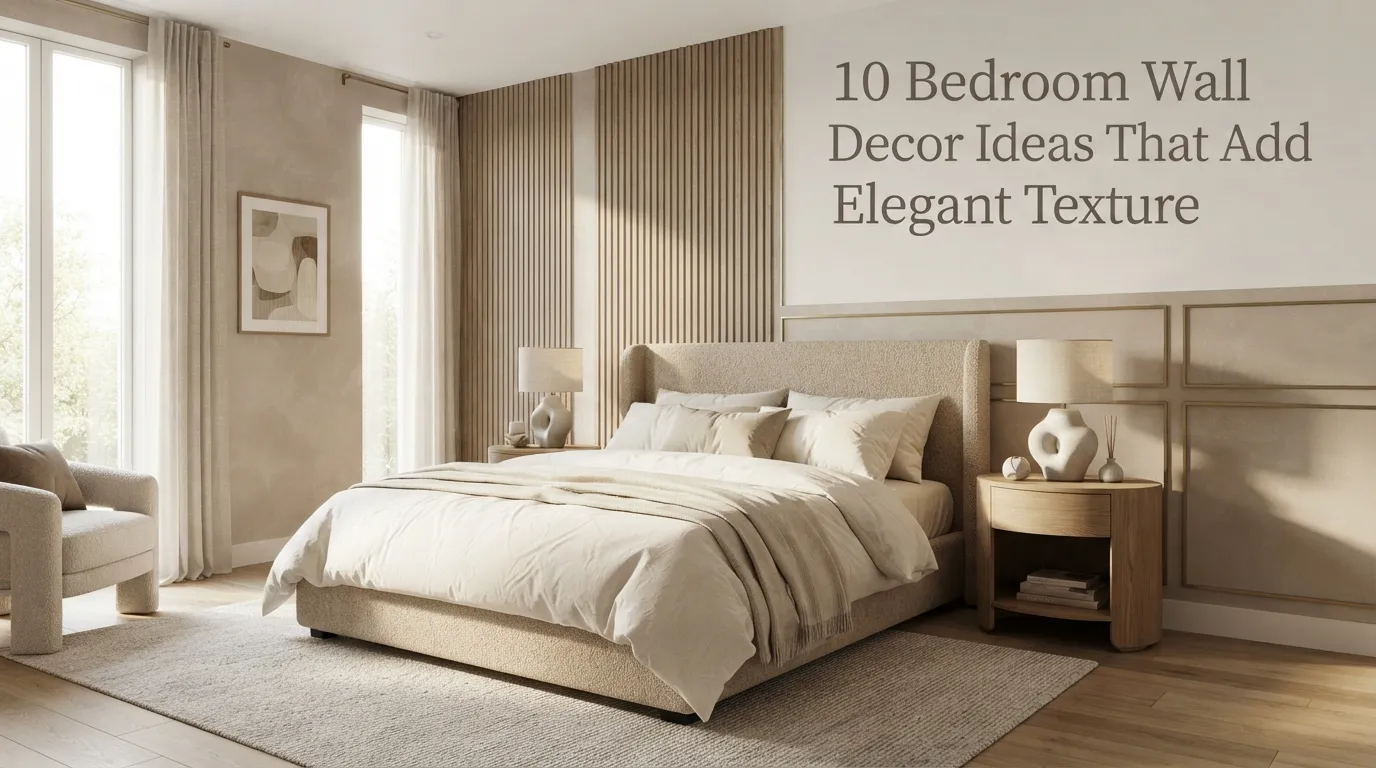
10 Bedroom Wall Decor Ideas That Add Elegant Texture
Bedroom walls often have more influence on the overall atmosphere than we realize. A beautiful bed and carefully chosen bedding can still leave the room feeling unfinished when the walls are completely bare. The right wall treatment can add depth, softness, architectural character, and visual interest without making the bedroom feel crowded.
Texture is especially useful in a modern bedroom because it creates dimension without depending on bold colors or excessive decoration. Wood panels, woven materials, plaster-inspired finishes, fabric wall art, and sculptural pieces can all make a simple bedroom feel more sophisticated.
The key is choosing texture that supports the room instead of competing with it. If the bedding already has several layers, a subtle wall finish may work better than a dramatic gallery. If the furniture is simple, a textured accent wall can become the focal point.
In my experience, the most successful bedroom walls usually have one clear purpose. The wall behind the bed might provide architectural interest, while another wall stays relatively quiet. This creates balance and allows the eye to rest.
You also do not need a major renovation to make an impact. Removable wallpaper, lightweight woven art, decorative molding, oversized artwork, and simple wood accents can create a finished appearance at different price points.
These bedroom wall decor ideas focus on elegant texture that feels warm, timeless, and livable. Whether your style leans modern, Scandinavian, contemporary, transitional, or softly minimalist, the right combination of materials can turn an ordinary wall into one of the most beautiful features in the room.
Table of Contents
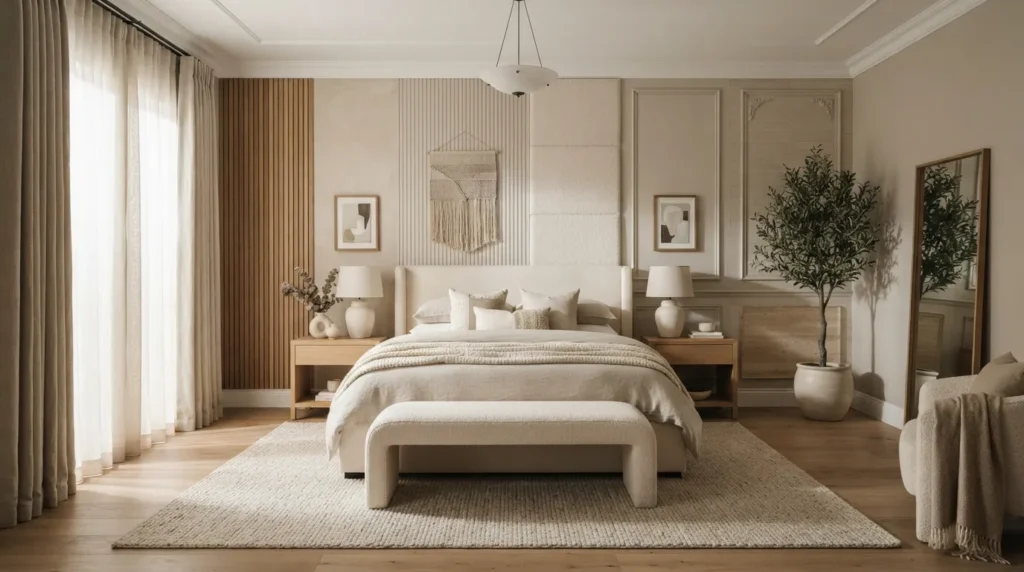
1. Vertical Wood Panels
Add warmth and architectural depth with clean-lined wood paneling behind the bed.
2. Textured Neutral Wallpaper
Use subtle patterns and tactile finishes to create a sophisticated bedroom backdrop.
3. Oversized Fabric Art
Bring softness to the walls with large-scale textile artwork and woven materials.
4. Plaster Inspired Finish
Create a refined organic backdrop with a soft, imperfect plaster-like wall treatment.
5. Decorative Wall Molding
Give plain walls architectural character with simple modern molding arrangements.
6. Sculptural Wall Panels
Use dimensional panels to create a dramatic focal point while keeping the palette restrained.
7. Woven Wall Decor
Introduce natural fibers and handmade texture for a relaxed yet elegant bedroom.
8. Layered Gallery Wall
Combine artwork, frames, and materials to create a collected textured display.
9. Textured Accent Color
Use a muted painted finish to combine color, depth, and subtle visual movement.
10. Elegant Bed Wall
Turn the entire wall behind the bed into a cohesive focal point with layered materials and balanced styling.
1. Vertical Wood Panels
Quick Benefits
- Adds architectural interest
- Creates natural warmth
- Emphasizes ceiling height
- Works with modern furniture
- Creates a strong focal point
Why It Works
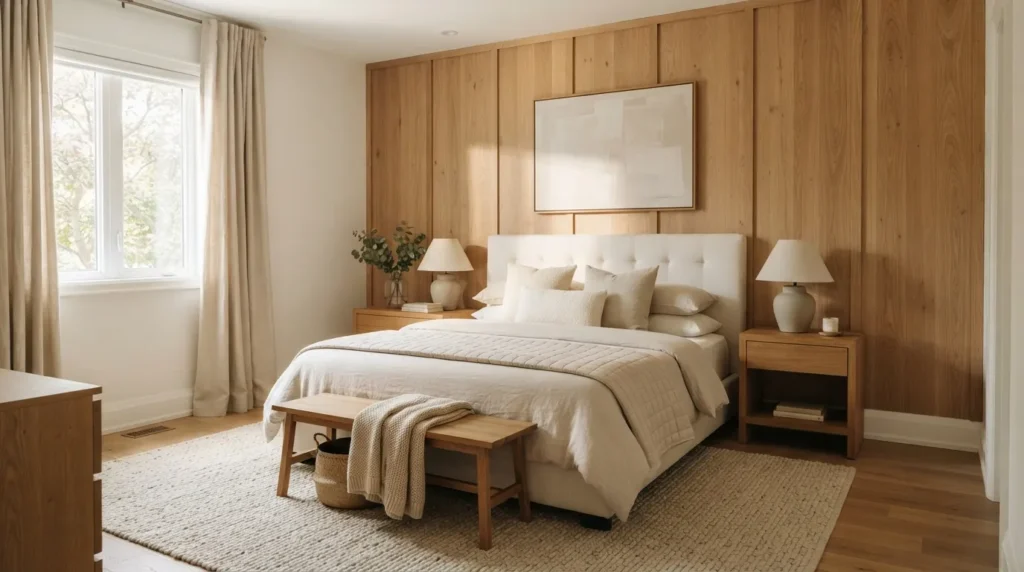
Vertical wood panels are one of the most effective ways to add texture without introducing a busy pattern. The repeated lines create subtle movement while the natural material brings warmth to a modern bedroom.
The vertical direction can also visually emphasize ceiling height, making the room feel taller and more intentional. Pale oak and natural ash create a light Scandinavian atmosphere, while walnut and medium-toned wood produce a richer, more dramatic effect.
The beauty of this approach comes from restraint. The wall itself provides enough visual interest, so the surrounding decor can remain simple.
A wood accent wall is particularly effective behind the bed because it creates a natural focal point without requiring a large collection of artwork.
How To Style It
Choose the wall behind the bed if you want the strongest visual impact. Full-height panels can create a dramatic architectural effect, while a partial treatment can feel more understated.
Pair the wood with neutral bedding in cream, ivory, beige, or taupe. Upholstered beds can soften the hard lines of the panels, while simple platform beds can create a more contemporary appearance.
Keep the nightstands relatively uncluttered. A ceramic lamp, small vase, or framed object is usually enough.
For a lighter look, choose pale natural wood and warm white walls on the surrounding surfaces. For a moodier bedroom, walnut panels can work with warm gray, mushroom, or muted brown accents.
2. Textured Neutral Wallpaper
Quick Benefits
- Adds pattern without bold color
- Creates subtle depth
- Offers many design options
- Works in rental-friendly applications
- Can transform a plain wall quickly
Why It Works
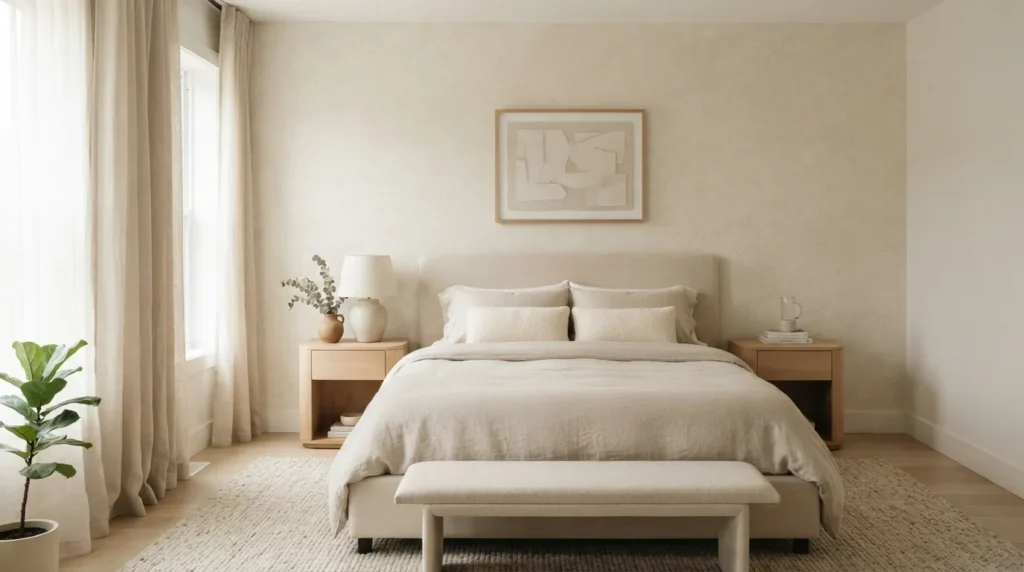
Wallpaper does not have to mean dramatic florals or highly noticeable patterns. Textured neutral wallpaper can create a sophisticated surface that looks interesting from across the room and becomes even more detailed up close.
Grasscloth-inspired textures, linen-look patterns, subtle geometric designs, plaster effects, and tonal organic prints all work well in bedrooms.
The restrained color palette allows the texture to become the primary feature. This makes the treatment especially useful when the rest of the room already has strong furniture or bedding.
Textured wallpaper can also provide visual continuity. Instead of adding several decorative objects to an empty wall, one cohesive surface creates depth across the entire area.
How To Style It
Use wallpaper behind the bed for a contained focal point. Choose a design that is only a few shades different from the surrounding wall color if you want a subtle effect.
For a cream bedroom, consider ivory, oatmeal, beige, or warm taupe wallpaper. Soft gray can work when balanced with warm wood and textured textiles.
If you prefer a stronger statement, select an organic geometric pattern with muted contrast.
Keep the bedding relatively simple so the wall remains visible. A plain upholstered headboard can work particularly well because it provides a soft transition between the wallpaper and the bed.
For renters, removable wallpaper offers a practical alternative, provided the product and existing wall surface are compatible.
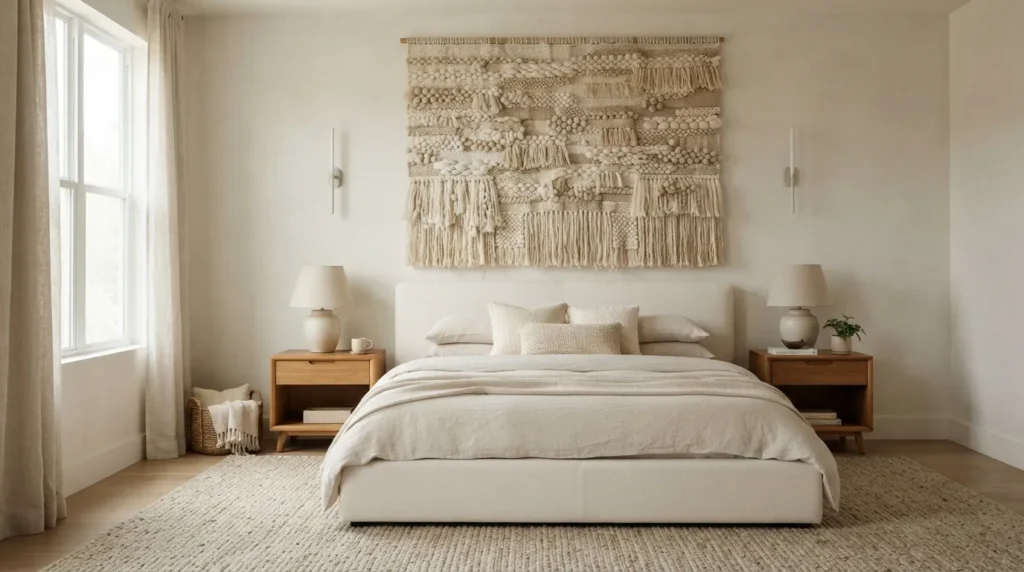
3. Oversized Fabric Art
Quick Benefits
- Adds softness to hard walls
- Creates an elegant focal point
- Introduces tactile detail
- Works beautifully above beds
- Makes neutral rooms feel warmer
Why It Works
Large textile artwork brings a different kind of texture to a bedroom. Instead of relying on architectural materials, it introduces softness through woven, knotted, quilted, or fabric-based surfaces.
Oversized artwork also solves a common decorating problem: a small piece of art can look lost above a large bed. One substantial textile piece can fill the wall more naturally while creating a calm visual anchor.
Neutral textile art is especially versatile. Cream, sand, beige, oatmeal, natural fiber, and soft brown pieces can complement modern, Scandinavian, organic, and transitional bedrooms.
The irregular texture of handmade-looking fabric also prevents the room from feeling overly polished.
How To Style It
Choose one large textile piece rather than arranging several small pieces if the wall behind the bed is spacious.
Look for simple shapes and restrained colors. A woven abstract composition, textured fabric panel, or oversized neutral textile can create sophistication without visual clutter.
Hang the piece securely and at an appropriate height. If it sits above the headboard, maintain enough space for the artwork to read as a separate element.
Pair it with linen bedding, a natural wood nightstand, and soft lighting to reinforce the tactile theme.
If the artwork has substantial texture, keep other wall decorations minimal.
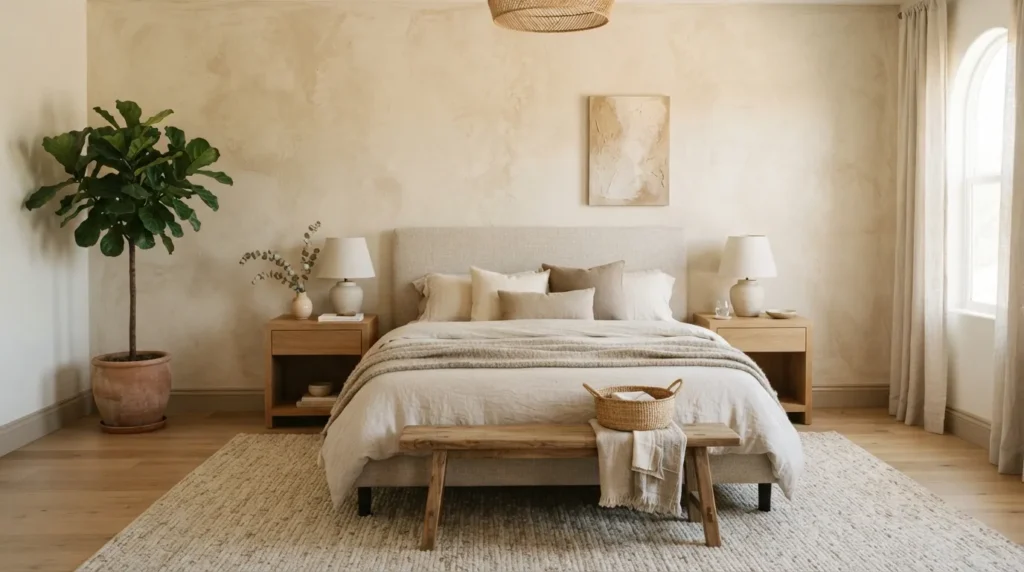
4. Plaster Inspired Finish
Quick Benefits
- Creates organic visual depth
- Works with minimalist furniture
- Adds subtle movement
- Complements warm neutrals
- Creates a refined backdrop
Why It Works
A plaster-inspired wall finish can make a bedroom feel architectural without relying on complicated decoration. The soft variations in tone and texture create movement across the wall while maintaining a restrained appearance.
This look works particularly well with modern and organic interiors because it celebrates subtle imperfection. Instead of a perfectly uniform surface, the wall has gentle tonal shifts that respond differently to natural and artificial light.
Warm ivory, cream, sand, mushroom, and soft beige are particularly effective. They provide enough contrast to distinguish the wall from the furniture while keeping the room peaceful.
The result can feel luxurious without looking overly formal.
How To Style It
Apply the finish to the wall behind the bed or another major focal wall. Keep the color close to the surrounding palette for a subtle appearance.
Pair it with natural wood, linen, stone-inspired accessories, and soft upholstered furniture.
Avoid covering the finished wall with excessive artwork. The surface itself is the decoration.
If a permanent plaster treatment is not practical, look for paint techniques or removable products designed to create a similar tonal effect. Always test a finish on a small area before treating an entire wall.
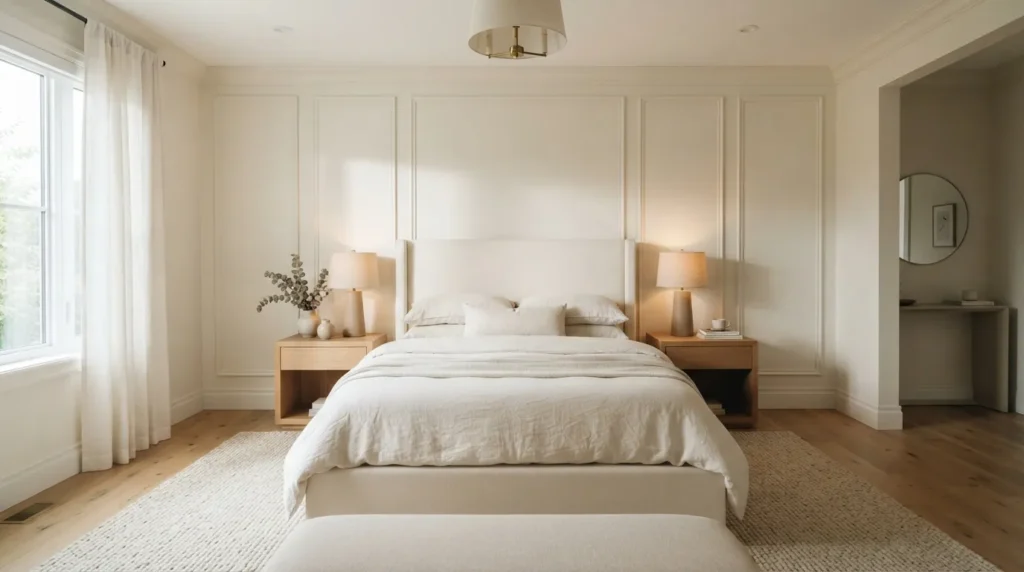
5. Decorative Wall Molding
Quick Benefits
- Adds architectural detail
- Works with modern and traditional styles
- Creates elegant geometric texture
- Can be painted to match the wall
- Gives plain walls more character
Why It Works
Wall molding creates texture through shadow rather than color. Simple rectangular panels, vertical battens, slim trim, or geometric arrangements can make an otherwise plain wall feel custom-designed.
This approach is particularly useful when you want architectural interest but prefer a cleaner appearance than wallpaper or heavily textured materials.
Painting the molding and wall the same color creates a sophisticated tonal effect. The texture becomes visible through the changing shadows while the overall palette remains calm.
Molding can also help establish proportions. Vertical arrangements can emphasize height, while horizontal or rectangular layouts can visually organize a wide wall.
How To Style It
For a modern bedroom, choose simple profiles rather than highly ornate trim.
Create a symmetrical arrangement behind the bed to reinforce the room’s balanced appearance. If you prefer a contemporary look, vertical battens can provide a more streamlined effect.
Paint everything in warm white, cream, taupe, or another color already used in the room.
Keep the furniture simple enough that the molding remains visible.
Before installation, measure carefully and map the layout with painter’s tape. This allows you to evaluate spacing and proportions before making permanent changes.
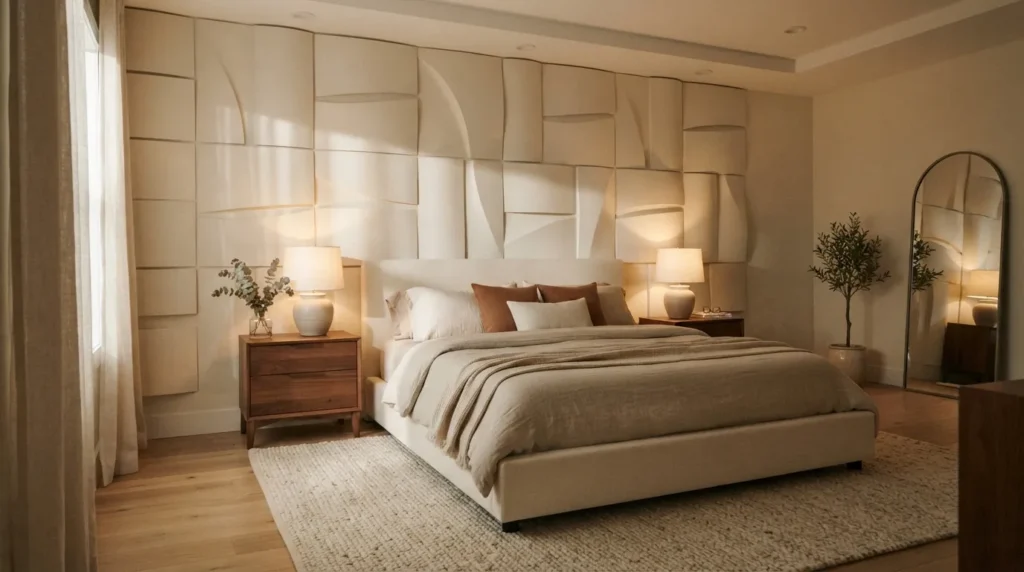
6. Sculptural Wall Panels
Quick Benefits
- Creates strong visual depth
- Adds modern architectural character
- Provides a dramatic focal point
- Works well with restrained colors
- Reduces the need for extra wall decor
Why It Works
Dimensional wall panels can transform a flat bedroom wall into a sculptural feature. Their raised or recessed surfaces create shadows that change throughout the day, giving the room a dynamic quality without requiring bold color.
Geometric panels can support a contemporary bedroom, while organic wave-like or curved designs create a softer appearance.
The key is restraint. A highly dimensional wall treatment already carries visual weight, so the rest of the bedroom can remain relatively simple.
This approach is especially effective behind a low-profile bed because the wall provides vertical interest while the furniture maintains a grounded appearance.
How To Style It
Choose panels in a color close to the surrounding walls if you want an understated effect. Warm white, cream, beige, or muted gray can highlight the shadows without overwhelming the room.
Pair sculptural panels with simple bedding and minimal nightstands.
Use directional lighting carefully. A wall-mounted light or soft lamp can emphasize the panel’s dimension, but harsh lighting can create unwanted shadows.
If you want a more subtle treatment, use panels on only part of the wall rather than covering the entire surface.
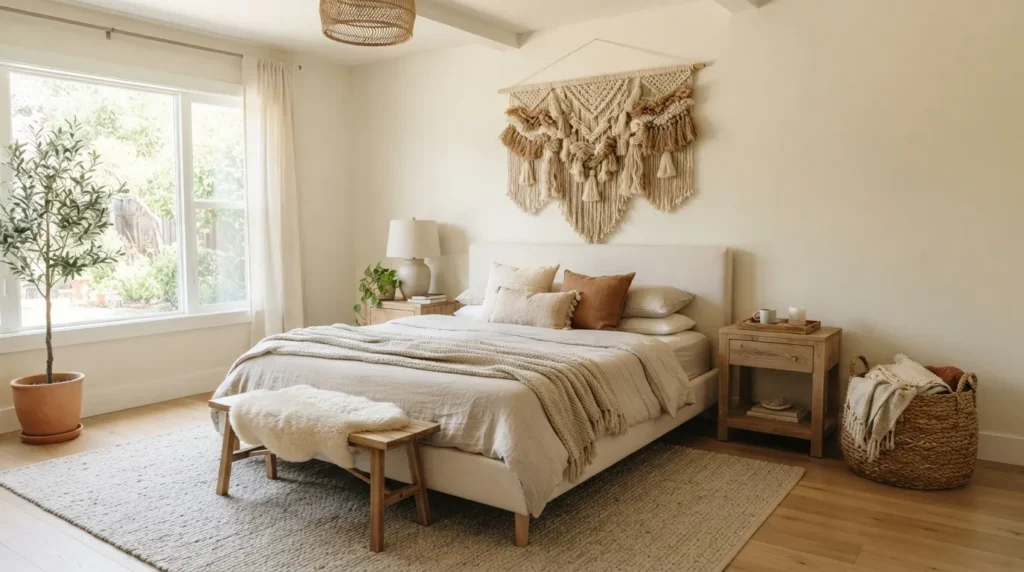
7. Woven Wall Decor
Quick Benefits
- Adds natural texture
- Brings handmade character into the room
- Works with neutral palettes
- Softens modern furniture
- Offers lightweight decorating options
Why It Works
Woven wall decor introduces texture without the visual heaviness of architectural treatments. Rattan, cane, seagrass, raffia, woven fiber, and textile pieces can make a modern bedroom feel warmer and more organic.
This approach works particularly well when the room already includes natural wood and linen. The materials repeat the same organic language without requiring exact matching.
Woven pieces also add subtle irregularity. That handmade quality prevents a highly coordinated bedroom from feeling too perfect.
The look can be relaxed or sophisticated depending on the shape and scale of the pieces.
How To Style It
For a large wall, consider one oversized woven piece. For a smaller area, a group of three related pieces can create a balanced arrangement.
Keep the color palette natural. Tan, cream, light brown, and muted beige work easily with modern neutral bedrooms.
Place woven artwork above a dresser, beside the bed, or above a low headboard.
Balance the texture with smooth surfaces nearby. A simple wood nightstand or clean-lined dresser prevents the room from becoming visually heavy.
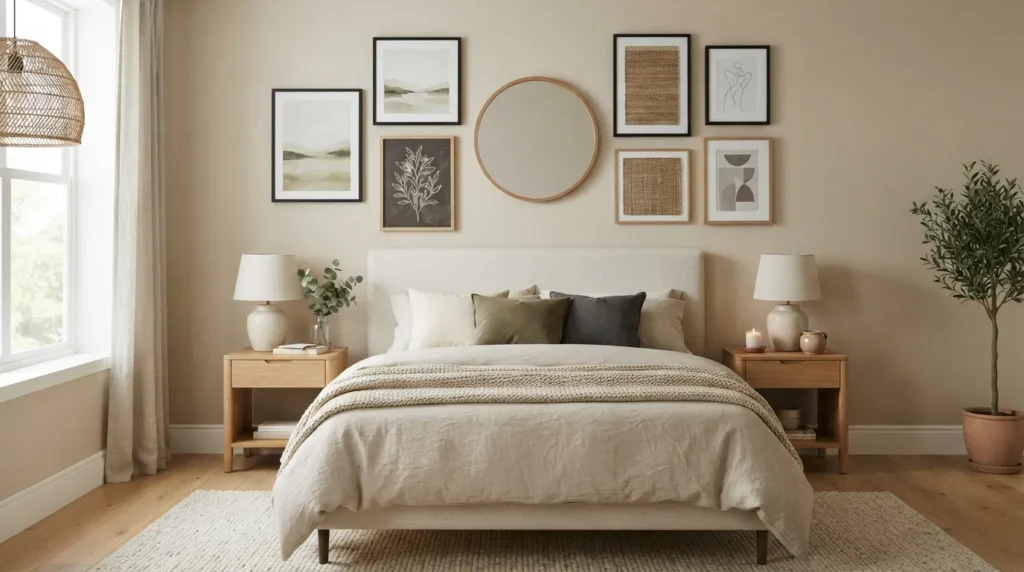
8. Layered Gallery Wall
Quick Benefits
- Adds personality and dimension
- Creates a collected appearance
- Allows multiple materials
- Works with different decorating styles
- Can evolve over time
Why It Works
A gallery wall can add texture when it goes beyond traditional framed prints. Mixing artwork with woven pieces, small mirrors, textile panels, photographs, and natural wood frames creates a more layered display.
The goal is not to fill the wall with as many objects as possible. Instead, choose pieces that share a color story or visual connection.
Warm neutral artwork can work beautifully with wood frames and woven details. A few darker elements can provide contrast without changing the overall peaceful mood.
This approach also allows the bedroom to feel personal. Family photographs, collected artwork, and meaningful objects can make the room more connected to the people who use it.
How To Style It
Start with your largest piece and build around it. Lay everything on the floor first so you can test different arrangements.
Mix frame sizes and orientations. Include one or two dimensional pieces to create physical depth.
Keep the palette cohesive. Cream, beige, brown, muted black, soft green, and natural wood can create a sophisticated combination.
Leave consistent breathing room between the pieces without making the arrangement overly rigid.
If the gallery is above the bed, make sure every piece is securely mounted.
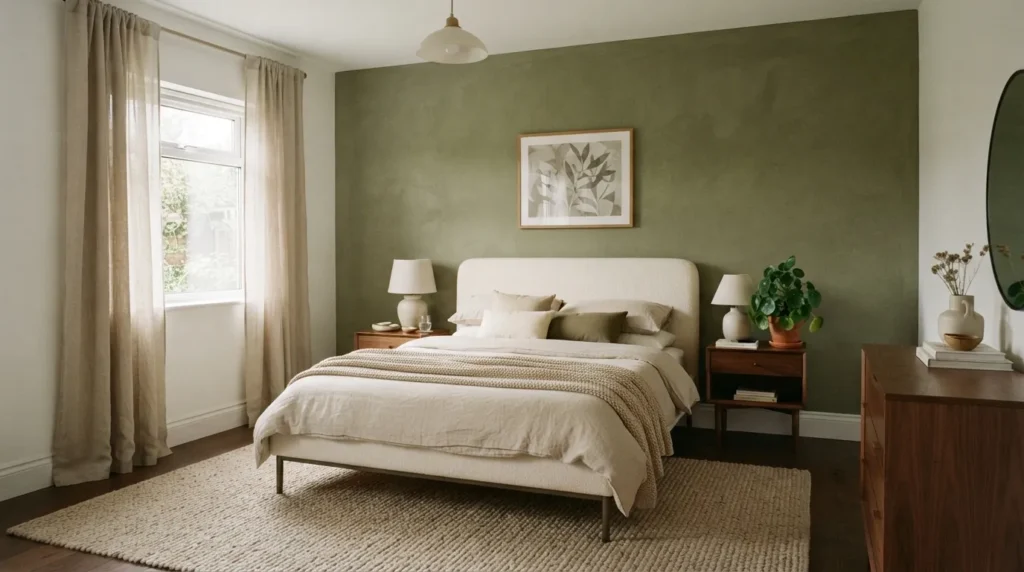
9. Textured Accent Color
Quick Benefits
- Adds personality without overwhelming the room
- Combines color and texture
- Creates a focal wall
- Works with modern furniture
- Easy to coordinate with bedding
Why It Works
Texture does not have to come only from physical materials. A painted wall can gain depth through color, finish, and subtle variation.
Muted olive, dusty blue, warm clay, mushroom, cocoa, and soft taupe can create an elegant accent while remaining restful enough for a bedroom.
Matte finishes tend to support a softer atmosphere because they reduce glare and allow the color to appear more nuanced.
The key is choosing a color with enough connection to the rest of the room. An accent wall should feel like part of the design rather than an isolated statement.
How To Style It
Choose one wall, preferably behind the bed, and select a muted color that appears elsewhere in smaller amounts.
For example, a soft olive wall can connect with a few green-gray cushions and natural wood. A dusty clay wall can work with beige bedding and warm brown accessories.
Keep the ceiling and surrounding walls lighter if you want the accent wall to remain the focal point.
Use simple artwork and neutral bedding so the color and finish remain visible.
If you want subtle texture, consider a limewash-inspired paint effect or matte decorative finish rather than a completely flat surface.
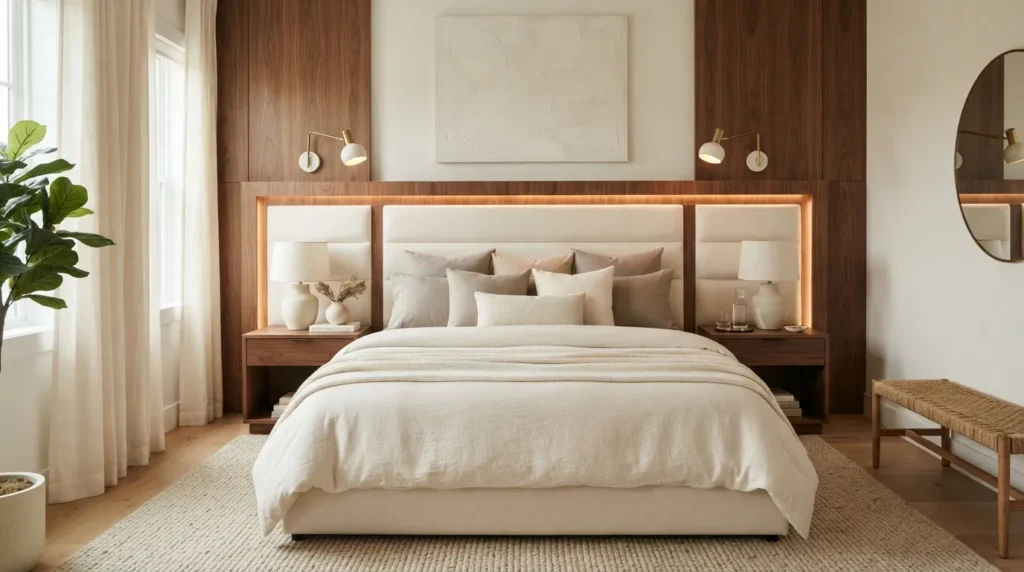
10. Elegant Bed Wall
Quick Benefits
- Creates a cohesive focal point
- Combines several textures
- Makes the bed feel more substantial
- Provides a polished finished look
- Works across multiple decorating styles
Why It Works
Instead of treating the wall behind the bed as a single decorative surface, consider it as an entire composition.
A beautifully designed bed wall can combine an upholstered headboard, wood panels, soft lighting, subtle artwork, and coordinated materials. Each layer has a purpose, but together they create a stronger visual effect.
This approach works particularly well in modern bedrooms because the bed wall can become the main feature while the rest of the room stays quiet.
The secret is maintaining hierarchy. One element should dominate, while the others support it.
For example, a tall upholstered headboard can be the primary feature, with narrow wood panels and warm bedside lighting providing secondary texture.
How To Style It
Begin with the bed and decide which element you want to emphasize.
For a luxurious appearance, combine a wide upholstered headboard with warm wood panels and symmetrical pendant or wall lighting.
For a simpler look, use a textured wall finish behind the bed and keep the headboard low-profile.
Coordinate the materials with the rest of the room. Repeat wood in the nightstands, colors in the bedding, and metal finishes in the lighting.
Avoid adding too many separate wall decorations. A cohesive composition looks more elegant than a collection of unrelated features.
How To Choose The Right Bedroom Wall Texture
The best wall texture depends on the existing architecture, furniture, lighting, and overall style of your bedroom.
Start by looking at the wall itself. A large uninterrupted wall can support a substantial treatment such as wood paneling, plaster texture, or dimensional panels. A wall with windows, doors, or built-in features may benefit from something simpler.
Next, consider the furniture. If your bed has a tall upholstered headboard, a highly detailed wall treatment may compete with it. A subtle painted texture or tonal molding could provide better balance.
Lighting matters too. Textured surfaces become more noticeable when light moves across them. Natural daylight can highlight wood grain and plaster variation, while lamps can emphasize dimensional panels.
Finally, think about maintenance. Some materials collect dust more easily than smooth walls, and some permanent treatments require more installation work.
The most beautiful choice is one that suits both the room and your lifestyle.
Bedroom Wall Decor For Small Rooms
Small bedrooms do not require bare walls. They simply benefit from controlled visual weight.
A tonal wall treatment can create interest without making the room feel crowded. Painting molding the same color as the wall is particularly effective because the shadows provide texture without introducing another strong color.
Large-scale artwork can also work better than several tiny pieces. One well-proportioned piece creates a clear focal point rather than breaking the wall into multiple visual sections.
Vertical wood battens can emphasize height, while a tall upholstered headboard can draw the eye upward.
Avoid adding texture to every wall. Choose one focal surface and let the remaining walls provide visual breathing room.
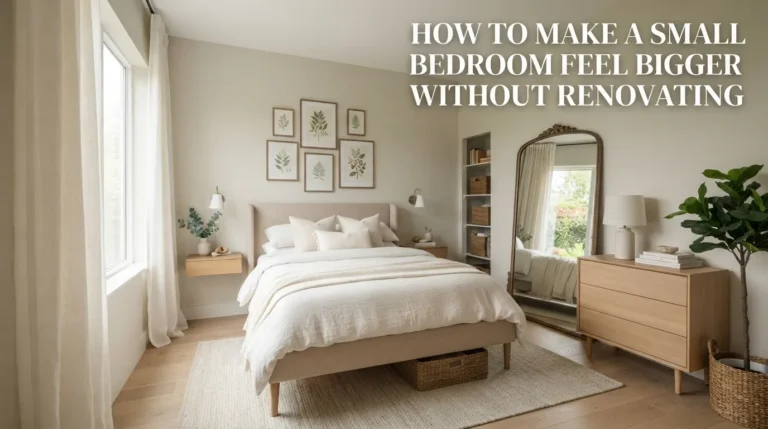
Mirrors can also contribute depth when placed thoughtfully. Position one where it reflects natural light or another attractive feature rather than an area filled with clutter.
How To Make Textured Walls Feel Elegant
Texture becomes elegant when it is balanced.
Too many materials competing for attention can make the bedroom feel busy. Instead, choose one major texture and two or three supporting materials.
For example, a wood-paneled wall can work with linen bedding, a wool-look rug, and ceramic accessories. A plaster-inspired wall can pair with an upholstered headboard, natural wood, and soft cotton.
Color is equally important. A restrained palette allows texture to remain the star.
Scale matters as well. Small textures can disappear on a large wall, while very large patterns can overwhelm a compact bedroom.
Keep the surrounding furniture relatively simple and let negative space frame the feature.
Budget-Friendly Ways To Add Wall Texture
Elegant wall decor does not always require expensive materials.
Paint can create a major transformation for relatively little. A warm neutral accent wall, tonal color blocking, or a limewash-inspired technique can introduce visual depth.
Trim can also be cost-effective when used selectively. Simple molding around the bed wall can create an architectural appearance without covering every surface.
Large textile artwork can sometimes provide more impact than a collection of framed pieces. Removable wallpaper can be another practical option for renters.
Even rearranging existing artwork can change the room. Grouping pieces by color or material can create a more intentional composition.
The key is to spend on the feature that has the greatest visual impact and keep the supporting elements simple.
Common Bedroom Wall Decor Mistakes
One of the most common mistakes is decorating every empty wall. Not every surface needs a focal point. Leaving some walls quiet helps the main feature stand out.
Another mistake is choosing texture without considering the furniture. A dramatic wall behind an equally dramatic bed can create too much competition.
Scale is also important. Tiny artwork above a king-size bed often looks disconnected, while oversized pieces can overwhelm a narrow wall.
Avoid ignoring lighting. A beautiful textured surface can look completely different depending on the direction and intensity of light.
Finally, do not sacrifice practicality for appearance. Secure heavy artwork properly, follow installation instructions, and consider how easily the material can be cleaned.
Elegant design still needs to function in everyday life.
FAQ
What is the best wall decor for a modern bedroom?
The best option depends on the room, but textured wood panels, subtle wallpaper, oversized artwork, decorative molding, plaster-inspired finishes, and woven wall decor all work beautifully. Choose one primary treatment and coordinate it with the bed, bedding, lighting, and surrounding furniture.
How do you add texture to a bedroom wall without making it look busy?
Use one dominant textured element and keep the surrounding palette restrained. Tonal molding, subtle wallpaper, natural wood, or a large textile piece can create depth without overwhelming the room. Limit additional wall decorations around the main feature.
What wall treatment looks best behind a bed?
Wood paneling, upholstered wall sections, textured wallpaper, decorative molding, and plaster-inspired finishes are all strong choices. The best treatment depends on the bed’s height and style. A detailed wall generally works best with simpler bedding and furniture.
Are wood wall panels still stylish for bedrooms?
Yes. Wood panels can complement modern, Scandinavian, contemporary, organic, and transitional bedrooms. For a timeless appearance, choose simple profiles and natural finishes rather than overly decorative patterns. Pale oak and walnut are particularly versatile.
How can I decorate bedroom walls on a budget?
Paint, simple molding, removable wallpaper, textile artwork, and rearranged existing frames can all create significant visual impact. Concentrate your budget on one focal wall rather than trying to decorate the entire bedroom.
Can textured wallpaper work in a small bedroom?
Yes. Subtle tonal wallpaper can add depth without making a small bedroom feel crowded. Light neutrals, fine textures, and understated patterns tend to work particularly well. Keep the rest of the room visually cohesive to maintain a spacious feeling.
How do you make a bedroom wall look luxurious?
Choose high-quality-looking materials with restrained colors and strong proportions. An oversized upholstered headboard, natural wood, elegant molding, plaster-inspired finish, or large textile artwork can create a sophisticated focal point. Good lighting and uncluttered styling are equally important.
Conclusion
Bedroom wall decor has the power to change the character of an entire room. A flat wall can become warm, architectural, artistic, or quietly luxurious with the right treatment.
The most successful approach is not necessarily the most elaborate one. A simple wood panel, softly textured wallpaper, oversized textile, or tonal molding can create enough depth to make the bedroom feel finished.
Start by identifying the wall that deserves attention, usually the one behind the bed. Then consider the materials already present in the room. Wood, linen, upholstery, ceramics, and warm neutral colors can guide the choice of wall treatment.
If your bedroom already has plenty of visual detail, choose something subtle. If the furniture is simple, let the wall become a stronger focal point.
Above all, remember that elegant texture comes from balance. Give the eye something interesting to explore while leaving enough quiet space for the room to remain peaceful.
A thoughtfully textured bedroom wall can turn a basic sleeping space into a room that feels considered, comfortable, and genuinely personal.
Related Articles
- 10 Modern Bedroom Ideas with Elegant Simplicity
- 10 Bedroom Wall Decor Ideas with Modern Wood Panels
- 10 Cozy Bedroom Ideas for a Peaceful Retreat
- How to Decorate a Bedroom with Elegant Decor
- 10 Modern Neutral Aesthetic Bedroom Ideas