
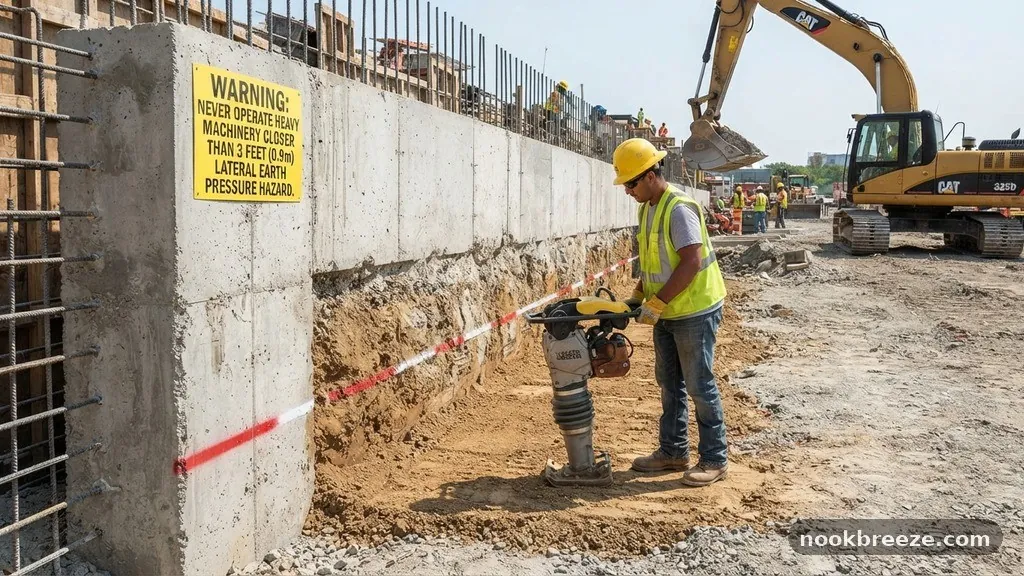
Backfill Soil Compaction: Never Run Heavy Machinery Closer Than 3 Feet to Wall
Backfill soil compaction is a critical phase of any construction project, yet the risks associated with heavy equipment proximity are often underestimated. When workers maneuver heavy machinery too close to a foundation or retaining wall, they create lateral pressures that far exceed the design limits of the structure. Maintaining a safe buffer zone of at least 3 feet is the industry standard for preventing catastrophic structural failure.
By understanding the physics of soil mechanics and the limitations of building materials, site managers can avoid costly repairs and dangerous collapses. This article provides the technical foundation needed to ensure your next grading project remains safe and compliant.
The Physics of Lateral Earth Pressure
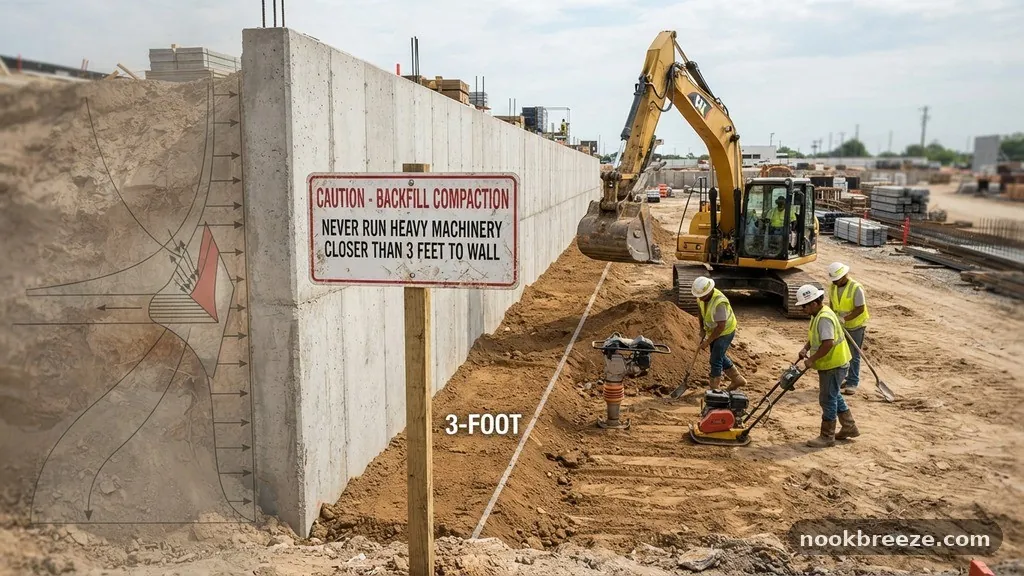
When you place soil against a wall, you aren’t just adding weight; you are introducing a complex system of lateral forces. As equipment moves over the surface, the weight is transferred through the soil in a pressure bulb that radiates downward and outward.
If that equipment is too close to a vertical structure, the lateral component of that force pushes against the wall. This pressure often exceeds the structural capacity of concrete masonry units or poured concrete that hasn’t reached full curing strength.
Engineers calculate this force based on the internal friction angle of the soil material. A loose backfill has a higher potential for lateral movement than a well-compacted, engineered fill.
When heavy machinery vibrates or rolls over the top of the backfill, it causes a “surcharge” load. This surcharge acts like a giant thumb pushing the wall over, especially if the wall is not yet braced by the floor diaphragm of the building.
The 3-foot rule exists because it keeps the majority of the equipment’s pressure bulb outside the zone where it would directly impact the wall’s stability. While soil can act as a bridge, the concentrated weight of a skid steer or excavator is a point load.
By staying at least 3 feet away, you ensure that the downward force is distributed into the native subgrade rather than against the wall face. This simple distance requirement is a non-negotiable safety protocol for any professional site.
Why Heavy Machinery Triggers Failure
Heavy machinery introduces dynamic loads that static soil heaps do not. Vibratory rollers, in particular, are designed to rearrange soil particles to achieve maximum density.
When you operate a vibratory compactor near a wall, you are essentially liquefying the soil and pushing it against the structure. This vibration can cause the wall to deflect, crack, or even suffer a complete structural shear.
Even without vibration, the sheer weight of modern construction vehicles is immense. A mid-sized excavator can weigh over 20,000 pounds, with the pressure concentrated on two narrow tracks.
When these tracks are positioned within 3 feet of a foundation, the pressure exerted per square inch is significant. The wall is designed to hold back the weight of the dirt, not the weight of the dirt plus a massive machine.
Furthermore, the operator’s visibility and reaction time are critical factors in this danger zone. If a machine slips or the operator makes a sudden movement, the proximity to the wall leaves no margin for error.
A slight tilt toward the excavation can lead to a localized collapse of the trench wall. By strictly enforcing the 3-foot clearance, you create a buffer that protects both the structure and the machinery from accidental contact.
Safe Compaction Methods Near Foundations
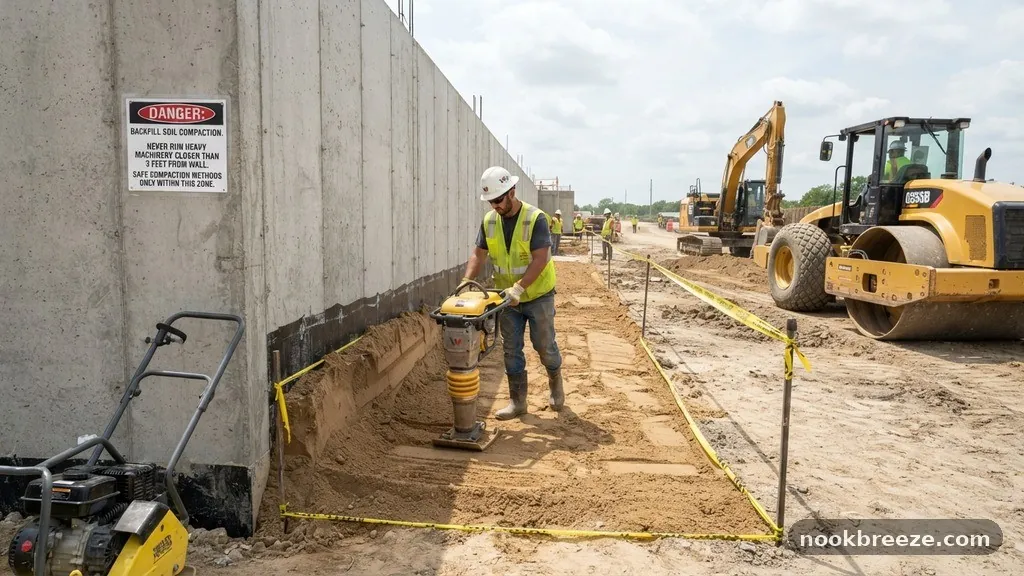
Since you cannot run heavy machinery right up to the wall, you must use alternative methods to achieve the required density. Hand-operated plate compactors are the primary tool for the “danger zone” within that 3-foot perimeter. These machines are lightweight enough to avoid excessive lateral pressure but powerful enough to compact thin lifts of soil effectively.
The process of backfilling must be done in thin, manageable layers, typically 6 to 8 inches at a time. Each layer should be leveled by hand or with a small rake before the plate compactor is applied.
This ensures uniform density throughout the entire depth of the backfill. If you dump a large pile of dirt and try to compact it all at once, you will end up with soft spots that lead to future settlement.
For deeper trenches, consider using flowable fill or lean concrete as a backfill material. This liquid material flows into the space and hardens without the need for mechanical compaction.
While it is more expensive than native soil, it eliminates the risk of wall damage entirely. It also provides excellent support for the foundation, preventing the settlement issues that often plague traditional backfilling processes.
Understanding Soil Types and Moisture
The effectiveness of your compaction efforts depends heavily on the type of soil you are using. Sandy soils are generally easier to compact because the grains interlock well under vibration.
Clay soils, however, are notoriously difficult because they hold moisture and can become plastic if they get too wet. If you are working with clay, you must monitor the moisture content constantly to ensure it is at the “optimum moisture content” for compaction.
Moisture is the silent variable in every compaction project. If the soil is too dry, it will not hold together, leaving gaps between particles. If it is too wet, the water acts as a lubricant, preventing the particles from locking into place.
You can test this in the field using a simple hand-squeeze test. If the soil forms a ball that crumbles easily when poked, it is likely at the right moisture level.
Engineers often specify “selected” backfill material for areas near walls to ensure consistent performance. This material is usually a clean, granular sand or a crushed stone mix that doesn’t expand or shrink significantly.
Using site-excavated dirt is often a mistake because it may contain organic matter or large rocks that prevent proper density. Proper material selection is the first step in a successful foundation project.
The Role of Drainage in Backfill
Compaction is only half the battle; drainage is the other half. Even if your soil is perfectly compacted, poor drainage can turn it into a heavy, saturated mess that exerts tremendous pressure on the wall.
Water accumulation behind a wall is the leading cause of basement leaks and foundation bowing. You must install a robust drainage system to manage hydrostatic pressure.
A standard drainage system includes a perforated pipe placed at the base of the foundation, surrounded by clean, washed stone. This stone should extend up the wall to act as a filter, preventing fine soil particles from clogging the pipe.
The top of the stone should be covered with a filter fabric to keep the backfill soil from washing down into the drainage layer. This keeps the water moving away from the wall rather than into it.
When backfilling, ensure the final grade slopes away from the structure at a rate of at least 5% for the first 10 feet. This directs surface water away from the foundation before it has a chance to soak into the backfill.
If the water can’t get to the wall, it can’t exert pressure on it. This simple grading strategy significantly reduces the load on your foundation walls over time.
Equipment Proximity Comparison
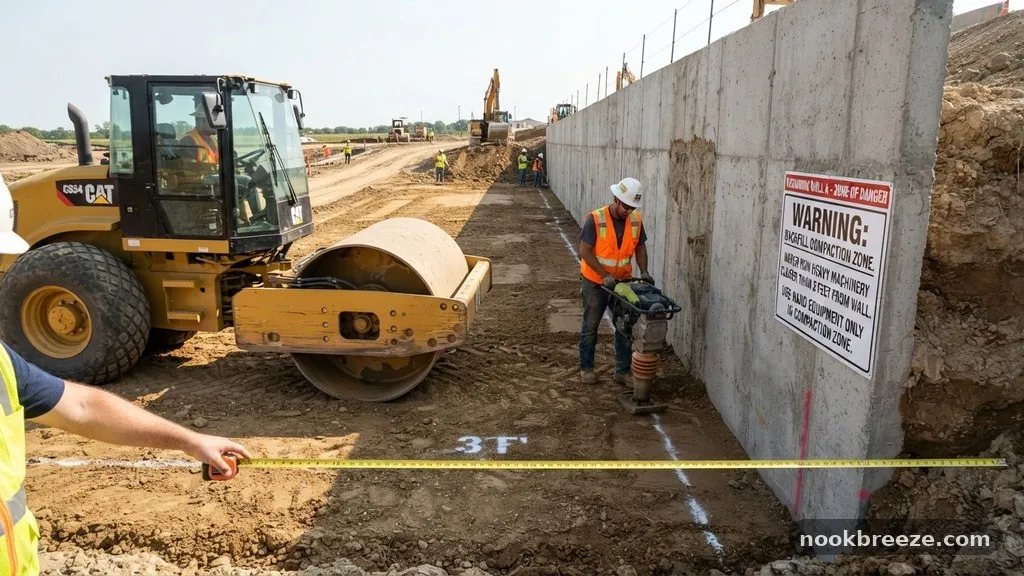
To illustrate the importance of maintaining distance, consider the following table regarding equipment types and their typical impact zones during backfill operations.
| Equipment Type | Typical Weight (lbs) | Safe Operating Distance | Compaction Method |
|---|---|---|---|
| Hand Plate Compactor | 150–300 | 0–3 feet | Vibratory plate |
| Walk-behind Roller | 1,500–2,500 | 3–5 feet | Vibratory drum |
| Skid Steer Loader | 6,000–10,000 | 5+ feet | Tire/Track pressure |
| Large Excavator | 20,000+ | 10+ feet | Distributed load |
Managing Risks on the Job Site
Risk management starts with a clear plan that every crew member understands. Before the first bucket of dirt is moved, the site supervisor should mark the 3-foot “no-go” zone with high-visibility spray paint or stakes.
This provides a visual cue that leaves no room for operator error. If an operator sees the line, they are much less likely to drift too close while focused on the task at hand.
Communication is also vital when multiple pieces of equipment are working in the same area. A spotter should always be present when heavy machinery is operating near a trench or a wall.
The spotter can monitor the distance between the machine and the structure, providing an extra pair of eyes that the operator might lack. If a machine gets too close, the spotter has the authority to halt the operation immediately.
Training is the third pillar of safety. Every operator should understand the basic mechanics of soil pressure and why the 3-foot rule exists.
When people understand the “why,” they are more likely to follow the rules even when they think no one is watching. Investing in safety training for your team is one of the most effective ways to prevent structural issues and improve overall project quality.
Documenting the Compaction Process
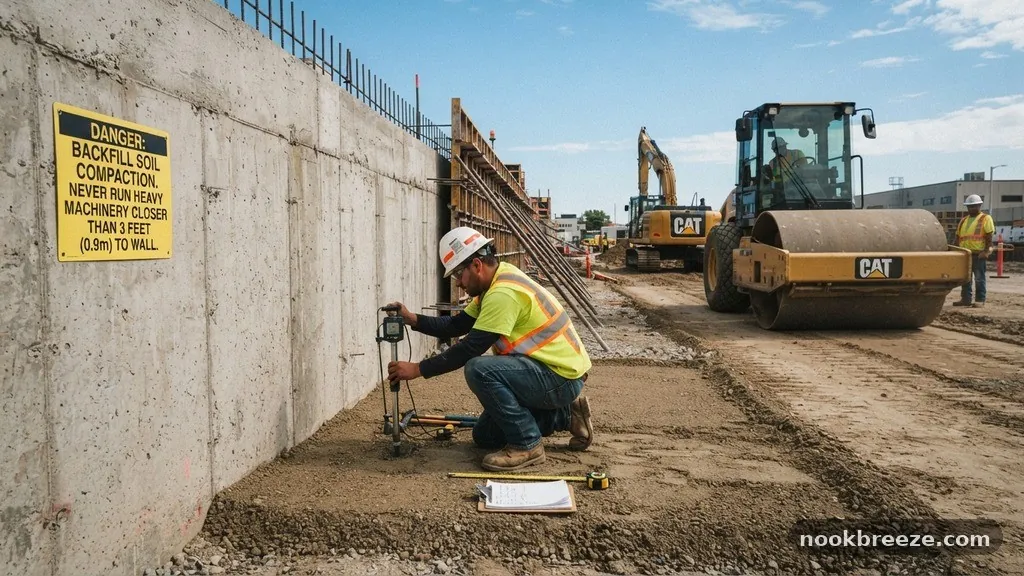
Documentation is essential for long-term liability protection. As construction professionals, you need to keep accurate records of the compaction testing performed on the site.
These tests, often conducted by a third-party geotechnical firm, verify that the soil has reached the required density. If a wall fails years down the road, having these records can prove that your team followed the correct procedures.
Most engineering specifications require compaction to reach 95% of the Maximum Dry Density (MDD) as determined by the Proctor test. This ensures that the soil is stable and won’t settle significantly under the weight of the structure.
If your site does not meet this threshold, you may need to re-compact or remove the material entirely. Keep these reports in a file specifically for the project, dated and signed by the field technician.
You should also keep a log of the backfilling process itself. Note the dates, the types of equipment used, and the weather conditions during the work.
If you encountered heavy rain during the backfilling process, record how you addressed the moisture issues. This level of detail shows that you were proactive in managing the site conditions and followed professional standards at every step.
Common Mistakes in Trench Backfilling
One of the most frequent errors is using frozen soil or large chunks of debris in the backfill. Frozen soil will eventually thaw, leaving voids that lead to sudden settlement.
Debris like wood, concrete scraps, or trash will decompose or shift over time, creating unpredictable pressure points against the wall. Always ensure the backfill material is clean and free of organic matter.
Another common mistake is failing to brace the wall before backfilling begins. A foundation wall is designed to be held in place by the floor system above it.
If you backfill against an unbraced wall, the force of the soil will push the top of the wall inward. This is a classic construction error that leads to permanent structural deformation and expensive repairs.
Finally, do not rush the process. Backfilling is often the last step before moving on to the next phase of the project, which creates pressure to work quickly.
However, taking the time to layer the soil and compact it properly is a small price to pay compared to the cost of a wall failure. If you are feeling pressure to speed up, remember that the structural integrity of the entire building is at stake.
Technical Resources for Site Professionals
For those looking to deepen their knowledge, the Natural Resources Conservation Service provides extensive data on soil properties and their behavior under load. Their technical manuals offer a wealth of information for engineers and contractors who need to understand the nuances of earthwork. Accessing these resources can help you make informed decisions when you encounter unusual soil conditions on your project site.
It is also beneficial to keep current with the latest OSHA safety standards regarding trenching and excavation. These regulations are designed to protect workers from cave-ins, but they also emphasize the importance of keeping heavy equipment away from the edges of excavations. By following these guidelines, you ensure that your site is not only structurally sound but also a safe environment for your employees.
Staying informed about new technology is also a smart move. Newer, more sensitive equipment can help you monitor ground vibration and soil density in real-time.
While these tools are an investment, they provide a level of precision that manual testing simply cannot match. Leveraging these technologies can set your work apart and give your clients peace of mind.
Frequently Asked Questions
Can soil compaction exceed 100%?
Yes, it is possible to achieve compaction levels that exceed the laboratory-determined maximum dry density if the soil is particularly well-graded and the compaction energy is high. However, this is rarely required in standard construction. Most specifications target 95% to 98% because exceeding 100% can sometimes lead to issues with soil expansion or drainage.
What is the minimum compaction requirement for an embankment?
The minimum requirement for an embankment usually depends on the intended use of the site, but 95% of the standard Proctor density is the common industry benchmark. If the embankment will support a building or a road, engineers may require higher densities to prevent future settlement. Always refer to the specific geotechnical report for your site.
How far must excavated soil be kept from the trench edge?
The general safety rule is to keep excavated material at least 2 feet from the edge of the trench to prevent the soil from falling back in and to reduce the surcharge load on the walls. When dealing with heavy machinery, this distance should be increased to at least 3 feet, or even further depending on the weight of the machine and the soil stability.
What is the ideal soil compaction level?
The ideal compaction level is generally between 95% and 98% of the maximum dry density. This range provides a balance between structural stability and the soil’s ability to drain water effectively. Aiming for this range ensures that the soil will not settle significantly while remaining permeable enough to prevent massive hydrostatic pressure buildup.
Does the 3-foot rule apply to all soil types?
The 3-foot rule is a minimum safety buffer that should be applied regardless of soil type. However, if you are working with loose or saturated soils, you should increase that distance significantly. In high-risk conditions, such as near deep excavations or in areas with high water tables, it is safer to keep heavy machinery as far away as possible from the structure.
Conclusion
Backfill soil compaction is a fundamental element of successful construction, directly impacting the long-term stability of your structures. By respecting the 3-foot rule and keeping heavy machinery at a safe distance, you prevent the dangerous lateral pressures that lead to cracks and structural failure. Always prioritize the use of lightweight, hand-operated equipment near walls and ensure that your drainage systems are properly installed.
Consistent, professional attention to these details will save you from the high costs of remediation and help you deliver a lasting project. If you have questions about specific site conditions, always consult with a licensed geotechnical engineer to ensure your approach is safe and compliant with local standards. Keep your site organized, your materials clean, and your equipment at a distance to guarantee the best results for your foundation work.