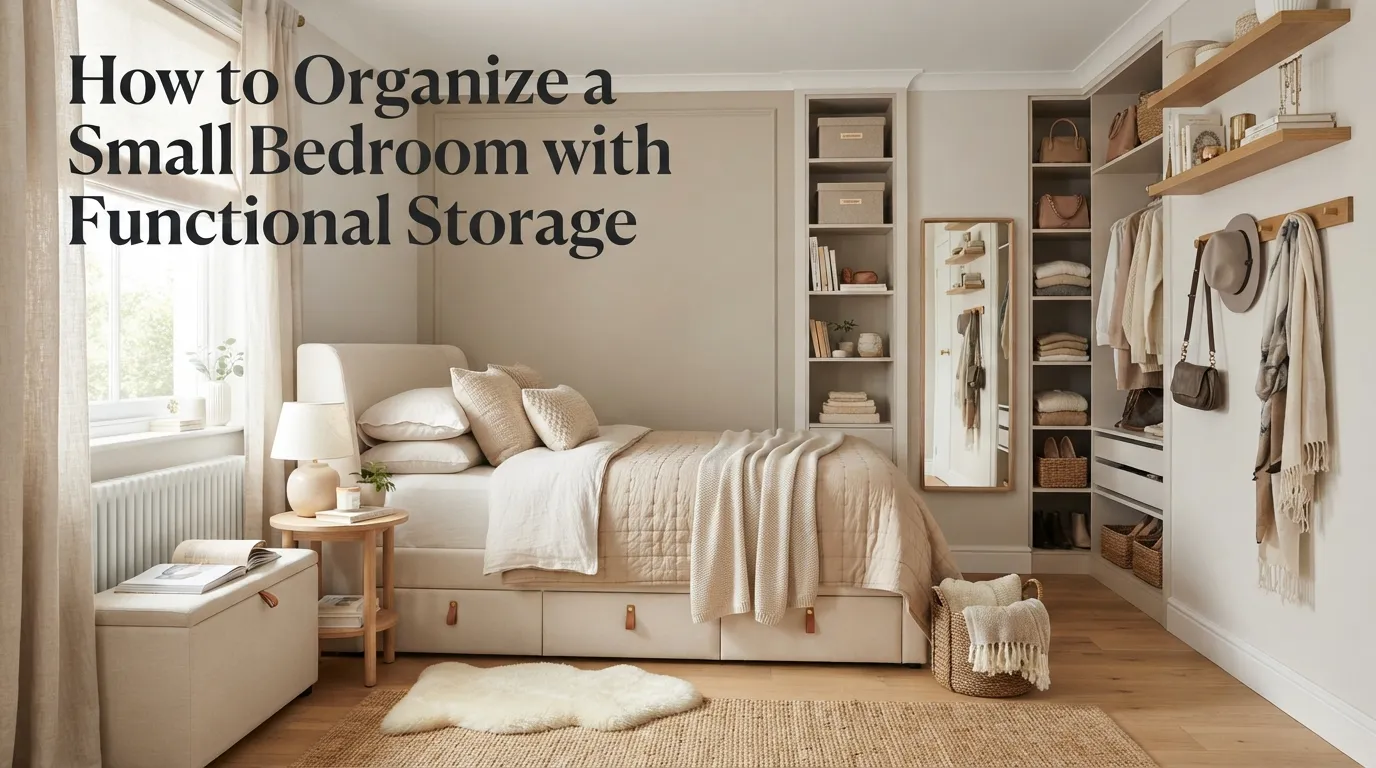
How to Organize a Small Bedroom with Functional Storage
A small bedroom can feel surprisingly difficult to organize. There may be enough room for a bed and a few essential pieces of furniture, yet somehow clothing, shoes, books, accessories, and everyday items still seem to take over every available surface.
The problem isn’t always a lack of storage. Often, it’s a matter of using the available space efficiently.
In a compact bedroom, every inch has a job. The area beneath the bed, the back of a door, the inside of a closet, the space beside the bed, and even the wall above a dresser can become useful storage zones when planned carefully.
I’ve noticed that one of the biggest mistakes people make in small bedrooms is buying storage containers before deciding what actually needs to be stored. Containers can organize clutter, but they can’t solve a storage system that doesn’t match your belongings.
A better approach is to start by sorting what you own, identifying the items you use most often, and then assigning each category a convenient home.
The goal isn’t to hide everything. A functional bedroom should make daily routines easier. Clothes should be easy to reach, frequently used accessories should remain accessible, and less-used items can be moved into higher or harder-to-reach spaces.
Furniture choice matters, too. A bulky dresser may provide plenty of drawers but leave the room difficult to navigate. A narrow vertical chest, under-bed storage, wall-mounted shelf, or storage bed may provide more useful capacity while taking up less floor space.
These ideas can help you organize a small bedroom without making it feel like a storage room. You’ll find practical ways to use overlooked spaces, reduce visual clutter, organize clothing, and choose furniture that works harder.
Whether you’re organizing a tiny apartment bedroom, guest room, children’s room, or your own compact space, the objective is the same: create a bedroom that feels calm, accessible, and easy to maintain.
Table of Contents
1. Use Under-Bed Space
Turn the often-unused area beneath your bed into practical storage.
2. Maximize Closet Space
Create more usable capacity by organizing the closet vertically.
3. Choose Vertical Furniture
Use tall storage pieces to take advantage of unused wall height.
4. Add Behind-Door Storage
Transform the back of the bedroom door into an accessible storage zone.
5. Install Floating Shelves
Keep useful items off the floor with simple wall-mounted storage.
6. Use Storage Baskets
Group smaller belongings into attractive, easy-to-access containers.
7. Optimize Nightstand Space
Choose bedside storage that provides function without overwhelming the room.
8. Organize Seasonal Items
Move occasional belongings away from your everyday storage areas.
9. Create Clothing Zones
Give different types of clothing their own logical storage locations.
10. Declutter Flat Surfaces
Keep dressers, desks, and nightstands clear with simple systems.
11. Choose Multifunctional Furniture
Make every major piece of furniture serve more than one purpose.
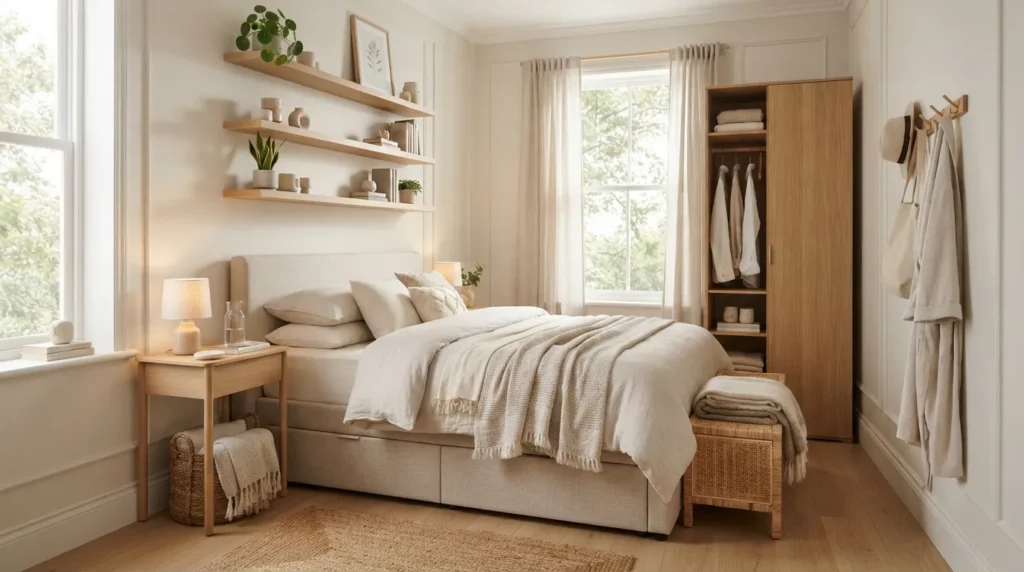
1. Use Under-Bed Space
Quick Benefits
- Uses overlooked space
- Keeps belongings out of sight
- Works well for seasonal items
- Reduces closet pressure
- Doesn’t require additional floor space
Why It Works
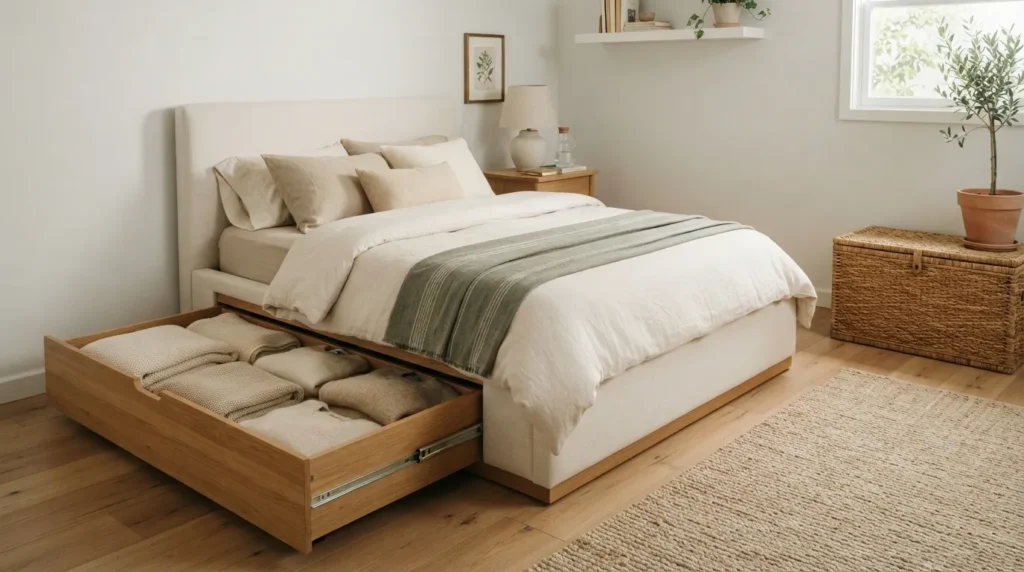
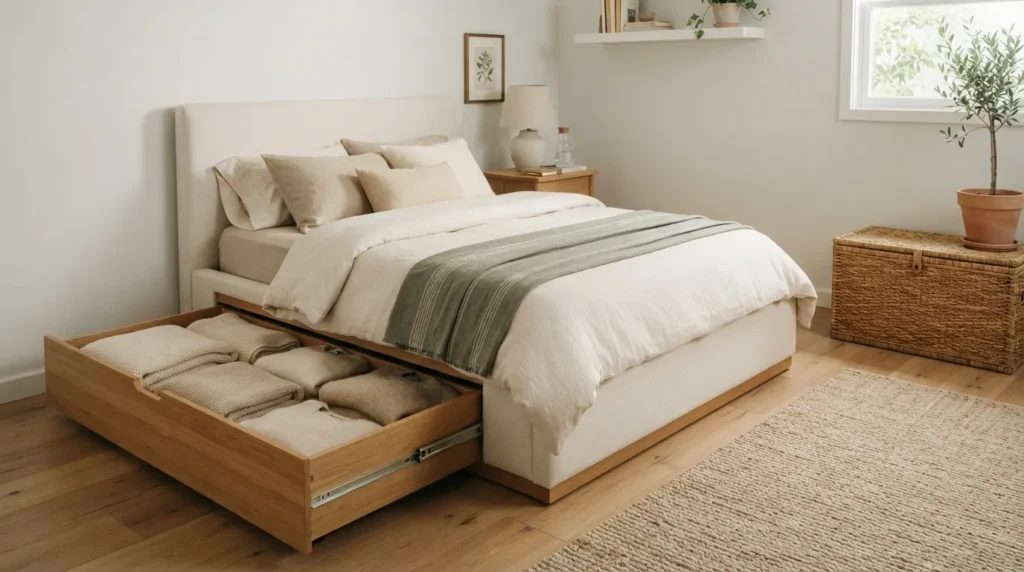
The space beneath a bed is one of the most valuable storage areas in a small bedroom because it already exists. You’re not adding another piece of furniture or sacrificing walking space.
It can be especially useful for belongings that aren’t needed every day, such as extra bedding, seasonal clothing, luggage, shoes, or holiday decorations.
The key is making sure the storage is accessible. If boxes are difficult to pull out, you may eventually stop using the system and begin stacking items elsewhere.
Under-bed storage also works best when categories are clearly separated. Instead of putting everything into one large container, use individual bins or drawers for different types of belongings.
How To Style It
Measure the height between the floor and the underside of the bed before purchasing containers.
Look for shallow rolling bins, lidded boxes, or purpose-built under-bed drawers.
Use clear containers when you want to see the contents quickly. Opaque boxes can create a cleaner appearance, but labels become more important.
Keep frequently used items closer to the edge and seasonal belongings farther toward the back.
For clothing and bedding, breathable storage may be preferable depending on the material and local humidity.
Don’t overfill containers. Items should remain easy to remove without unpacking the entire bin.
2. Maximize Closet Space
Quick Benefits
- Creates more usable clothing storage
- Makes outfits easier to find
- Reduces bedroom clutter
- Uses vertical space
- Helps prevent overstuffed shelves
Why It Works
A small closet can hold much more than it appears to when every section is used intentionally.
Many closets rely almost entirely on one hanging rod, leaving significant vertical space above and below unused. Adding shelves, drawers, stackable organizers, or a second hanging area can increase useful capacity without expanding the closet.
The first step is knowing what belongs there.
A closet filled with clothes you rarely wear leaves less room for the pieces you actually use.
Organizing by category also reduces the time spent searching. When similar items are grouped together, you can quickly see what you have.
How To Style It
Begin by removing clothes that no longer fit your lifestyle, size, or preferences.
Group clothing by category, such as tops, pants, dresses, jackets, and everyday basics.
If your closet has sufficient height, consider a second hanging rod for shorter garments.
Use shelf dividers or bins to keep folded items from becoming unstable piles.
Place less-used belongings on upper shelves.
Use slim, matching hangers when appropriate to create a more consistent appearance and make the available hanging rod easier to use.
Keep the floor as clear as possible so shoes and storage bins don’t become obstacles.
3. Choose Vertical Furniture
Quick Benefits
- Uses wall height
- Saves floor space
- Adds significant storage
- Creates a streamlined layout
- Works well in narrow rooms
Why It Works
When floor space is limited, think upward.
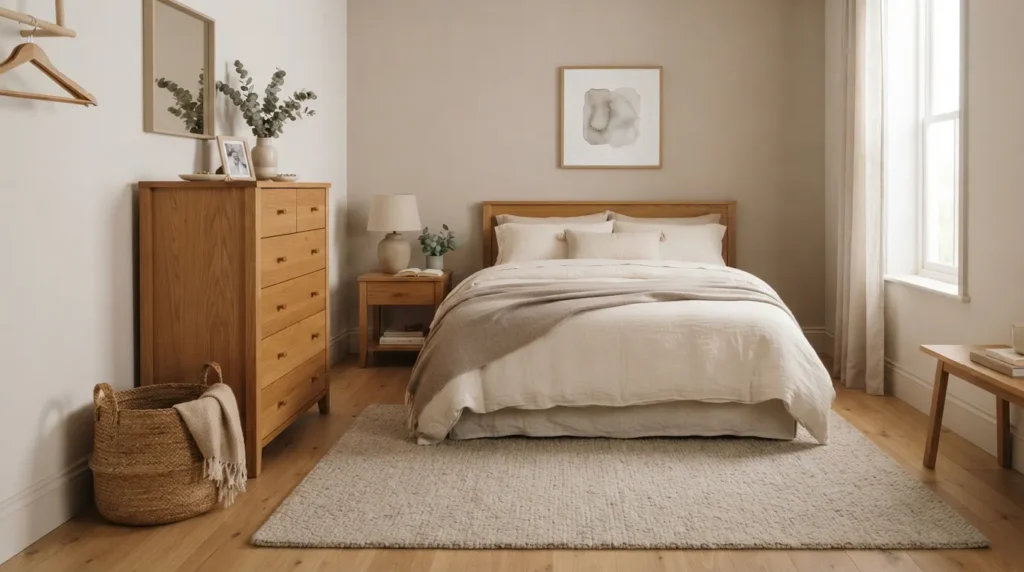
Tall furniture can provide substantially more storage than a wide, low piece while occupying a smaller footprint.
A narrow chest of drawers, tall bookcase, vertical wardrobe, or slim cabinet can take advantage of ceiling height that otherwise remains unused.
This is particularly useful in bedrooms with high ceilings.
Vertical furniture also creates a more intentional appearance when it is positioned carefully. Instead of having several small storage pieces scattered around the room, one tall piece can consolidate belongings.
How To Style It
Measure both the width and depth of the furniture before buying. In a small bedroom, a few inches of extra depth can significantly affect the walkway.
Choose a tall dresser rather than a very wide one if the room’s layout allows.
Use the upper shelves for less frequently accessed items.
Keep the most-used belongings between waist and eye level.
If you’re placing a tall unit near the bed, make sure it doesn’t visually crowd the sleeping area.
For a cohesive appearance, choose furniture that complements the bed frame and other major finishes.
4. Add Behind-Door Storage
Quick Benefits
- Uses an overlooked surface
- Doesn’t require floor space
- Works for accessories
- Keeps small items accessible
- Can be inexpensive
Why It Works
The back of a bedroom door is essentially a vertical wall that is often ignored.
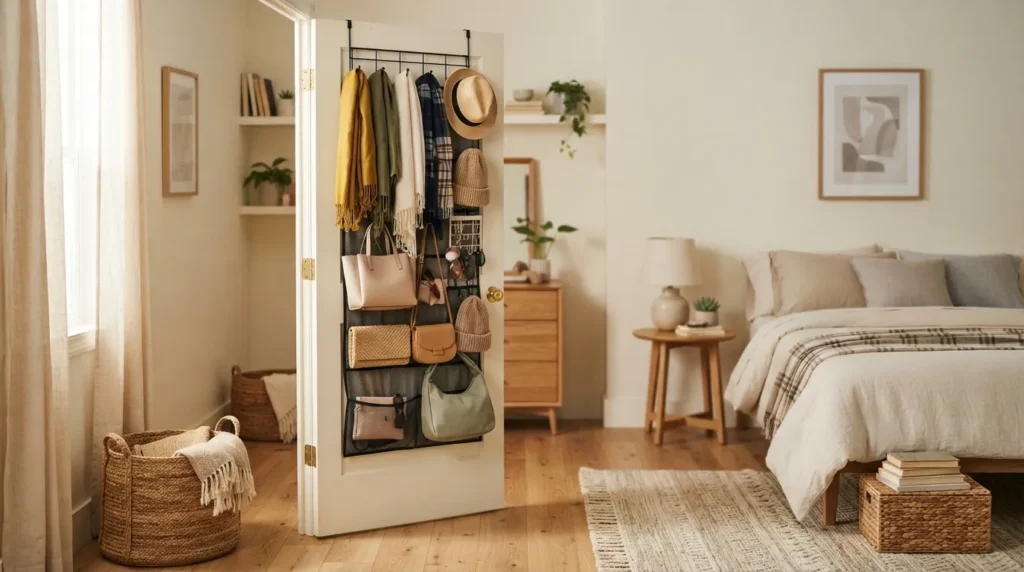
A properly installed over-door organizer, hooks, or slim rack can create useful storage for accessories, bags, shoes, scarves, hats, or frequently used clothing.
This approach is particularly useful when your bedroom has little closet space.
The important consideration is depth. A storage system that sticks out too far can interfere with the door closing or make the room feel crowded.
Always check the door’s clearance and the weight limits of the hardware or organizer.
How To Style It
Use hooks for bags, robes, hats, and frequently worn jackets.
A pocket organizer can hold smaller accessories, hair tools, or lightweight personal items.
For shoes, choose a slim organizer designed specifically for the available door clearance.
Keep everyday items toward the upper-middle portion of the organizer where they are easiest to reach.
Avoid turning the entire door into a storage wall. A simple, organized arrangement is easier to maintain and looks less visually busy.
5. Install Floating Shelves
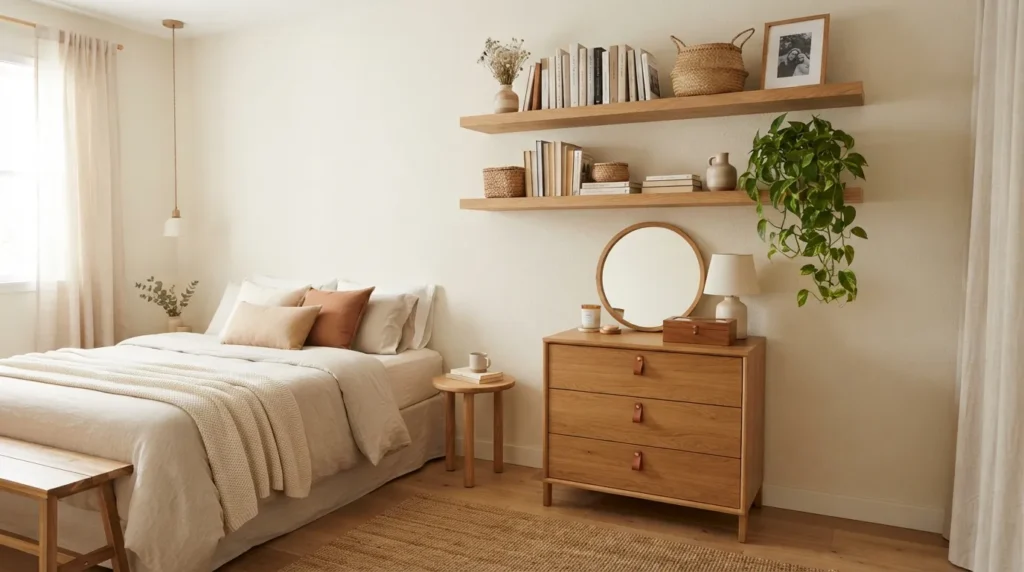
Quick Benefits
- Frees floor space
- Adds accessible storage
- Works above furniture
- Creates decorative opportunities
- Fits narrow walls
Why It Works
Floating shelves are particularly useful when floor space is scarce.
They can transform otherwise unused wall areas above a dresser, desk, nightstand, or empty corner into functional storage.
Unlike a traditional bookcase, shelves don’t consume valuable floor space.
They also give you flexibility. You can use them for books and decor, but they can also hold small baskets, folded accessories, jewelry boxes, or everyday items.
The key is avoiding visual overload. A shelf packed from end to end can make a small room feel more crowded.
How To Style It
Install shelves where they are convenient to reach without interfering with doors or windows.
Use small baskets to group loose belongings.
Combine functional items with a few decorative pieces.
For example, a shelf might hold folded scarves in a basket, several books, a small plant, and a framed photograph.
Keep heavier items on properly supported shelves and follow the manufacturer’s weight and installation recommendations.
If you have several shelves, leave some open space between groups of objects.
6. Use Storage Baskets
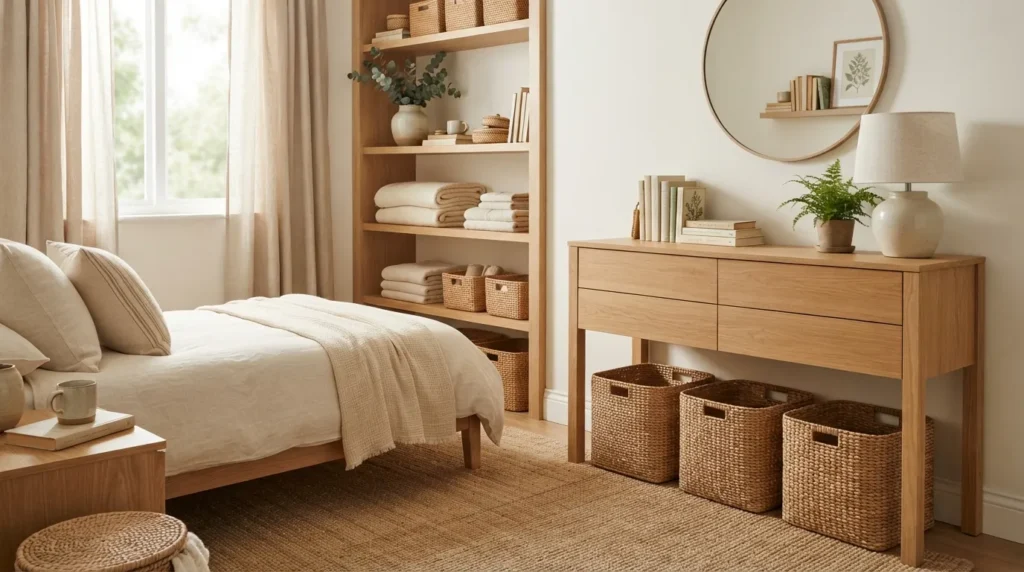
Quick Benefits
- Groups small items
- Reduces visual clutter
- Makes shelves easier to maintain
- Adds texture
- Works throughout the bedroom
Why It Works
Open shelves and closets can quickly become messy when they’re filled with small individual objects.
Baskets create visual boundaries. Instead of seeing dozens of separate items, you see a few organized containers.
They’re especially useful for accessories, extra linens, electronics, scarves, belts, and other belongings that don’t stack neatly.
Baskets can also add warmth to a bedroom. Woven materials, canvas, fabric, and simple natural fibers can soften the appearance of furniture with hard edges.
How To Style It
Choose baskets that fit the dimensions of your shelves or storage compartments.
Use larger baskets for blankets and linens.
Smaller baskets can organize accessories, chargers, hair products, or miscellaneous items.
Label baskets if multiple people share the room or if the contents aren’t obvious.
Don’t use baskets as an excuse to keep unnecessary belongings. A beautifully organized container is still clutter if it holds items you don’t use.
Choose a consistent basket style if you want the room to feel visually calm.
7. Optimize Nightstand Space
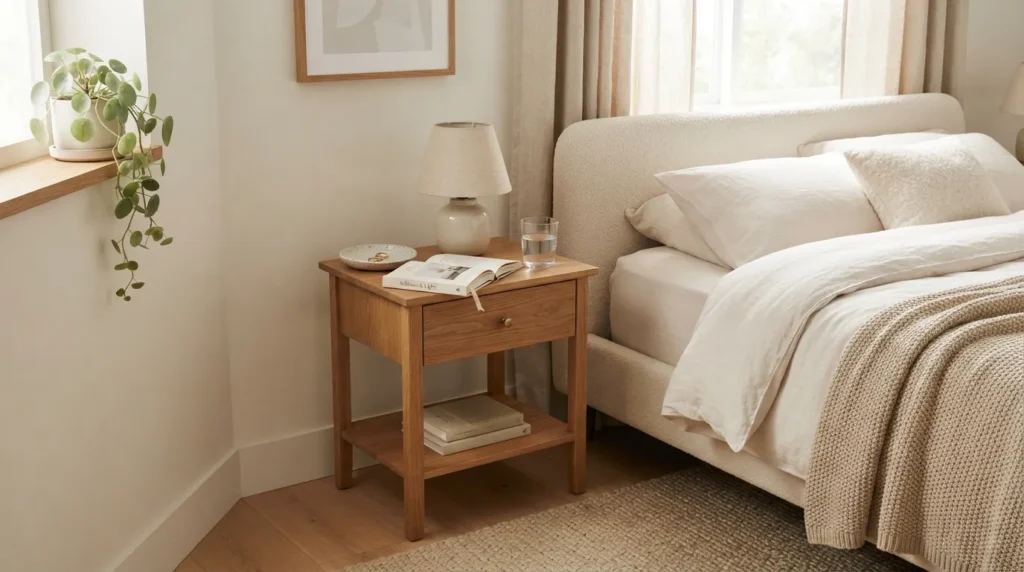
Quick Benefits
- Keeps bedtime essentials accessible
- Reduces surface clutter
- Adds hidden storage
- Creates a calmer sleeping area
- Makes better use of a small footprint
Why It Works
A nightstand doesn’t need to be large to be useful.
In a small bedroom, the best bedside table is often one that provides the exact storage you need without taking up unnecessary floor space.
A drawer can hold glasses, chargers, medication, reading materials, or other personal items, while an open shelf can provide space for books.
If you already have a tiny bedside table, you can improve its function by reducing what stays on the surface.
The goal is to keep the tabletop reserved for things you genuinely use every night.
How To Style It
Choose a narrow nightstand with at least one drawer when possible.
Keep the surface limited to essentials such as a lamp, book, and small decorative object.
Use the drawer for personal items and electronics.
If floor space is extremely limited, consider a wall-mounted bedside shelf instead of a traditional nightstand.
Choose a lamp with a relatively small footprint or use a wall-mounted light where appropriate.
A clear nightstand creates an immediate sense of calm in a compact bedroom.
8. Organize Seasonal Items
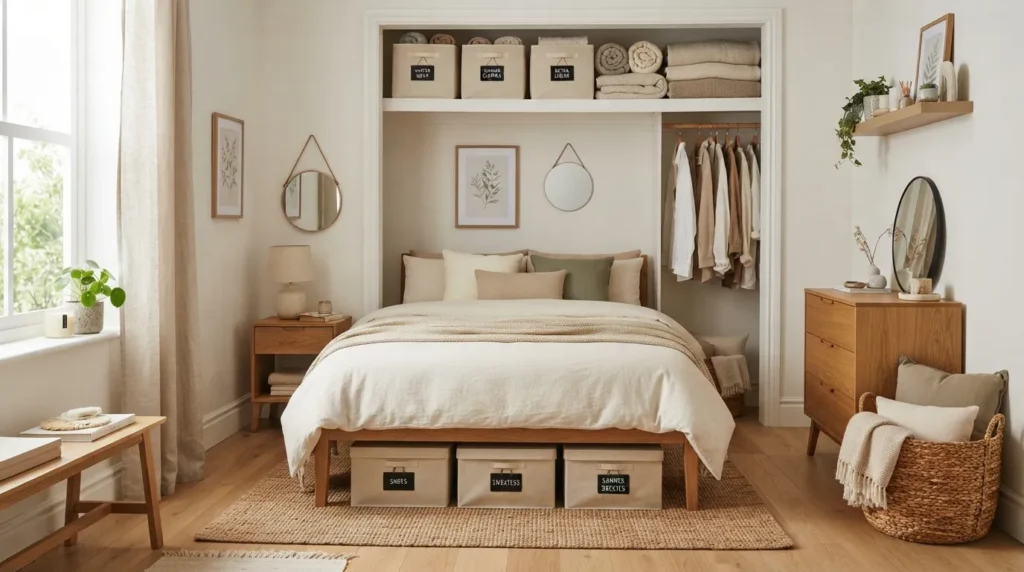
Quick Benefits
- Frees everyday storage
- Reduces closet crowding
- Makes clothing easier to access
- Keeps rarely used items contained
- Simplifies seasonal changes
Why It Works
You don’t need your entire wardrobe taking up prime storage space all year.
Heavy winter clothing may not need to occupy the easiest-to-reach areas during summer, just as lightweight summer pieces don’t need to dominate the closet in colder months.
Rotating seasonal belongings can make a small closet feel significantly more manageable.
This doesn’t mean storing everything in another room. High closet shelves, under-bed bins, storage ottomans, or other less accessible areas can work well.
How To Style It
Create clearly labeled categories such as winter clothing, summer clothing, extra bedding, and seasonal accessories.
Use sturdy containers that protect belongings from dust.
Store the least frequently used items in higher spaces.
Keep the next season’s clothing accessible so the transition doesn’t become a major project.
Before storing anything, check whether you actually used it during the previous season.
Seasonal organization is also a natural opportunity to remove damaged, unused, or duplicate items.
9. Create Clothing Zones
Quick Benefits
- Makes getting dressed easier
- Reduces searching
- Prevents storage piles
- Creates a repeatable system
- Helps maintain organization
Why It Works
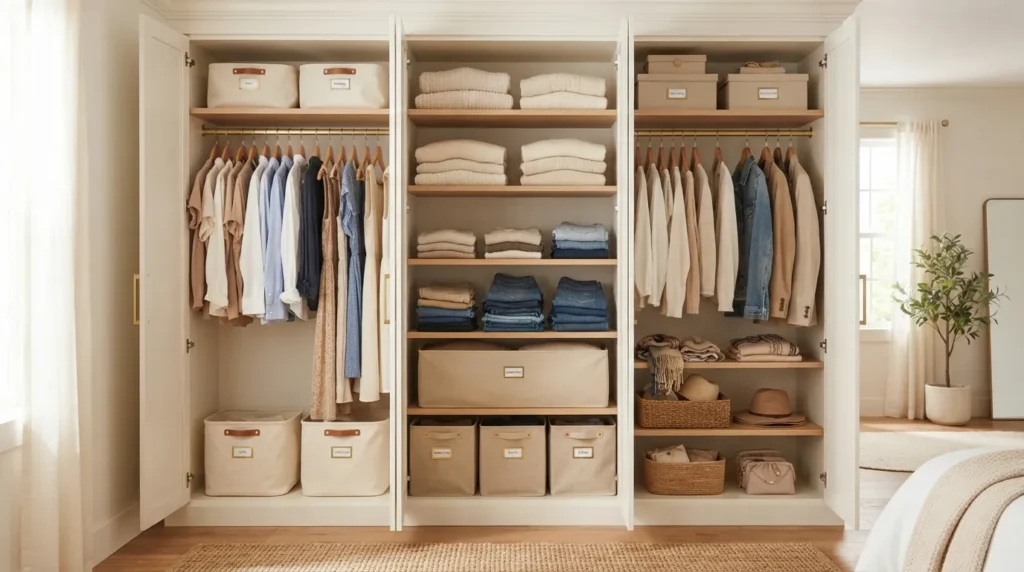
Organization becomes easier when every category has a predictable home.
Instead of randomly putting clothes wherever space is available, create zones based on how you actually use them.
For example, everyday tops can occupy one drawer or section, while workout clothes, sleepwear, undergarments, and accessories have separate locations.
The system doesn’t need to be complicated. In fact, simple systems are often easier to maintain.
The most convenient spaces should hold the clothing you wear most often.
How To Style It
Assign categories to drawers, shelves, and hanging sections.
Fold soft items vertically when appropriate so you can see more of the contents rather than stacking everything in tall piles.
Use small dividers for socks, underwear, belts, and accessories.
Hang garments that wrinkle easily.
Keep everyday clothing between comfortable reach heights.
If two people share a small bedroom, give each person clearly defined zones rather than mixing everything together.
The best system is the one you can maintain without having to reorganize it every week.
10. Declutter Flat Surfaces
Quick Benefits
- Makes the room feel larger
- Reduces visual noise
- Makes cleaning easier
- Creates a calmer atmosphere
- Improves everyday functionality
Why It Works
A small bedroom can look cluttered even when every drawer and closet is technically organized.
The reason is visual clutter.
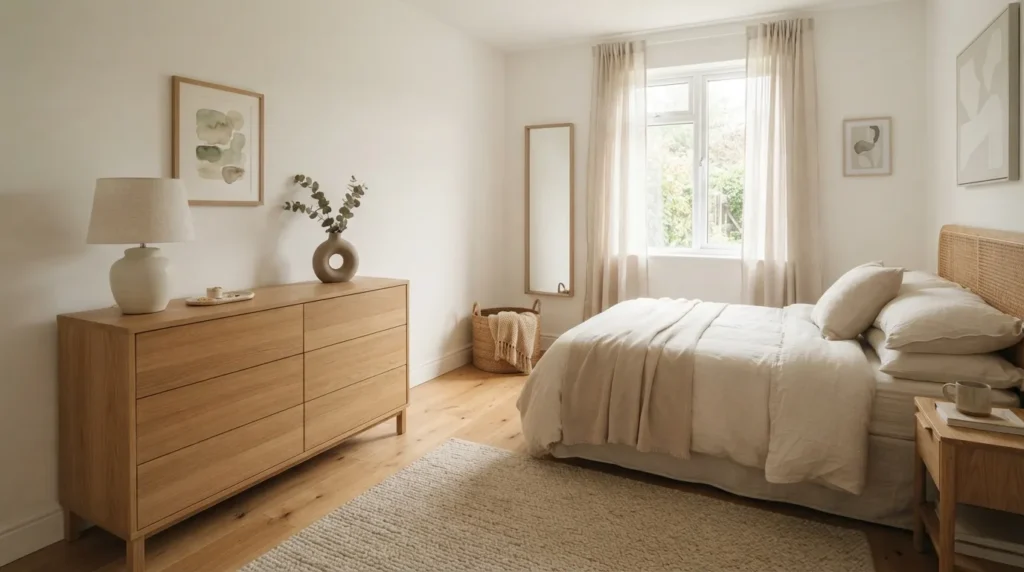
Dressers, desks, nightstands, and shelves tend to collect items throughout the day. Because these surfaces are always visible, even a handful of objects can make the room feel messy.
Keeping flat surfaces intentionally clear can have a surprisingly strong effect.
You don’t need completely empty surfaces. The goal is to establish limits.
How To Style It
Choose a small number of objects for each surface.
A dresser might hold a lamp, framed artwork, jewelry tray, and one decorative object.
Use trays to contain smaller items.
Create a designated charging location so cables don’t spread across nightstands and desks.
Return everyday items to their storage homes at the end of the day.
If a surface repeatedly becomes cluttered, pay attention to what accumulates there. That often indicates the item needs a more convenient storage location.
11. Choose Multifunctional Furniture
Quick Benefits
- Saves floor space
- Combines multiple functions
- Reduces the need for extra furniture
- Increases storage capacity
- Works especially well in very small bedrooms
Why It Works
When space is limited, furniture needs to work harder.
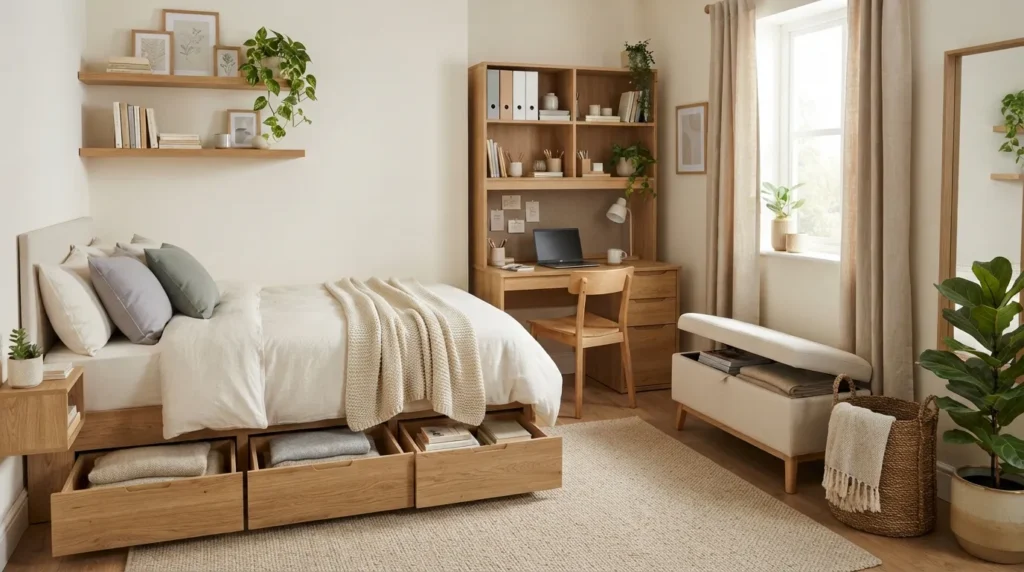
A storage bed can replace separate bins. A bench with hidden storage can provide seating and hold blankets. A desk with drawers can serve as both workspace and organization station.
Multifunctional furniture reduces the number of individual pieces required in the room, which can make the space feel more open.
However, not every multifunctional piece is automatically useful. Choose furniture based on your actual storage needs rather than buying features you won’t use.
How To Style It
Look for a bed with integrated drawers or lift-up storage if under-bed capacity is important.
Use a storage ottoman at the foot of the bed for blankets, extra pillows, or seasonal items.
Choose a narrow desk with drawers if you need a workspace.
A wall-mounted folding desk can be useful when a full-time desk would consume too much floor space.
Keep the visual design simple so multifunctional furniture doesn’t make the room feel overly busy.
Related Articles
- How to Make a Small Bedroom Feel Bigger
- Small Bedroom Storage Ideas Without Buying Furniture
- 10 Bedroom Organization Ideas for Less Clutter
- How to Organize a Small Closet Efficiently
- Small Bedroom Decorating Ideas for a Cozy Space
Frequently Asked Questions
How do you organize a small bedroom with little storage?
Start by reducing items you don’t use and then prioritize vertical and hidden storage. Use under-bed containers, tall furniture, closet organizers, floating shelves, door-mounted storage, and multifunctional furniture. Keep frequently used belongings in the easiest-to-reach areas and move seasonal or occasional items into higher or less accessible storage.
Where should I put things in a small bedroom?
Place everyday belongings in convenient locations close to where you use them. Clothing should remain near the bed or dressing area, while books can go on a nightstand or nearby shelf. Seasonal items can move beneath the bed or onto high closet shelves. The closer an item is to its point of use, the easier the organization system will be to maintain.
How can I get more closet space?
Use the vertical space above and below your existing hanging area. Depending on the closet design, you can add shelves, drawers, stackable bins, or an additional hanging rod. Slim hangers may also help maximize hanging capacity. Before adding organizers, remove clothing you no longer wear so you’re not simply creating more storage for unnecessary items.
How do I keep a small bedroom from looking cluttered?
Reduce the number of visible objects and give frequently used belongings designated homes. Use baskets and drawers to contain smaller items, keep flat surfaces relatively clear, and avoid oversized furniture. A consistent color palette can also make storage pieces visually blend into the room and create a calmer overall appearance.
Is under-bed storage good for clothes?
Yes, under-bed storage can work well for seasonal clothing, extra bedding, and less frequently used garments. Choose containers that protect the clothing from dust and moisture and make sure the items are clean and completely dry before storing them. Avoid packing containers so tightly that removing one item requires emptying the entire box.
How can I organize a small bedroom without buying furniture?
Start with the storage you already have. Declutter clothing and belongings, reorganize your closet, use existing drawers more efficiently, add labels to current containers, and make better use of under-bed and vertical space. Rearranging furniture can also reveal unused corners or wall areas that can become useful storage zones.
What furniture is best for a small bedroom?
Furniture that combines storage with another function is often the most useful. Storage beds, narrow dressers, drawer-equipped nightstands, storage benches, wall-mounted desks, and tall cabinets can provide substantial capacity without requiring many separate pieces. Always measure the room and preserve comfortable walkways before choosing large furniture.
Conclusion
Organizing a small bedroom doesn’t require turning every inch into a storage container. The most effective approach is to create a simple system that matches the way you actually use the room.
Start by removing belongings that no longer serve you. Then look at the storage opportunities you already have: beneath the bed, inside the closet, behind the door, along the walls, and inside existing furniture.
Once those areas are being used efficiently, consider adding pieces that provide more than one function. A storage bed, tall dresser, narrow nightstand, or storage bench can often replace multiple smaller items.
Keep everyday belongings easy to reach and move seasonal or occasional items into less accessible areas. Use baskets, labels, and drawer zones to keep categories together, and don’t overlook the effect of clear surfaces.
The goal isn’t perfection. A functional bedroom is one that makes your daily routine easier.
When clothing is easy to find, chargers have a designated place, bedding is neatly stored, and the floor remains open, the entire room can feel calmer.
Start with one area today—perhaps the closet, nightstand, or space beneath the bed. Once that area works well, move to the next.
Small changes, repeated consistently, can turn even a very compact bedroom into a comfortable and organized space.