Timber vs Concrete Block Retaining Walls: Lifespan Comparison in Wet Climates
Choosing between timber vs concrete block retaining walls requires a clear understanding of how different materials respond to moisture. In wet climates, the primary concern is the rate of degradation and the long-term structural integrity of your landscape investment. While timber offers a classic, natural aesthetic, concrete blocks provide superior resistance to the environmental stressors common in high-precipitation regions.
Homeowners often weigh the lower upfront cost of wood against the minimal maintenance requirements of masonry. Understanding the specific lifespan of these materials will help you determine which option best suits your property’s needs and your budget.
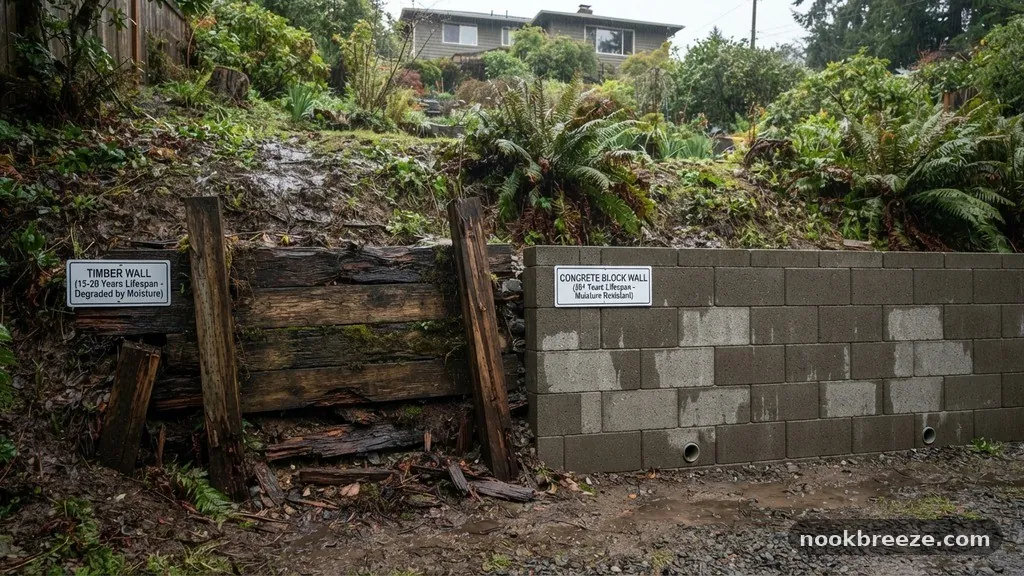
When evaluating the longevity of these structures, concrete block walls typically outlast timber by several decades. A properly constructed concrete block retaining wall can last between 50 and 100 years, whereas treated timber walls generally require replacement after 10 to 20 years. In environments with constant soil saturation, timber is susceptible to fungal decay and insect infestation even when pressure-treated.
Concrete, by contrast, is impervious to rot and maintains its structural mass regardless of moisture levels. If you prioritize long-term durability over initial material costs, concrete is the clear winner for wet-climate projects.
The Role of Moisture in Material Degradation
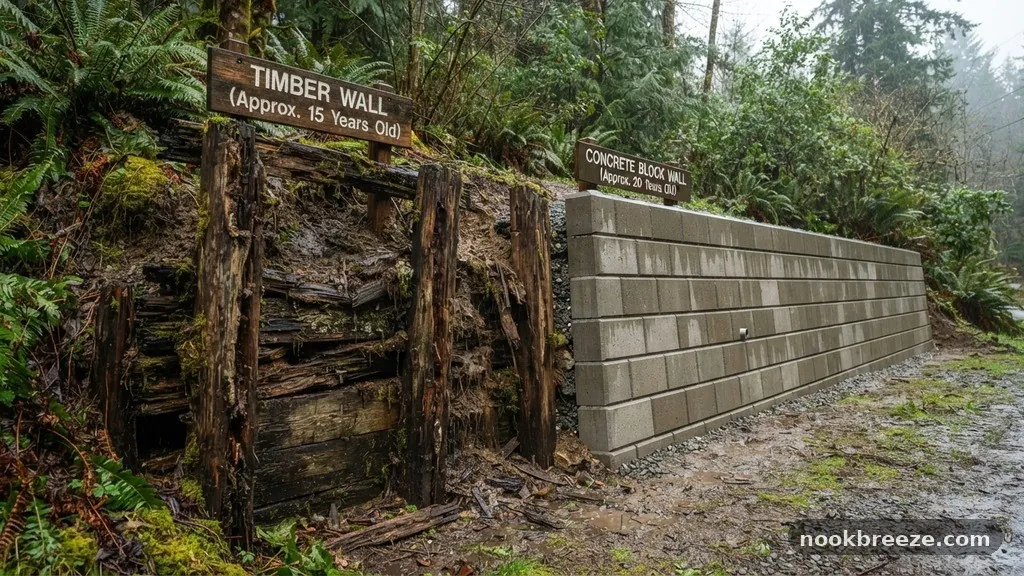
Water is the primary enemy of any retaining wall, especially in high-rainfall zones. Timber, being an organic material, acts like a sponge, absorbing moisture from the surrounding soil.
This constant state of saturation accelerates the breakdown of chemical preservatives, eventually leading to wood rot. Once the fibers soften, the structural capacity of the timber sleepers diminishes, often leading to bowing or failure.
Concrete blocks are engineered to withstand hydrostatic pressure and moisture exposure without losing structural integrity. While water can seep through joints or cracks, the material itself does not decompose or lose mass due to humidity.
This makes concrete a more reliable option for walls that must support significant soil loads in rainy regions. You won’t face the same cycle of structural weakening that defines the lifecycle of timber installations.
Comparative Lifespan Expectations
When comparing the two, you are essentially choosing between a temporary landscape feature and a permanent structural improvement. Timber walls are often viewed as a medium-term solution that provides a softer, more natural look for residential gardens. Once the wood begins to show signs of splintering or deep rot, the wall is likely nearing the end of its functional life.
Concrete blocks are permanent assets that rarely require replacement if installed with proper drainage. The durability gap is substantial, with concrete often outliving the home it protects. To see how these materials stack up, consider the following general lifespan estimates for residential retaining walls.
| Material Type | Estimated Lifespan | Primary Failure Factor |
|---|---|---|
| Pressure-Treated Timber | 10–20 Years | Biological Decay/Rot |
| Concrete Block | 50–100 Years | Foundation Settling |
| Natural Stone | 100+ Years | Mechanical Shifting |
Understanding the Impact of Drainage
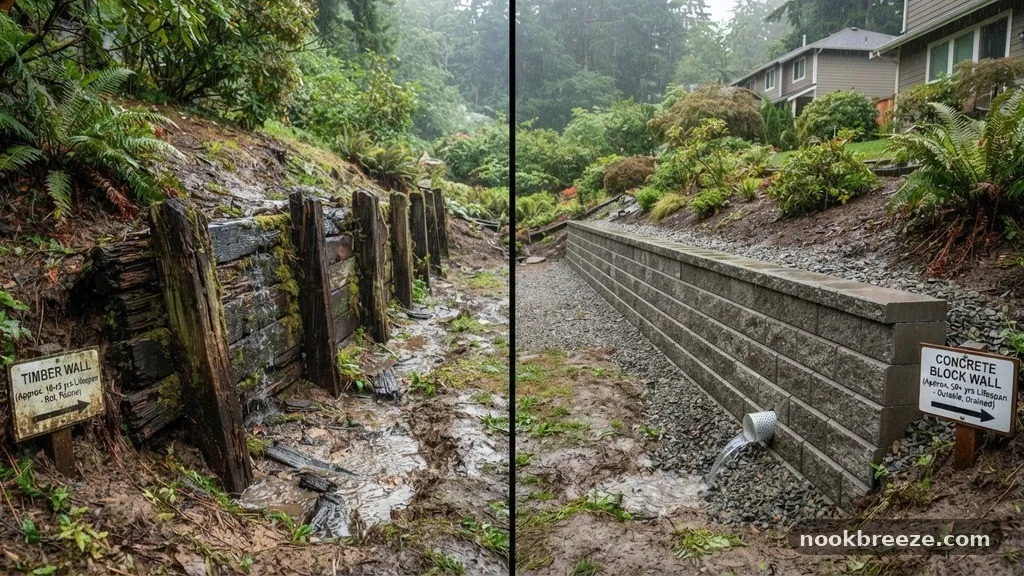
Regardless of the material chosen, the lifespan of any retaining wall is heavily dependent on effective drainage. If water builds up behind the wall, it creates immense hydrostatic pressure that can push even the most robust structures out of alignment. In wet climates, this pressure is significantly amplified during heavy storm events.
For timber walls, poor drainage is a death sentence, as trapped water keeps the wood in a perpetually damp state. This prevents the timber from ever drying out, which is necessary to slow the progress of wood-destroying fungi.
Concrete walls are also susceptible to drainage failures, but the damage manifests as wall displacement or cracking rather than material decay. Installing a perforated pipe along the base of the wall is the most effective way to manage water and extend the life of your structure.
Installation Complexity and Site Preparation
The installation process for timber vs concrete block retaining walls differs significantly in terms of labor and expertise. Timber sleepers are relatively lightweight and easy to cut, making them a popular choice for DIY enthusiasts. However, they require precise leveling and anchoring to prevent the wall from shifting under the weight of wet, heavy soil.
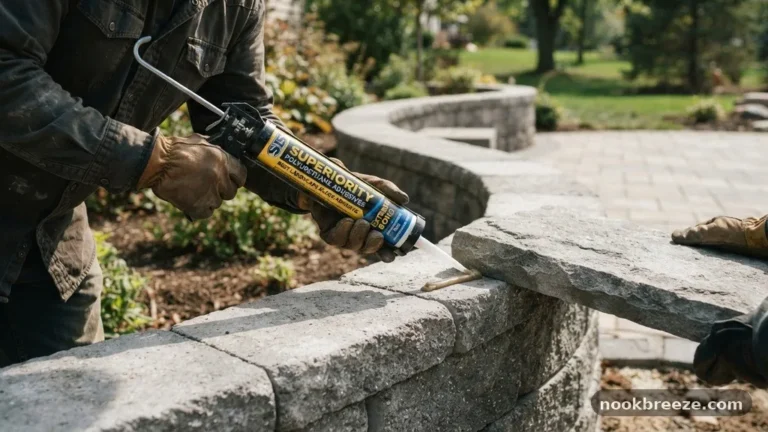
Concrete blocks are much heavier and often require specialized equipment for transport and placement. Each block must be carefully positioned and, in many designs, interlocked or mortared to create a cohesive unit.
While the installation process is more demanding, it creates a much more stable barrier against soil movement. Proper base preparation, such as using compacted gravel, is crucial for both materials to prevent the wall from sinking.
Maintenance Requirements Over Time
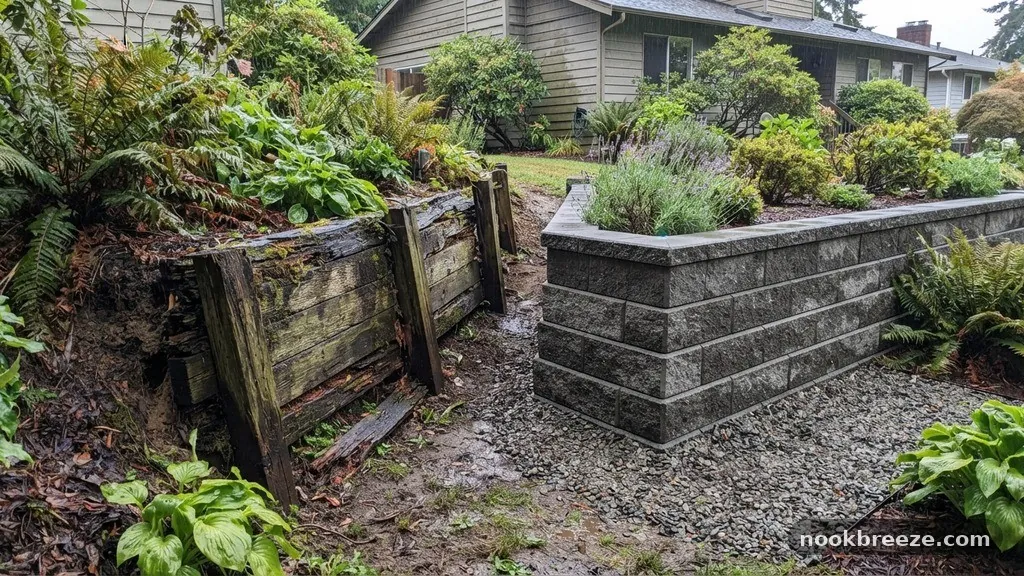
Maintenance is where the two materials diverge most sharply in terms of long-term effort and cost. Timber walls require periodic inspections to check for soft spots, insect damage, and loose fasteners. You may also need to apply wood preservatives or sealants every few years to maintain the wall’s resistance to moisture.
Concrete block walls are virtually maintenance-free once the initial installation is complete. You may occasionally need to clean the surface to remove moss or algae, but the structure itself requires no ongoing treatment.
This low-maintenance profile is a significant benefit for homeowners in wet climates who want to avoid the recurring labor associated with wood. You can find more details on construction standards at the Natural Resources Conservation Service website.
Aesthetics and Landscape Integration
Many homeowners choose timber because of the way it blends into a natural garden setting. The warm tones of wood complement plantings and create a softer, more organic aesthetic than stark masonry. As the timber ages, it can develop a weathered silver patina that many find attractive in a landscape design.
Concrete blocks have evolved significantly and now come in a wide range of textures and colors that mimic natural stone. While they may not have the same warmth as wood, they offer a clean and polished look that works well with modern architecture. If you prefer the natural aesthetic of timber but need the longevity of concrete, you might consider decorative concrete blocks with a rough-hewn finish.
Cost Analysis and Value Retention
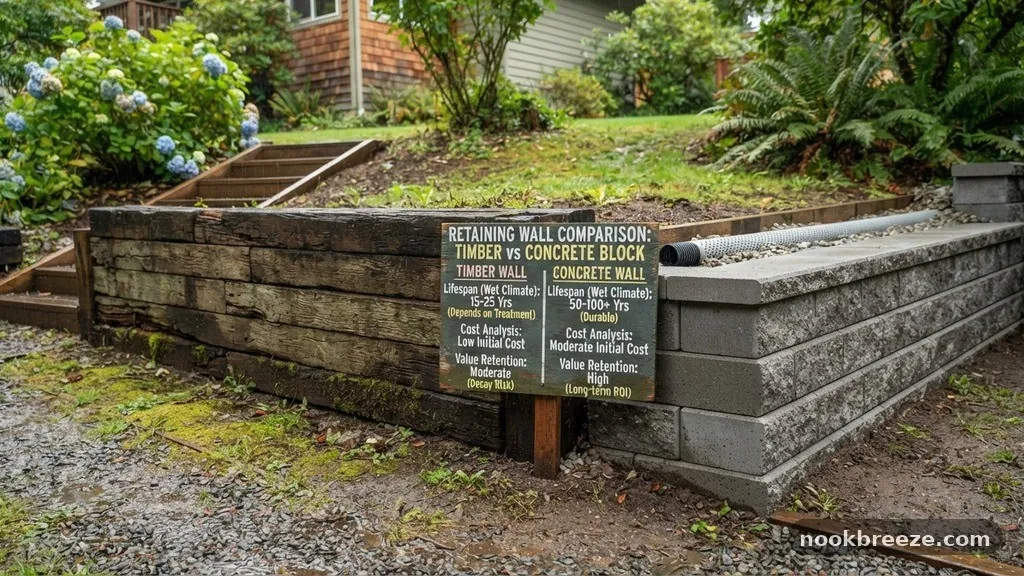
The upfront cost of timber is generally lower than that of concrete, which is why it remains a common choice for smaller projects. However, the true cost of a wall must include the price of replacement and ongoing maintenance. If you have to replace a timber wall every 15 years, the long-term expense will quickly exceed the cost of a single concrete installation.
Concrete block walls represent a larger initial investment but provide better value through longevity. They also contribute more to the resale value of a property, as potential buyers view them as a permanent improvement rather than a maintenance liability. When evaluating the budget, think about the total cost of ownership over a 30-year period rather than just the initial price tag.
Common Modes of Failure
Understanding how these walls fail can help you choose the right material for your specific site. Timber walls typically fail through a combination of structural rot at the ground line and the snapping of anchor ties. Once the wood loses its integrity, the wall can no longer support the soil, leading to a catastrophic collapse.
Concrete block walls primarily fail due to issues with the underlying soil foundation rather than the blocks themselves. If the ground beneath the wall isn’t properly compacted, the entire structure can lean or tilt over time. A well-built concrete wall is incredibly resilient, but it is not immune to the laws of physics if the foundation is compromised.
Key Considerations for Wet Climates
When building in an area with high rainfall, you must prioritize materials that can handle constant saturation. The following factors are essential for any retaining wall project in a wet environment:
- Ensure the wall design accounts for maximum soil saturation weight.
- Use high-quality, free-draining aggregate backfill behind the wall.
- Incorporate a robust drainage system, including weep holes and pipes.
- Choose materials that are rated for ground contact and moisture exposure.
- Consult with a structural engineer if the wall exceeds a certain height or supports a load.
Frequently Asked Questions
What type of retaining wall lasts the longest?
Concrete block and natural stone retaining walls are the most durable options available. When built with proper drainage and a solid foundation, these structures can easily last for a century or more, far outperforming any timber-based alternative.
Is it possible to make timber walls last longer in wet areas?
While you cannot prevent wood decay indefinitely, you can extend the life of timber by ensuring excellent drainage and using high-grade, pressure-treated sleepers. Keeping the soil away from direct contact with the wood using a waterproof membrane can also help, though it is rarely a perfect solution.
Why do timber walls fail more often than concrete?
Timber is a biological material that naturally breaks down when exposed to moisture, fungi, and insects. Concrete is an inert masonry product that does not suffer from these biological processes, making it inherently more resistant to the environmental conditions found in wet climates.
Are concrete block walls always more expensive?
Concrete blocks often carry a higher material and labor cost upfront, but they are more economical over the long term. Because timber walls require frequent repairs and eventual replacement, the total cost of ownership for a wood wall can be significantly higher than that of a concrete one over several decades.
Can I build a concrete wall myself?
While some homeowners manage small concrete block projects, the complexity of base preparation and proper drainage installation often requires professional expertise. A poorly installed concrete wall can fail just as easily as a timber one, so professional guidance is highly recommended for safety.
The decision to install a retaining wall should be guided by your long-term goals for your property and the specific environmental conditions of your site. In wet climates, timber vs concrete block retaining walls presents a clear choice between a temporary, aesthetic preference and a durable, functional asset. While timber provides a natural look that many find appealing, the constant threat of rot makes it a difficult choice for permanent structural support.
Concrete blocks offer the peace of mind that comes with a long-lasting, low-maintenance solution that will stand the test of time. If you are planning a landscape project, take the time to evaluate your drainage needs and budget carefully to ensure the best result. Reach out to a local professional to discuss the specific requirements for your terrain and soil type today.