10 DIY Garden Projects That Increase Curb Appeal
Curb appeal often starts long before someone reaches the front door.
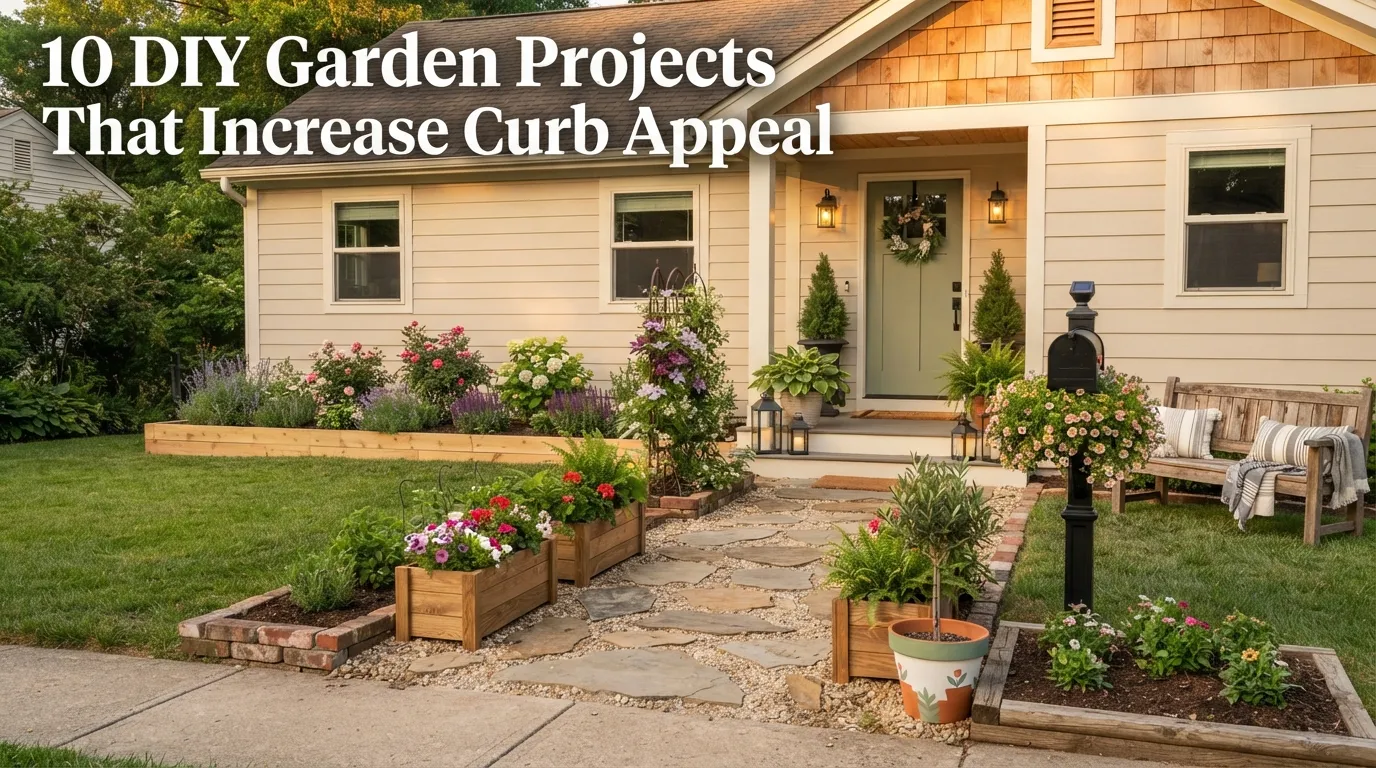
A tidy walkway, healthy-looking plants, attractive planters, and a well-defined garden border can completely change how a home looks from the street. The good news is that improving the front yard does not always require a major landscaping project or an expensive renovation.
Simple DIY garden projects can make a surprisingly noticeable difference.
A fresh planter arrangement can frame an entryway. A painted garden border can give an untidy bed a cleaner outline. A simple trellis can add height and architectural interest. Even a few strategically placed containers can make a plain porch feel more connected to the landscape.
The key is choosing projects that improve both appearance and function.
In my experience, the best curb-appeal projects are the ones that look intentional but remain realistic to maintain. There is little benefit in creating a complicated garden feature that becomes difficult to water, repair, or keep tidy.
Before starting, look at your front yard from the street. Notice where the eye naturally goes. Is the walkway difficult to see? Does the front door lack greenery? Does the garden bed have an uneven edge? Are there empty areas that could use height or texture?
Those observations can help you choose the right project rather than simply adding more decorations.
You also do not need to complete all ten projects. One or two well-executed improvements can make a stronger impression than a yard filled with unrelated features.
From simple planter upgrades to DIY edging and garden signs, these ideas focus on approachable projects that can add personality, structure, and seasonal interest to your home’s exterior.
Table of Contents
1. Painted Planter Boxes
Refresh the front entry with simple planter boxes in a coordinated exterior color.
2. DIY Garden Edging
Create cleaner garden borders that visually separate planting areas from lawns and walkways.
3. Wooden Garden Trellis
Add height and architectural interest with a simple vertical trellis.
4. Upcycled Container Garden
Turn attractive everyday items into distinctive outdoor planters.
5. DIY Stepping Stones
Create a more inviting garden path with personalized stepping stones.
6. Window Box Makeover
Use colorful or leafy window boxes to connect the house with the garden.
7. Simple Garden Arch
Frame a walkway or planting area with a charming garden arch.
8. Decorative Garden Border
Use natural materials to create a defined edge around flower beds.
9. DIY Address Planter
Combine house numbers with greenery to create a practical entry feature.
10. Front Yard Focal Point
Create one eye-catching garden feature that brings the entire landscape together.
1. Painted Planter Boxes
Quick Benefits
- Frames the front entrance
- Adds color and greenery
- Defines the porch area
- Works in small front yards
- Easy to customize
Why It Works
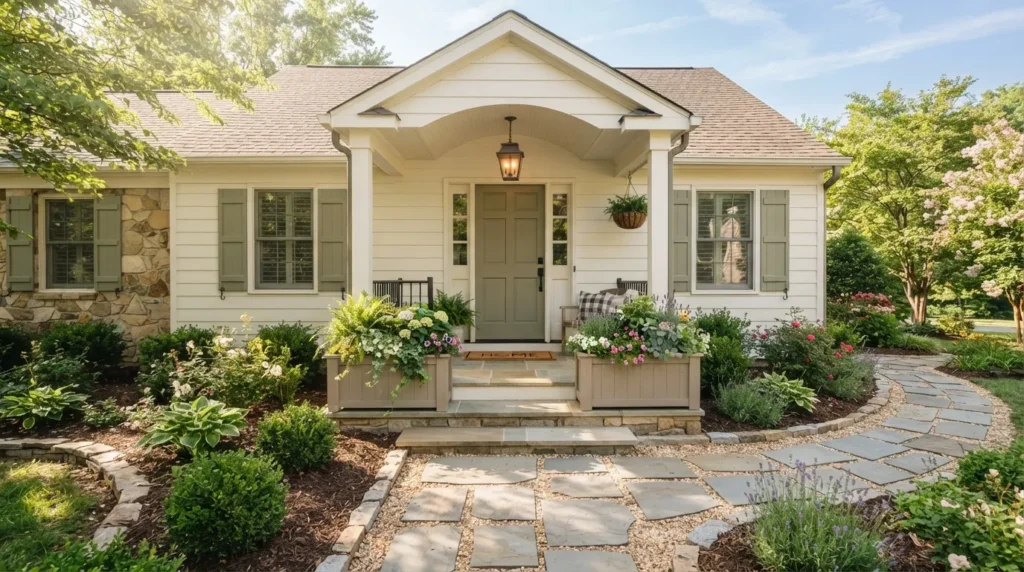
Planters are one of the simplest ways to add visual structure to a home’s exterior.
When placed near the front door, they naturally draw attention toward the entrance while making the transition between the house and garden feel more intentional.
A pair of matching planter boxes can create symmetry around a doorway. A single larger planter can work well beside a narrow entrance.
Painting the boxes gives you another opportunity to coordinate the exterior.
A soft white, warm gray, natural green, charcoal, or wood-inspired finish can complement many home styles without competing with the landscaping.
How To Style It
Start with weather-resistant planter boxes or build simple wooden boxes from exterior-rated lumber.
Sand the surfaces and use an exterior-appropriate primer and finish.
Choose a color that relates to your home’s trim, shutters, door, or other exterior details.
Fill the boxes with plants suited to the available sunlight and your local climate.
For a layered appearance, combine a taller upright plant with medium foliage and a trailing plant near the edge.
Keep the arrangement slightly fuller toward the center and allow some greenery to spill naturally over the sides.
Make sure drainage is adequate and the boxes are positioned securely.
2. DIY Garden Edging
Quick Benefits
- Creates cleaner garden borders
- Separates lawn from planting beds
- Makes landscaping look finished
- Reduces visual clutter
- Defines the shape of the yard
Why It Works
Even beautiful plants can look messy when a garden bed has no clear boundary.
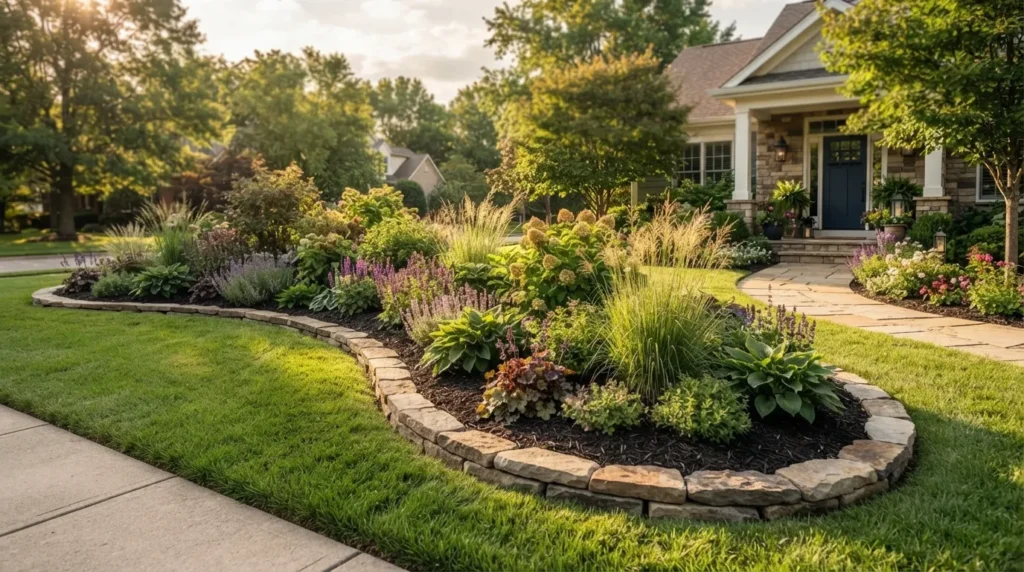
Edging creates a visual line between grass, mulch, soil, and pathways. This simple distinction can make a front yard appear more maintained without changing the plants themselves.
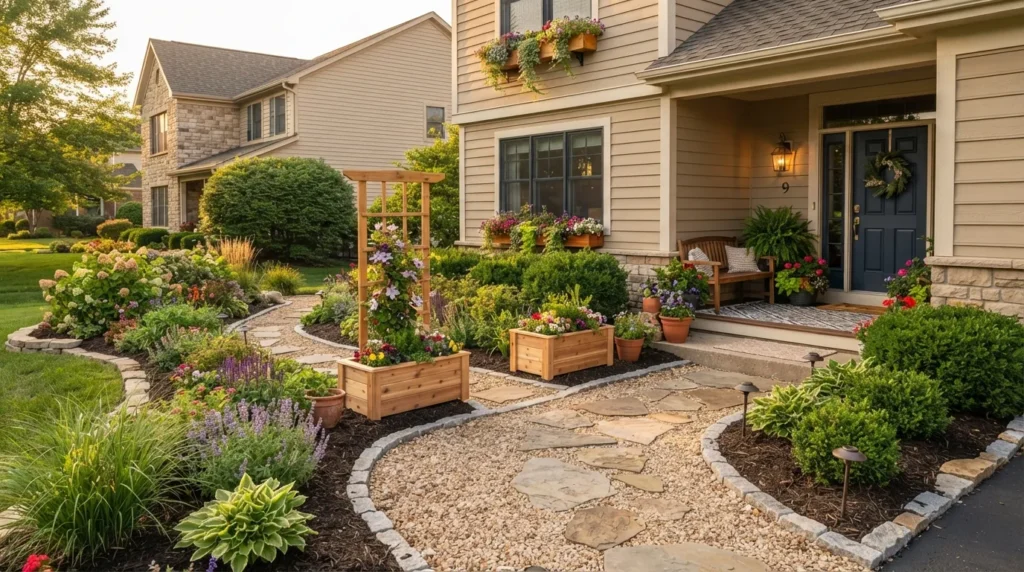
You can use many materials for garden edging, including natural stone, brick, timber, or other suitable landscape materials.
The best choice depends on the style of your home.
Clean straight lines work well with modern architecture, while gently curved borders can complement cottage-style gardens.
How To Style It
First mark the desired border using garden hose, landscape marking material, or another temporary guide.
Keep the shape consistent with the existing paths and architecture.
Remove excess grass and soil along the planned edge.
Install the selected edging material securely and level it appropriately.
For a natural appearance, use irregular stone.
For a more structured look, choose brick or clean-cut edging.
Avoid creating overly complicated shapes.
A simple, well-maintained border can have a stronger curb-appeal effect than an intricate design.
3. Wooden Garden Trellis
Quick Benefits
- Adds vertical interest
- Supports climbing plants
- Creates a focal point
- Makes flat walls more attractive
- Uses limited ground space
Why It Works
Front gardens often contain plenty of horizontal space but very little vertical structure.
A trellis introduces height.
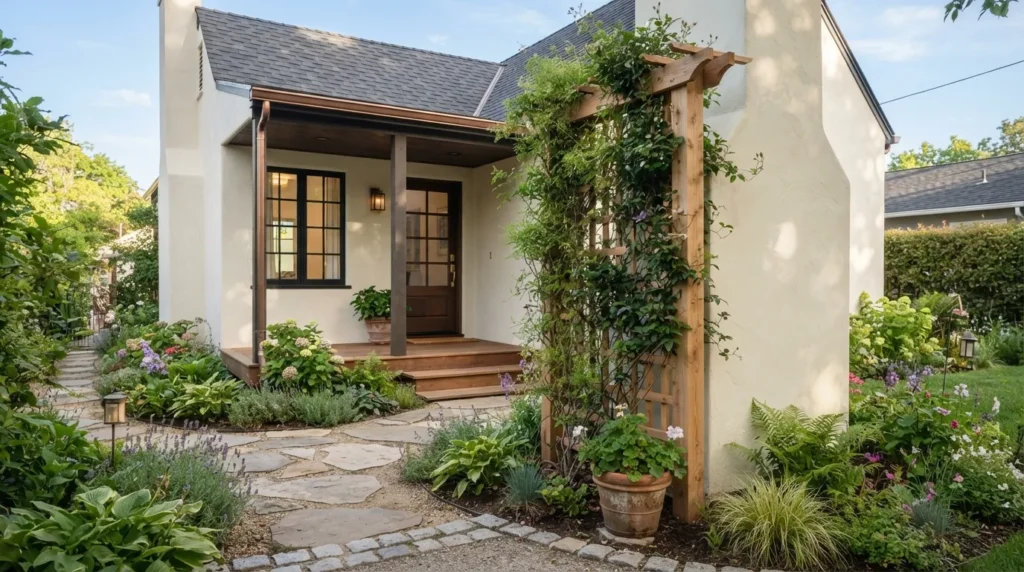
It can frame a porch, soften a blank wall, support suitable climbing plants, or define a garden entrance.
Even before plants grow across it, a simple wooden trellis can act as an architectural feature.
As plants mature, the structure becomes part of the garden itself.
How To Style It
Build a simple grid-style trellis using exterior-rated wood or purchase a ready-made structure.
Sand rough edges and use an exterior-appropriate protective finish.
Position it where it can support suitable climbing plants without blocking windows, doors, utility equipment, or walkways.
Choose climbing plants based on your local climate and growing conditions.
Keep the trellis proportional to the house.
A very small structure can disappear visually, while an oversized one can overwhelm a compact entry garden.
4. Upcycled Container Garden
Quick Benefits
- Adds personality
- Reuses existing materials
- Creates unique planters
- Works in small spaces
- Allows seasonal changes
Why It Works
Not every planter needs to come from a garden center.
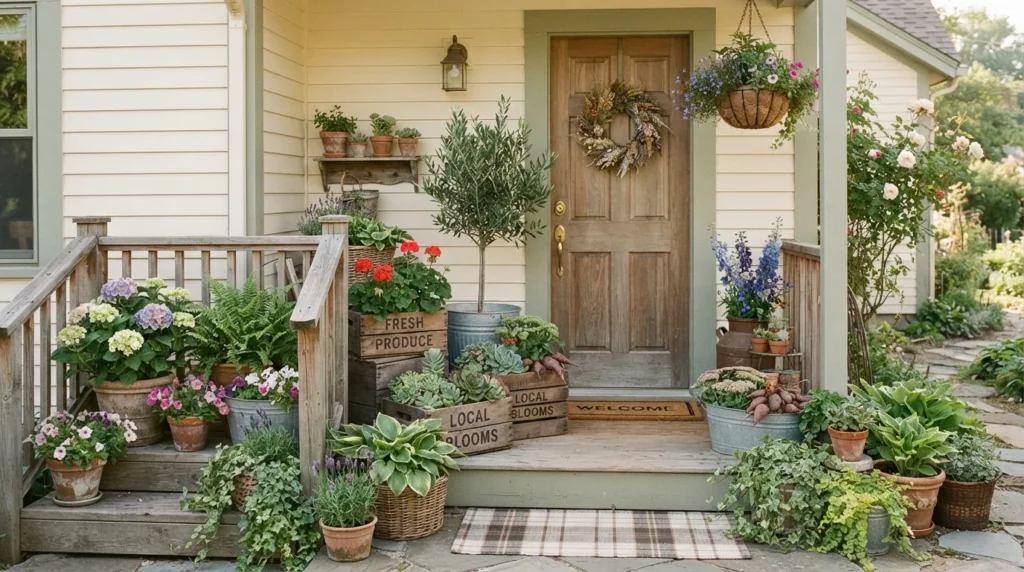
Old containers, wooden crates, galvanized vessels, baskets designed for outdoor use, and other suitable objects can become distinctive garden features when prepared correctly.
The appeal comes from combining useful recycling with attractive planting.
This approach works particularly well for cottage, farmhouse, rustic, and eclectic garden styles.
The important part is choosing containers that are structurally suitable for outdoor use and plants.
How To Style It
Select containers with enough depth for the plants you plan to grow.
Make sure water can drain appropriately.
If using a wooden container, choose suitable exterior-grade materials and finishes.
Group three containers of different sizes together to create a layered display.
Keep the color palette coordinated.
For example, combine weathered wood with terracotta and muted green.
Avoid using too many unrelated container styles.
A curated group feels intentional; a random collection can make the front yard look cluttered.
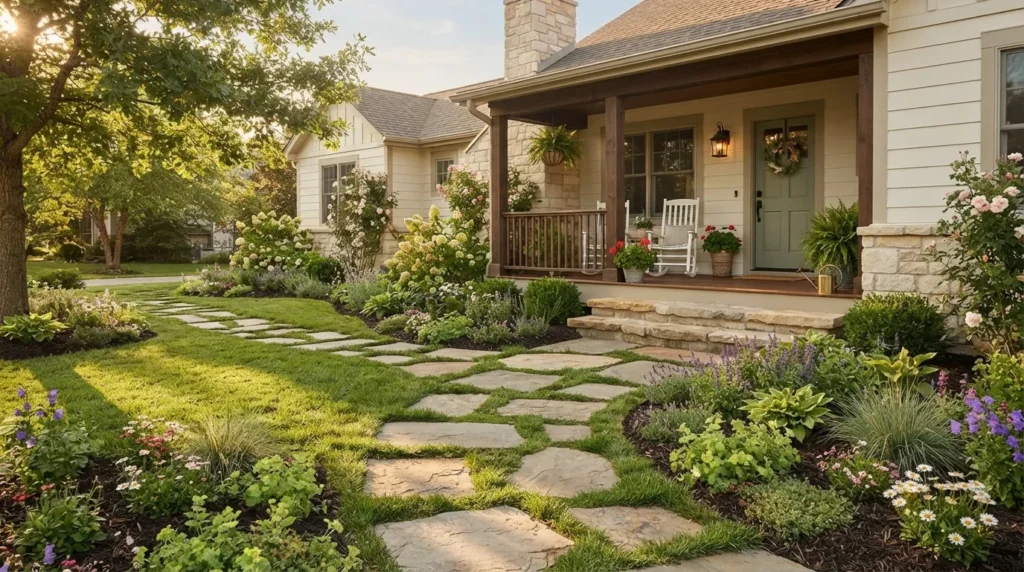
5. DIY Stepping Stones
Quick Benefits
- Adds character to pathways
- Guides movement through the garden
- Connects landscape areas
- Creates a handmade detail
- Can be customized
Why It Works
A path does more than help people move through the yard.
It also directs the eye.
Stepping stones can create a gentle visual route toward a porch, garden gate, side yard, or seating area.
They can also make an ordinary lawn feel more like a designed landscape.
Simple stepping stones can be made using suitable outdoor materials or purchased molds and appropriate concrete mixes.
How To Style It
Plan the path before installing anything.
Walk through the proposed route and place temporary markers where each stone might sit.
Consider comfortable spacing based on the intended users.
Keep the pathway visually aligned with the home’s architecture.
Natural stone creates an organic appearance.
Concrete stepping stones can provide a cleaner contemporary look.
Surround the stones with low-growing plants, gravel, mulch, or lawn depending on the desired style.
Make sure each stone is stable and appropriately installed for safe walking.
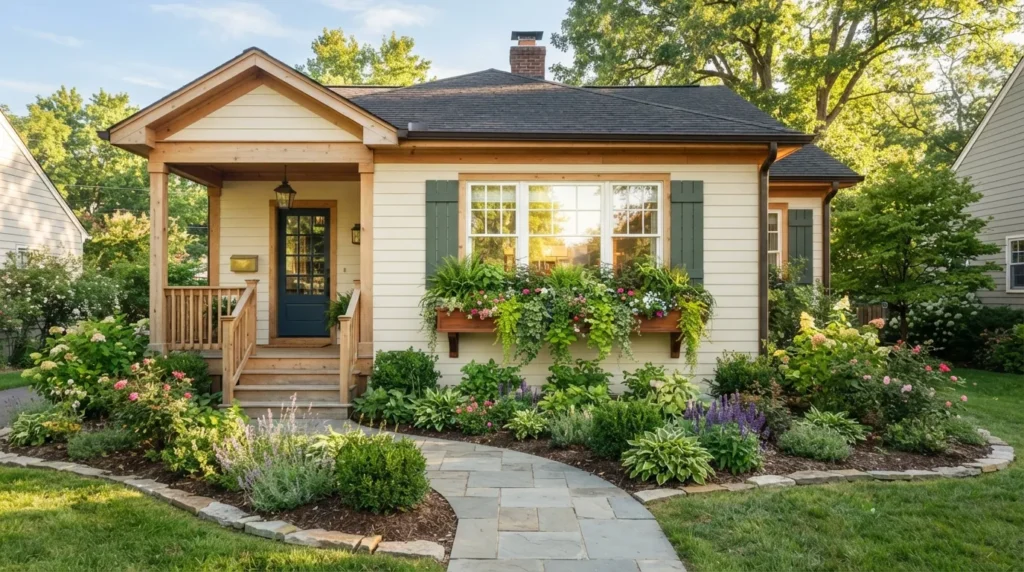
6. Window Box Makeover
Quick Benefits
- Adds greenery near windows
- Enhances the home’s facade
- Creates seasonal color
- Works with small yards
- Makes windows more decorative
Why It Works
Window boxes bring garden elements upward onto the house itself.
They can soften hard exterior lines and make windows feel more connected to the surrounding landscape.
A simple window box filled with foliage can add character even when flowering plants are not in season.
They are particularly effective on homes with limited front-yard space because they create a garden effect without using much ground area.
How To Style It
Choose a window box that suits the width and architectural style of the window.
Use a finish that coordinates with the exterior.
For planting, combine different forms rather than selecting plants based only on flower color.
An upright plant can provide height.
Rounded foliage can create fullness.
Trailing plants can soften the front edge.
Choose plants according to sunlight, temperature, watering requirements, and the weight capacity of the installation.
Secure the box properly and ensure appropriate drainage.
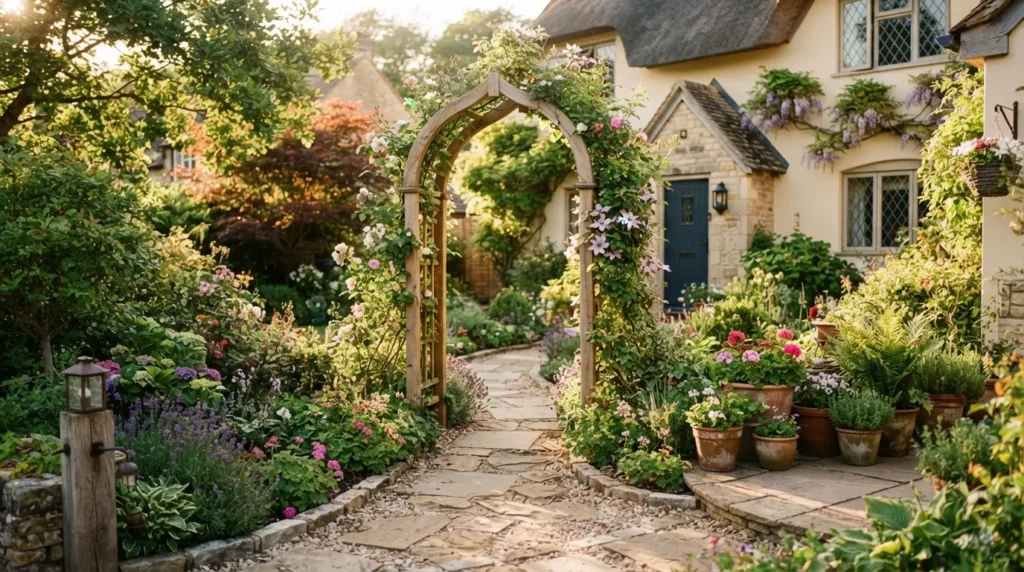
7. Simple Garden Arch
Quick Benefits
- Creates an entry point
- Adds vertical structure
- Makes paths feel special
- Supports climbing plants
- Creates a strong focal point
Why It Works
An arch can turn an ordinary garden path into a defined destination.
Even a simple wooden or metal structure can create the feeling of entering another garden area.
With suitable climbing plants, the structure can become increasingly lush over time.
This project works particularly well when a front walkway leads toward a side garden, gate, porch, or secondary path.
How To Style It
Choose an arch that fits the scale of the property.
A narrow walkway generally benefits from a simple, lightweight design.
Install it securely and make sure it does not interfere with walking clearance.
Train suitable climbing plants gradually as they grow.
For a clean modern appearance, keep the structure simple.
For a cottage-inspired garden, allow climbing greenery to grow more naturally around the frame.
Avoid covering the structure so heavily that it blocks the pathway.
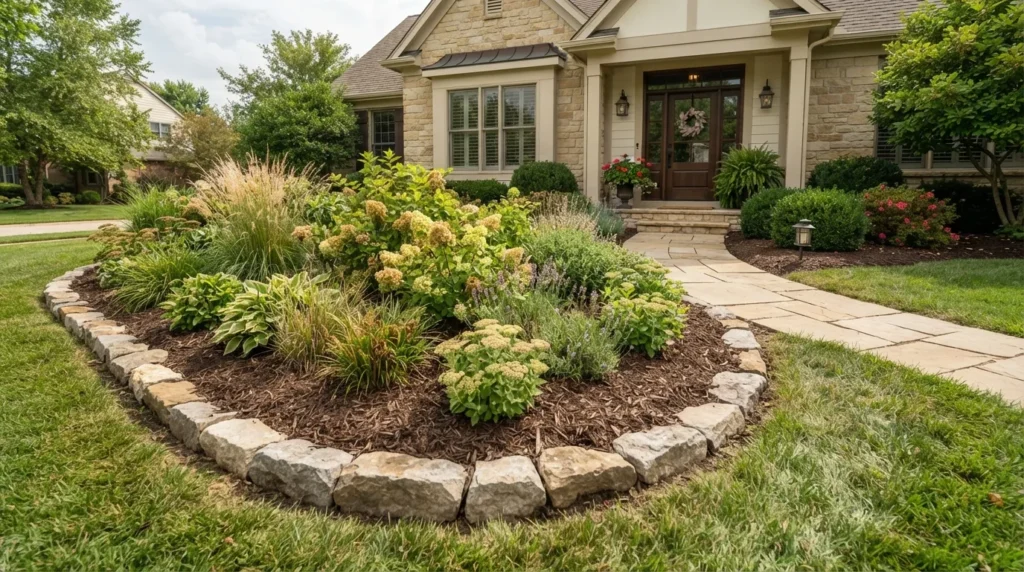
8. Decorative Garden Border
Quick Benefits
- Defines planting beds
- Adds texture
- Creates visual continuity
- Makes mulch areas look finished
- Complements existing landscaping
Why It Works
A decorative border can make a flower bed look more intentional even when the planting itself is simple.
Natural stones, bricks, timber, or other suitable materials can create a transition between plants and lawn.
The border also provides an opportunity to repeat materials found elsewhere on the property.
For example, stone used near the front steps can be echoed around a garden bed.
This repetition creates cohesion.
How To Style It
Choose one border material and repeat it consistently.
Natural stone works well for organic landscapes.
Brick can complement traditional architecture.
Wood creates a relaxed appearance but requires appropriate exterior care.
Lay the border along a clearly defined garden shape.
Keep the width and spacing consistent.
Avoid combining too many materials in one small area.
The objective is definition rather than decoration for its own sake.
9. DIY Address Planter
Quick Benefits
- Adds useful curb appeal
- Makes the address easier to identify
- Combines function with greenery
- Creates a personalized entry detail
- Works in compact spaces
Why It Works
Practical features can also be beautiful.
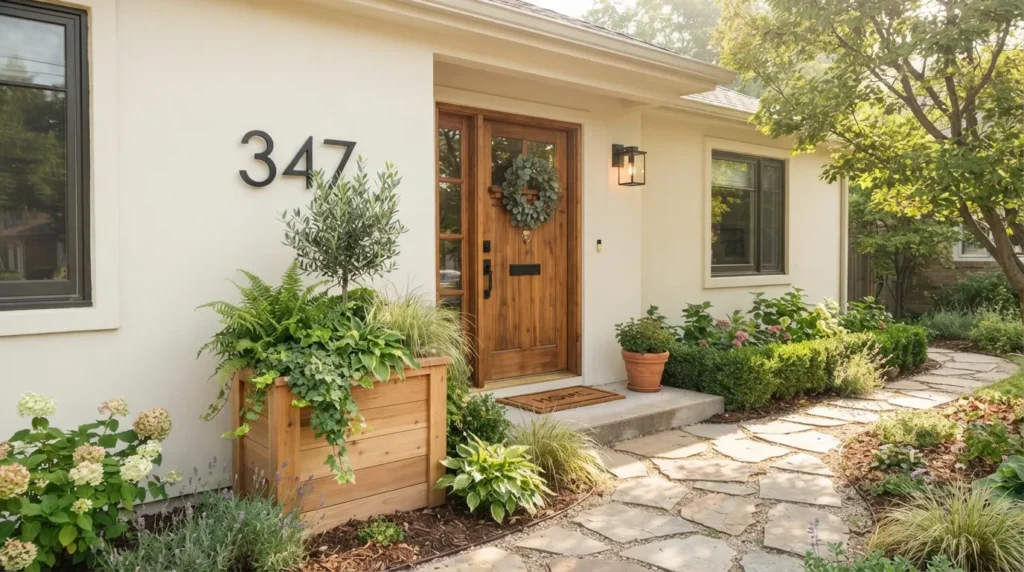
A planter combined with visible house numbers can become a small focal point near the front entrance.
This works particularly well when the property lacks a large porch or prominent architectural feature.
The greenery softens the practical nature of the address display.
How To Style It
Use a sturdy planter or build a simple vertical wooden planter.
Add weather-resistant house numbers that are easy to read from the street.
Keep the number placement clear rather than hiding it among foliage.
Choose plants that will not quickly grow over the numbers.
Coordinate the planter finish with the front door, mailbox, or exterior trim.
For a modern house, use clean typography and a simple rectangular planter.
For a traditional home, consider a more classic planter shape.
10. Front Yard Focal Point
Quick Benefits
- Creates visual direction
- Gives the garden a central feature
- Helps unify multiple projects
- Adds personality
- Makes the landscape memorable
Why It Works
A front yard does not need dozens of decorative elements.
Often, one strong focal point provides enough visual interest.
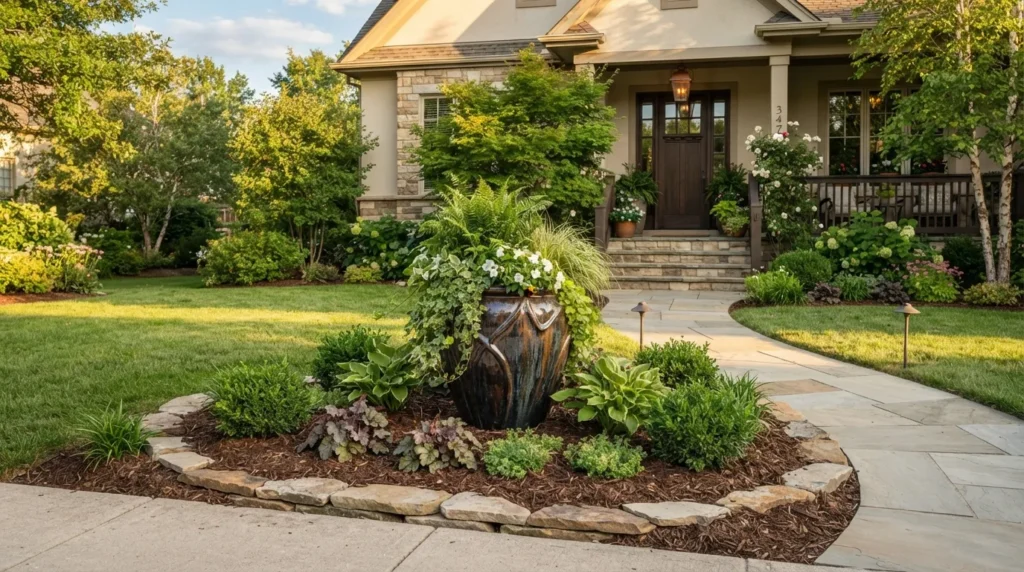
This could be a large planter, a small ornamental tree, a decorative bench, a birdbath, a trellis, a sculptural pot, or a thoughtfully designed planting bed.
The focal point gives the eye somewhere to land.
It also makes the surrounding landscaping feel more intentional.
How To Style It
Choose one feature that relates to the home’s architecture.
Place it where it can be seen clearly from the street without obstructing the entrance.
Surround it with simpler plants so it remains visually important.
Repeat one or two materials from the focal point elsewhere in the garden.
For example, a stone planter can be echoed through the garden edging.
A wooden trellis can coordinate with a wooden planter box.
This repetition creates a cohesive landscape without requiring everything to match.
How DIY Garden Projects Improve Curb Appeal
The strongest curb appeal comes from visual organization.
A well-defined pathway, clean garden edges, healthy plants, and a welcoming entrance create a sense of order.
DIY projects can reinforce that structure.
Planters frame the entrance.
Edging defines planting areas.
Trellises add height.
Stepping stones guide movement.
Window boxes connect the architecture with the garden.
You do not need to change every part of your yard.
Look for areas where a small improvement can solve a visual problem.
If the entry feels empty, add a substantial planter.
If the flower bed looks messy, improve the edging.
If a wall feels blank, consider a trellis.
If the walkway lacks definition, add stepping stones or a border.
Choosing DIY Projects For Your Home Style
Different homes benefit from different garden details.
Modern Homes
Choose clean lines, simple planters, restrained colors, geometric edging, and minimal plant arrangements.
Traditional Homes
Brick edging, symmetrical planters, window boxes, classic garden arches, and balanced planting can complement traditional architecture.
Farmhouse Homes
Natural wood, galvanized containers, simple trellises, rustic planters, and relaxed planting work well.
Cottage-Style Homes
Layered greenery, informal borders, climbing plants, vintage-inspired containers, and curved pathways can create a charming appearance.
The best project is one that looks connected to the existing architecture.
Low-Cost Ways To Increase Curb Appeal
You do not need to build every feature from scratch.
Start by cleaning the existing landscape.
Remove dead plants, weeds, fallen branches, and unnecessary objects.
Refresh mulch where appropriate.
Trim overgrown plants.
Clean containers and outdoor surfaces.
Then focus your DIY budget on one visible feature.
A freshly painted planter can make a noticeable difference.
So can a defined garden edge or a well-designed window box.
Sometimes the highest-impact improvement is simply making existing features look cared for.
How To Make DIY Garden Projects Last
Outdoor projects face sun, moisture, wind, temperature changes, and seasonal wear.
Choose materials appropriate for exterior conditions.
Use exterior-rated wood when building wooden projects.
Select finishes designed for outdoor exposure.
Make sure planters have appropriate drainage.
Secure structures properly.
Inspect projects periodically for loose components, damaged finishes, rot, or instability.
Maintenance is part of the project.
A beautiful garden feature that becomes weathered or unsafe quickly will not provide lasting value.
Common DIY Garden Mistakes
One common mistake is adding too many unrelated projects.
A front yard can quickly look cluttered when every area has a different planter, border, color, and decorative style.
Another mistake is choosing plants without considering mature size.
Small plants can eventually block windows, paths, house numbers, or architectural features.
Poor drainage is another frequent problem.
Containers and planting areas require appropriate water management.
Finally, do not ignore scale.
A tiny planter can disappear beside a large entrance, while an oversized garden structure can overwhelm a small property.
Always consider the relationship between the project, the house, and the surrounding landscape.
FAQ
What DIY projects add the most curb appeal?
Projects that improve structure and the entrance often create a strong visual impact. Consider coordinated planter boxes, clean garden edging, window boxes, a simple trellis, an attractive pathway, or one large focal planter. Choose projects that address a specific weakness in the existing landscape rather than adding decorations randomly.
How can I improve curb appeal without spending much money?
Start with maintenance. Remove weeds, trim overgrown plants, clean outdoor surfaces, refresh existing planters, and define garden edges. Then choose one small DIY feature such as a painted planter, simple trellis, stepping stones, or window box.
What are easy DIY garden projects for beginners?
Painted planter boxes, simple container gardens, basic garden edging, window boxes, and small decorative garden borders can be approachable starting points. Choose a project that matches your available tools, materials, experience, and local conditions.
How do I choose plants for front-yard planters?
Consider sunlight, wind, temperature, watering needs, mature size, and the planter’s drainage. Combine plants with different heights and growth habits to create a fuller arrangement. Choose varieties that are appropriate for your local growing conditions.
Can DIY garden projects increase the value of a home?
Well-maintained landscaping can improve the visual appeal and first impression of a property, but the effect on property value varies by location, property, project quality, and buyer preferences. Focus on creating an attractive, functional, and well-maintained exterior rather than expecting a specific financial return.
How do I make a DIY garden project look professional?
Keep the design simple and repeat materials or colors already used around the home. Pay attention to scale, alignment, spacing, drainage, and finish quality. A small project installed carefully often looks more polished than a complicated project with inconsistent details.
How often should garden projects be maintained?
Maintenance depends on the materials, plants, weather, and project type. Inspect outdoor structures periodically, clean containers, refresh finishes when needed, trim plants, and check drainage. Seasonal maintenance helps prevent small problems from becoming larger repairs.
Conclusion
Improving curb appeal does not require completely redesigning your front yard.
A few thoughtful DIY projects can create structure, add greenery, and make the entrance feel more welcoming.
Start by looking at your home from the street. Identify the areas that feel empty, messy, disconnected, or visually unbalanced. Then choose a project that solves that particular problem.
A painted planter can frame the front door. Garden edging can give flower beds a finished appearance. A trellis can introduce height. Window boxes can bring greenery closer to the architecture. A simple path or garden arch can make the landscape feel more intentional.
Keep the design cohesive.
Repeat colors and materials where possible, choose plants suited to your conditions, and avoid filling every available space with decoration.
Most importantly, remember that curb appeal is not only about adding things. Cleaning, trimming, defining, and maintaining what you already have can create just as much impact.
Choose one project, complete it carefully, and let it become the foundation for the next improvement.
Related Articles
- 10 DIY Garden Projects That Anyone Can Try
- 10 Garden Decor Ideas That Feel Like a Luxury Retreat
- 10 Small Garden Ideas for Beautiful Outdoor Spaces
- 10 Front Porch Planter Ideas for a Welcoming Entrance
- 10 Backyard Landscape Design Ideas with Beautiful Greenery