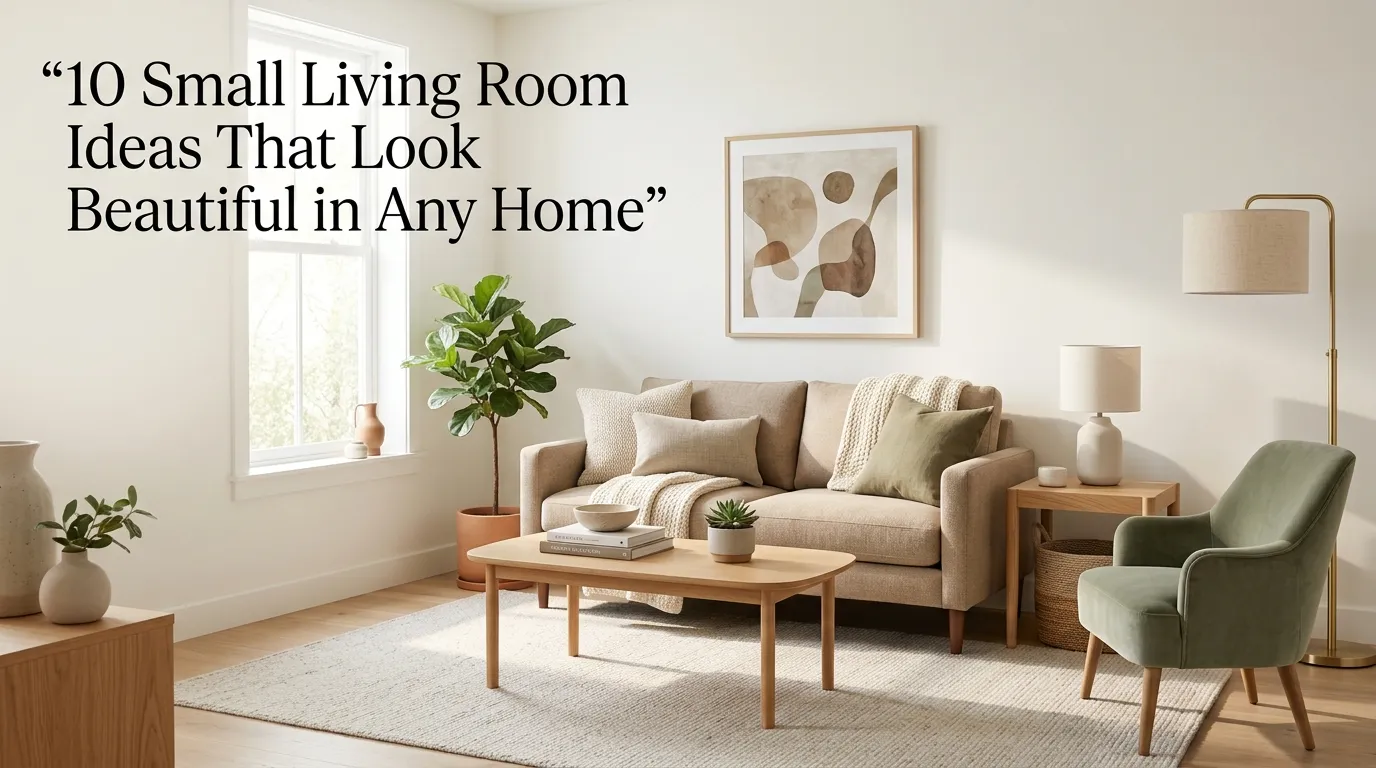
10 Small Living Room Ideas That Look Beautiful in Any Home
A small living room can be one of the most rewarding spaces to decorate because every choice has a visible impact. When square footage is limited, the right furniture, lighting, colors, and decorative details can make the room feel comfortable and thoughtfully designed rather than crowded.
The challenge is that small rooms often have to do several jobs at once. They may be the place where you watch television, welcome guests, read, work from home, or simply relax at the end of the day. Oversized furniture can quickly overwhelm the space, while too little furniture can make the room feel unfinished. The goal is not to make every small living room look enormous. Instead, it is to create a room that feels open, balanced, practical, and personal.
I’ve noticed that some of the most inviting living rooms rely on surprisingly simple ideas. A sofa with a lighter visual profile, curtains hung higher than the window, a carefully placed mirror, or a coffee table with an open base can completely change how the room feels. Even renters can make many of these improvements without major renovations.
The best approach is to think about scale, visual weight, circulation, and light before adding decorative accessories. Once those basics are right, layers of texture, color, artwork, and greenery can make the room feel finished.
Whether your home has a compact apartment living room, a narrow family room, or a tiny sitting area, these ideas can help you make the most of what you already have. You don’t have to sacrifice comfort or personality simply because the room is small.
Table of Contents
1. Light Neutral Layers
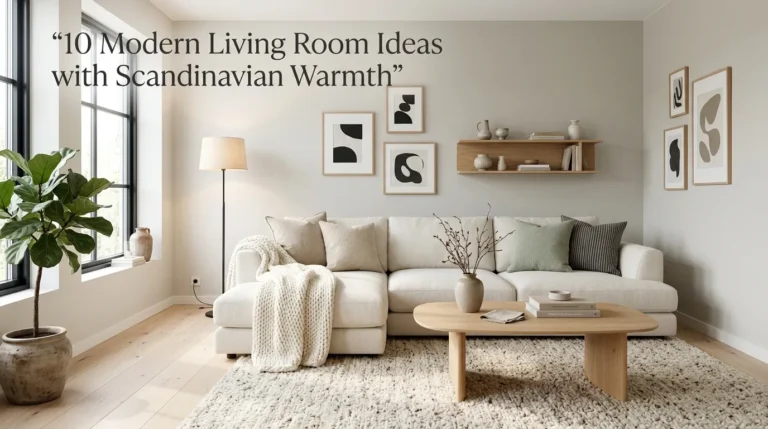
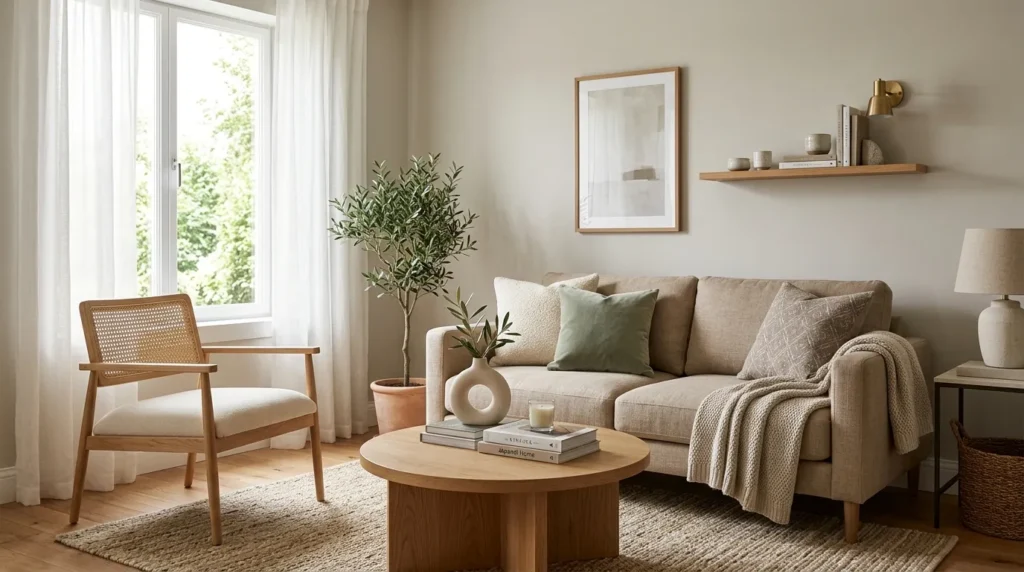
Create an airy foundation with soft neutrals, natural textures, and carefully balanced furnishings.
2. Slimline Furniture
Choose furniture with streamlined proportions so the room feels comfortable without looking overloaded.
3. Mirror Focal Point
Use strategically positioned mirrors to reflect light and add depth to a compact living space.
4. Multiuse Coffee Table
Select a coffee table that provides useful surface area while keeping the visual footprint light.
5. Floor To Ceiling Curtains
Draw the eye upward with full-length curtains that make the room feel taller and more finished.
6. Floating Storage
Keep valuable floor space open by using wall-mounted storage and streamlined shelving.
7. Layered Lighting
Combine multiple light sources to make a small living room feel warmer, brighter, and more dimensional.
8. Cozy Textural Mix
Add depth with rugs, pillows, throws, wood, woven materials, and other tactile finishes.
9. Compact Gallery Wall
Create a personality-filled focal point with artwork arranged in a cohesive, intentional composition.
10. Greenery And Wood
Bring warmth and life into the room with plants, natural wood, and organic decorative accents.
1. Light Neutral Layers
Quick Benefits
- Makes the room feel brighter and more open
- Creates a calm foundation for decorating
- Works well with many furniture styles
- Helps natural light travel through the space
- Makes seasonal decorating easier
Why It Works
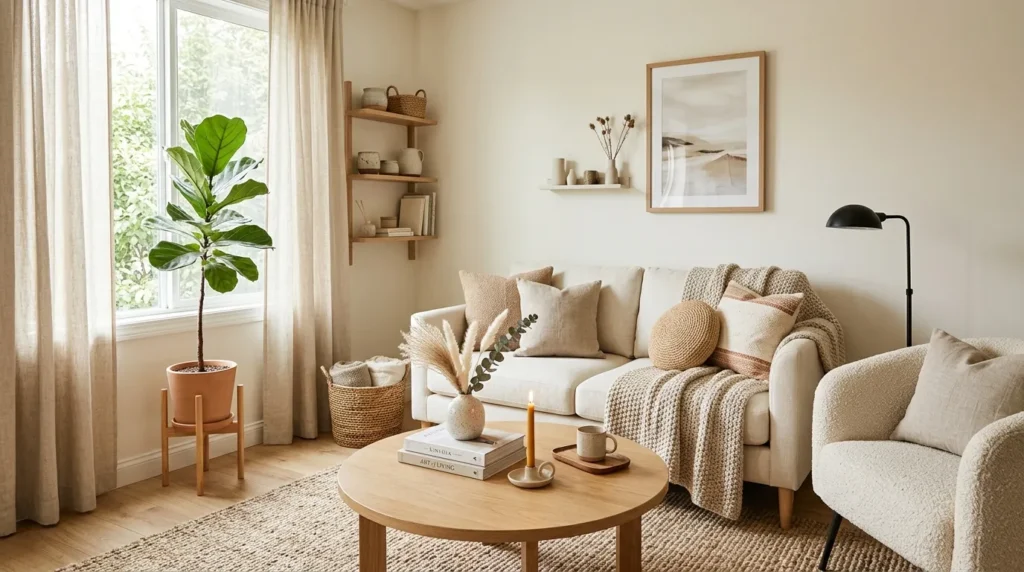
Light colors can be especially useful in a compact living room because they reduce visual heaviness. Soft white, warm ivory, oatmeal, beige, greige, and pale taupe can create a bright foundation without making the room feel cold. The key is not covering everything in stark white. A small space often looks more inviting when several closely related shades are layered together.
Think of the room as a collection of tones rather than one single color. A warm ivory wall can work with a beige sofa, cream curtains, a light oak coffee table, and a slightly deeper taupe rug. These subtle variations add dimension while maintaining visual continuity.
Another advantage is flexibility. Neutral foundations make it easy to introduce seasonal colors through pillows, flowers, artwork, or throws without redecorating the entire room.
For homes with limited natural light, warmer neutrals can be particularly helpful. They tend to feel softer during the evening than very cool whites. If the room receives plenty of sunlight, slightly cooler neutral tones can also work beautifully.
How To Style It
Start with one dominant neutral for the walls and larger furniture pieces. Then introduce two or three supporting shades through textiles and accessories. For example, pair a cream sofa with oatmeal cushions, a beige rug, and light wood furniture.
Avoid making every surface the exact same shade. Instead, use differences in texture to create interest. A linen-look curtain, boucle accent pillow, woven basket, wool-style rug, and smooth ceramic vase can all share a neutral palette while feeling distinctly different.
Keep larger pieces relatively simple and allow smaller objects to provide personality. A muted green plant, framed landscape print, or dark wood accent can create contrast without making the room feel visually busy.
If you’re renting, neutral textiles can achieve much of the same effect without painting. A light rug, curtains, slipcovers, and coordinated cushions can visually unify mismatched furniture.
2. Slimline Furniture
Quick Benefits
- Preserves walking space
- Creates a less crowded appearance
- Makes furniture easier to arrange
- Supports better traffic flow
- Gives the room a modern, polished look
Why It Works
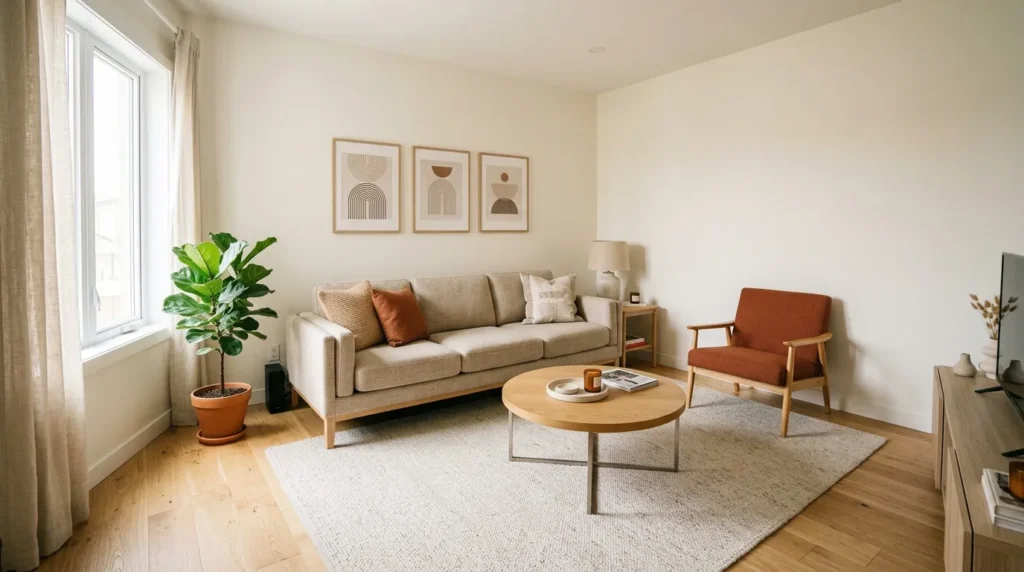
Furniture scale matters enormously in a small room. A sofa may technically fit against a wall, but if it has very deep cushions, oversized arms, and a bulky base, it can make the entire room feel compressed.
Slimline furniture solves part of this problem by reducing visual weight. Look for sofas with narrower arms, moderate seat depth, exposed or slightly raised legs, and clean silhouettes. These details allow more of the floor to remain visible, which can make the room feel more spacious.
This doesn’t mean choosing uncomfortable furniture. Comfort should remain a priority. Instead, compare the dimensions of different pieces before buying and consider how much space is left around them.
One mistake many homeowners make is measuring only whether a sofa will physically fit. You also need to consider doorways, walkways, side tables, coffee tables, and the amount of clearance needed for everyday movement.
A smaller sofa paired with one comfortable accent chair can often work better than a large sectional that dominates the entire room.
How To Style It
Measure the room before shopping, including the width of doors and hallways used to bring furniture inside. Mark potential furniture footprints on the floor with painter’s tape. This simple step can reveal whether a piece will feel too large before you spend money.
Choose a sofa that leaves enough space for comfortable movement. Pair it with a lightweight chair, small ottoman, or compact slipper chair rather than automatically adding another full-size armchair.
Furniture with visible legs can also help expose more flooring. Light wood or metal legs are useful when you want a more open appearance.
For a narrow room, consider arranging furniture along the longest walls rather than placing bulky pieces across the room. Keep pathways straightforward and avoid forcing people to walk around the coffee table at awkward angles.
The most attractive small living rooms often have fewer pieces, but each piece serves a clear purpose.
3. Mirror Focal Point
Quick Benefits
- Reflects available light
- Adds visual depth
- Creates a strong focal point
- Works in modern and traditional homes
- Can make a narrow room feel more expansive
Why It Works
A well-placed mirror can change how a compact room is perceived. Rather than simply decorating an empty wall, a mirror reflects light and gives the eye another visual layer to explore.
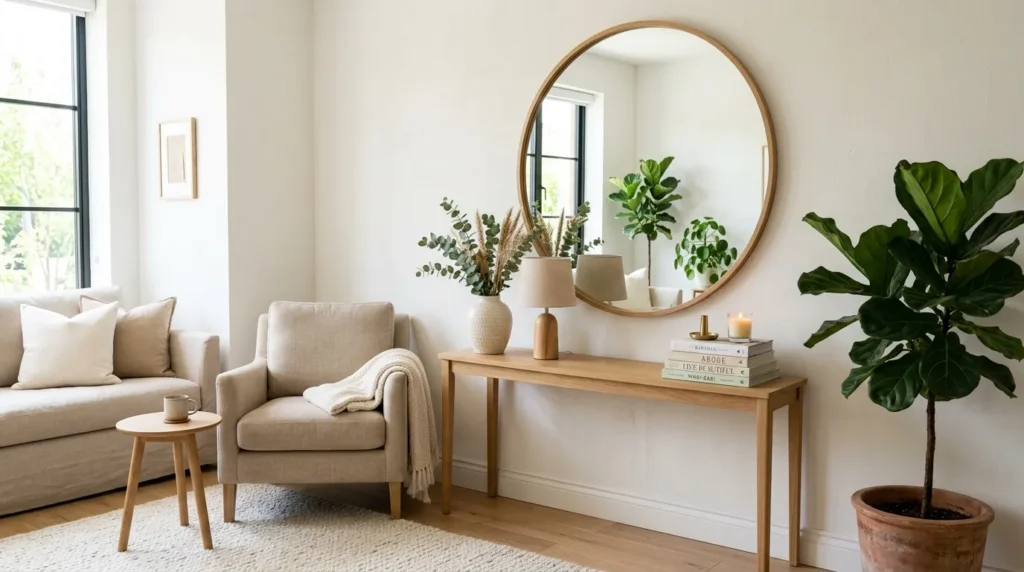
The most effective placement depends on the room. A large mirror opposite or near a window can reflect daylight, while a mirror placed above a console can create a decorative focal point. In a narrow living room, a horizontal mirror may emphasize width, while a tall mirror can draw attention upward.
Frame style also matters. A thin black frame can add definition to a contemporary room, while natural wood creates a softer, more organic look. An antique-style frame can bring character to a traditional or vintage-inspired interior.
The goal is to reflect something attractive. A mirror facing a cluttered corner may simply make the clutter more noticeable. Instead, position it so the reflection includes natural light, artwork, greenery, or another visually pleasing feature.
How To Style It
Choose a mirror based on the proportions of the wall rather than buying the largest possible option. A generously sized mirror can be beautiful, but it should still feel connected to the furniture beneath or around it.
Try placing a round mirror above a narrow console table. Add a small lamp, ceramic vase, and one or two books to create a simple vignette.
For a more modern appearance, use a large frameless or thin-framed mirror with clean-lined furniture. For a warmer room, consider a wood-framed mirror paired with woven baskets and natural textiles.
If you are renting, lean a large mirror against the wall instead of mounting it. This can also create a relaxed, designer-inspired look.
Before finalizing the position, check what the mirror reflects from different seating areas. A few minutes of adjustment can make the difference between a useful focal point and a distracting reflection.
4. Multiuse Coffee Table
Quick Benefits
- Provides useful everyday surface space
- Can include hidden storage
- Reduces the need for extra furniture
- Supports entertaining and relaxing
- Adds style without overwhelming the room
Why It Works
In a small living room, every furniture piece has an opportunity to do more than one job. A coffee table can hold drinks, books, remote controls, decorative objects, and even extra seating when selected thoughtfully.
Instead of automatically choosing a large rectangular table, consider what the room actually needs. A round table can improve circulation in a tight layout because there are no sharp corners to navigate around. A nesting table set can provide flexible surface area when guests arrive and tuck away when it isn’t needed.
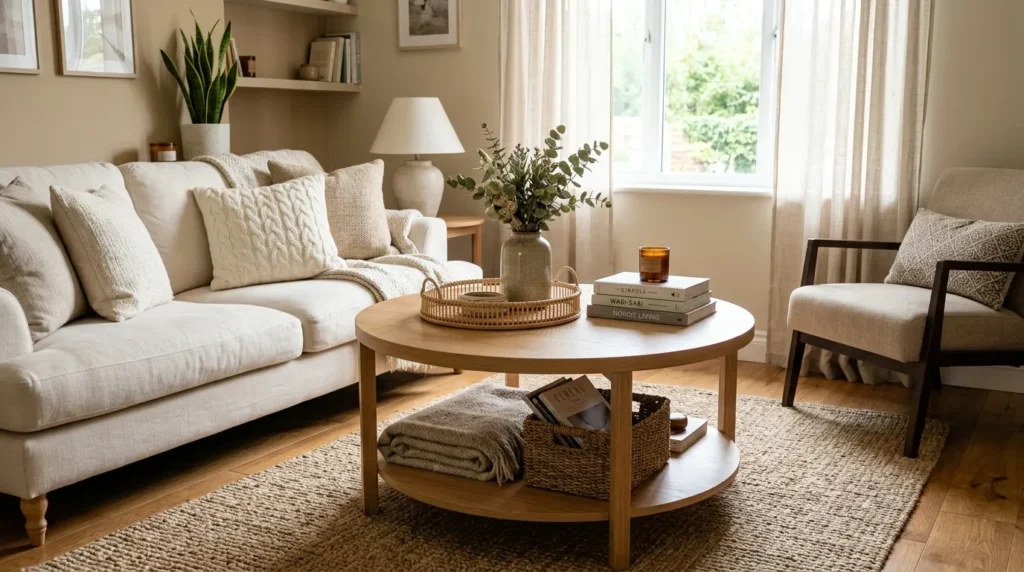
Storage coffee tables can also help control clutter. Lift-top designs, lower shelves, and drawers can give everyday items a home without requiring another cabinet.
The right coffee table should also leave comfortable space between the seating and table. A beautiful table that blocks movement will quickly become frustrating.
Think about the coffee table as part of the room’s circulation plan rather than an isolated decorative object.
How To Style It
For a compact seating arrangement, start by considering a round or oval table. These shapes can soften a room filled with straight furniture lines and make movement easier.
If storage is important, choose a table with a lower shelf or concealed compartment. Keep the visible surface relatively restrained. A tray can organize candles, books, and a small decorative object without making everything look scattered.
For a natural interior, combine a light oak or walnut table with a woven tray and ceramic accessories. In a modern room, a simple glass or slim metal design can reduce visual weight.
Nesting tables are particularly useful when flexibility matters. Keep the smaller table tucked underneath most of the time and pull it out when you need another surface.
Before buying, measure the distance between the sofa and table. You want enough room to move comfortably without making the table feel disconnected from the seating.
5. Floor To Ceiling Curtains
Quick Benefits
- Draws attention upward
- Makes windows look more substantial
- Adds softness and texture
- Can visually increase ceiling height
- Works in rental-friendly decorating
Why It Works
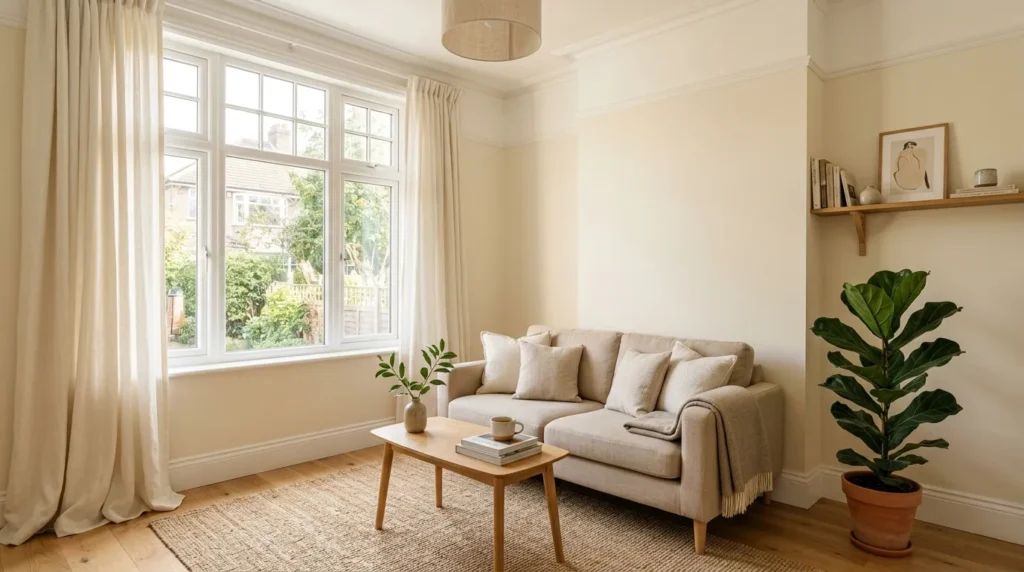
Window treatments can have an unexpectedly large effect on a small room. Curtains mounted close to the ceiling and extending toward the floor create a continuous vertical line, encouraging the eye to travel upward.
This can make the ceiling appear taller and give the room a more finished appearance. The effect is especially useful in apartments or older homes where windows may be small or positioned lower on the wall.
Curtain color can either blend with the walls or provide subtle contrast. In a neutral room, ivory or warm beige curtains can maintain an airy appearance. If the walls are already light, a slightly deeper linen tone can introduce dimension.
The fabric also matters. Lightweight linen-look materials allow light to filter through and keep the room from feeling enclosed. Heavier curtains can add warmth but may feel visually substantial in a very small space.
How To Style It
Mount curtain rods several inches above the window frame when the room allows, and extend the rod beyond the sides of the window so the curtains can sit mostly outside the glass when open.
Choose panels long enough to reach the floor. Avoid stopping them at the bottom of the window because that can visually shorten the wall.
For a soft, relaxed appearance, choose natural-looking fabrics in cream, flax, oatmeal, or warm white. For a more tailored room, use structured panels with a subtle woven texture.
If privacy is a concern, layer sheer curtains with room-darkening panels. This gives you control over daylight without making the windows permanently heavy.
Renters can use tension rods or removable mounting solutions when appropriate, but always check the property rules and weight limits before installation.
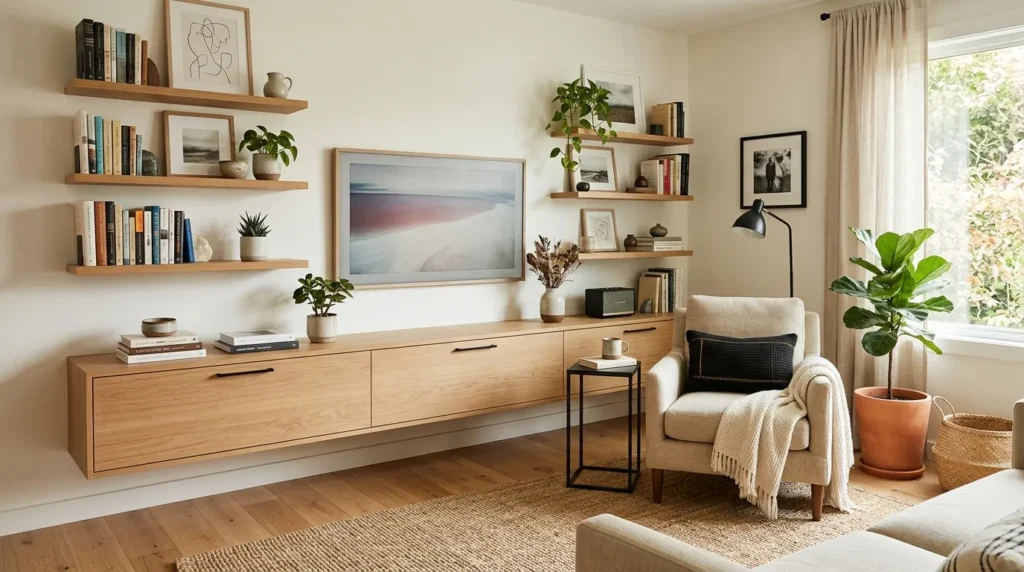
6. Floating Storage
Quick Benefits
- Keeps floor space visually open
- Reduces clutter
- Adds useful storage
- Creates opportunities for display
- Works particularly well in narrow rooms
Why It Works
Storage is one of the biggest challenges in a compact living room. Books, electronics, toys, blankets, paperwork, and everyday objects can quickly cover every available surface.
Wall-mounted storage shifts some of those functions upward. Because the floor remains visible beneath floating shelves or cabinets, the room can feel less crowded than it would with a large freestanding storage unit.
The trick is to avoid filling every inch of wall space. Open shelving works best when there is a balance between displayed objects and empty space.
Closed storage can hide less attractive necessities, while a few open shelves can showcase books, artwork, plants, and collected pieces.
This approach is especially useful in apartments where floor space is limited. A narrow floating cabinet can provide practical storage without consuming the same footprint as a traditional media console.
How To Style It
Start by deciding what needs to be stored rather than choosing shelves first. Everyday clutter should have concealed or organized storage, while decorative items can occupy open shelves.
Install floating shelves above a compact console or on an otherwise unused wall. Leave breathing room between objects and avoid arranging everything at exactly the same height.
Use a combination of books, small artwork, ceramics, framed photographs, and greenery. Grouping objects in threes or varying their heights can create a more natural composition.
For a minimalist room, keep the shelves relatively sparse. For a collected home, mix vintage objects with contemporary pieces.
If you have children or pets, consider placing fragile accessories higher and keeping frequently used items in closed storage.
The best storage solution is one that makes daily cleanup easier, not one that simply looks attractive in a photograph.
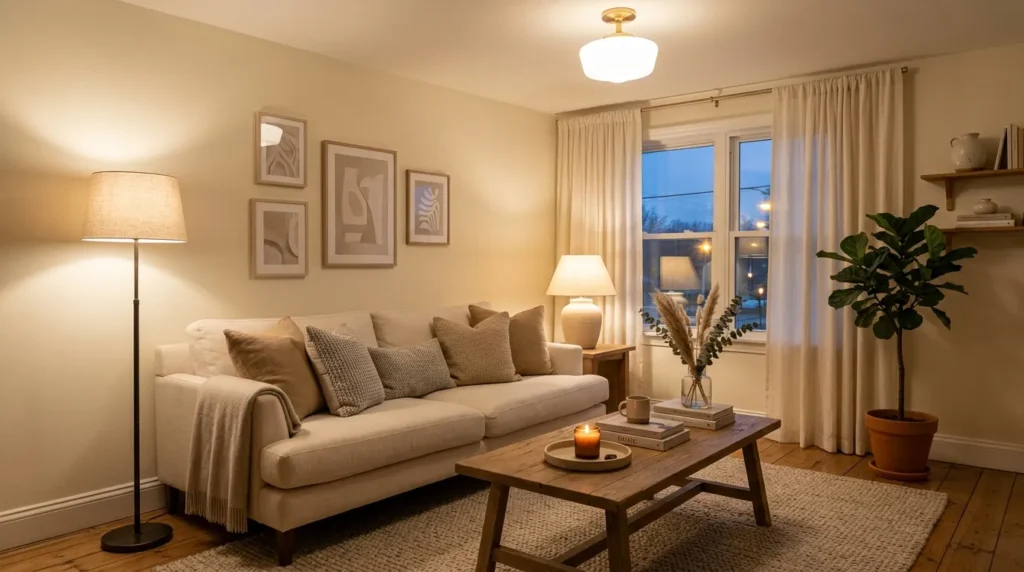
7. Layered Lighting
Quick Benefits
- Creates a warmer atmosphere
- Makes the room useful at different times of day
- Adds visual depth
- Highlights decorative features
- Reduces reliance on one harsh ceiling light
Why It Works
Lighting can completely change a small living room after sunset. A single overhead fixture often produces flat or overly bright illumination, while several smaller light sources create a more comfortable atmosphere.
Think in layers: ambient lighting for general visibility, task lighting for reading or activities, and accent lighting for mood and decorative emphasis.
A floor lamp beside a chair, table lamp on a console, and small lamp on a side table can create several points of light around the room. This distributes attention instead of concentrating it in one location.
Warm bulbs are often more inviting for evening living areas, although the ideal color temperature depends on the room and personal preference.
Lighting also provides an opportunity to introduce style. A sculptural lamp can act as artwork, while a simple linen shade can reinforce a relaxed aesthetic.
How To Style It
Begin with the existing ceiling light and identify what is missing. If the seating area feels dark, add a floor lamp beside the sofa or chair. If a corner feels empty, a small table lamp may make it both useful and attractive.
Use lamps at different heights to create visual rhythm. A taller floor lamp can balance a low sofa, while a table lamp can add a warm glow at eye level.
For a small room, look for narrow lamp bases and wall-mounted sconces when installation is practical. Plug-in sconces can also offer a similar effect for renters.
Place lighting near areas where you naturally read, relax, or entertain. Decorative lighting should support the way the room is actually used.
Don’t forget the evening view. Turn off the main ceiling light and see whether the smaller fixtures provide enough illumination. If they do, the room will generally feel much more layered and inviting.
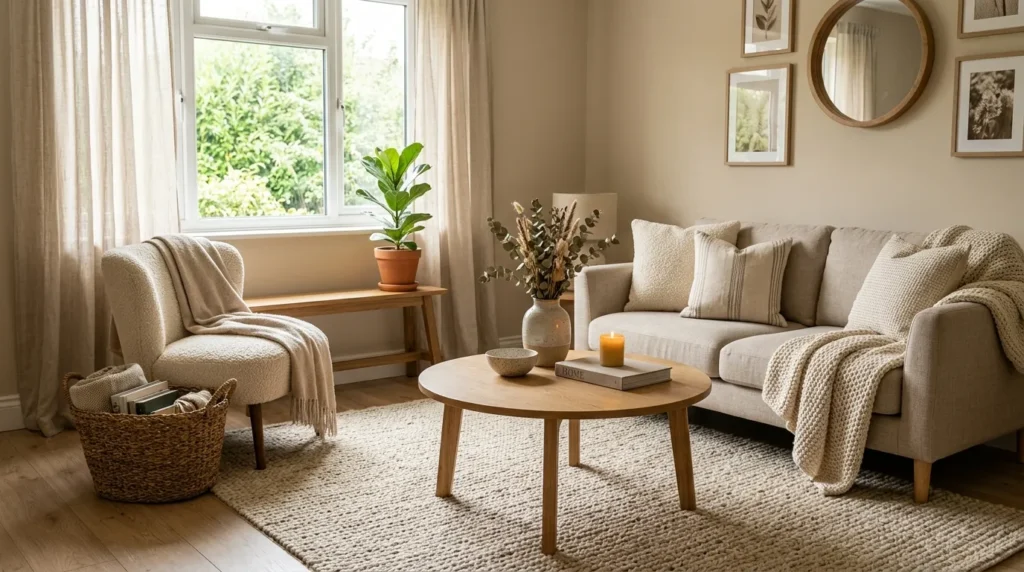
8. Cozy Textural Mix
Quick Benefits
- Makes neutral rooms feel interesting
- Adds warmth without requiring strong colors
- Creates a comfortable atmosphere
- Helps inexpensive pieces feel more considered
- Works across many decorating styles
Why It Works
A small living room doesn’t need lots of decorative objects to feel finished. Texture can do much of the work.
Imagine a simple cream sofa surrounded by a woven rug, linen curtains, a knitted throw, a wood coffee table, and a boucle or cotton accent pillow. The colors may be restrained, but the room still feels rich because the surfaces interact with one another.
Texture is particularly valuable when you prefer neutral decorating. Without differences in material, an all-neutral room can become flat. With the right combination of fabrics and natural materials, the same palette can feel warm and sophisticated.
The important thing is variation. Too much of one texture can make the room look repetitive, while too many unrelated materials can make it feel chaotic.
How To Style It
Begin with the largest tactile surfaces, such as the rug, sofa, and curtains. Then layer smaller textures through pillows and throws.
Combine materials such as cotton, linen, wool-style fabrics, woven fibers, ceramic, glass, and wood. A smooth ceramic vase next to a rough woven basket creates contrast without requiring another color.
For a cozy family room, use a washable or durable rug and easy-care fabrics where possible. Practicality matters just as much as appearance.
Avoid covering every available surface with pillows and blankets. A few thoughtfully chosen pieces often look more intentional.
If your room already contains lots of patterns, use solid textures to calm it down. If the room is mostly solid colors, introduce subtle woven patterns or tactile fabrics to keep it visually interesting.
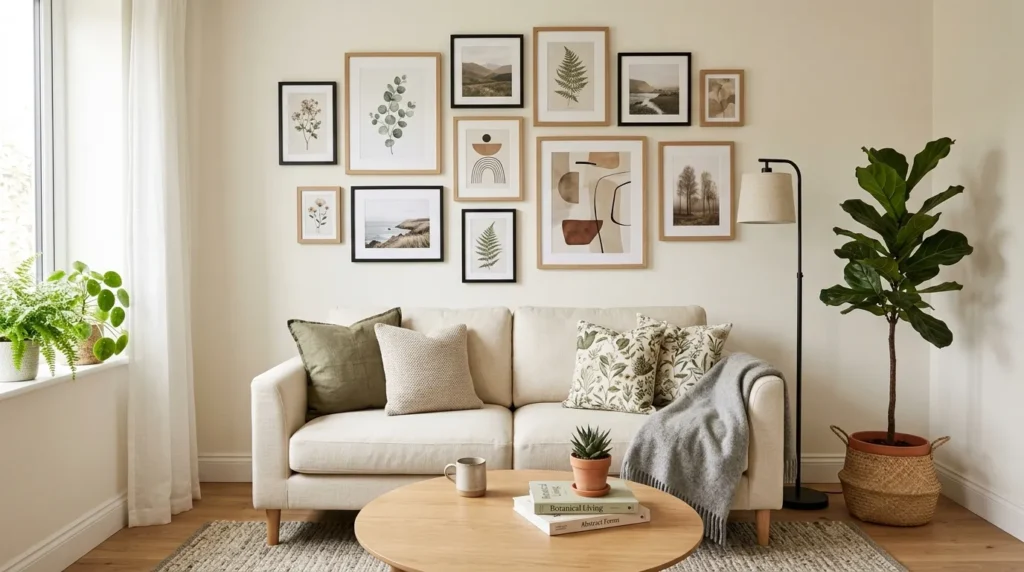
9. Compact Gallery Wall
Quick Benefits
- Adds personality without taking floor space
- Creates a strong focal point
- Makes blank walls more interesting
- Can showcase meaningful artwork
- Works with many decorating styles
Why It Works
Wall space becomes especially valuable when floor space is limited. A gallery wall allows you to add personality, color, and visual interest without introducing another piece of furniture.
The most successful arrangements feel intentional rather than random. You can use a collection of family photographs, botanical prints, landscapes, abstract artwork, vintage illustrations, or a combination that shares a common color palette.
Frame consistency can create cohesion. Matching frames give a clean, contemporary appearance, while a curated mix of wood, black, brass, or vintage frames feels more collected.
Scale is important. Tiny artwork scattered across a large wall can look disconnected, while one oversized piece may create a stronger statement.
A gallery wall can also help define the living area in an open-plan home, particularly when there isn’t a traditional wall separating the seating zone from the dining or kitchen area.
How To Style It
Choose a visual theme before hanging anything. This might be a shared color palette, subject matter, frame finish, or simply artwork that feels connected to your personal style.
Lay the pieces on the floor first and experiment with arrangements. Photograph the layout before transferring it to the wall.
Keep the overall composition connected to the furniture beneath it. A gallery wall above a sofa generally looks better when it has enough width to relate visually to the sofa without extending dramatically beyond it.
For a renter-friendly option, use removable hanging products that are appropriate for the artwork’s weight and the wall surface.
Leave some negative space around the overall arrangement. A gallery wall should feel like one cohesive focal point rather than a collection of objects competing for attention.
10. Greenery And Wood
Quick Benefits
- Adds natural warmth
- Introduces organic shapes
- Softens modern furniture
- Brings subtle color into neutral rooms
- Creates a more lived-in atmosphere
Why It Works
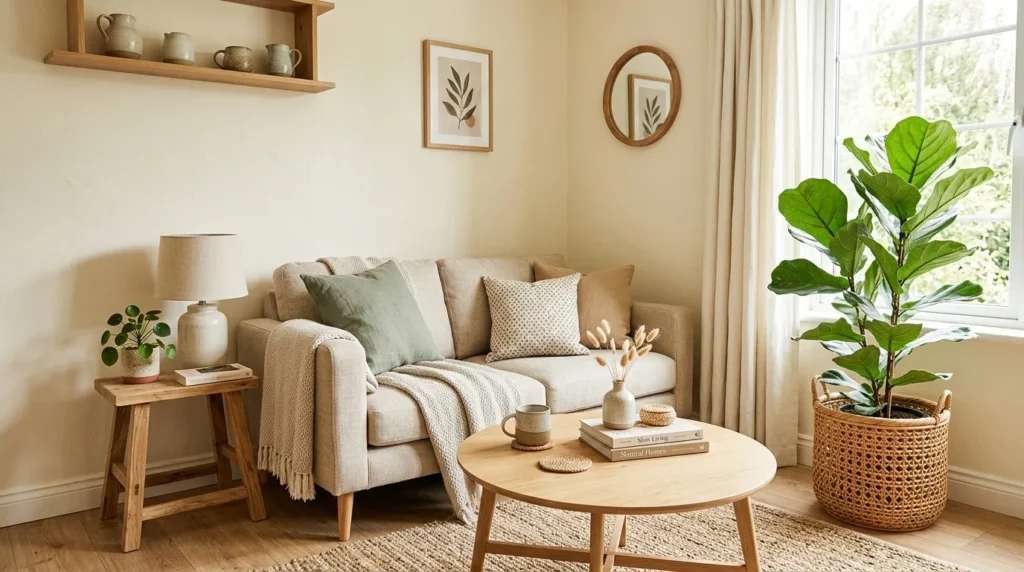
Natural materials can make a small living room feel welcoming without adding visual clutter. Wood introduces warmth and variation, while plants add organic shapes that contrast beautifully with the straight lines of sofas, tables, shelves, and walls.
You don’t need a large collection of plants. One substantial plant in an empty corner can be more effective than several tiny plants scattered throughout the room.
Wood works in almost every decorating style. Light oak can support a Scandinavian or contemporary space, walnut can create a richer traditional feel, and reclaimed or weathered wood can complement farmhouse interiors.
Plants also help fill awkward areas without the visual heaviness of furniture. A tall plant can occupy a corner that would otherwise remain empty, while a small trailing plant can soften a shelf.
How To Style It
Choose plants according to the amount of natural light your living room actually receives. Low-light-tolerant varieties can be more practical for darker rooms than plants that require bright sunlight.
Use one larger planter to create a strong corner feature rather than filling every surface with small pots. Natural baskets, ceramic planters, or simple textured containers can complement the room’s existing finishes.
Introduce wood through the coffee table, side table, picture frames, shelves, or decorative objects. Try to repeat the wood tone at least once or twice so it feels intentional.
If maintaining live plants isn’t practical, high-quality faux greenery can provide a similar visual effect. Choose realistic shapes and keep the arrangement simple.
The goal is to create a sense of nature and warmth, not turn the living room into a greenhouse.
Related Articles
- Small Living Room Layout Ideas for Better Everyday Flow
- Cozy Neutral Living Room Ideas for a Warm Home
- Modern Living Room Decor Ideas for a Clean Look
- Small Apartment Decorating Ideas That Maximize Space
- Easy Home Decor Ideas for a More Comfortable Living Room
Frequently Asked Questions
How can I make a small living room look bigger?
Use light colors, appropriately scaled furniture, visible floor space, mirrors, and window treatments that draw the eye upward. Keeping pathways clear is equally important. Rather than filling the room with many small pieces, choose fewer items that provide useful functions and have a clear visual relationship with one another.
What color is best for a small living room?
Soft neutrals such as warm white, cream, beige, light taupe, and greige are versatile choices because they reflect light and create visual continuity. However, a small room does not have to be completely neutral. Muted greens, soft blues, warm terracotta, or deeper accent colors can work beautifully when used thoughtfully.
Should a small living room have a sectional?
A sectional can work in a small living room when its dimensions and configuration match the space. Measure carefully before purchasing, especially the depth and chaise length. In some rooms, a compact sofa paired with one lightweight chair offers better circulation and more flexibility than a sectional.
What type of coffee table works best in a small room?
Round, oval, nesting, and visually lightweight coffee tables are often practical choices. Storage tables can be especially useful when you need to keep blankets, books, games, or remote controls organized. The best option depends on the room’s layout and the amount of clearance available around the table.
How do I decorate a small living room without making it cluttered?
Give every item a purpose and limit the number of decorative objects on visible surfaces. Use baskets, cabinets, floating storage, and furniture with built-in storage to control everyday clutter. Then add a few intentional details such as artwork, plants, pillows, and books rather than filling every empty corner.
Are mirrors good for small living rooms?
Yes. A strategically placed mirror can reflect natural or artificial light and create additional visual depth. Position it so it reflects something attractive, such as a window, artwork, or greenery. The size and shape should also relate to the surrounding furniture and wall proportions.
How do I make a small living room feel cozy instead of cramped?
Focus on warmth rather than adding more objects. Layer soft lighting, comfortable textiles, natural materials, and a few personal decorative pieces. Keep the main pathways open and choose furniture that fits the room’s dimensions. A cozy space should feel comfortable and usable, not packed with accessories.
Conclusion
A small living room doesn’t have to feel limited. In many homes, the challenge of working with less space encourages better decisions about furniture, storage, lighting, and decoration.
Start by looking at the room as a whole. Consider where natural light enters, how people move through the space, and which furniture pieces genuinely earn their place. From there, small changes can have a surprisingly noticeable effect. A light neutral palette can create continuity, slim furniture can improve circulation, and a strategically positioned mirror can add depth. Floor-to-ceiling curtains can emphasize height, while layered lighting and natural textures can make the room feel warm after dark.
The most important lesson is that spaciousness is not only about square footage. It is also about visual balance and how easily the room functions from morning to evening.
You don’t need to change everything at once. Start with one or two ideas that solve your biggest problem, then build from there. A thoughtfully arranged small living room can be stylish, comfortable, practical, and full of personality.