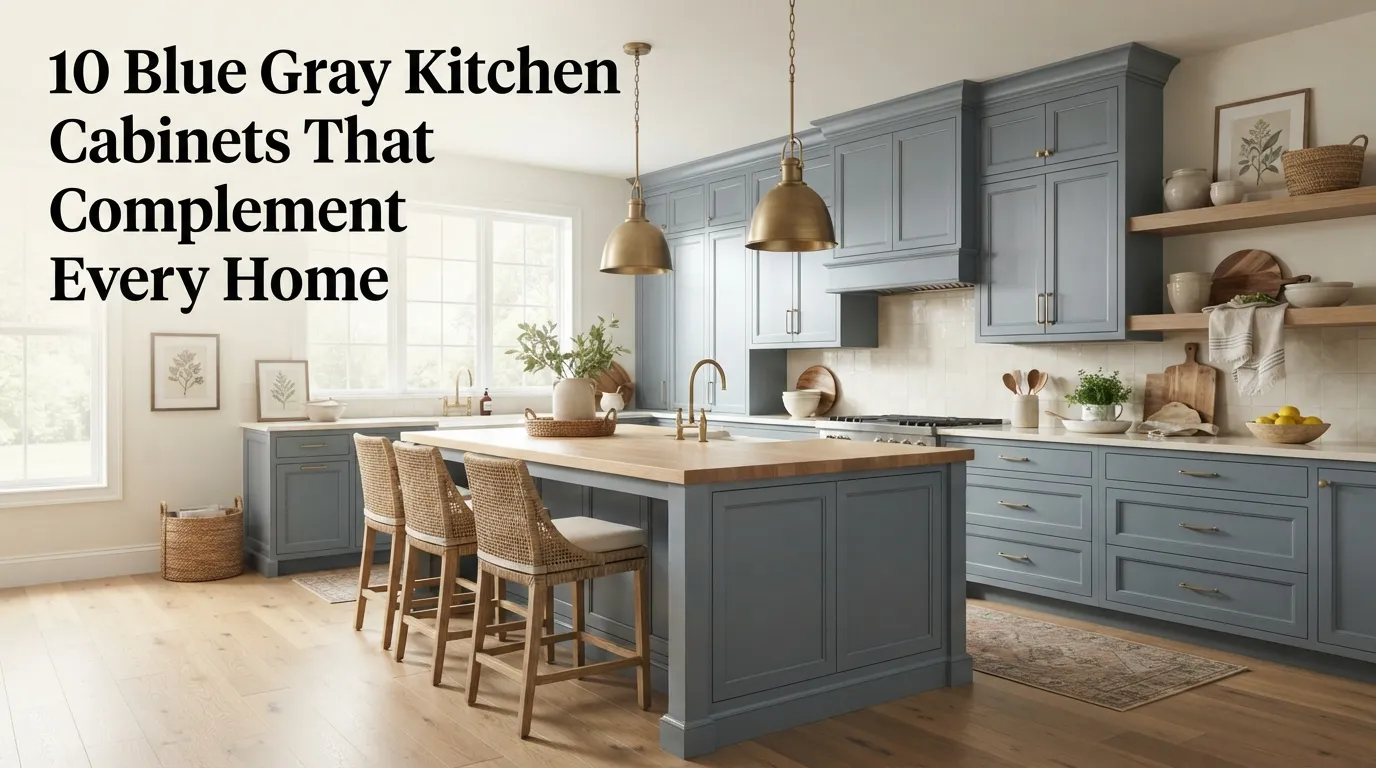
10 Blue Gray Kitchen Cabinets That Complement Every Home
Blue gray kitchen cabinets have a way of making a kitchen feel both timeless and current. The color sits comfortably between cool blue and soft neutral gray, which makes it surprisingly easy to pair with wood, white, stone, brass, black, and stainless steel.
That versatility is one reason blue gray has become such an appealing choice for homeowners who want more personality than an all-white kitchen without committing to a bold, difficult-to-coordinate color. Depending on the lighting and surrounding materials, blue gray cabinets can feel coastal, traditional, modern farmhouse, transitional, or distinctly contemporary.
The best part is that you don’t have to redesign the entire kitchen around the cabinets. A carefully selected blue gray can work with existing countertops, flooring, backsplashes, and hardware when the undertones are considered first.
I’ve noticed that the biggest mistake homeowners make with blue gray is choosing a color from a tiny paint chip and assuming it will look the same once it covers an entire kitchen. Natural light, artificial lighting, countertops, flooring, and nearby wall colors can all change how the cabinet color appears.
That’s why it helps to think about the complete room rather than the cabinets alone.
Whether you’re planning a full kitchen renovation, painting existing cabinets, or simply collecting inspiration for a future project, these ideas show how blue gray cabinetry can be styled in different ways. You’ll find combinations with natural oak, white countertops, marble-inspired surfaces, warm metals, dark accents, and soft neutral walls.
The goal isn’t to create a kitchen that follows a temporary trend. It’s to create a balanced space where the cabinet color feels intentional and works naturally with the rest of your home.
Table of Contents
1. Blue Gray and Oak
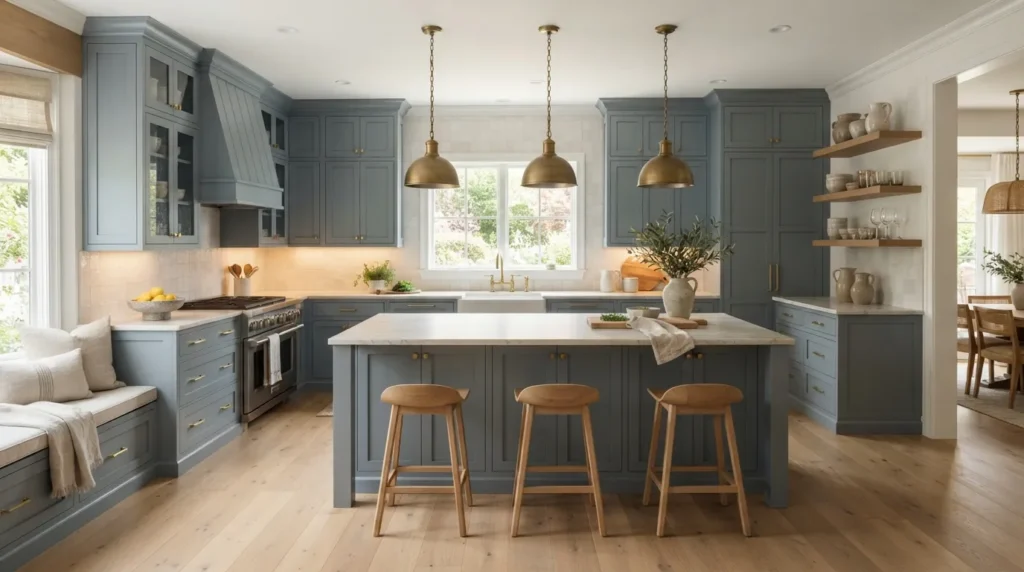
Pair blue gray cabinetry with natural oak for warmth and contrast.
2. Soft White Countertops
Create a bright kitchen by balancing blue gray cabinets with white surfaces.
3. Marble-Inspired Details
Add elegant visual movement with marble-look countertops and backsplashes.
4. Brass Hardware Accents
Warm up blue gray cabinetry with timeless brass and gold-toned hardware.
5. Coastal Blue Gray
Create a relaxed coastal kitchen using soft blue gray and natural textures.
6. Modern Matte Finish
Use simple cabinet lines and matte finishes for a contemporary kitchen.
7. Farmhouse Warmth
Combine blue gray cabinets with wood, traditional details, and cozy textures.
8. Two-Tone Cabinet Design
Mix blue gray lowers or islands with lighter upper cabinetry for dimension.
9. Dark Contrast Details
Use black fixtures and accents to give blue gray cabinets a sophisticated edge.
10. Classic Transitional Style
Balance blue gray cabinetry with timeless materials for a versatile kitchen.
1. Blue Gray and Oak
Quick Benefits
- Adds natural warmth
- Softens cool cabinet tones
- Works with modern and traditional kitchens
- Creates visual contrast
- Complements natural wood flooring
Why It Works
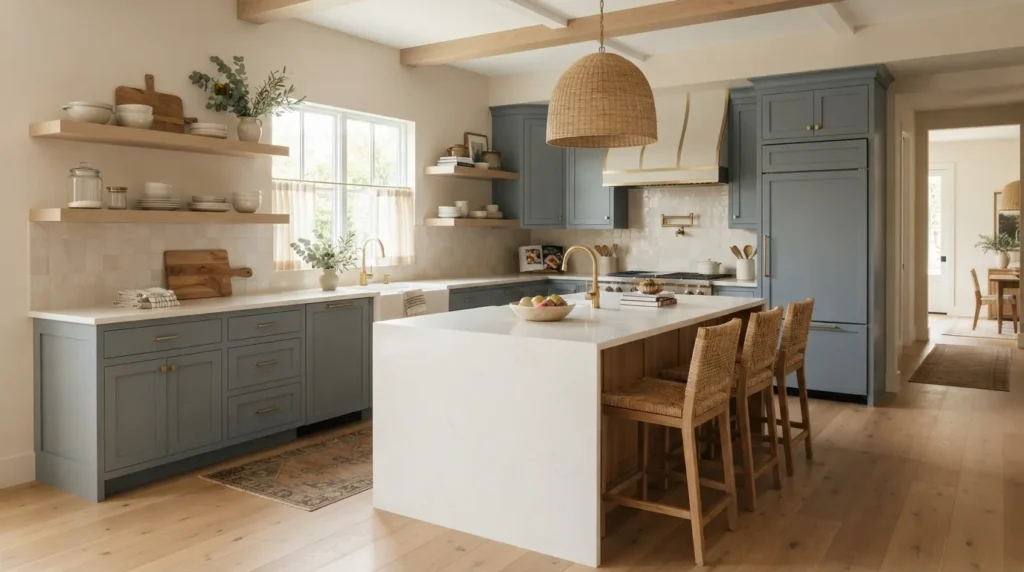
Blue gray and natural oak make an especially balanced combination because each material provides something the other lacks. Blue gray cabinetry brings a calm, sophisticated color to the kitchen, while oak introduces warmth and organic texture.
This combination is particularly useful when you want a kitchen that feels contemporary without becoming overly cool. Natural wood can keep blue gray from feeling sterile, especially in kitchens with limited sunlight.
Oak also offers plenty of flexibility. Pale white oak can create a light Scandinavian-inspired look, while warmer oak tones can make the room feel more traditional and inviting.
The important consideration is undertone. Some blue grays lean strongly toward blue, while others contain more neutral or green undertones. The wood tone should complement rather than fight with the cabinet color.
How To Style It
Try blue gray lower cabinets with a natural oak island for an attractive contrast. Alternatively, use blue gray cabinetry throughout the kitchen and introduce oak through open shelving, bar stools, flooring, or a range hood.
For countertops, warm white quartz or a light stone surface can bridge the two colors.
Keep the backsplash relatively simple if the oak has a strong grain. A soft white tile allows both the cabinetry and wood to remain visible without overwhelming the room.
Brushed brass, aged bronze, or simple black hardware can all work.
For a cohesive appearance, repeat the oak tone at least twice. For example, pair an oak island with oak stools or oak shelving.
2. Soft White Countertops
Quick Benefits
- Makes the kitchen feel brighter
- Creates a clean contrast
- Works in smaller kitchens
- Keeps the palette versatile
- Provides a timeless foundation
Why It Works
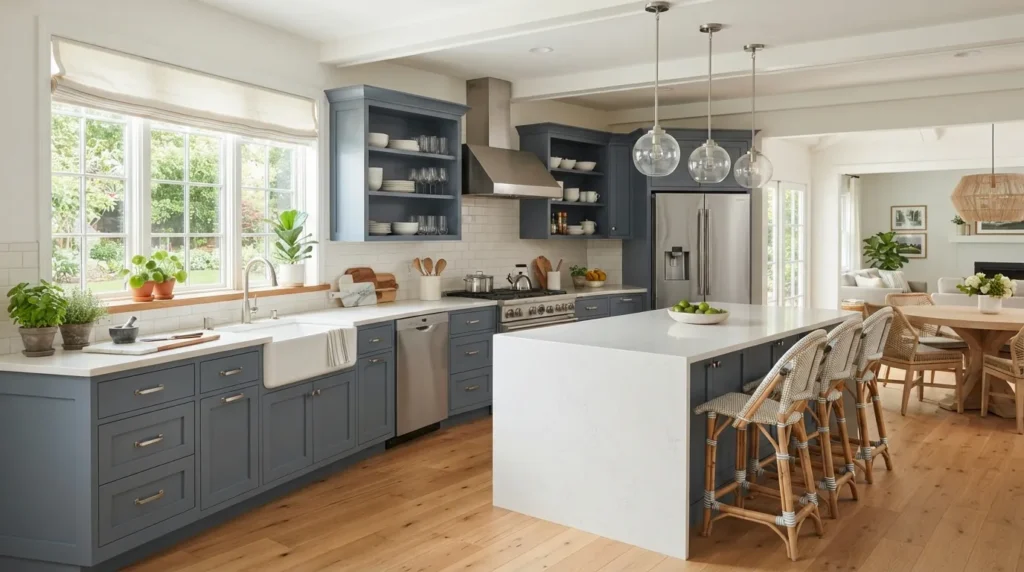
Blue gray cabinetry paired with a soft white countertop creates one of the easiest combinations to live with. The white surface reflects light while the cabinet color provides enough contrast to keep the kitchen from looking completely monochromatic.
This combination can work especially well in kitchens where natural light is limited. A lighter countertop helps prevent deeper blue gray cabinets from visually absorbing too much light.
Soft white is often more forgiving than an extremely bright, stark white because it can bridge warm and cool materials.
If you’re keeping existing flooring or appliances, a simple white countertop can also help unify the room.
One thing to watch is the undertone of the white. A warm white countertop can make a strongly cool blue gray appear slightly more blue, while a cooler white can reinforce the cabinet’s coolness.
How To Style It
Consider a quartz countertop in a soft white or lightly veined finish. Subtle veining can add movement without competing with the cabinet color.
Pair the cabinets with a simple white subway tile or handmade-look backsplash for a classic appearance.
If the kitchen has stainless steel appliances, keep other finishes relatively restrained. Stainless steel already introduces a cool metallic element.
For a warmer kitchen, introduce wood through cutting boards, stools, shelving, or flooring.
White countertops also give you freedom with hardware. Brass creates warmth, black creates contrast, and brushed nickel keeps the overall palette cool and understated.
3. Marble-Inspired Details
Quick Benefits
- Adds elegance
- Introduces visual movement
- Complements sophisticated cabinet colors
- Creates a high-end appearance
- Works with traditional and modern styles
Why It Works
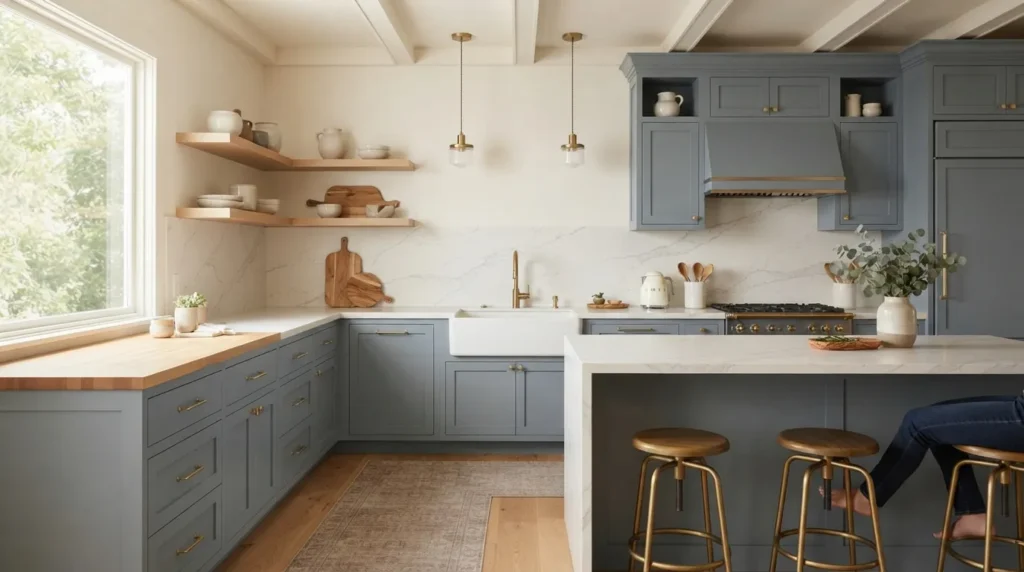
Blue gray cabinets can look particularly elegant when paired with marble or a marble-inspired surface. The natural movement in stone provides contrast against the relatively uniform cabinet color.
You don’t need to cover every surface in dramatic veining. In many kitchens, one prominent marble-inspired countertop combined with a quieter backsplash creates enough visual interest.
White surfaces with subtle gray veining are especially easy to pair with blue gray cabinets because they repeat the cabinet’s neutral side without making the room feel too coordinated.
For homeowners who want a more dramatic appearance, stronger veining can create a statement island or backsplash.
The trick is balance. When the countertop has dramatic movement, the rest of the room should generally become quieter.
How To Style It
Use blue gray cabinets as the stable color foundation and allow the marble-inspired surface to become the decorative element.
A white backsplash with subtle gray veins can connect the countertop and cabinetry.
For hardware, brushed brass can make the space feel warmer and more traditional, while black hardware creates a stronger contemporary contrast.
Keep decorative accessories simple. A ceramic vase, wooden cutting boards, a few cookbooks, and fresh greenery are usually enough.
If you’re using a heavily veined material, consider keeping the flooring and wall color relatively understated.
4. Brass Hardware Accents
Quick Benefits
- Adds warmth
- Creates elegant contrast
- Works with traditional kitchens
- Can update existing cabinets
- Adds visual detail without changing cabinetry
Why It Works
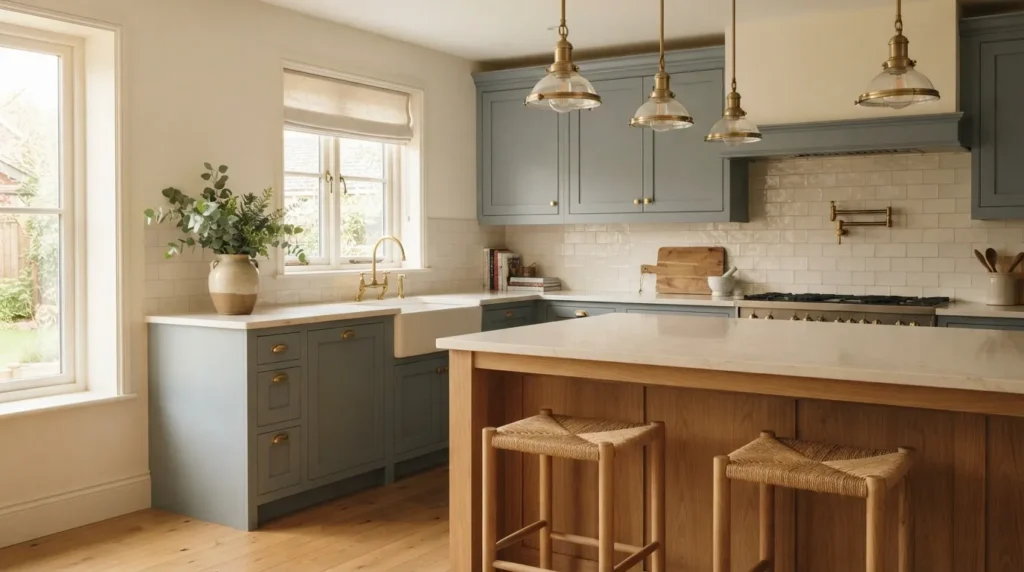
Blue gray and brass are a natural pairing because the warmth of brass balances the cooler cabinet color.
This doesn’t mean every kitchen needs polished gold hardware. Brushed brass, aged brass, antique brass, and softer champagne finishes can each produce a different effect.
Polished brass creates a more noticeable decorative statement. Aged brass feels more traditional and collected. Brushed finishes tend to look slightly more relaxed and contemporary.
Hardware is also one of the easiest ways to experiment with the combination. If you already have blue gray cabinets, changing knobs and pulls can introduce warmth without repainting or replacing the cabinetry.
How To Style It
Choose hardware that works with the kitchen’s overall architecture.
For a traditional kitchen, cup pulls, round knobs, and simple brass bin pulls can look appropriate.
For a contemporary kitchen, use long linear pulls in a brushed finish.
Repeat the brass in one or two additional locations, such as a faucet, pendant light, or cabinet detail.
Don’t feel obligated to make every metal in the kitchen brass. Mixing metals can work beautifully when each finish has a clear purpose.
For example, brass cabinet hardware with stainless appliances can create a balanced combination as long as the overall palette remains controlled.
5. Coastal Blue Gray
Quick Benefits
- Creates a relaxed atmosphere
- Works with natural materials
- Feels light and approachable
- Complements white accents
- Fits many casual homes
Why It Works
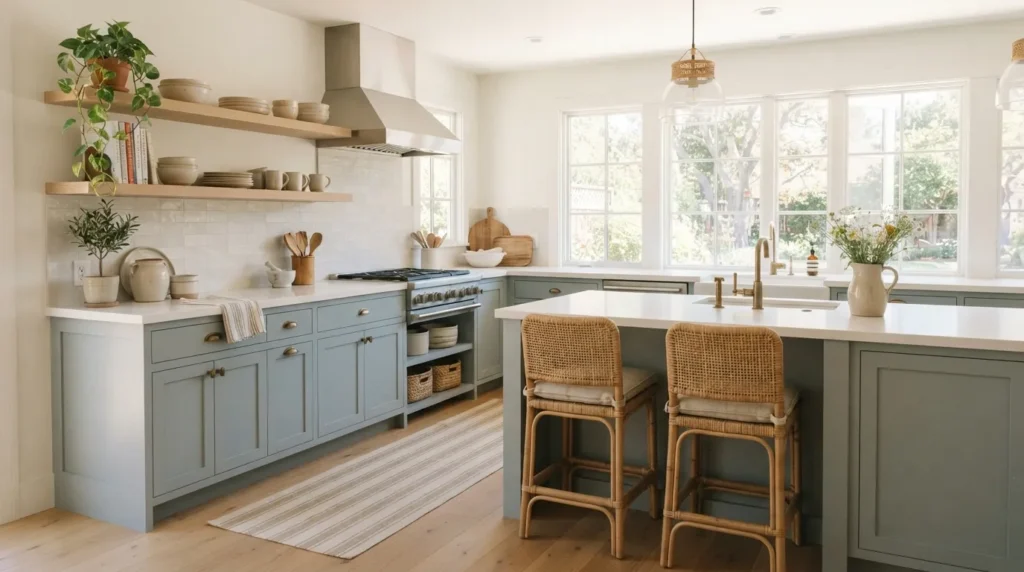
Blue gray naturally lends itself to coastal-inspired kitchens because the color can evoke water, sky, and weathered materials without becoming overly literal.
The key to a sophisticated coastal kitchen is restraint. You don’t need seashell decorations, nautical signs, or an abundance of blue accessories.
Instead, focus on the combination of color, light, texture, and natural materials.
Soft blue gray cabinetry can look beautiful alongside white walls, pale oak, woven textures, and simple ceramic accessories.
This approach works particularly well in homes where you want the kitchen to feel relaxed rather than formal.
How To Style It
Choose a blue gray with a soft, muted appearance rather than an extremely saturated blue.
Pair it with warm white walls and a pale countertop.
Introduce natural textures through rattan stools, woven baskets, oak shelving, linen window treatments, or wood accessories.
A simple white tile backsplash can keep the space bright.
For lighting, consider woven pendants or simple glass fixtures.
Keep decorative accents minimal. A bowl of lemons, fresh flowers, a wooden cutting board, and a few handmade ceramics can provide enough personality.
The result should suggest coastal calm without turning the kitchen into a themed room.
6. Modern Matte Finish
Quick Benefits
- Creates a clean appearance
- Reduces visual shine
- Works with simple cabinetry
- Complements contemporary kitchens
- Makes hardware stand out
Why It Works
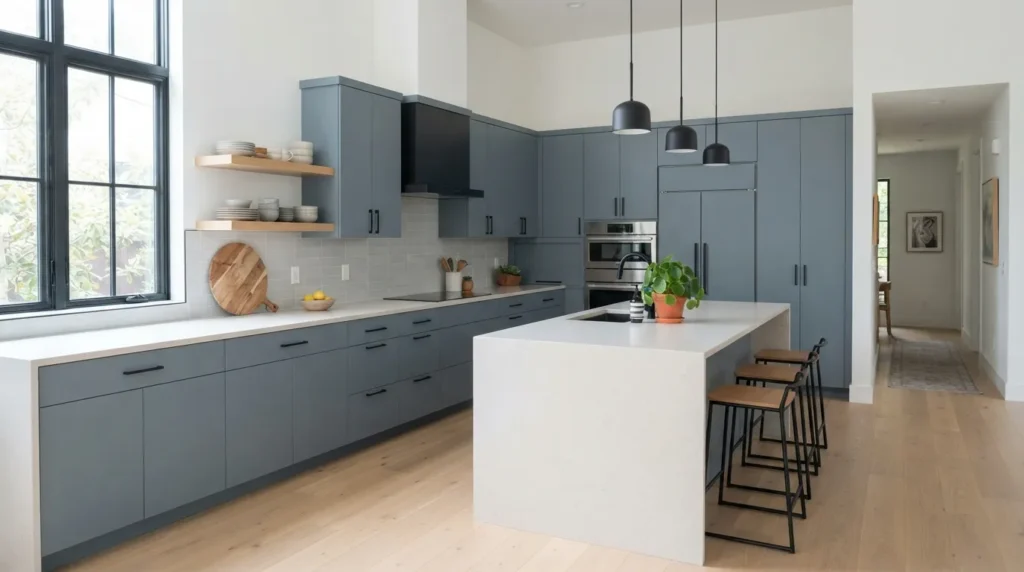
A matte blue gray finish can make cabinetry feel especially contemporary. Instead of relying on decorative details, the design lets the color and clean cabinet lines become the primary visual elements.
Matte surfaces also pair beautifully with other understated materials, such as concrete-look countertops, simple quartz, flat-front cabinets, and streamlined lighting.
This doesn’t mean matte cabinetry is only appropriate for ultra-modern homes. A simple shaker cabinet in a muted blue gray can also look surprisingly timeless.
The finish should be considered alongside practical use. Kitchen cabinets experience fingerprints, cooking residue, and regular wear, so always check the manufacturer’s care recommendations before selecting a particular finish.
How To Style It
Use flat-panel or simple shaker doors to maintain a clean appearance.
Pair the cabinets with a light countertop and minimal backsplash.
Black hardware can create strong contrast, while brushed nickel produces a softer effect.
Choose lighting with simple silhouettes. Globe pendants, linear fixtures, or understated recessed lighting can work well.
For flooring, natural oak or light neutral tile can keep the room from becoming too cool.
Avoid adding too many decorative elements. A few carefully selected objects will have more impact in a streamlined kitchen.
7. Farmhouse Warmth
Quick Benefits
- Creates a comfortable atmosphere
- Works with traditional details
- Pairs beautifully with wood
- Adds color without overwhelming the room
- Supports casual family living
Why It Works
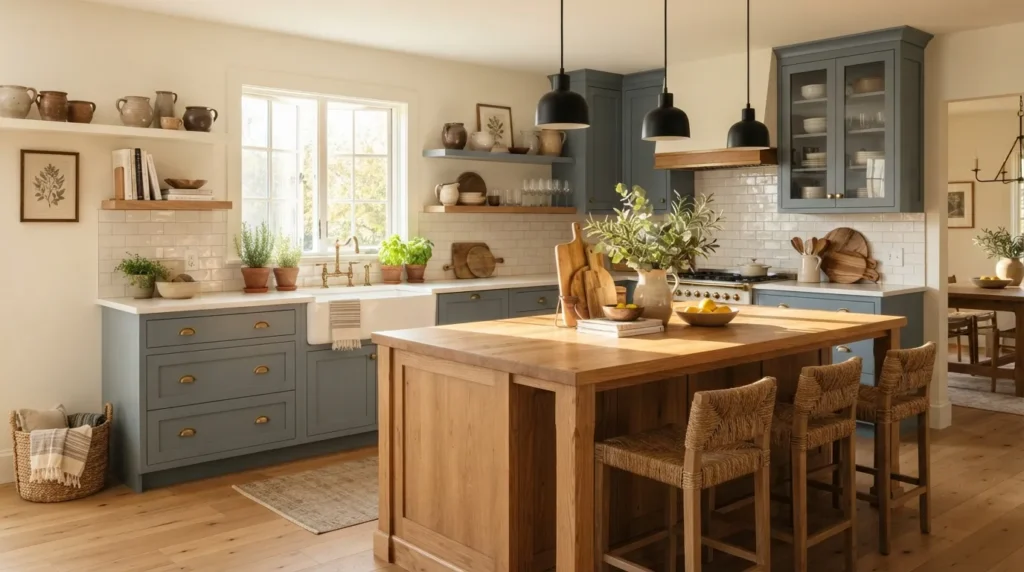
Blue gray cabinets can work wonderfully in a farmhouse-inspired kitchen because the color feels softer than a saturated navy but more distinctive than plain white.
The style becomes especially appealing when blue gray is combined with natural wood, classic tile, simple lighting, and traditional cabinet profiles.
A farmhouse kitchen doesn’t have to look rustic or overly decorated. Modern farmhouse design often works best when traditional elements are mixed with cleaner contemporary finishes.
The blue gray cabinets can provide the visual color while wood and textured materials bring warmth.
How To Style It
Choose shaker-style blue gray cabinets for a classic foundation.
Pair them with a farmhouse-inspired sink if it suits the architecture of the home, or use a simple undermount sink for a more contemporary interpretation.
Introduce natural wood through an island, floating shelves, stools, or cutting boards.
White subway tile remains an easy backsplash choice, especially when the room already contains several materials.
For lighting, consider simple black, aged brass, or bronze fixtures.
A few vintage-inspired accessories can add personality, but avoid filling every shelf. Open shelving looks best when practical items are mixed with a small number of decorative pieces.
8. Two-Tone Cabinet Design
Quick Benefits
- Adds visual dimension
- Helps define kitchen zones
- Works well with islands
- Prevents one color from dominating
- Offers flexibility with existing cabinetry
Why It Works
Using blue gray for only part of the cabinetry can be a smart way to introduce color without committing the entire kitchen to one shade.
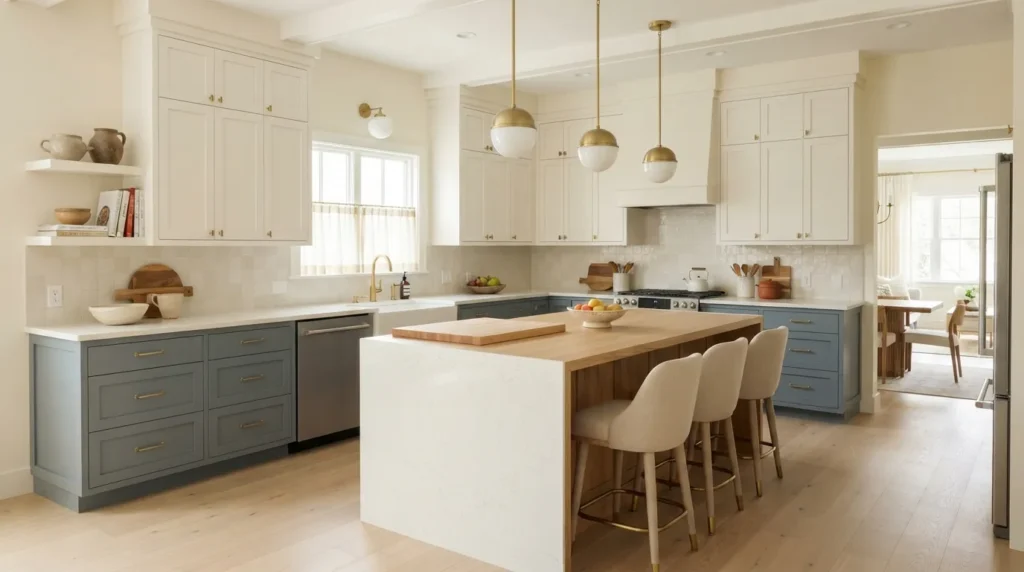
A popular approach is blue gray lower cabinets paired with white or warm neutral uppers. Another option is using blue gray throughout the perimeter and reserving the color for a central island.
The island approach is particularly useful if you want the kitchen to feel bright but still have a strong focal point.
Two-tone cabinetry also creates visual hierarchy. The eye naturally notices the contrasting island or lower cabinets, which can help organize the room.
How To Style It
For a bright kitchen, try blue gray base cabinets with warm white upper cabinets.
If you have a large island, consider painting only the island blue gray and keeping the perimeter cabinetry neutral.
Repeat the blue gray somewhere else in the room through bar stools, artwork, or a small decorative accessory.
Natural wood is another excellent bridge between the two cabinet colors.
Keep the countertop consistent across the different cabinet colors when possible. One continuous surface can make the combination feel intentional.
Avoid introducing too many additional cabinet colors. Two primary cabinet finishes are usually enough.
9. Dark Contrast Details
Quick Benefits
- Creates definition
- Adds modern contrast
- Makes blue gray feel sophisticated
- Works well with contemporary fixtures
- Helps architectural details stand out
Why It Works
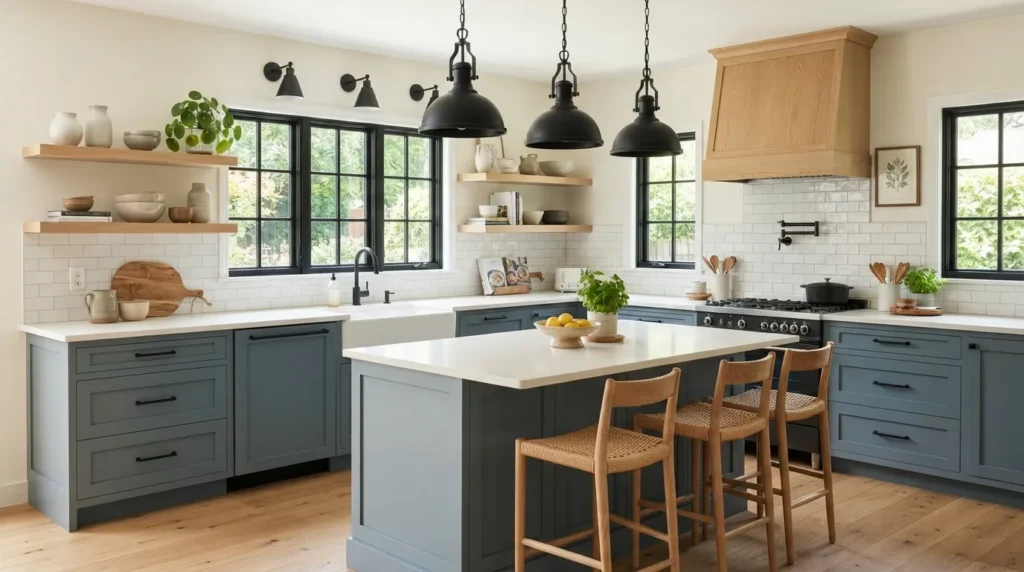
Black and deep charcoal accents can give blue gray cabinetry a sharper, more sophisticated appearance.
The contrast is particularly effective when the blue gray is relatively soft or muted. Black hardware, window frames, lighting, or bar stools can provide enough definition to keep the room from feeling washed out.
However, dark accents should be distributed thoughtfully. Too much black can make a small kitchen feel visually heavy, particularly when combined with dark countertops and flooring.
A few repeated black elements are usually enough.
How To Style It
Start with black cabinet pulls or knobs.
Then repeat the finish through pendant lights, faucet details, window frames, or seating.
Keep the countertop relatively light if the kitchen is small or receives limited natural light.
Natural wood can soften the contrast. A pale oak island or wood stools can make black and blue gray feel warmer.
For the backsplash, consider white, cream, or a soft neutral tile.
This combination works especially well with simple cabinet doors because the contrast becomes part of the architecture rather than competing with decorative details.
10. Classic Transitional Style
Quick Benefits
- Timeless appearance
- Works with many home styles
- Balances traditional and modern elements
- Easy to accessorize
- Can remain appealing through future updates
Why It Works
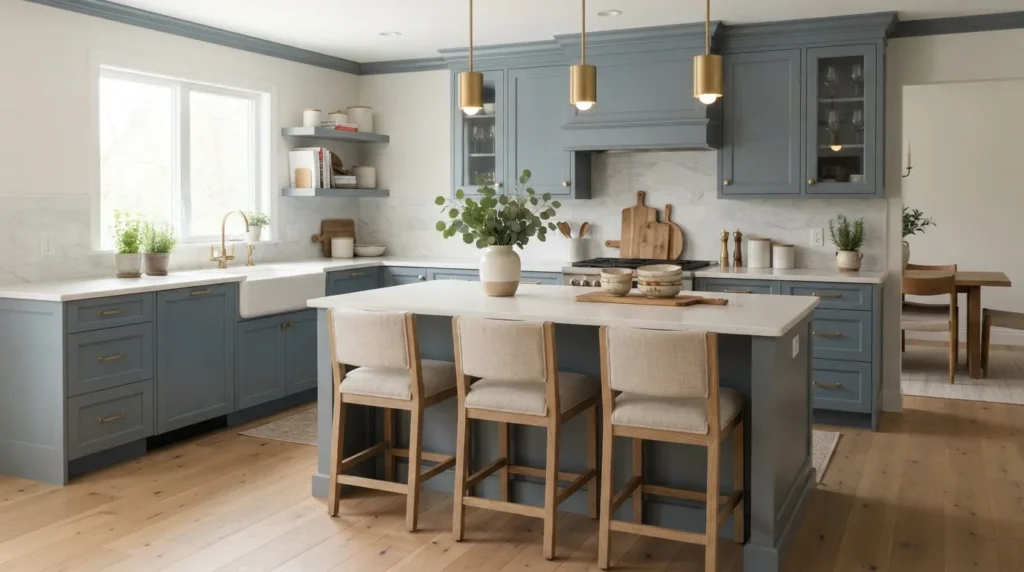
If you’re looking for the most adaptable approach, blue gray cabinetry in a transitional kitchen is difficult to beat.
Transitional design combines traditional proportions and materials with cleaner modern details. Blue gray fits naturally into this middle ground because it has enough color to provide personality while remaining neutral enough to coordinate with different finishes.
Shaker cabinets, white countertops, simple hardware, natural wood, classic tile, and understated lighting can all work together without making the room feel overly trendy.
This approach is particularly practical for homeowners who expect their preferences to evolve. You can change lighting, stools, textiles, and decorative accessories later without needing to repaint the cabinets.
How To Style It
Begin with blue gray shaker cabinets and a light countertop.
Add a simple backsplash, such as white subway tile, marble-inspired tile, or a subtle handmade-look ceramic.
Choose either brass, brushed nickel, or black hardware based on the warmth and style you want.
Introduce wood through flooring, an island, shelving, or furniture.
Keep the walls neutral so the cabinetry remains the main color feature.
Finish with simple accessories: a wooden cutting board, ceramic containers, fresh greenery, and a few useful kitchen items.
The result should feel comfortable enough for everyday family life but polished enough to remain attractive for years.
Related Articles
- Blue Gray Kitchen Ideas With Natural Wood Accents
- Modern Kitchen Cabinet Color Ideas for Every Home
- Small Kitchen Ideas That Make the Space Feel Bigger
- White and Wood Kitchen Ideas for a Warm, Timeless Look
- Kitchen Backsplash Ideas That Complement Gray Cabinets
Frequently Asked Questions
Is blue gray a good color for kitchen cabinets?
Yes. Blue gray can be a versatile cabinet color because it combines the calming qualities of blue with the neutrality of gray. It can work in traditional, farmhouse, coastal, transitional, and modern kitchens. The key is selecting a shade that works with your kitchen’s natural light, countertops, flooring, and other undertones.
What colors go well with blue gray kitchen cabinets?
Blue gray works well with white, cream, natural oak, warm beige, soft gray, black, brass, brushed nickel, and many natural stone colors. Warm wood is particularly useful for balancing the cooler appearance of blue gray. The exact combination depends on whether the cabinet color leans more blue, gray, green, or neutral.
Are blue gray cabinets still in style?
Blue gray has remained popular because it can function as both a color and a near-neutral. Rather than relying on an extremely saturated shade, choosing a muted blue gray with balanced undertones can give the kitchen a more timeless appearance. Classic cabinet profiles and natural materials can also help the design remain adaptable as trends change.
What countertop looks best with blue gray cabinets?
Soft white and lightly veined countertops are among the most versatile choices. White quartz, marble-inspired surfaces, and pale natural stone can create a bright contrast. Warm countertops with beige or subtle taupe undertones can also work beautifully, especially when the kitchen includes natural wood flooring or warm accents.
What hardware looks best with blue gray cabinets?
Brass, aged brass, brushed nickel, and black hardware can all work with blue gray cabinetry. Brass introduces warmth, black creates contrast, and brushed nickel maintains a quieter, cooler appearance. Choose the finish based on the rest of the kitchen rather than treating cabinet hardware as an isolated decision.
Do blue gray cabinets make a kitchen look dark?
They can, particularly when a deep blue gray is combined with dark countertops, flooring, and limited natural light. However, lighter blue gray cabinets paired with white countertops, warm walls, reflective surfaces, and adequate lighting can keep the room feeling bright. Always test cabinet samples in the actual kitchen before committing.
How can I make blue gray cabinets feel warmer?
Natural wood is one of the easiest ways to warm up blue gray cabinetry. Oak flooring, wood shelving, an island, stools, or cutting boards can introduce organic warmth. Brass hardware, warm white walls, woven accessories, and soft lighting can also keep the kitchen from feeling too cool.
Conclusion
Blue gray kitchen cabinets offer an appealing middle ground between colorful cabinetry and traditional neutrals. They bring personality into the kitchen while remaining flexible enough to work with many different materials and decorating styles.
If you prefer a warm and natural kitchen, pair blue gray with oak or other natural wood. For a brighter space, combine it with soft white countertops and a simple backsplash. Brass hardware can add warmth, while black accents can create a sharper contemporary appearance.
You can also use blue gray selectively. Painting only the island or lower cabinets allows you to introduce color without making the entire kitchen feel different.
Before choosing a specific shade, take samples home and view them throughout the day. Morning sunlight, afternoon shadows, evening lighting, countertops, flooring, and nearby wall colors can all affect how the cabinet color appears.
Most importantly, build the palette around the materials you genuinely enjoy. A beautiful kitchen doesn’t require every finish to match perfectly. It needs balance, useful function, comfortable proportions, and a combination of colors and textures that feels right for your home.
Whether your style is farmhouse, coastal, modern, or transitional, blue gray cabinetry can provide a beautiful foundation that feels distinctive today while remaining flexible enough for future updates.