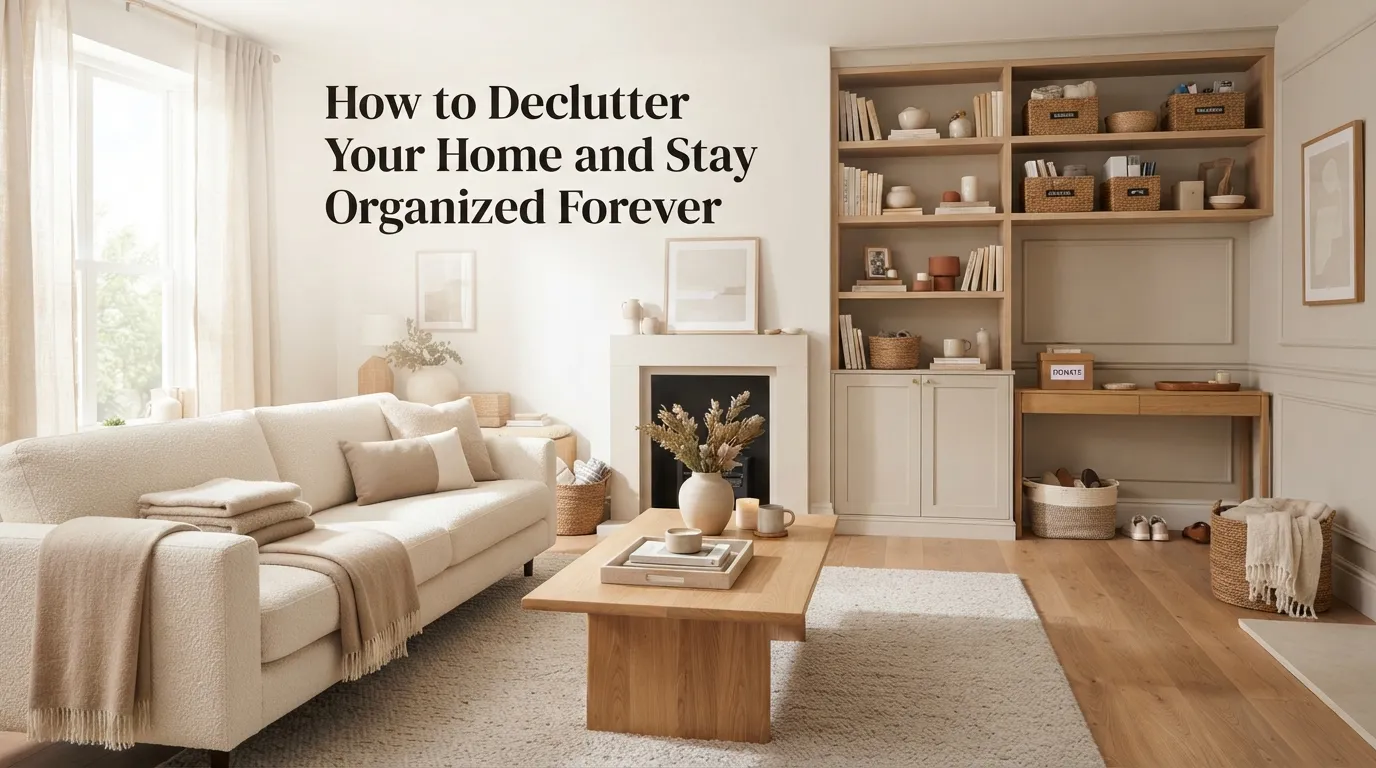
How to Declutter Your Home and Stay Organized Forever
A cluttered home rarely becomes overwhelming overnight. More often, small piles slowly appear on counters, drawers become harder to close, closets become crowded, and items without a clear home begin moving from one surface to another.
Then comes the big organizing day.
You spend hours sorting, donating, folding, labeling, and rearranging everything. The house looks fantastic for a little while. But weeks later, the same clutter starts returning.
The problem is often not a lack of organizing skills. It is the absence of a simple system that fits everyday life.
A truly organized home does not depend on constantly tidying. It depends on having fewer unnecessary belongings, giving frequently used items convenient homes, and creating small routines that prevent clutter from rebuilding.
The good news is that you do not have to declutter your entire house in one exhausting weekend. Working room by room and category by category can make the process much easier. You can also make decisions based on how you actually live rather than trying to create a picture-perfect home.
In my experience, the biggest transformation happens when people stop asking, “Where can I put this?” and start asking, “Does this deserve space in my home?”
That small change makes organizing much more sustainable.
This guide walks through a practical approach to decluttering your home, from deciding what to keep to creating simple habits that help your spaces stay organized. It also covers the areas that tend to become cluttered fastest, including kitchens, closets, bathrooms, paperwork, bedrooms, and entryways.
The goal is not an empty house.
The goal is a home where the things you own are useful, accessible, and easy to put away.
Table of Contents
1. Start With One Space
Begin with a manageable area so the process feels achievable.
2. Use The Four-Box Method
Sort belongings into clear categories before deciding where anything belongs.
3. Remove Obvious Clutter
Begin with items that are clearly broken, expired, duplicated, or unused.
4. Declutter By Category
Group similar belongings together to make better decisions.
5. Give Everything A Home
Create practical storage locations based on how your household uses each item.
6. Simplify Your Closets
Reduce clothing and accessories that create unnecessary visual and physical clutter.
7. Reset Your Kitchen
Clear counters, cabinets, drawers, and pantry areas with practical systems.
8. Control Paper And Digital Clutter
Create simple systems for documents, mail, files, and digital information.
9. Create Daily Reset Habits
Use small routines to prevent clutter from accumulating again.
10. Build A Maintenance System
Create monthly and seasonal habits that keep your home organized long term.
1. Start With One Space
Quick Benefits
- Reduces overwhelm
- Creates visible progress
- Makes decisions easier
- Builds organizing momentum
- Helps you learn what works
Why It Works
Trying to declutter an entire home at once can create decision fatigue before you even finish the first room.
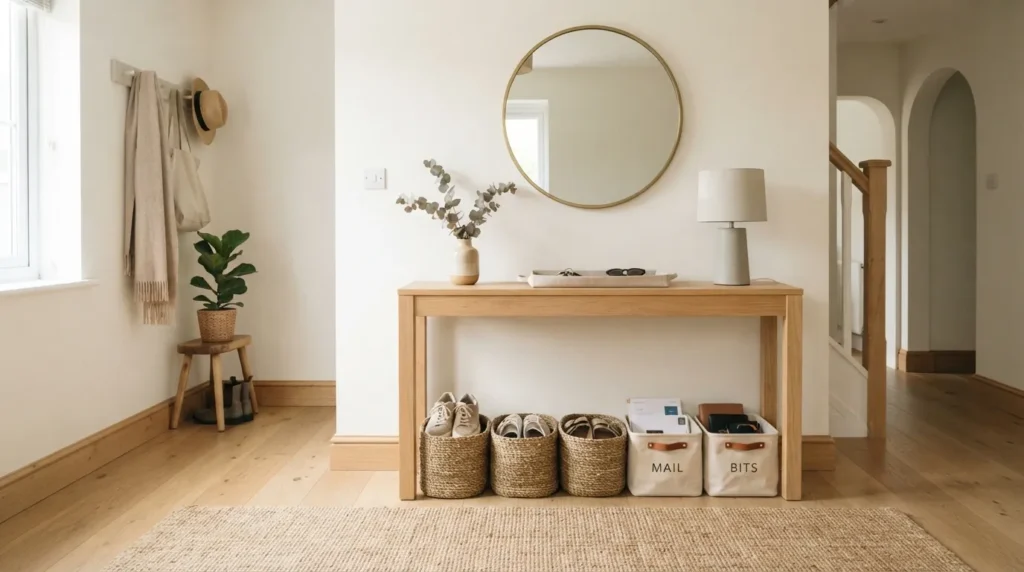
A smaller starting point gives you a clear boundary. You can finish one drawer, shelf, bathroom cabinet, or entryway before moving somewhere else.
The best starting point is usually an area that bothers you regularly but does not contain hundreds of emotionally significant belongings.
A crowded kitchen counter, overflowing bathroom drawer, or messy entryway can provide an immediate sense of progress.
Once one area becomes easier to maintain, you have a working example of your new organizing system.
How To Style It
Choose one contained area rather than an entire room.
Set aside a few containers or bags for sorting.
Remove everything from the selected area so you can see what you actually have.
Clean the empty space before returning anything.
Group similar items together.
Then return only the belongings that belong in that specific area.
Do not move to another room simply because you find something that belongs elsewhere. Put it into a temporary relocation pile and finish your original space first.
This keeps the project focused.
2. Use The Four-Box Method
Quick Benefits
- Simplifies sorting
- Reduces indecision
- Creates clear categories
- Prevents random piles
- Works in every room
Why It Works
Decluttering becomes easier when every item has a temporary destination.
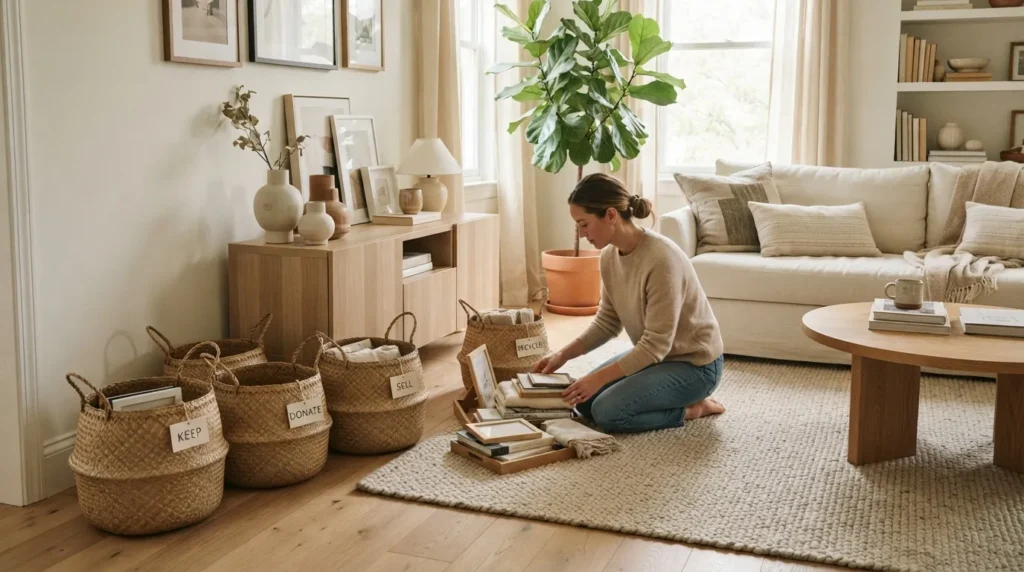
The four-box method uses four basic categories: keep, donate, relocate, and discard.
The “keep” group contains things that belong in the space and are useful.
“Donate” includes usable items you no longer want.
“Relocate” contains belongings that belong somewhere else in the home.
“Discard” is for items that are broken, expired, damaged beyond reasonable use, or otherwise unsuitable for keeping or donating.
The important part is making the decision before reorganizing.
If you start buying storage containers before reducing the number of belongings, you may simply create prettier ways to store clutter.
How To Style It
Use four boxes, baskets, bags, or clearly marked areas.
Pick up one item at a time.
Make a decision before moving to the next item.
Ask:
- Do I use this?
- Does it work?
- Would I choose to buy it again?
- Does it belong in my current lifestyle?
- Do I have another item that does the same job?
Avoid creating a large “maybe” category. If something genuinely requires more thought, place it in a small separate group and return to it after the easier decisions are complete.
Finish each category before beginning the next organizing task.
3. Remove Obvious Clutter
Quick Benefits
- Produces fast results
- Makes decluttering easier
- Frees storage space
- Reduces unnecessary decisions
- Builds confidence
Why It Works
Not every item deserves a complicated decision.
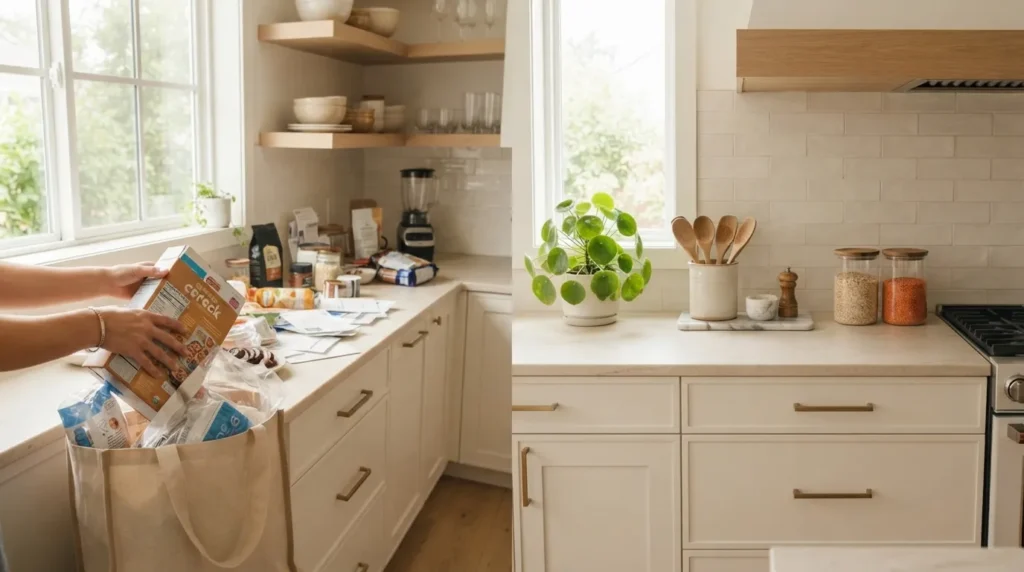
Expired products, broken objects, empty containers, duplicate items, old packaging, damaged clothing, and things you have been meaning to repair for years can often be identified quickly.
Starting with these easy decisions clears physical space and reduces visual noise.
It also creates momentum for more difficult categories.
Many people become stuck because they begin with sentimental items or belongings connected to complicated memories. Starting with obvious clutter allows you to practice the process without emotional fatigue.
How To Style It
Walk through one room with a trash bag and a donation bag.
Look for:
- Empty boxes
- Expired products
- Broken items
- Unused packaging
- Duplicate tools
- Old magazines
- Worn-out textiles
- Clothing that is no longer wearable
- Objects missing essential parts
Do not turn this stage into a deep cleaning project.
The objective is simply to remove items that have an obvious reason for leaving.
Once the obvious clutter is gone, move into more intentional sorting.
4. Declutter By Category
Quick Benefits
- Reveals duplicates
- Makes comparisons easier
- Prevents room-to-room clutter
- Creates more consistent decisions
- Shows how much you actually own
Why It Works
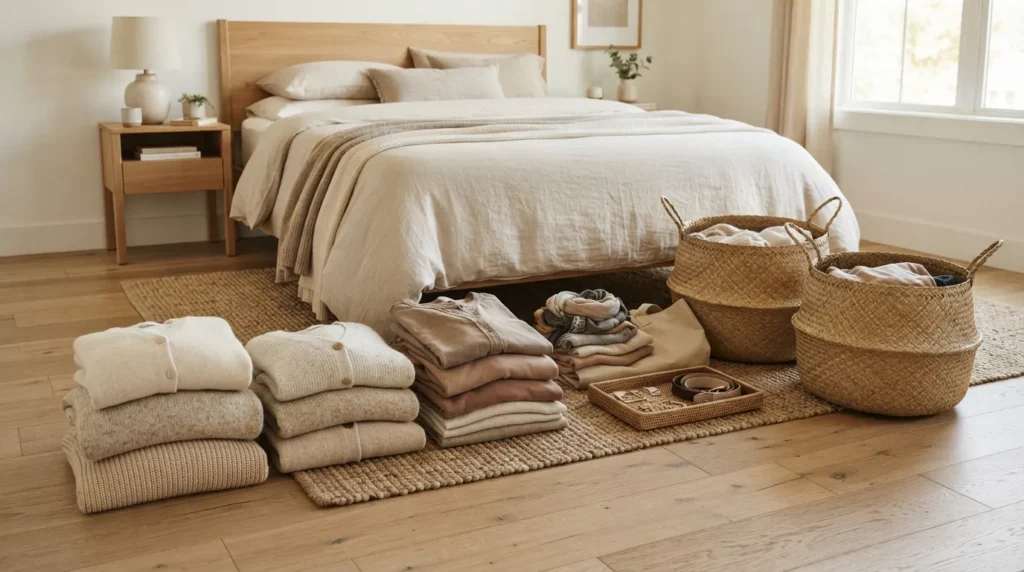
Sometimes the same type of item is scattered throughout the house.
You may have candles in several rooms, cleaning products under multiple sinks, or office supplies spread across different drawers.
Sorting by category brings everything together.
Once similar items are visible at the same time, it becomes easier to identify duplicates and decide how much you realistically use.
This approach is especially helpful for clothing, books, kitchen gadgets, toiletries, paperwork, craft supplies, and decorative accessories.
How To Style It
Choose one category.
Gather all items from that category into one location.
Spread everything out so you can compare quantities.
Keep the items that are useful, functional, and appropriate for your current lifestyle.
Group the remaining belongings by destination.
Then create one storage location for that category.
For example, keep household batteries together instead of storing some in the kitchen, some in a desk drawer, and others in a bedroom.
A category-based system makes future organizing much easier because you know exactly where similar items belong.
5. Give Everything A Home
Quick Benefits
- Makes tidying faster
- Reduces misplaced items
- Improves daily routines
- Makes storage more intuitive
- Prevents surface clutter
Why It Works
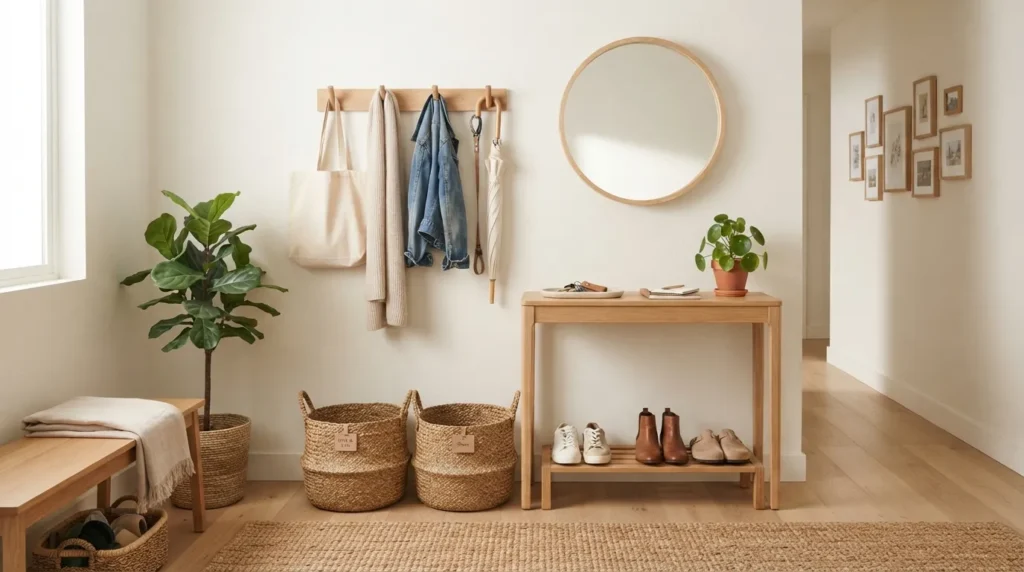
An organized home depends on convenient homes for everyday objects.
If putting something away requires opening three cabinets, moving another item, and reaching an awkward shelf, the system is unlikely to last.
Storage works best when it matches behavior.
Frequently used objects deserve convenient locations. Rarely used belongings can occupy less accessible storage.
This principle is especially important in kitchens, entryways, bathrooms, and family spaces.
How To Style It
Think about where you naturally use each item.
Keep coffee supplies near the coffee-making area.
Store everyday shoes close to the entrance.
Place cleaning products near the areas they are used.
Keep frequently used toiletries within easy reach.
Use drawers, baskets, bins, hooks, and shelves according to the type of item being stored.
Label containers when the contents are difficult to identify.
Avoid creating overly complicated systems.
If everyone in the household can understand where something belongs, the system is more likely to stay functional.
6. Simplify Your Closets
Quick Benefits
- Makes getting dressed easier
- Frees valuable storage space
- Reduces visual clutter
- Makes seasonal rotation simpler
- Reveals what you actually wear
Why It Works
Closets often become storage areas for clothes connected to past versions of ourselves.
There are items that fit differently, clothes reserved for an imaginary occasion, pieces bought on impulse, and things kept simply because they were expensive.
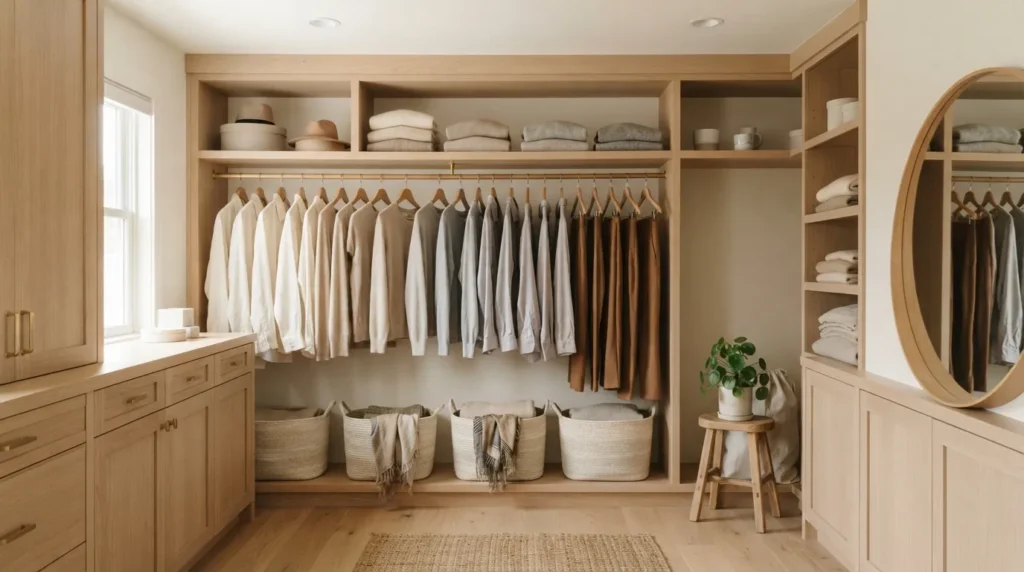
A useful wardrobe reflects your current lifestyle.
The goal is not owning a specific number of clothes. It is having a collection that is practical, comfortable, and easy to navigate.
A less crowded closet also makes it easier to see what you already own.
How To Style It
Take everything out of one clothing category.
For example, begin with tops rather than emptying the entire closet.
Sort items into keep, donate, relocate, and discard.
Consider:
- Does it fit comfortably?
- Do I wear it?
- Is it in good condition?
- Does it suit my current lifestyle?
- Is it easy to style with other pieces?
Fold or hang clothing according to the way you naturally use it.
Keep frequently worn items at eye level.
Store occasional or seasonal pieces in less accessible areas if appropriate.
Avoid filling every inch of the closet. Empty space makes the remaining clothing easier to see and use.
7. Reset Your Kitchen
Quick Benefits
- Creates clearer counters
- Makes cooking easier
- Improves cabinet access
- Reveals duplicate items
- Makes pantry storage more efficient
Why It Works
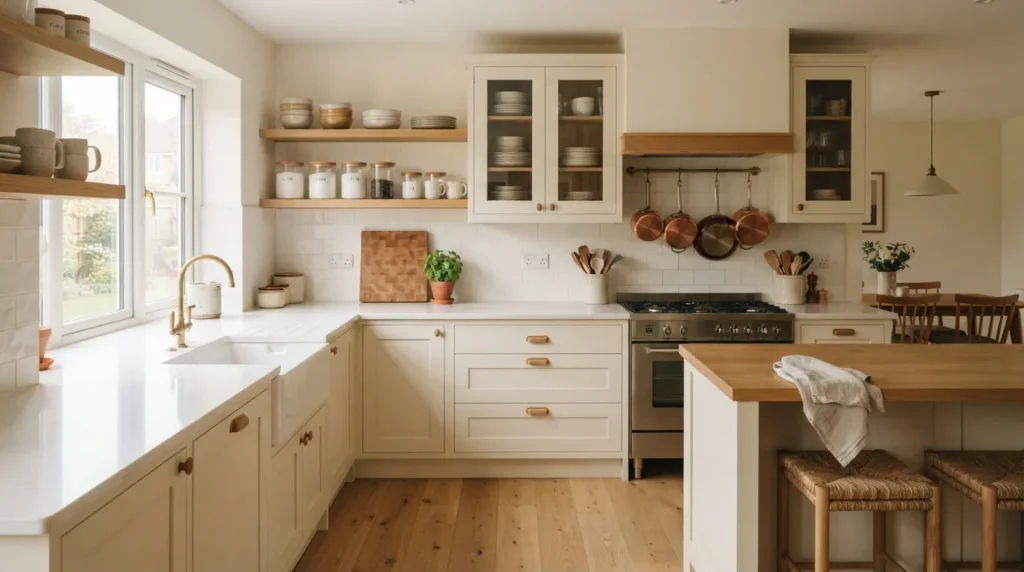
Kitchen clutter can make everyday tasks feel harder than they need to be.
A countertop covered with appliances, mail, containers, and miscellaneous objects reduces usable workspace.
Inside cabinets, duplicate dishes, rarely used gadgets, and mismatched containers can consume valuable space.
The kitchen benefits from storage based on frequency of use.
The things you reach for every day deserve the easiest access.
How To Style It
Start with the countertop.
Remove everything that does not belong there.
Then work through one cabinet or drawer at a time.
Look for duplicate utensils, excess mugs, unused gadgets, chipped dishes, and containers without matching lids.
Group similar items.
Use drawer dividers where they genuinely improve access.
Keep everyday cooking tools close to the main preparation area.
Store occasional appliances elsewhere if they do not need daily access.
For the pantry, group similar foods together and keep frequently used items toward the front.
The goal is a kitchen where putting something away feels obvious.
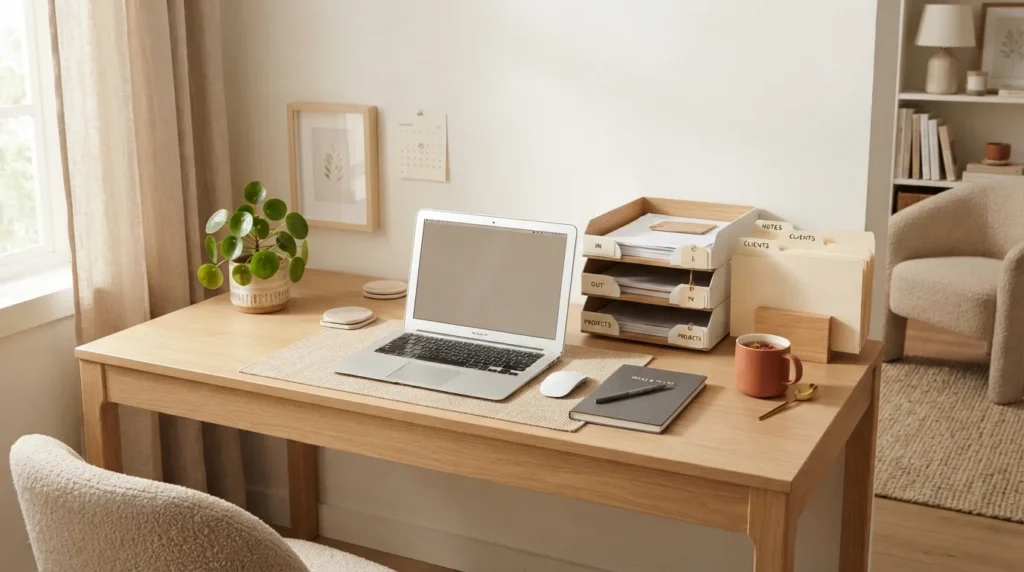
8. Control Paper And Digital Clutter
Quick Benefits
- Reduces visual mess
- Makes important documents easier to find
- Prevents mail from piling up
- Simplifies digital storage
- Creates a calmer workspace
Why It Works
Clutter is not always physical.
Unopened mail, old documents, screenshots, downloads, duplicate files, and overflowing inboxes can create another form of mental clutter.
Paper is especially easy to accumulate because many documents feel important simply because they contain information.
A simple system separates documents that require action from records that need to be retained.
Digital organization follows the same principle.
The goal is not to create dozens of folders. It is to make important information easy to locate.
How To Style It
Create one location for incoming paper.
Sort mail as soon as practical.
Separate items requiring action from documents that need filing.
Recycle unwanted paper promptly.
Keep important records in a secure, clearly organized location.
For digital files, create broad categories rather than dozens of tiny folders.
Use descriptive file names.
Delete duplicate downloads and unnecessary screenshots.
Unsubscribe from email lists that no longer provide value.
A small weekly digital reset can prevent hundreds of files from accumulating unnoticed.
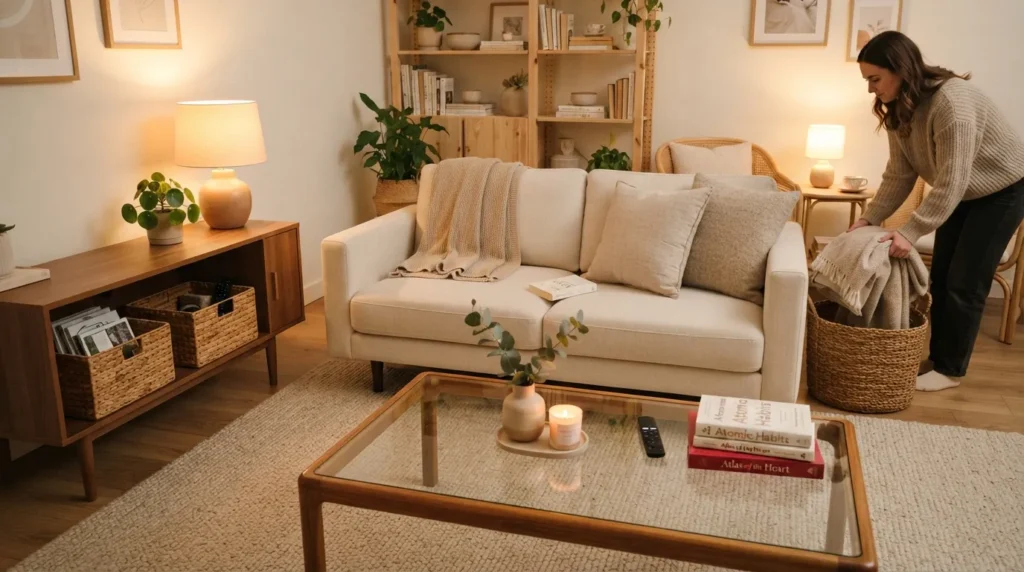
9. Create Daily Reset Habits
Quick Benefits
- Prevents clutter buildup
- Makes cleaning easier
- Reduces weekend organizing
- Keeps surfaces clearer
- Turns organization into routine
Why It Works
Long-term organization comes from small repeated actions.
A home does not stay organized because someone occasionally performs a massive cleaning session. It stays organized because everyday items return to their homes regularly.
A short evening reset can prevent dishes, clothing, papers, toys, and miscellaneous objects from becoming tomorrow’s larger problem.
The routine does not have to be complicated.
Think of it as returning the house to its basic operating condition before the day ends.
How To Style It
Create a short daily reset.
For example:
- Return loose items to their homes.
- Clear the main kitchen surfaces.
- Put clothing into the hamper or closet.
- Process obvious paper clutter.
- Reset the living room.
- Prepare frequently used items for the next morning.
Keep the routine short enough to repeat consistently.
If something repeatedly remains out, reconsider its storage location.
The problem may not be laziness. The item’s home may simply be inconvenient.
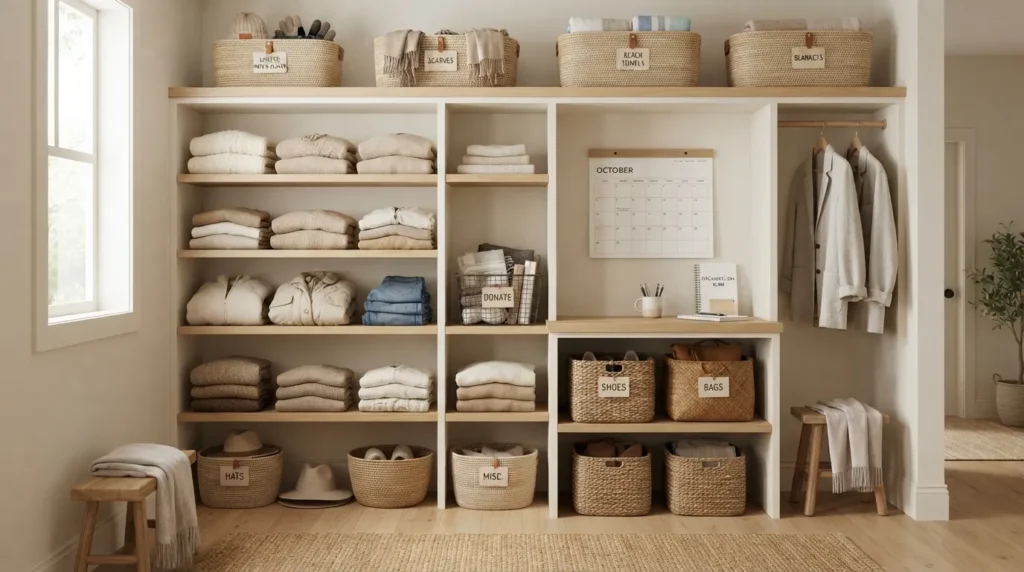
10. Build A Maintenance System
Quick Benefits
- Prevents large clutter buildup
- Keeps storage manageable
- Creates predictable routines
- Makes seasonal changes easier
- Supports long-term organization
Why It Works
Decluttering is not a single event.
Homes change. Families grow. Hobbies change. Clothing wears out. New purchases enter the house.
A maintenance system recognizes this reality.
Instead of waiting until every closet is overflowing, schedule small reviews throughout the year.
This keeps clutter from reaching the overwhelming stage again.
How To Style It
Create a monthly mini-reset.
Choose one small category to review each month.
Examples include:
- Bathroom products
- Pantry items
- Clothing
- Paperwork
- Toys
- Cleaning supplies
- Kitchen gadgets
- Decorative accessories
Add a seasonal review for coats, holiday decor, outdoor items, and other belongings that rotate throughout the year.
Keep a donation bag or box in an appropriate location so unwanted items have an obvious temporary destination.
When the container is full, process it promptly.
This turns decluttering from a major event into a normal part of home maintenance.
How To Decide What To Keep
Decluttering becomes much easier when you use consistent questions.
Ask whether the item is useful, functional, loved, or genuinely meaningful.
Then consider how often you use it.
Something that is used every day has a clear role. Something that has not been touched in several years deserves a more thoughtful evaluation.
Consider whether you would buy the item again today.
This question can be surprisingly helpful because it removes some of the guilt attached to past purchases.
Also consider whether another item performs the same function.
Duplicates are not always unnecessary, especially in larger households, but excessive duplication often creates hidden clutter.
The goal is not to eliminate everything that is not used every week.
The goal is to make intentional decisions about what occupies limited space.
How To Declutter Sentimental Items
Sentimental belongings are often the most difficult category.
Do not begin your entire decluttering project here.
When you reach sentimental objects, separate emotional value from physical quantity.
You can appreciate a memory without keeping every object associated with it.
Consider choosing a smaller collection of representative pieces.
Photographs can preserve the memory of certain objects, although not every item needs to be photographed.
Create one dedicated memory box or storage area if appropriate.
If several family members have sentimental belongings, give each person a reasonable amount of space rather than allowing sentimental objects to spread throughout the home.
The purpose is not to erase memories.
It is to give meaningful belongings a deliberate place.
How To Organize A Small Home
Small homes benefit from strict storage boundaries.
Every category needs a realistic amount of space.
If your kitchen has one drawer for utensils, the utensil collection has to fit that drawer.
If the entryway has limited shoe storage, keeping dozens of pairs there creates an immediate organizational problem.
Use vertical space where practical.
Choose furniture with useful storage when it fits your lifestyle.
Keep surfaces relatively clear.
Prioritize belongings that perform multiple useful functions.
Most importantly, avoid bringing additional storage into the home before reducing unnecessary possessions.
Storage solves a space problem only when the number of belongings is already manageable.
How To Prevent Clutter From Coming Back
The easiest way to maintain an organized home is to control what enters it.
Before buying something, consider where it will live.
If you cannot identify a home for it, pause before purchasing.
Use a one-in, one-out approach for categories that tend to accumulate, such as clothing, mugs, books, or decorative accessories.
Keep donation items moving out of the house rather than allowing them to become another pile.
Schedule small resets instead of waiting for clutter to become overwhelming.
And pay attention to recurring clutter.
If mail constantly accumulates on one counter, create a mail station somewhere nearby.
If shoes always gather beside the door, add practical storage there.
Repeated clutter is often useful information. It shows you where the current system does not match your daily habits.
Common Decluttering Mistakes
One common mistake is trying to organize before removing unnecessary belongings.
Another is buying too many storage containers too early.
A beautifully labeled collection of bins can still contain items you never use.
Decluttering everything in one day can also lead to exhaustion and rushed decisions.
Another problem is creating complicated systems that nobody maintains.
The best organization system is not necessarily the most beautiful one. It is the one that works during a busy Tuesday morning.
Finally, avoid treating a temporary mess as failure.
Homes are used every day. Cooking creates mess. Laundry accumulates. Children play. Packages arrive.
The goal is not permanent perfection.
The goal is having systems that make returning to order relatively easy.
FAQ
How do I start decluttering my home?
Start with one small, manageable area such as a drawer, shelf, bathroom cabinet, or kitchen counter. Remove the contents, sort items into keep, donate, relocate, and discard categories, clean the empty space, and return only what belongs there. Completing a small area creates momentum without making the project feel overwhelming.
How can I stay organized after decluttering?
Give frequently used items convenient homes and create short daily reset routines. Review small categories regularly rather than waiting for clutter to become overwhelming. Also pay attention to what enters your home and make sure new purchases have an appropriate place before bringing them inside.
What should I declutter first?
Start with obvious clutter such as broken items, expired products, empty packaging, duplicates, and belongings that are clearly no longer useful. These decisions are usually easier than sorting sentimental possessions and can quickly create visible progress.
How do I declutter when I feel overwhelmed?
Reduce the size of the project. Instead of thinking about the entire house, choose one drawer, shelf, or category. Set a realistic amount of time and stop when that period ends. Small completed areas create progress without requiring an exhausting organizing marathon.
How do I declutter sentimental items?
Save sentimental belongings for later in the process. When you reach them, focus on the meaning rather than the quantity. Keep the items that genuinely represent important memories and consider creating one designated memory-storage area instead of allowing sentimental objects to spread throughout the house.
How often should I declutter my home?
Small maintenance reviews can happen monthly, while larger seasonal reviews can address clothing, outdoor items, holiday decorations, and other rotating categories. The frequency depends on household size and lifestyle. Regular small reviews are generally easier to manage than waiting until every storage area becomes full.
Why does my house become cluttered again after organizing?
Clutter often returns when items do not have convenient homes, too many belongings are being stored, or new items enter faster than old items leave. Look at where clutter repeatedly accumulates. Those locations can reveal a storage system that does not match your everyday habits.
Conclusion
A permanently organized home is not a home that never gets messy.
It is a home with systems that make messes easier to reset.
Start small. Remove obvious clutter first, then work through categories that tend to accumulate. Give useful belongings convenient homes and avoid creating complicated storage systems that are difficult to maintain.
Pay particular attention to the places where clutter repeatedly returns. If shoes always gather by the door, improve the entryway system. If kitchen counters fill with appliances, rethink what deserves permanent counter space. If paperwork piles up, create one simple location for incoming documents.
The most important change happens when organization becomes part of everyday life rather than a once-a-year project.
A few minutes of resetting, a monthly category review, and more intentional purchasing can make a noticeable difference over time.
You do not need a perfectly minimal home. You need a home that supports the way you actually live.
Start with one drawer, one shelf, or one surface today. Build from there, and let each small improvement make the next one easier.
Related Articles
- How to Declutter Your Home Without Feeling Overwhelmed
- How to Organize a Small Bedroom Without Extra Cabinets
- How to Organize a Small Bedroom Without Spending Money
- 10 Small Home Organization Ideas for Everyday Living
- How to Make a Small Home Feel Bigger With Smart Organization