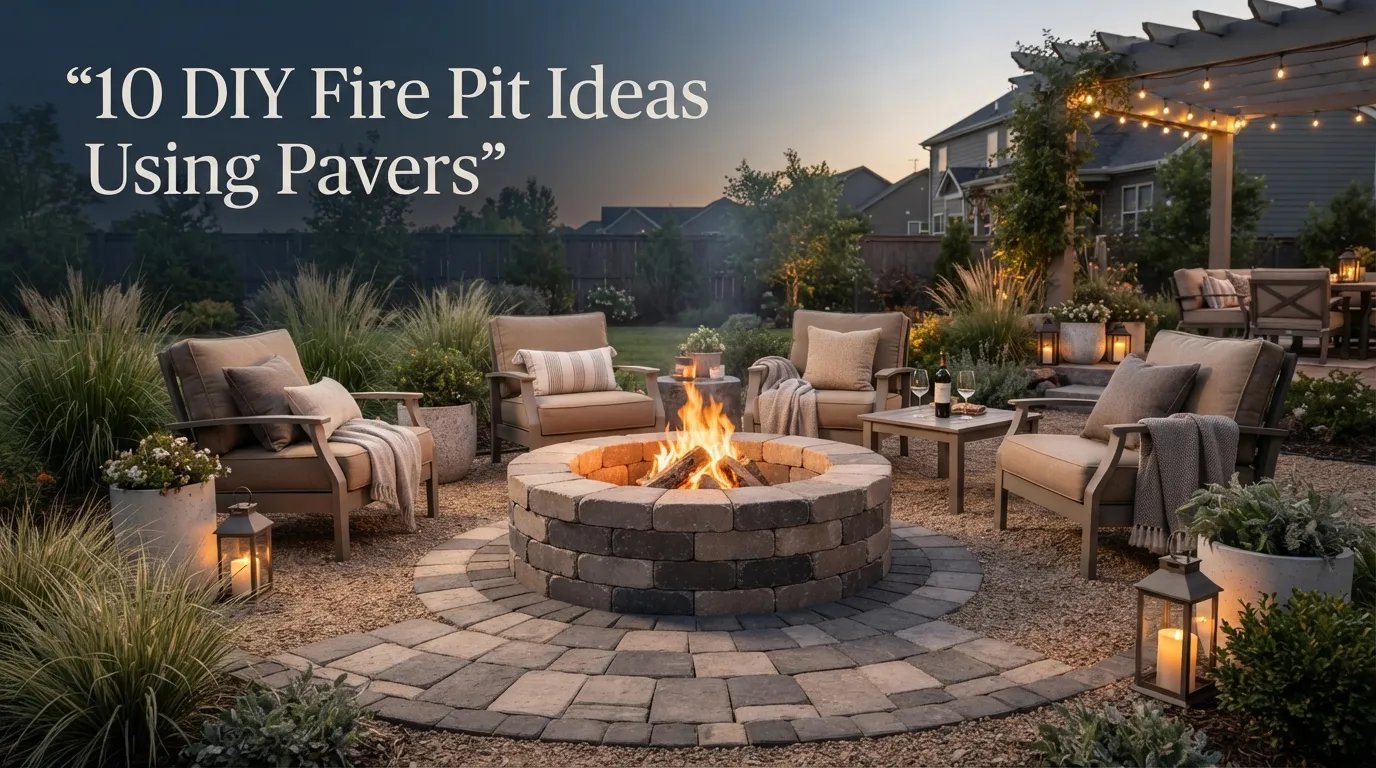
10 DIY Fire Pit Ideas Using Pavers
A backyard fire pit can turn an ordinary outdoor area into a comfortable place for evening conversations, weekend gatherings, and quiet nights outside. The good news is that you don’t necessarily need an elaborate built-in fireplace to create that feeling. Pavers can provide a practical way to build a defined fire-pit area while giving the finished space a neat, landscaped appearance.
Pavers are especially appealing for DIY outdoor projects because they come in many shapes, colors, textures, and sizes. You can use them to create a simple circular fire pit, a more structured square design, or an entire outdoor seating area surrounding the fire feature. Pairing the pavers with gravel, stone, landscaping, or comfortable outdoor furniture can make the finished space feel much more intentional.
Before starting, though, safety needs to come first. Not every paver is suitable for direct exposure to high heat, and a paver wall should not automatically be assumed to be a safe fire ring. Choose materials specifically rated or recommended for fire-pit applications, follow the manufacturer’s installation instructions, and check local fire regulations and any HOA restrictions. A proper noncombustible base, appropriate clearances, and safe fuel practices are essential.
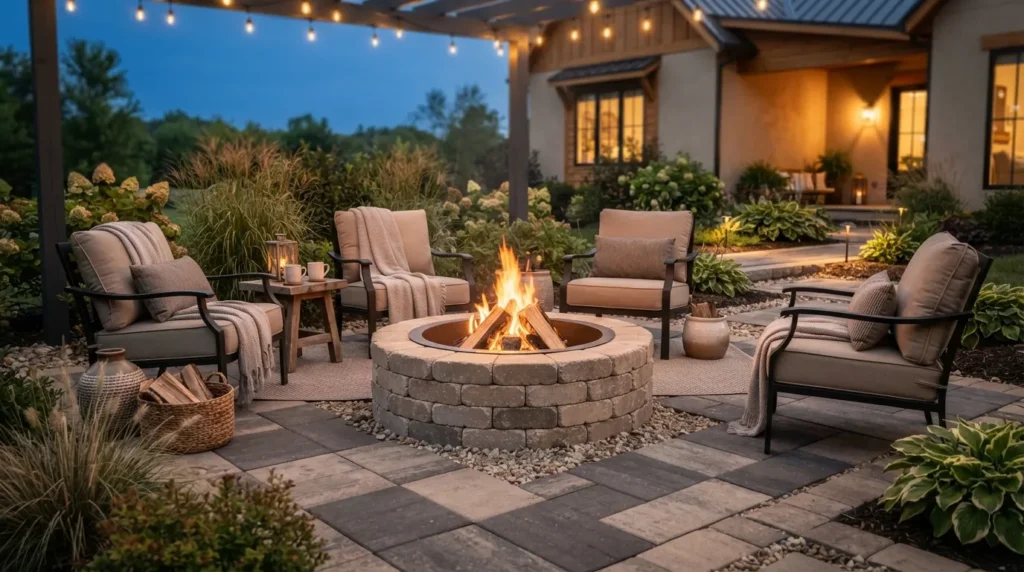
I’ve found that the most attractive outdoor fire-pit designs aren’t necessarily the largest ones. A modest fire feature surrounded by comfortable seating and thoughtful landscaping can often feel more inviting than an oversized installation.
These ideas will help you think through different ways to use pavers for a DIY-style fire-pit project, from simple gravel retreats to polished patio entertaining areas.
Table of Contents
1. Classic Circular Pit
A timeless round design creates a natural focal point for backyard seating.
2. Square Paver Pit
Use clean geometric lines for a contemporary outdoor gathering area.
3. Gravel Fire Pit
Combine pavers with gravel for a relaxed and relatively simple backyard retreat.
4. Patio Fire Circle
Build the fire feature into a larger paver patio for comfortable entertaining.
5. Built-In Seating
Surround the fire pit with permanent or semi-permanent seating for gatherings.
6. Rustic Stone Style
Combine textured pavers with natural landscaping for a relaxed rustic appearance.
7. Modern Fire Feature
Create a streamlined design using simple paver lines and restrained landscaping.
8. Sunken Fire Pit
Use a carefully planned recessed seating area to create an intimate outdoor room.
9. Garden Fire Retreat
Blend the fire pit into lush planting for a cozy garden atmosphere.
10. Entertaining Fire Zone
Design the entire area around conversation, dining, and outdoor entertaining.
1. Classic Circular Pit
Quick Benefits
- Creates a natural gathering point
- Works with many backyard styles
- Complements curved seating arrangements
- Easy to coordinate with gravel or stone
- Makes the fire feature the visual centerpiece
Why It Works
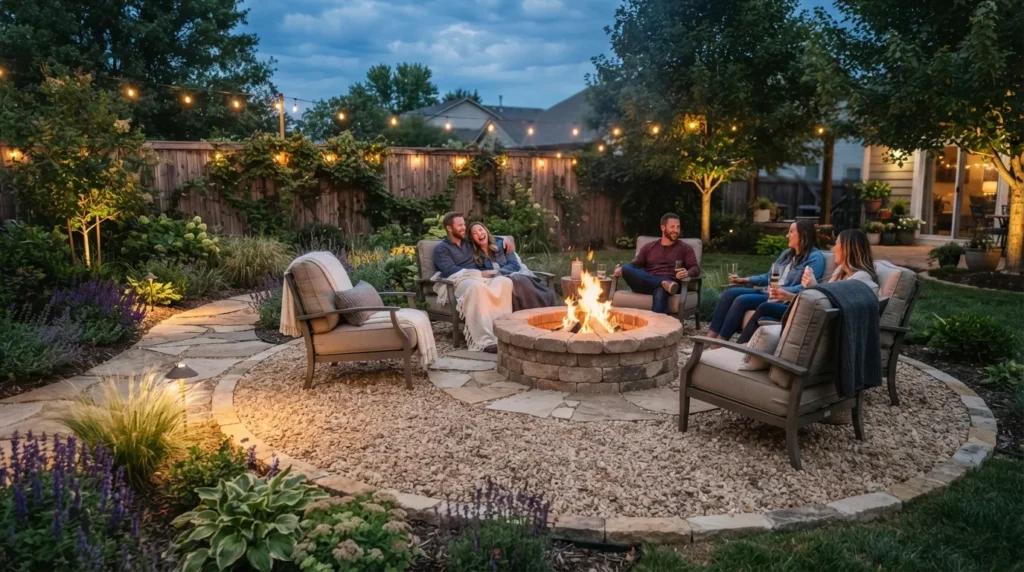
A circular fire pit is one of the most recognizable backyard layouts because the shape naturally encourages people to gather around it. Everyone has a relatively equal relationship to the center, making the arrangement particularly comfortable for conversations.
Pavers can be used to create a defined circular surround when the chosen product is appropriate for fire-pit construction. Their repeated shapes also give the project a finished appearance without requiring complicated decorative details.
The surrounding surface matters just as much as the fire pit itself. A circle placed in an otherwise empty lawn can look unfinished, while the same feature surrounded by gravel, stone, low planting, and seating can become a genuine outdoor destination.
For smaller backyards, keeping the overall scale modest is especially important. A compact fire feature with enough clearance can be much more practical than trying to create a large entertaining zone.
How To Style It
Choose a suitable location away from the house, fences, overhanging branches, and other combustible materials. Check local requirements before deciding on the location.
Create a level, stable, noncombustible foundation according to the fire-pit manufacturer’s specifications. Use only pavers or fire-rated materials that are appropriate for the intended application.
Surround the fire pit with a generous noncombustible area, such as properly installed gravel or pavers. This creates a visual boundary as well as a practical surface for seating.
Add four to six weather-resistant chairs around the circle, depending on the available space. Adirondack-style chairs, simple metal seating, or cushioned outdoor chairs can all work.
Keep landscaping nearby but not immediately against the fire feature. A few large planters placed at a safe distance can soften the space without compromising safety.
2. Square Paver Pit
Quick Benefits
- Creates clean architectural lines
- Works well with modern homes
- Fits rectangular patios efficiently
- Can coordinate with existing pavers
- Provides a structured appearance
Why It Works
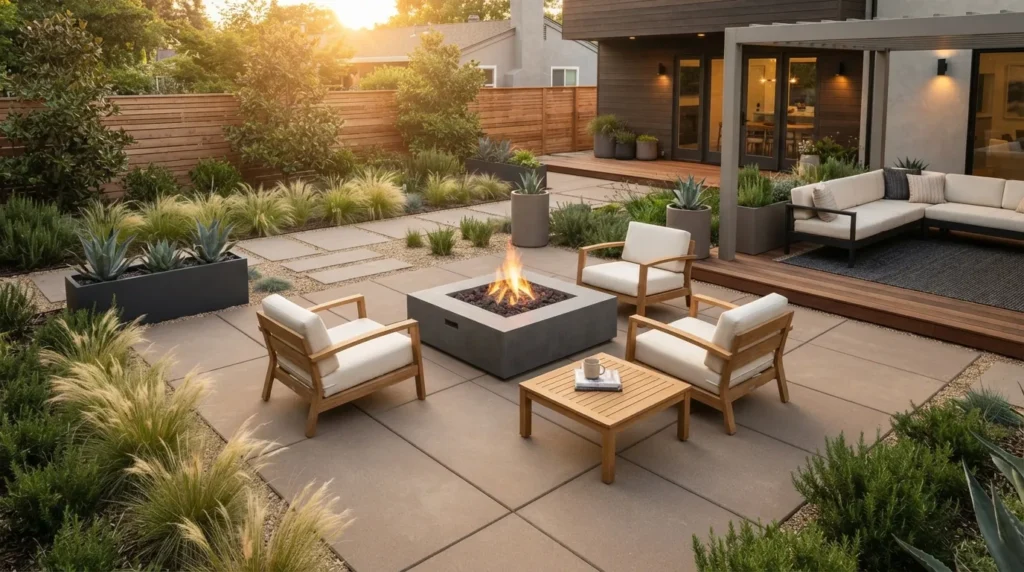
Not every backyard needs a round fire pit. A square or rectangular design can be particularly attractive when the surrounding landscape already uses straight lines.
If your patio consists of rectangular pavers, a geometric fire feature can make the entire backyard feel more cohesive. The repetition of horizontal and vertical lines creates a contemporary appearance without requiring elaborate decoration.
Square designs can also make better use of certain spaces. A rectangular seating arrangement around a square fire feature can align with the shape of a patio or deck, creating a more efficient layout.
However, the fire itself still requires appropriate construction materials. Standard decorative concrete pavers should not automatically be used inside a fire chamber simply because they look attractive.
How To Style It
Use a restrained palette of two or three materials. For example, charcoal-colored fire-pit pavers can work with light gray patio pavers and natural wood furniture.
Keep the geometry simple. A square fire feature surrounded by straight-edged paving can look polished without additional decorative borders.
Add a rectangular outdoor rug where appropriate and safe, keeping combustible materials away from the fire opening and following fire-feature instructions.
For seating, try a pair of outdoor sofas arranged opposite one another or four individual chairs positioned around the perimeter.
Use low planting around the outer edge of the entertaining area rather than directly beside the fire.
3. Gravel Fire Pit
Quick Benefits
- Creates a relaxed garden atmosphere
- Pairs naturally with pavers
- Works well for informal seating
- Can suit different backyard sizes
- Provides a clear noncombustible surrounding zone
Why It Works
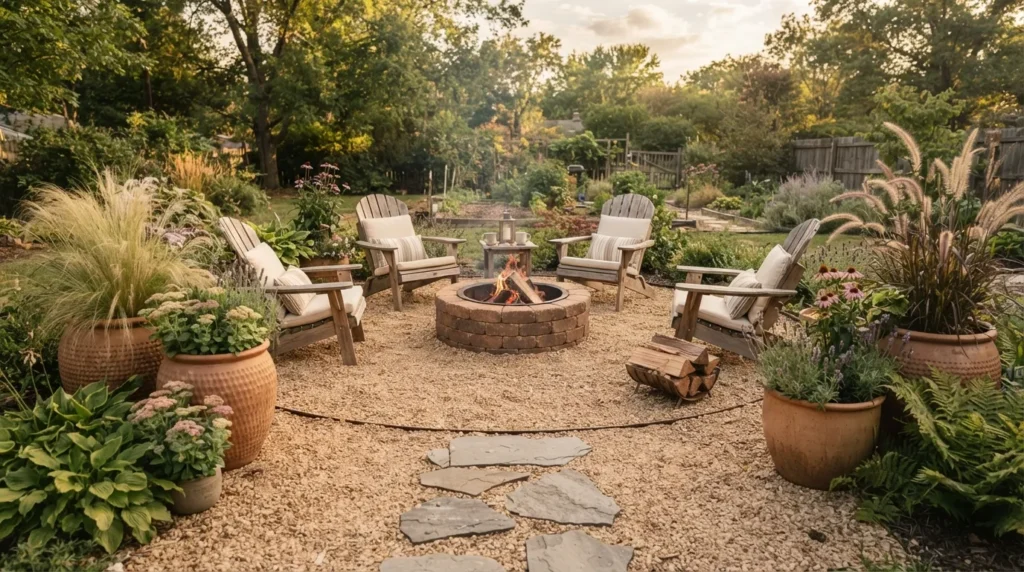
Gravel and pavers make a particularly attractive combination for casual backyard fire-pit spaces. The contrast between the solid geometric pavers and loose stone creates texture without making the design feel overly formal.
This approach can work especially well in cottage, farmhouse, rustic, and naturalistic landscapes.
A gravel fire-pit area also has the advantage of visually separating the fire feature from grass. Instead of placing chairs directly on the lawn, the gravel establishes a dedicated outdoor zone.
Proper preparation is important. Gravel should be installed over an appropriately prepared base, and edging can help keep it from spreading into surrounding lawn or planting beds.
How To Style It
Start with a defined circular or square area of compacted, appropriate gravel. Choose a stone color that complements your home’s exterior and the paver finish.
Place the paver fire feature toward the center and maintain the clearances required by the manufacturer and local regulations.
Surround the area with comfortable outdoor chairs. Natural wood, black metal, or woven furniture can all work depending on the overall design.
Add a few large planters outside the main fire zone. Ornamental grasses, drought-tolerant plants, or shrubs can create a soft garden border where suitable.
A short stepping-stone path can connect the gravel area to the main patio or house.
4. Patio Fire Circle
Quick Benefits
- Integrates the fire feature into an outdoor living area
- Works for entertaining
- Provides a polished finished appearance
- Creates separate activity zones
- Can complement existing patio materials
Why It Works
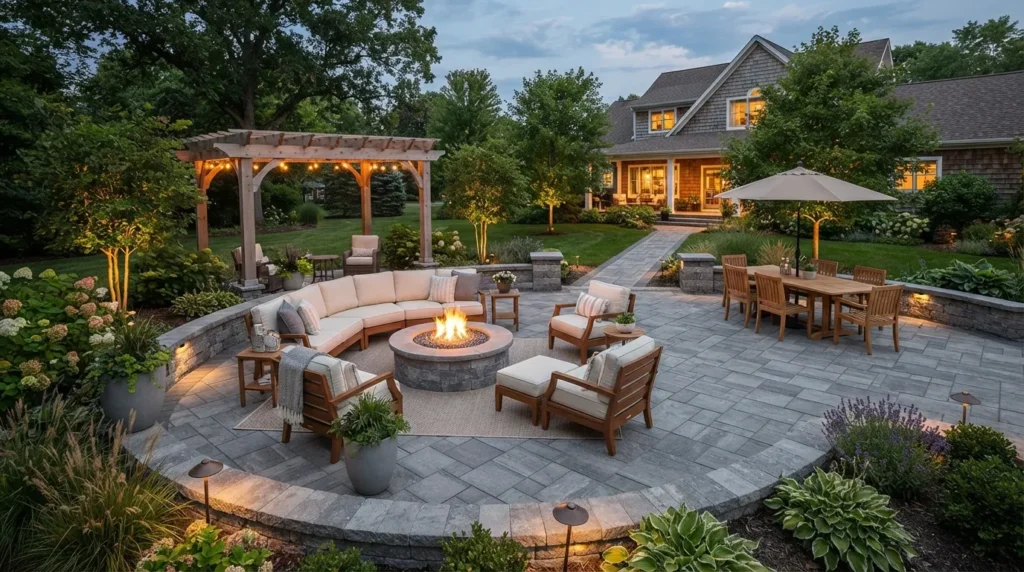
If you already have a paver patio, incorporating a fire feature into the overall design can make the backyard feel much more intentional.
Instead of treating the fire pit as a separate project, think of the patio as the foundation for an outdoor living room. The fire feature becomes one focal point within that larger space.
This approach is particularly useful for homeowners who regularly entertain. One side of the patio can hold a dining table while another area provides lounge seating around the fire.
The key is maintaining enough separation between activities. A crowded patio quickly becomes uncomfortable, particularly when the fire is in use.
How To Style It
Use complementary pavers rather than trying to match every material exactly. A slightly darker paver can help visually distinguish the fire feature from the main patio.
Create a seating zone around the fire while maintaining comfortable walking paths between the fire area, dining space, and house.
Add a low outdoor table for drinks, but keep furniture and other combustible objects at the appropriate distance from the fire.
Use landscaping around the outer perimeter to soften the large paved area.
If the patio is close to the house, carefully follow required clearances and local regulations. A fire feature should never be positioned simply because it looks good in a particular corner.
5. Built-In Seating
Quick Benefits
- Creates a permanent gathering area
- Provides visual structure
- Can accommodate several people
- Reduces the need for individual chairs
- Can complement paver construction
Why It Works
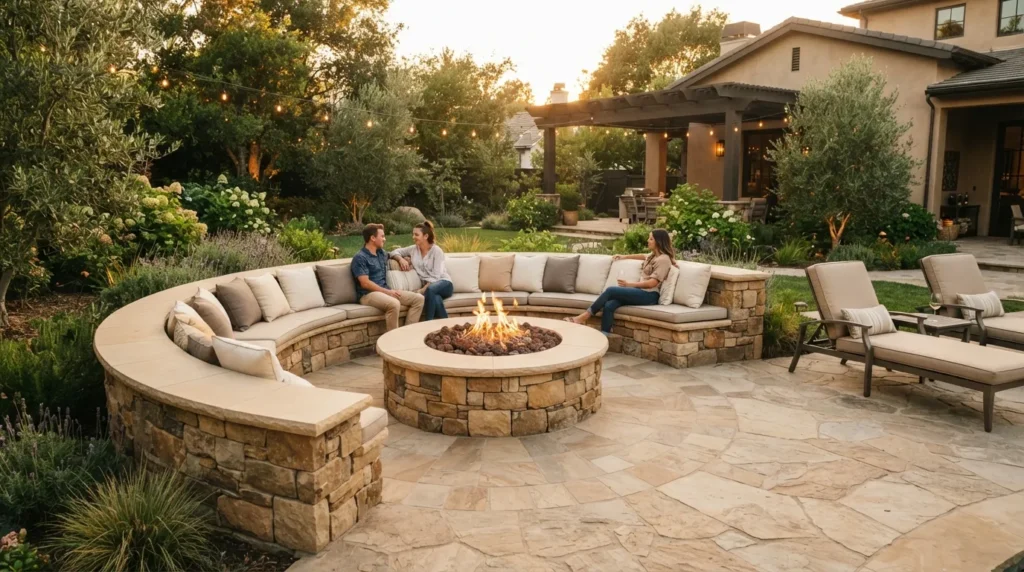
A fire pit naturally encourages people to sit together, so built-in seating can make the area feel like a deliberately designed outdoor room.
Paver walls, masonry benches, or appropriately designed landscape seating can provide a permanent place to gather. However, seating should be designed independently from the fire chamber so that heat exposure and required clearances are properly addressed.
For homeowners who host frequent gatherings, permanent seating can also reduce the amount of furniture that needs to be stored.
The design doesn’t need to be complicated. A straight bench along one side or a pair of low seating walls can create structure while leaving the rest of the area flexible.
How To Style It
Use pavers that coordinate with the fire-pit surround rather than creating too many competing materials.
Add removable outdoor cushions when the fire feature is not in use and store them safely when necessary.
Break up long seating walls with planters or small side tables where appropriate.
If you want more flexibility, combine one built-in bench with movable chairs. This lets you change the seating arrangement depending on the occasion.
Keep combustible cushions, pillows, and other textiles at safe distances from active flames and follow the fire feature’s safety instructions.
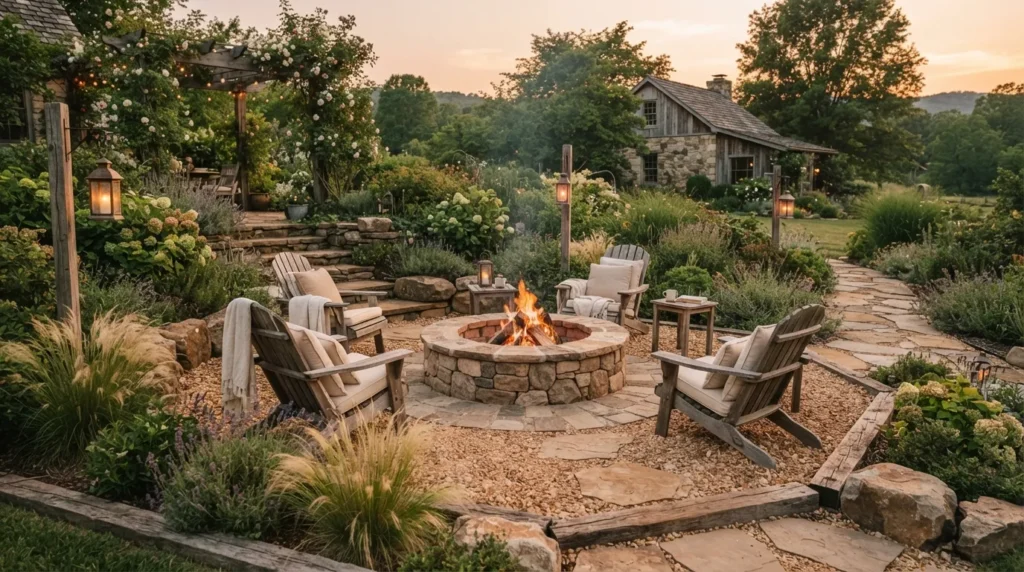
6. Rustic Stone Style
Quick Benefits
- Creates a relaxed outdoor atmosphere
- Works well with natural landscaping
- Adds texture
- Complements wood furniture
- Can feel connected to the garden
Why It Works
Rustic fire pits don’t need to look perfectly symmetrical. Combining textured pavers, natural stone, gravel, and planting can create a backyard that feels relaxed rather than overly constructed.
This style works particularly well for homes with natural wood, brick, stone, or traditional architectural details.
The trick is creating enough structure so the area doesn’t become visually messy. Repeating one stone or paver throughout the fire-pit zone can provide cohesion.
Natural textures also work beautifully with outdoor furniture. Wood, woven materials, canvas, and simple metal finishes can make the space feel comfortable and approachable.
How To Style It
Choose pavers with natural variation rather than highly polished finishes.
Pair them with warm-toned gravel and natural wood seating.
Plant ornamental grasses and hardy shrubs around the outer perimeter where appropriate. Avoid dry vegetation immediately beside the fire area.
A simple timber-style bench can provide additional seating, provided it is positioned at a safe distance from the fire.
Use low-level landscape lighting along the approach to the fire pit rather than installing extremely bright fixtures around the entire area.
The finished space should feel like a natural extension of the garden.
7. Modern Fire Feature
Quick Benefits
- Creates a clean visual focal point
- Complements contemporary homes
- Uses simple shapes
- Works with limited planting
- Can make a small patio feel organized
Why It Works
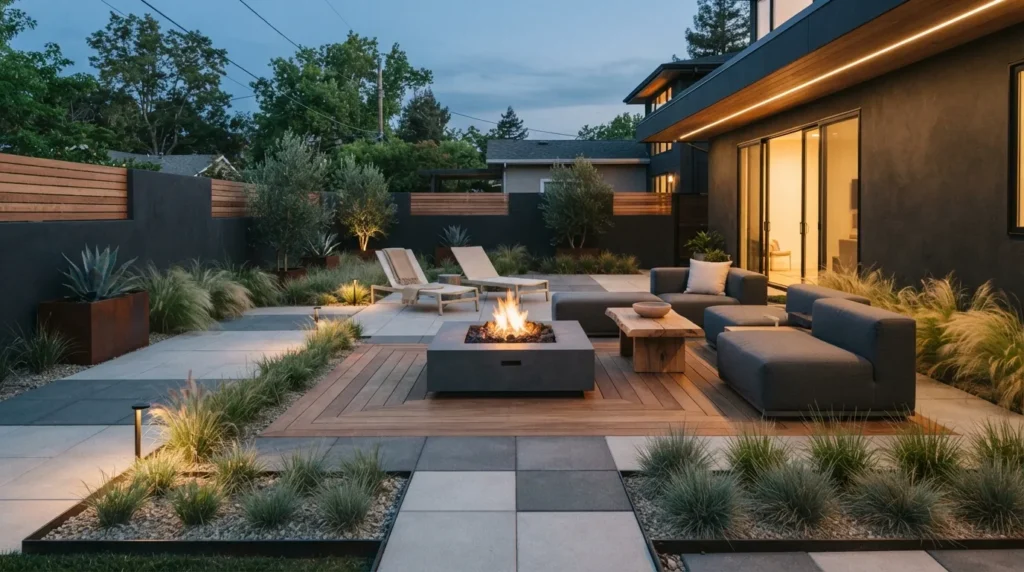
Modern backyard design often relies on restraint. Instead of combining numerous materials, a contemporary fire-pit area can use a simple palette of pavers, concrete, metal, wood, and greenery.
A geometric paver surround creates a strong foundation for this style. Dark charcoal, gray, cream, or warm taupe pavers can provide a neutral backdrop for simple outdoor furniture.
The surrounding landscape should support the geometry rather than compete with it. Repeated grasses, clipped shrubs, or architectural plants can create a clean appearance.
Modern doesn’t have to mean cold. Adding natural wood, textured cushions, and warm lighting can keep the space comfortable.
How To Style It
Choose one dominant paver color and repeat it in another hardscape area if possible.
Use simple outdoor furniture with clean lines. A low-profile sofa and two chairs can create an uncluttered seating arrangement.
Limit decorative accessories to a few purposeful pieces.
Use warm lighting to soften the geometry after sunset.
For landscaping, repeat two or three plant varieties rather than using a large collection of different species.
The result should feel calm and deliberate rather than overly decorated.
8. Sunken Fire Pit
Quick Benefits
- Creates an intimate atmosphere
- Visually separates the fire area
- Can feel like a dedicated outdoor room
- Works well for entertaining
- Creates a strong landscape focal point
Why It Works
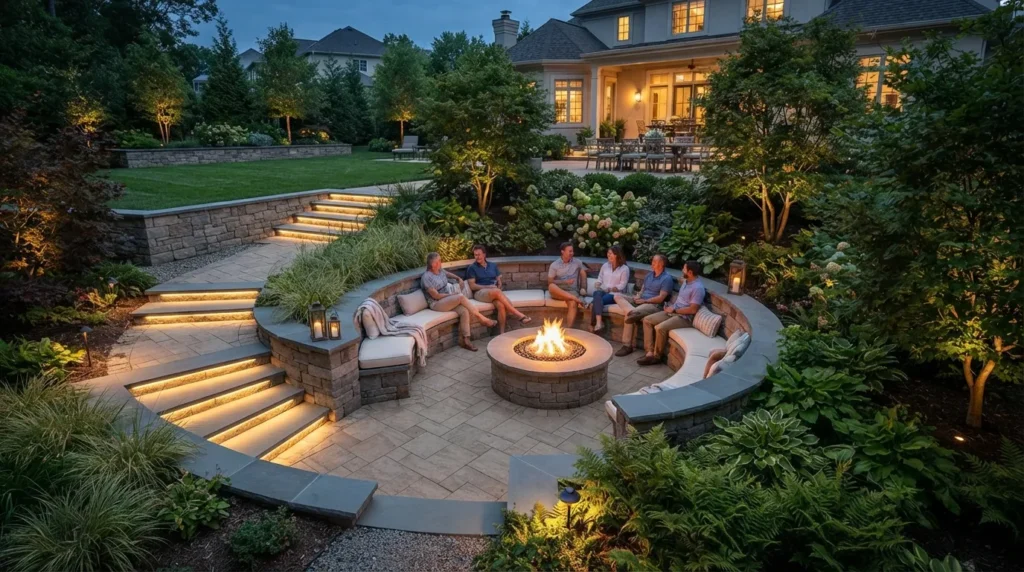
A recessed fire-pit area can create a dramatic sense of separation between the main lawn or patio and the gathering space.
Instead of simply placing furniture around a fire feature, the lowered area becomes an outdoor room. Seating can follow the perimeter, while the fire feature occupies the center.
This concept requires more planning than a simple surface-level fire pit. Excavation, drainage, retaining structures, access, and local construction requirements all need to be considered.
Water management is particularly important. A recessed area can collect water if the site isn’t properly designed.
For that reason, a sunken fire pit is better approached as a landscape construction project rather than an improvised weekend excavation.
How To Style It
Use pavers or appropriate masonry materials to create the retaining walls and surrounding surface according to a suitable design.
Keep the seating comfortable but allow enough space for safe movement.
A broad stairway can connect the lower fire area to the surrounding patio or lawn.
Use low planting around the upper perimeter to soften the transition.
Avoid placing tall plants or combustible structures directly around the fire feature.
When excavation or retaining walls are involved, professional assistance may be appropriate, especially where drainage, structural stability, utilities, or significant grade changes are involved.
9. Garden Fire Retreat
Quick Benefits
- Blends the fire pit into the landscape
- Creates a private feeling
- Adds natural color and texture
- Works with cottage-style yards
- Encourages evening relaxation
Why It Works
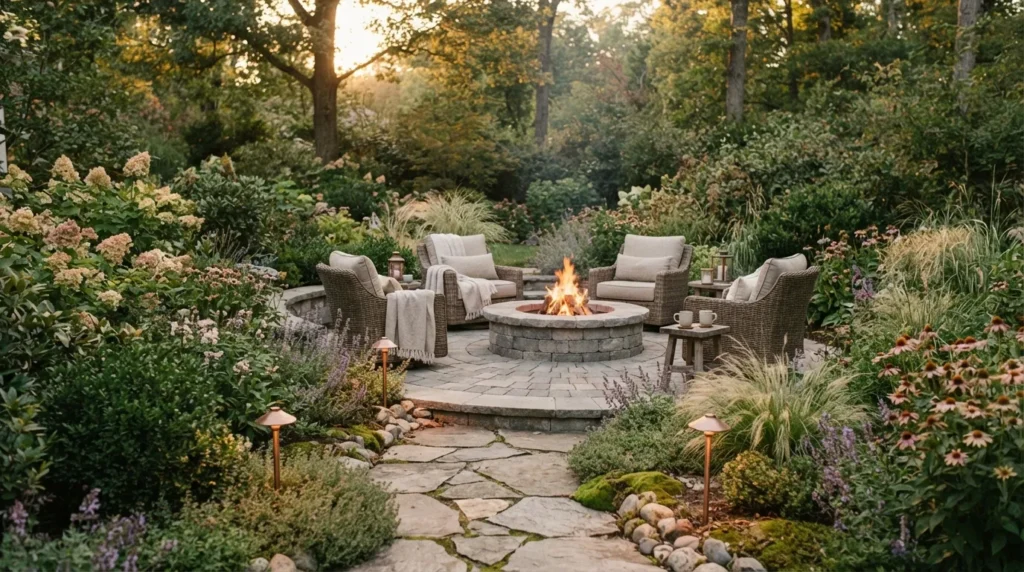
A fire pit doesn’t have to dominate the backyard. Nestling the gathering area within thoughtfully designed landscaping can make it feel like a hidden garden retreat.
The most effective garden fire-pit spaces use plants around the outer boundary rather than crowding the fire itself. This creates a sense of enclosure while keeping the immediate fire area clear.
The combination of pavers and greenery is especially attractive because the hardscape provides structure while plants soften the visual edges.
This approach works particularly well in larger yards where the fire pit can become a destination away from the main house.
How To Style It
Create a simple paver walkway leading from the house or main patio to the fire area.
Surround the seating zone with layered planting at a safe distance. Use evergreen shrubs for structure, ornamental grasses for movement, and flowering plants for seasonal interest where appropriate.
Choose comfortable chairs with natural textures and neutral cushions.
Add subtle pathway lighting so the route remains easy to navigate after dark.
If the fire pit is intended to be used regularly, keep a clear access route and enough open space around the seating area.
The goal is to make the fire area feel tucked into the garden without compromising visibility or safety.
10. Entertaining Fire Zone
Quick Benefits
- Supports larger gatherings
- Combines multiple outdoor activities
- Creates a flexible backyard layout
- Makes the patio more functional
- Encourages outdoor entertaining
Why It Works
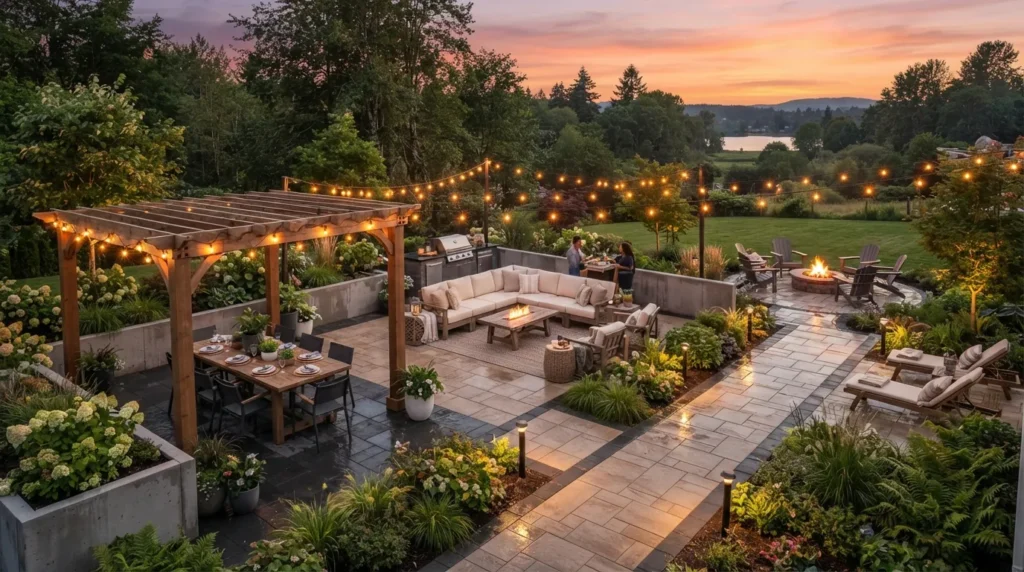
If your backyard is regularly used for parties, family gatherings, or weekend dinners, a fire pit can become one part of a larger outdoor entertaining zone.
Rather than building the entire design around the fire, create several connected areas. A dining table can sit near the house, a lounge area can occupy the central patio, and the fire pit can anchor a separate conversation zone.
Pavers are useful here because they can visually connect different areas while still defining individual spaces.
Good circulation is essential. Guests should be able to move from the house to the dining area, seating, and fire pit without crossing directly through the main conversation space.
How To Style It
Begin with the largest activity zone and work outward.
Place dining furniture near the kitchen or back door for convenient serving. Use comfortable lounge seating in a central location, then position the fire feature farther away where appropriate.
Use matching or complementary pavers across the different zones to create visual continuity.
Outdoor planters can separate areas without creating solid barriers.
For evening gatherings, layer lighting across pathways, dining areas, seating, and landscaping.
Keep the fire area uncluttered and ensure that chairs, decorations, cushions, and other combustible items remain at the distances specified by the fire-feature manufacturer and local regulations.
Related Articles
- Backyard Landscaping Ideas for a Beautiful Outdoor Retreat
- Cozy Patio Ideas for Small and Large Backyards
- DIY Outdoor Seating Ideas for Comfortable Backyard Gatherings
- Backyard Fire Pit Landscaping Ideas for Every Style
- Outdoor Lighting Ideas for a Cozy Backyard
- Small Backyard Ideas for Creating More Outdoor Living Space
Frequently Asked Questions
Can I use regular pavers to build a fire pit?
Not necessarily. Ordinary landscaping pavers are not automatically designed for direct, repeated exposure to high temperatures. Some can crack, spall, or deteriorate when exposed to intense heat. Choose products specifically recommended or rated for fire-pit applications, and follow the manufacturer’s installation instructions. Never assume that a decorative paver is fire-safe simply because it is made from concrete or stone.
What should I put under a paver fire pit?
A fire pit needs a stable, level, appropriately prepared noncombustible base. The exact construction depends on the fire-pit design, site conditions, and manufacturer’s instructions. Gravel, compacted aggregate, concrete, or other suitable materials may be appropriate for different installations. Proper drainage and stability are important, particularly outdoors where freeze-thaw cycles or heavy rainfall may affect the ground.
How far should a DIY fire pit be from a house?
There isn’t one universal distance that applies to every fire pit. Required clearances depend on the fire-pit type, fuel source, local regulations, manufacturer instructions, and surrounding materials. Check your local fire code and the specific product requirements before installation. Keep the fire feature away from combustible structures, fences, trees, and other hazards, and don’t rely on a general internet measurement as a substitute for local requirements.
Are pavers good for a DIY fire pit?
Pavers can be useful for the surrounding structure and landscape area when the selected materials are appropriate for the application. However, not all pavers are designed for high heat. Products specifically intended for fire-pit construction are the safer choice. The fire chamber, outer surround, foundation, drainage, and surrounding clearances should all be considered as part of the complete design.
Can I put a fire pit directly on grass?
A fire pit should not simply be placed directly on grass and treated as a permanent installation. Grass and surrounding vegetation are combustible, and uneven ground can create stability issues. A properly prepared noncombustible area provides a safer and more practical foundation. Follow the fire-pit manufacturer’s instructions and local regulations for the required surface and clearances.
How can I make a paver fire pit look more expensive?
Focus on the entire setting rather than adding excessive decoration. Use a coordinated paver palette, comfortable outdoor seating, attractive landscaping, and layered lighting. Repeating materials between the fire pit and surrounding patio can make the project feel more cohesive. Keeping the design simple and allowing enough open space around the fire feature often creates a more polished appearance.
Is a DIY paver fire pit safe?
Safety depends on the materials, construction, location, fuel source, and how the fire pit is operated. A DIY project should only use materials suitable for the application and follow manufacturer instructions and local requirements. If the design involves significant excavation, retaining walls, gas connections, electrical work, or complex masonry, professional assistance may be appropriate. Always supervise an active fire and follow local fire-safety rules.
Conclusion
A paver fire pit can become a beautiful focal point for a backyard, but the best projects begin with safety and practical planning rather than appearance alone.
Start by choosing the right location and checking local regulations. Then select materials specifically appropriate for the fire-pit application and create a stable, noncombustible foundation. Once those fundamentals are addressed, you can focus on the fun part: deciding how the fire feature should fit into the landscape.
A classic circular design works beautifully for relaxed conversations, while square paver layouts can complement modern patios. Gravel can create a casual garden retreat, built-in seating can accommodate gatherings, and carefully planned landscaping can make the entire area feel like a natural extension of the backyard.
You don’t have to complete an elaborate outdoor renovation all at once. A simple fire feature, comfortable seating, and thoughtfully placed pavers can be enough to create a useful gathering space.
The most successful design is the one that fits your backyard, your lifestyle, and the way you actually spend time outdoors. Start with a safe foundation, keep the layout comfortable, and let the surrounding landscaping provide the warmth and character.