
10 DIY Coffee Tables That Save You Hundreds
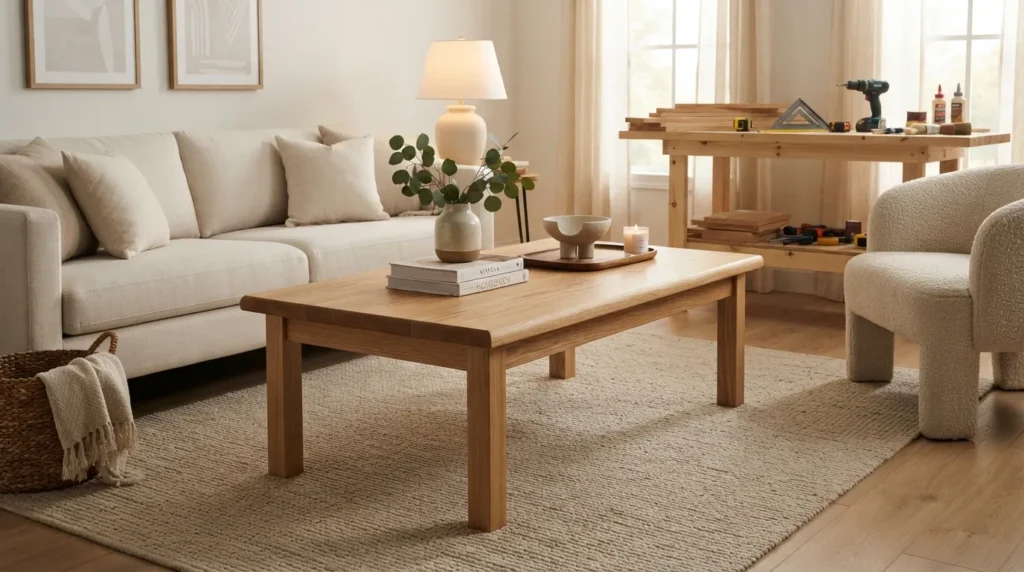
A coffee table can completely change the way a living room feels, but buying a beautiful one can get surprisingly expensive. Between solid wood construction, metal details, storage features, and designer-inspired finishes, even a relatively simple coffee table can cost hundreds of dollars.
That is exactly why DIY coffee tables are worth considering.
With the right materials, a straightforward design, and a little patience, you can create a table that looks intentional rather than homemade. The biggest advantage is flexibility: you can choose the exact dimensions, finish, wood tone, storage style, and shape to suit your living room.
I’ve found that the best DIY furniture projects aren’t necessarily the most complicated ones. A simple wood frame with carefully finished boards can look far more expensive than a project overloaded with decorative details. Good proportions, clean edges, and a finish that complements the rest of the room often make the biggest difference.
Before starting, think about how you actually use your coffee table. Do you need storage for blankets and remotes? Is your living room small? Do you prefer a rustic farmhouse look, modern minimalism, or something warmer and more traditional? Those answers can help you choose a project that looks good and works well for everyday life.
These 10 DIY coffee table ideas cover a range of styles and skill levels, from simple crate-inspired designs to more substantial wood tables. Some can be adapted from affordable materials you may already have, while others are better suited to a planned weekend woodworking project.
If you’re furnishing a living room on a budget, these ideas can help you create a custom-looking centerpiece without paying designer furniture prices.
Table of Contents
1. Simple Wood Slab
Create a timeless coffee table with a substantial wooden top and simple legs.
2. Rustic Crate Table
Turn wooden crates into a practical coffee table with built-in storage.
3. Hairpin Leg Table
Combine a simple wood top with metal hairpin legs for an industrial look.
4. Farmhouse Plank Table
Build a classic plank-style table with warm wood and sturdy construction.
5. Storage Drawer Table
Add concealed storage for living-room essentials without sacrificing style.
6. Round Pedestal Table
Use a circular top and central base to soften a rectangular seating arrangement.
7. Reclaimed Wood Table
Give salvaged boards a new purpose with a character-rich custom table.
8. Minimalist Slat Table
Create a contemporary piece using clean lines and evenly spaced wood slats.
9. Lift-Top Table
Combine coffee-table styling with a practical work or dining surface.
10. Concrete and Wood
Mix contrasting materials for a modern statement piece with plenty of character.
1. Simple Wood Slab
Quick Benefits
- Easy to customize
- Works with many decorating styles
- Requires relatively few materials
- Can be stained or painted
- Creates an expensive-looking silhouette
Why It Works
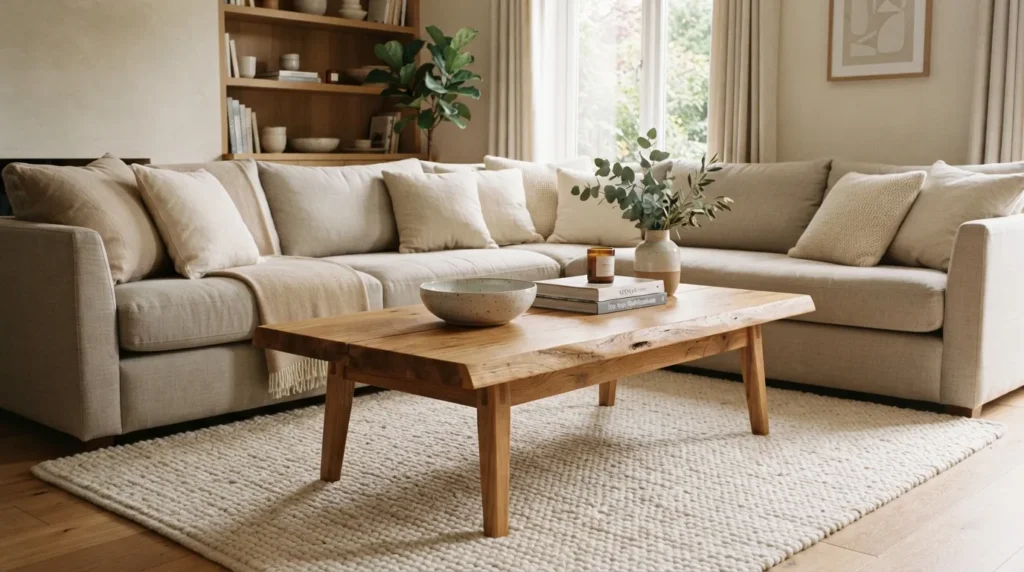
Sometimes the simplest furniture designs are the most convincing. A substantial wood tabletop supported by four carefully positioned legs creates a clean, timeless coffee table that can work in farmhouse, transitional, Scandinavian, or modern interiors.
The beauty of this project comes from proportion rather than complicated construction. A thick-looking top paired with sturdy legs immediately gives the piece visual weight.
You also have complete control over the finish. A light natural stain can emphasize the wood grain, while a medium walnut tone can make the table feel richer and more traditional.
If you’re new to furniture building, this is a useful project because the basic concept is straightforward. You still need accurate measurements, secure joinery, and proper sanding, but you don’t have to create complex curves or mechanisms.
How To Style It
Start with a properly dried and dimensionally suitable wood board or a panel designed for furniture use. Select legs that are strong enough for the tabletop and everyday use.
Sand every surface thoroughly, paying particular attention to exposed edges. A slightly softened edge can make the finished piece feel more professionally made.
Choose a finish that complements your living room flooring and other wood furniture. You don’t necessarily need an exact match; coordinating undertones often look more natural.
Keep the tabletop styling simple. A low ceramic bowl, a stack of books, a small plant, and one decorative object can be enough.
Add felt pads beneath the legs to protect flooring and make the table easier to move.
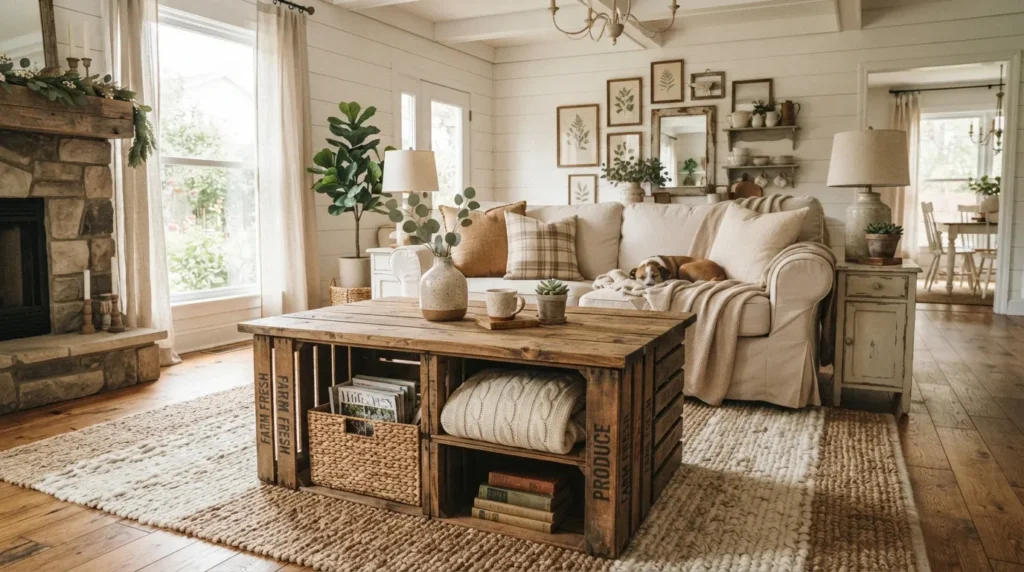
2. Rustic Crate Table
Quick Benefits
- Provides built-in storage
- Uses inexpensive materials
- Works well in casual rooms
- Can be customized easily
- Offers both display and hidden storage
Why It Works
Wooden crates are a classic DIY material because they provide structure without requiring you to build every component from scratch.
When arranged correctly, crates can form the base of a coffee table while creating useful compartments for books, blankets, magazines, games, or baskets.
This style is especially appealing in relaxed farmhouse, rustic, cottage, or casual living rooms. The open storage can also make a small space more functional because everyday items have a designated place.
The biggest challenge is making the final piece look intentional rather than like several crates simply placed together. Consistent finishing and a sturdy tabletop can make all the difference.
How To Style It
Choose sturdy crates with similar dimensions and inspect them carefully for damaged boards, loose nails, or rough edges.
Sand the crates before assembly and remove splinters from every surface that people may touch.
You can leave the wood natural, stain it, or paint it depending on your room.
Secure the crates together rather than relying on their weight alone. Add a properly supported tabletop above the base and ensure the entire structure is stable before use.
Use the open compartments for baskets, books, or folded throws.
If the crates have a particularly rustic appearance, balance them with a cleaner tabletop and simple contemporary accessories.
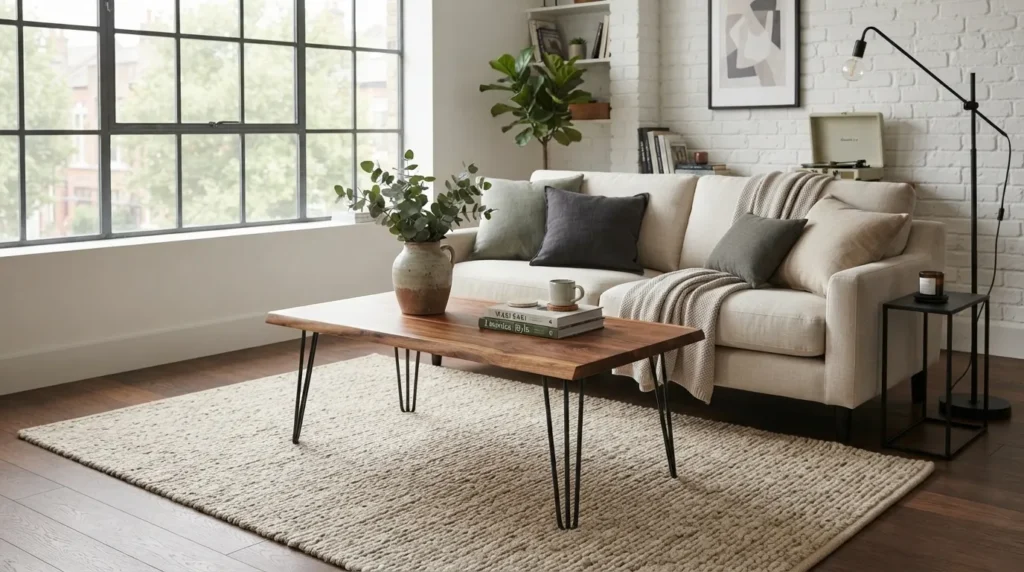
3. Hairpin Leg Table
Quick Benefits
- Creates an industrial look
- Requires a simple tabletop
- Uses minimal visual space
- Works well in smaller rooms
- Easy to customize
Why It Works
Hairpin legs are one of the easiest ways to give a basic wooden top a completely different personality.
Their thin metal profile keeps the table visually light, which can be particularly useful in smaller living rooms where bulky furniture can make the space feel crowded.
The combination of warm wood and dark metal also creates a versatile contrast. It can work in industrial, modern farmhouse, eclectic, and contemporary interiors.
Because the legs are visually simple, the tabletop becomes the main feature. That makes wood selection and finishing especially important.
How To Style It
Choose a sturdy tabletop with a straight, clean profile. A medium-toned walnut stain can create a sophisticated appearance, while natural oak tones feel lighter and more casual.
Position the hairpin legs evenly and use appropriate fasteners for the tabletop material.
Check the table for wobbling after installation. Small leveling adjustments can make a significant difference.
For styling, pair the table with a neutral rug, simple sofa, and a few black metal accents to repeat the leg finish.
A low-profile coffee table book and ceramic tray can add interest without covering too much of the wood surface.
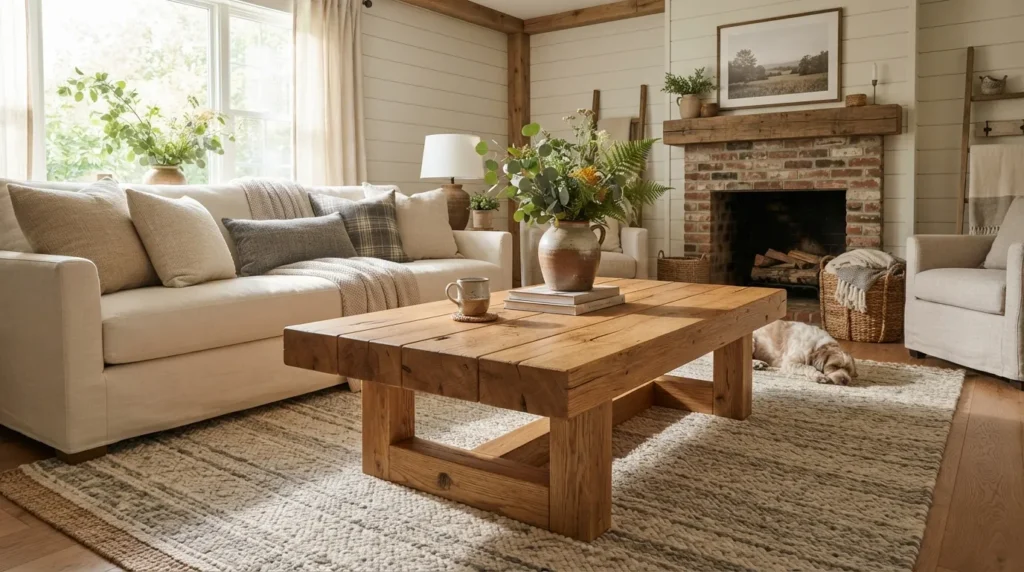
4. Farmhouse Plank Table
Quick Benefits
- Offers a substantial appearance
- Works with casual interiors
- Provides plenty of tabletop space
- Can be built in different sizes
- Pairs naturally with wood furniture
Why It Works
A farmhouse plank coffee table can become the visual anchor of a comfortable living room. The individual boards give the tabletop texture, while a substantial base makes the piece feel sturdy and substantial.
This style works especially well when the rest of the room already includes natural materials. It can coordinate with wood flooring, woven baskets, linen upholstery, and neutral textiles.
The important thing is avoiding excessive distressing. A few natural variations in the wood can create character without making the table look artificially aged.
How To Style It
Use several furniture-grade boards to create the top, making sure they are properly aligned and securely joined.
A simple apron and sturdy legs can provide the traditional farmhouse structure.
Choose a finish that emphasizes the natural grain rather than completely hiding it.
If the tabletop is visually heavy, keep the accessories relatively low and simple.
A large woven tray can organize remotes and smaller objects while maintaining the relaxed farmhouse look.
Pair the table with an area rug that provides enough contrast to distinguish the wood from the flooring.
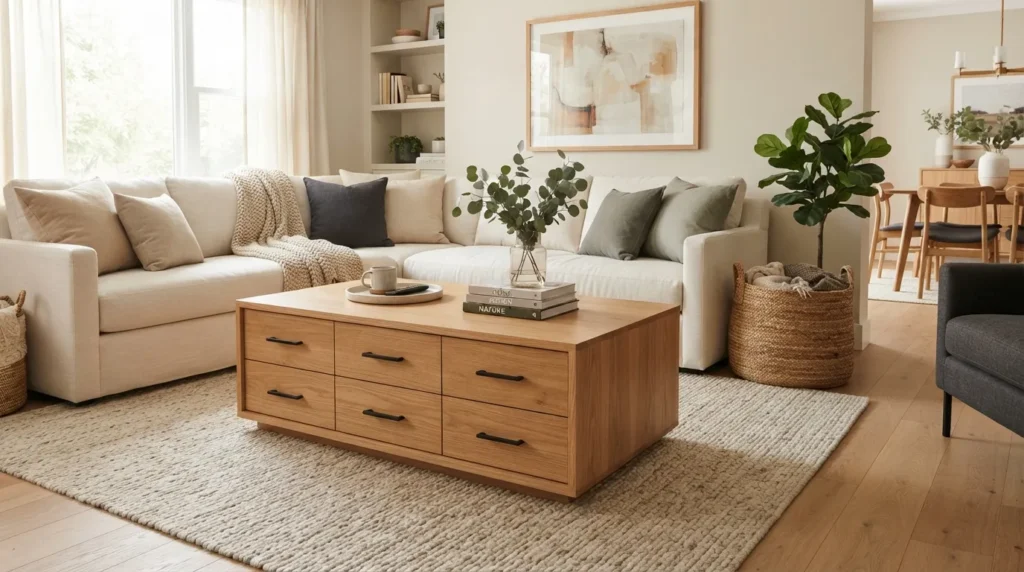
5. Storage Drawer Table
Quick Benefits
- Hides clutter
- Adds practical storage
- Works well for families
- Keeps the tabletop organized
- Can look like high-end furniture
Why It Works
A coffee table with drawers can be especially useful in a busy living room. Instead of leaving remotes, chargers, children’s items, and small electronics on the tabletop, you can tuck them away.
This design requires more woodworking skill than a basic four-leg table, but the added functionality can make the effort worthwhile.
The key is making the storage mechanism reliable. Drawers need proper support, adequate clearance, and hardware that can handle repeated use.
A simple rectangular exterior can keep the design approachable even when the interior construction is more involved.
How To Style It
Keep the outside silhouette clean and let the drawer fronts blend into the overall design.
Choose simple hardware if you want a traditional appearance. Minimal pulls or integrated handles can make the table feel more contemporary.
Use the drawers for practical items rather than decorative storage.
A tray on top can create another layer of organization.
If you’re working with a small living room, consider a table with drawers instead of adding another storage cabinet. One multifunctional piece can reduce visual clutter.
6. Round Pedestal Table
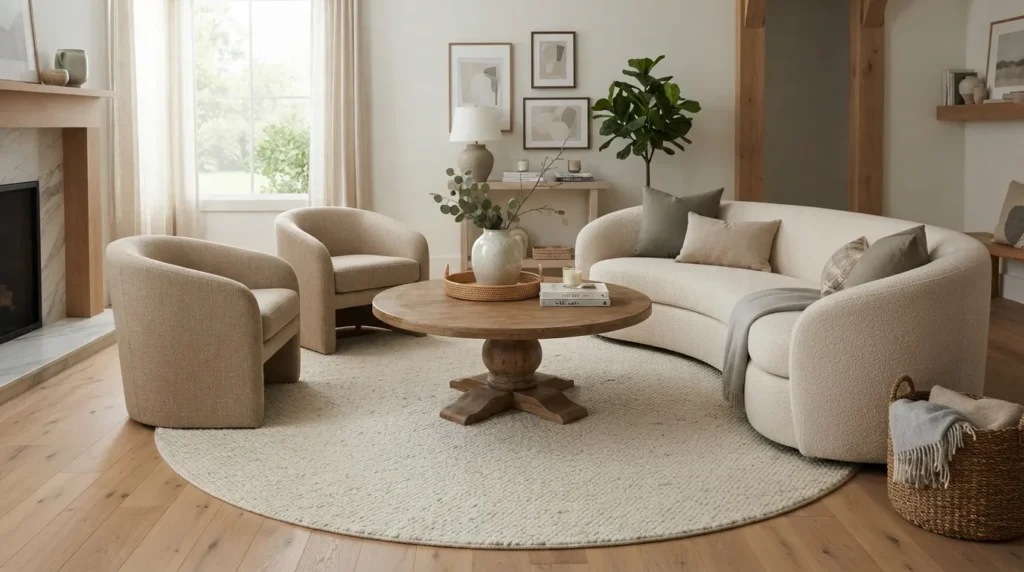
Quick Benefits
- Softens angular furniture
- Works well in conversation areas
- Eliminates sharp corners
- Creates a sculptural focal point
- Fits many decorating styles
Why It Works
A round coffee table can make a living room feel more relaxed because its curved shape contrasts with sofas, chairs, walls, and rectangular rugs.
This can be particularly useful in rooms where most of the furniture consists of straight lines.
A pedestal base also gives the table a distinctive appearance without requiring multiple legs.
For homes with children or narrow walkways, a round shape can be practical because it eliminates exposed corners, although the overall table still needs to be positioned safely.
How To Style It
Use a circular wood tabletop with a strong, stable pedestal base designed to support it properly.
Keep the base proportionate to the top. A large tabletop paired with a narrow base can become unstable.
Paint the pedestal for a modern appearance or stain the entire piece for a traditional wood look.
A round tray can echo the shape of the tabletop while keeping small accessories organized.
Leave enough open surface for everyday use. Coffee tables are furniture, not just decorative platforms.
7. Reclaimed Wood Table
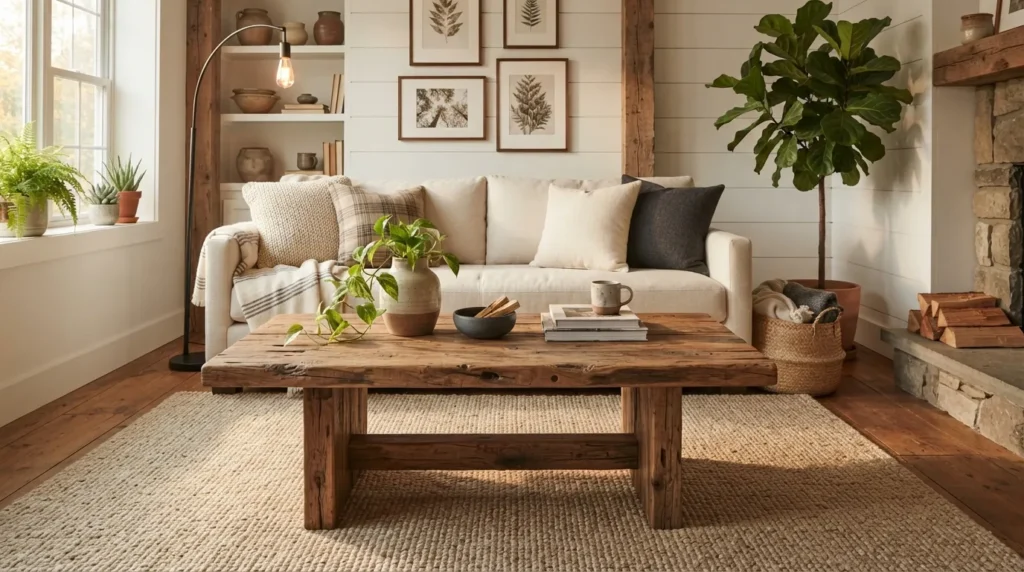
Quick Benefits
- Adds natural character
- Creates a one-of-a-kind appearance
- Works with rustic interiors
- Gives old materials new life
- Can highlight beautiful wood grain
Why It Works
Reclaimed wood brings something manufactured materials can’t easily replicate: variation.
Old boards may contain knots, weathering, nail holes, color changes, and subtle imperfections that make each piece unique. That character can give a simple coffee table a strong visual presence.
However, reclaimed wood requires careful preparation. It should be inspected, cleaned, properly de-nailed, and sanded before being used for furniture. The source and condition of the wood also matter.
Not every old board is suitable for indoor furniture, so choose reclaimed lumber carefully.
How To Style It
Keep the surrounding room relatively simple so the wood remains the focal point.
Pair the table with linen upholstery, neutral rugs, woven baskets, and simple ceramic accessories.
Avoid adding too many distressed pieces. One reclaimed table can provide enough rustic character without turning the entire room into a themed space.
A clear protective finish can preserve the appearance while making the surface easier to clean.
For a more modern interpretation, combine the reclaimed tabletop with sleek black metal legs.
8. Minimalist Slat Table
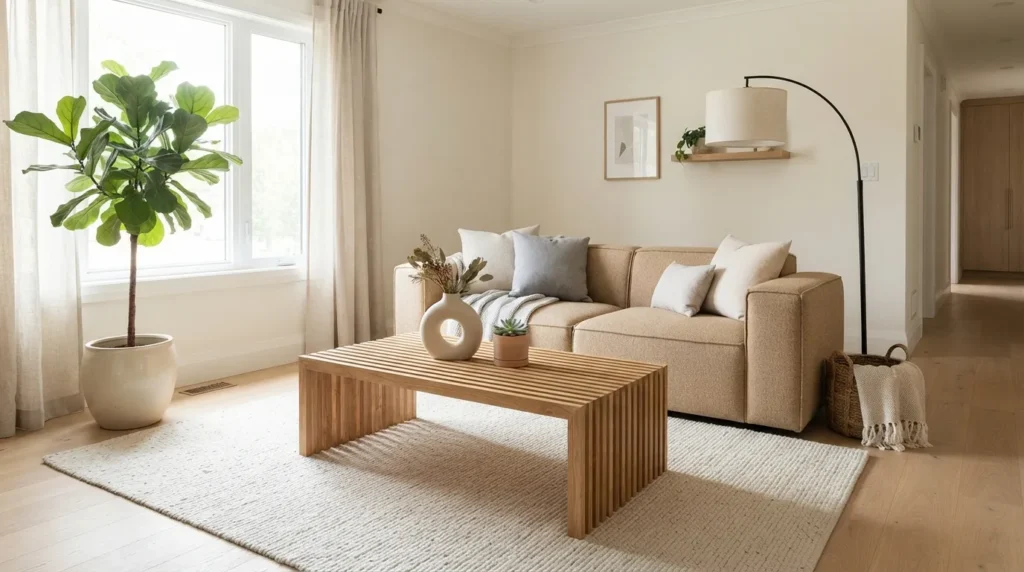
Quick Benefits
- Creates a contemporary look
- Adds subtle texture
- Keeps the silhouette simple
- Works with modern interiors
- Can be customized to different sizes
Why It Works
A slatted tabletop or base can create visual interest without adding ornate details.
The repeated lines of the wood create rhythm, while the overall shape remains clean. This makes the design especially attractive in modern, Scandinavian, or minimalist living rooms.
Spacing is important. Uneven gaps can make the table look unfinished, while consistent spacing creates a more professional appearance.
This is one of those projects where careful measuring matters more than complicated woodworking techniques.
How To Style It
Use straight, consistent boards and take time to measure the spacing before final assembly.
A pale natural wood finish can emphasize the Scandinavian character, while a deeper stain can make the design feel more sophisticated.
Pair the table with a neutral sofa, textured area rug, and simple black or brass lighting.
Keep accessories restrained. A single sculptural vase or a small stack of books can complement the linear design.
If your living room already contains many patterns, let the table remain visually quiet.
9. Lift-Top Table
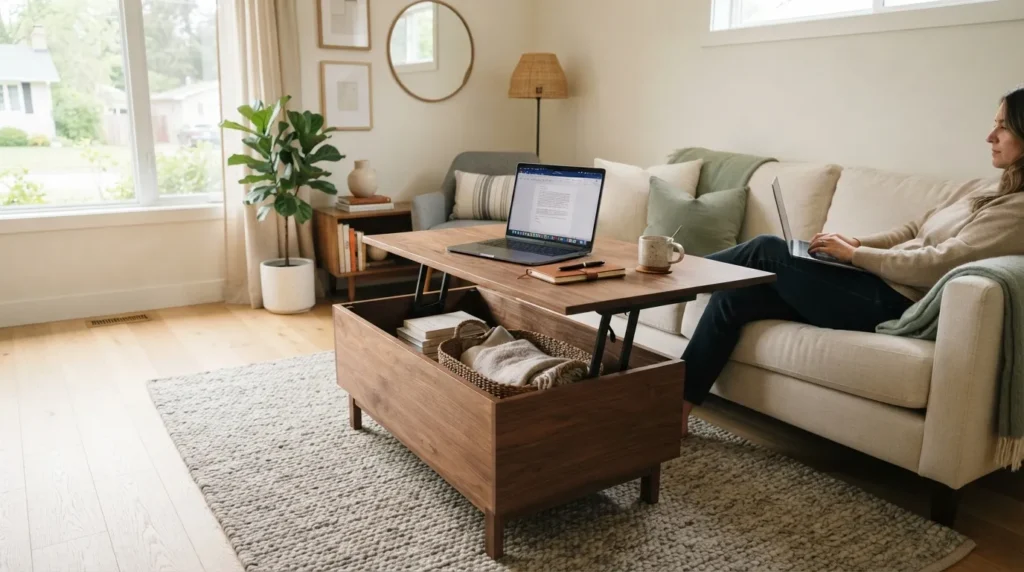
Quick Benefits
- Adds hidden storage
- Creates a raised work surface
- Works for small homes
- Supports flexible living
- Combines multiple functions
Why It Works
A lift-top coffee table can be incredibly useful in homes where one room serves several purposes.
The tabletop can rise to provide a more comfortable surface for working, eating, writing, or using a laptop. When closed, it functions like a traditional coffee table.
This design is more mechanically involved than a simple table because the lift mechanism needs to operate smoothly and support the top securely.
It is worth investing in quality hardware and carefully following the manufacturer’s installation instructions.
How To Style It
Choose a simple exterior design so the mechanism doesn’t dominate the appearance.
Use the interior storage compartment for blankets, electronics, books, or other living-room essentials.
When closed, style the top like a normal coffee table with a tray and a few decorative objects.
Make sure the lift mechanism has enough clearance to open fully without hitting the sofa or nearby furniture.
For small apartments, this type of table can be especially practical because one piece serves several functions.
10. Concrete and Wood
Quick Benefits
- Creates a modern statement
- Mixes warm and cool materials
- Provides strong visual contrast
- Works with industrial interiors
- Looks highly customized
Why It Works
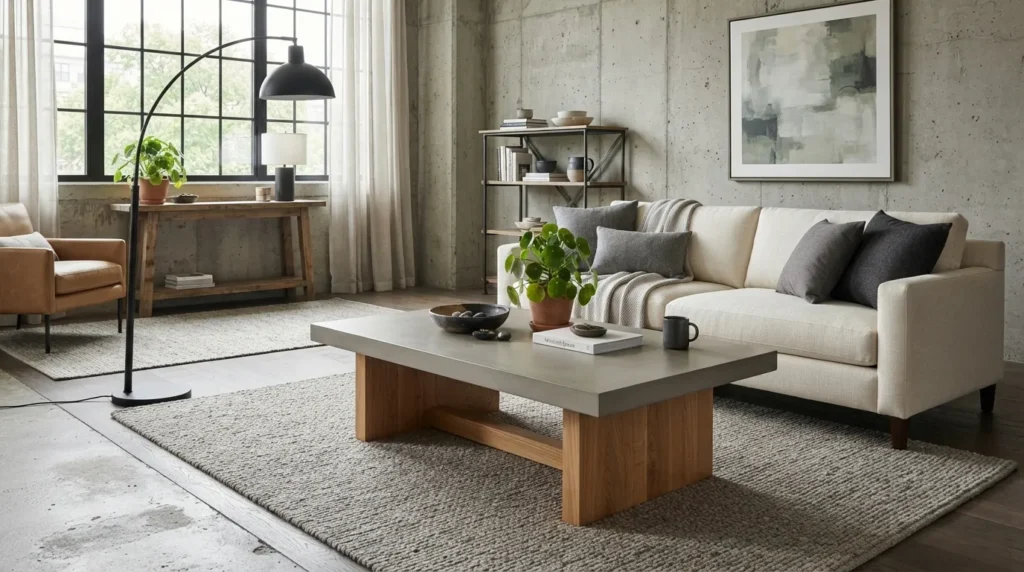
The combination of wood and concrete creates an appealing contrast between organic warmth and architectural simplicity.
A wood base can soften a concrete-inspired top, while the gray surface provides a neutral foundation for colorful or textured accessories.
For a DIY project, lightweight concrete or a suitable concrete-look material may be easier to handle than a very heavy solid concrete slab. The finished weight and structural requirements should always be considered before construction.
This design works particularly well in modern industrial, minimalist, and contemporary living rooms.
How To Style It
Use a simple wooden base with clean lines and a properly supported concrete or concrete-look tabletop.
Choose a warm wood finish to prevent the room from feeling too cold.
Pair the table with a textured rug and upholstered sofa to soften the harder materials.
Black metal lighting can repeat the industrial character, while greenery can introduce a natural element.
Keep the tabletop styling minimal. A wooden tray, ceramic bowl, or small plant can provide enough contrast against the concrete surface.
Related Articles
- DIY Living Room Decor Ideas on a Budget
- Small Living Room Ideas That Maximize Space
- How to Make a Living Room Look More Expensive
- DIY Home Decor Projects for Beginners
- Coffee Table Styling Ideas for Every Living Room
Frequently Asked Questions
Is it cheaper to build your own coffee table?
It can be, particularly when you choose a straightforward design and source materials carefully. The final cost depends on lumber, hardware, finishes, tools, and whether you already own the equipment required. DIY isn’t automatically cheaper, but it gives you control over materials and dimensions and can provide a custom piece for less than comparable handmade furniture.
What is the easiest DIY coffee table to make?
A basic wood tabletop with four pre-made legs is among the most approachable designs. A crate-style table can also be relatively simple because the crates provide much of the structure. Beginners should prioritize stable construction, accurate measurements, proper sanding, and appropriate fasteners rather than choosing a complicated design.
What wood is best for a DIY coffee table?
Suitable wood depends on your budget, desired appearance, and construction method. Pine can be an affordable option for painted or rustic projects, while oak, maple, and other hardwoods can provide greater durability and a more refined appearance. Choose properly dried, furniture-suitable lumber and consider how the wood will react to the finish you plan to use.
How do I make a DIY coffee table look expensive?
Focus on proportions and finishing. Straight, properly aligned boards, smooth edges, consistent joints, and a professional-looking finish can make a simple design appear much more polished. Avoid overdecorating the finished table. A restrained combination of quality-looking materials and simple accessories often creates a more sophisticated result.
What height should a coffee table be?
A coffee table is generally most comfortable when its height is close to the seat height of the surrounding sofa and chairs, although the ideal dimension depends on the furniture and how you use the table. Measure your seating before building rather than choosing a height based solely on a standard measurement.
Can I make a coffee table from old wood?
Yes, reclaimed wood can create a beautiful and distinctive coffee table. Inspect the material carefully, remove old nails and hardware, clean and sand the boards thoroughly, and make sure the wood is appropriate for indoor furniture. Apply a suitable protective finish to make the surface easier to maintain.
How can I protect a DIY coffee table?
Use a finish appropriate for the wood and expected use. Depending on the project, polyurethane, hardwax oil, or another furniture finish may provide protection from everyday spills and wear. Always follow the finish manufacturer’s preparation and curing instructions, and use coasters or trays to reduce direct contact with moisture and heat.
Conclusion
Building your own coffee table can be one of those DIY projects that delivers far more value than its size suggests. A coffee table sits at the center of the living room, so even a relatively simple design can have a major effect on the overall space.
The best project depends on your needs. A basic wood table is ideal if you want something timeless and straightforward. Crates can provide affordable storage, hairpin legs create a lighter industrial look, and reclaimed wood can give your room plenty of natural character. If functionality matters most, a drawer or lift-top design can turn the table into useful storage and workspace.
Don’t feel pressured to choose the most complicated project. A well-built simple table with carefully finished wood can look more impressive than an ambitious design with rushed construction.
Before you start, measure your living room, consider the surrounding furniture, choose materials suitable for furniture construction, and plan the finish before making your first cut.
Then give yourself time to sand, assemble, and finish the piece properly.
A custom coffee table doesn’t have to look homemade. With thoughtful proportions, reliable construction, and a finish that complements your room, it can become one of those pieces that makes the entire living room feel more personal.