
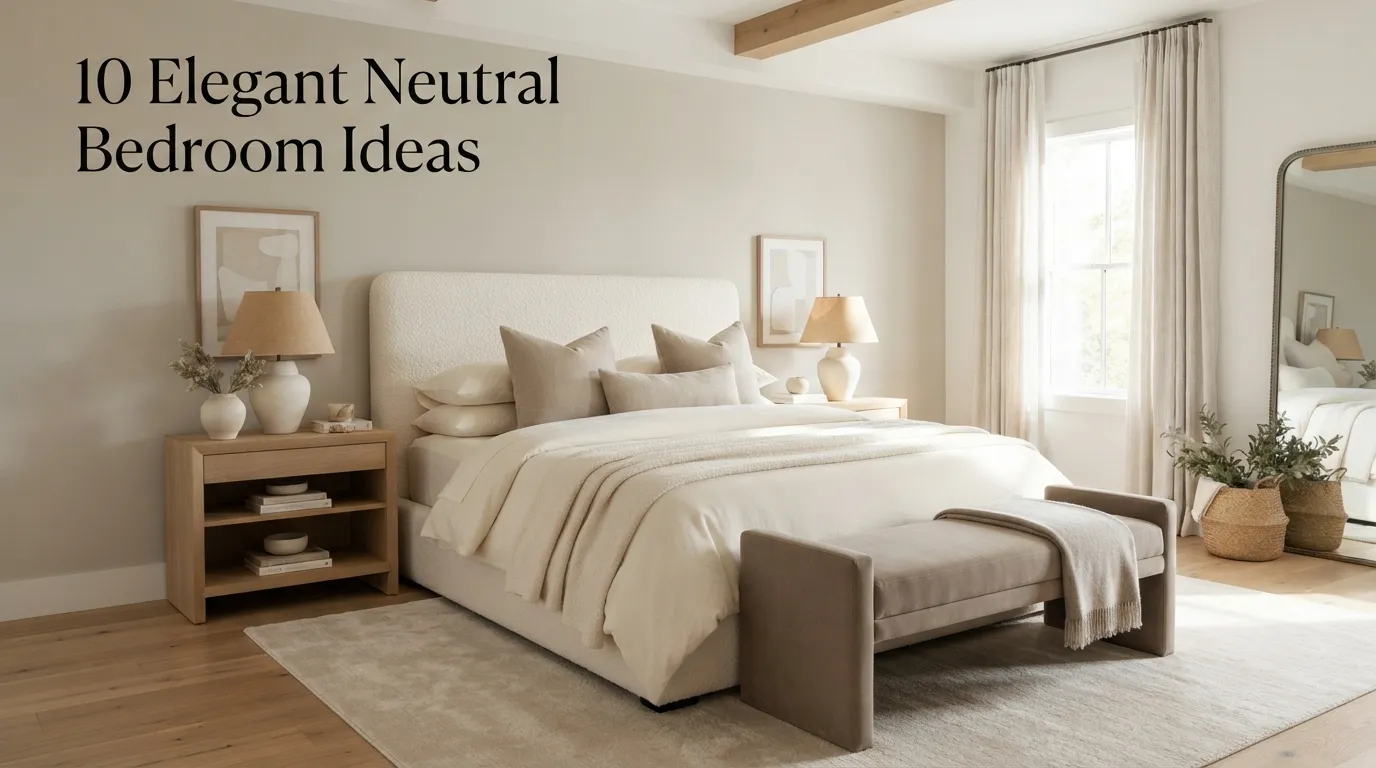
10 Elegant Neutral Bedroom Ideas
A neutral bedroom can feel elegant without feeling cold, plain, or overly decorated.
The secret is not choosing as many beige pieces as possible. It is creating depth through layers of color, texture, proportion, lighting, and carefully selected details. Cream walls, warm white bedding, natural wood, linen, soft taupe, and subtle brown accents can work together to create a bedroom that feels calm while still looking thoughtfully designed.
Neutral decorating is especially useful in a bedroom because the space benefits from a restful visual environment. When colors are quiet and materials have enough variation, the room can feel peaceful without becoming boring.
In my experience, the most beautiful neutral bedrooms usually have one thing in common: they rely on texture instead of strong color to create interest. A chunky throw, linen duvet, upholstered headboard, woven basket, textured rug, or ceramic lamp can add character without disturbing the soft palette.
Another important detail is warmth. An all-white bedroom can sometimes feel stark, particularly when combined with cool lighting and glossy surfaces. Warm woods, creamy textiles, aged finishes, and soft lighting help create a more inviting atmosphere.
You also do not need a large bedroom to use these ideas. Simple furniture arrangements, restrained accessories, and coordinated materials can make a compact room feel polished and comfortable.
Whether you are refreshing your master bedroom, guest room, or apartment bedroom, these ideas offer practical ways to create an elegant neutral retreat that feels timeless rather than overly styled.
Table of Contents
1. Layered Cream Bedding
Build a sophisticated foundation with different shades and textures of warm neutral bedding.
2. Upholstered Headboard
Use a soft upholstered headboard to introduce comfort and visual structure.
3. Warm Wood Accents
Add natural wood tones to keep a neutral bedroom inviting and grounded.
4. Textured Neutral Walls
Give the walls subtle character with plaster, paneling, wallpaper, or dimensional finishes.
5. Soft Taupe Palette
Combine beige, taupe, cream, and warm white for a refined monochromatic look.
6. Natural Linen Layers
Use breathable linen and relaxed textiles to create understated elegance.
7. Statement Lighting
Make lighting part of the decor with sculptural lamps and warm illumination.
8. Minimal Nightstands
Keep bedside surfaces simple while adding practical and beautiful details.
9. Textured Area Rug
Anchor the room with a soft rug that adds warmth beneath the neutral palette.
10. Curated Decor
Finish the bedroom with a small collection of intentional accessories.
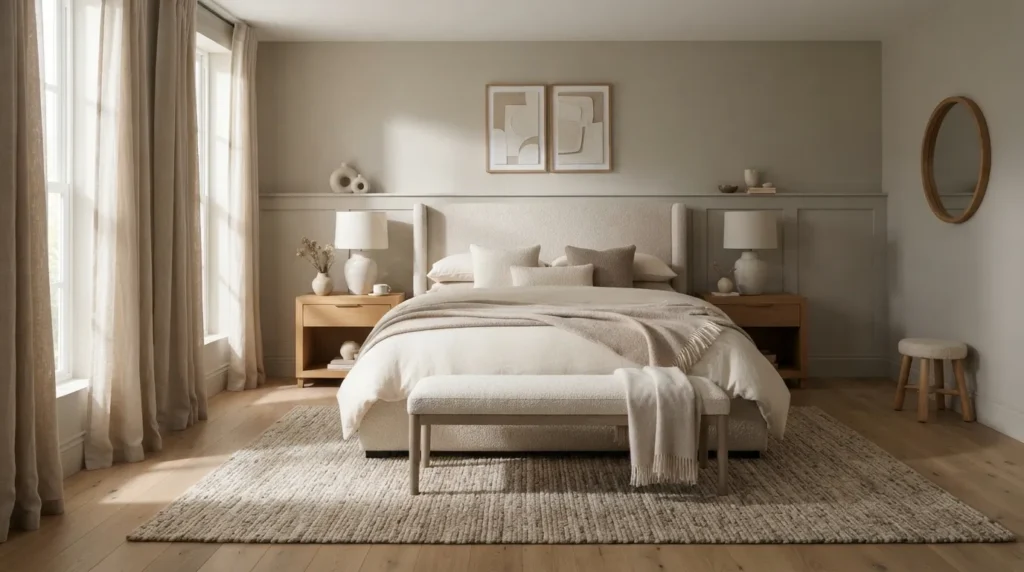
1. Layered Cream Bedding
Quick Benefits
- Creates an instantly calm atmosphere
- Adds depth without strong colors
- Makes the bed feel luxurious
- Works with many bedroom styles
- Keeps the palette soft and timeless
Why It Works
The bed is usually the largest visual element in a bedroom, so changing its texture can dramatically affect the entire space.
Instead of using one flat shade of white, layer cream, ivory, oatmeal, beige, and soft taupe. The subtle variations create dimension while maintaining a cohesive neutral palette.
Texture becomes especially important here. A linen duvet, quilted coverlet, knitted throw, and soft cotton sheets can all occupy similar colors while looking completely different.
This approach creates the feeling of a carefully designed bedroom without relying on bold patterns.
How To Style It
Begin with warm white or ivory sheets.
Add a cream duvet or coverlet, then layer a quilt or textured blanket across the lower third of the bed.
Use pillows in slightly different neutral shades.
For example, combine ivory with oatmeal, taupe, and light beige.
Avoid making every piece exactly the same color.
A few subtle variations create more visual interest.
Finish with a casually folded throw at the foot of the bed.
The goal is relaxed elegance rather than a perfectly symmetrical hotel display.
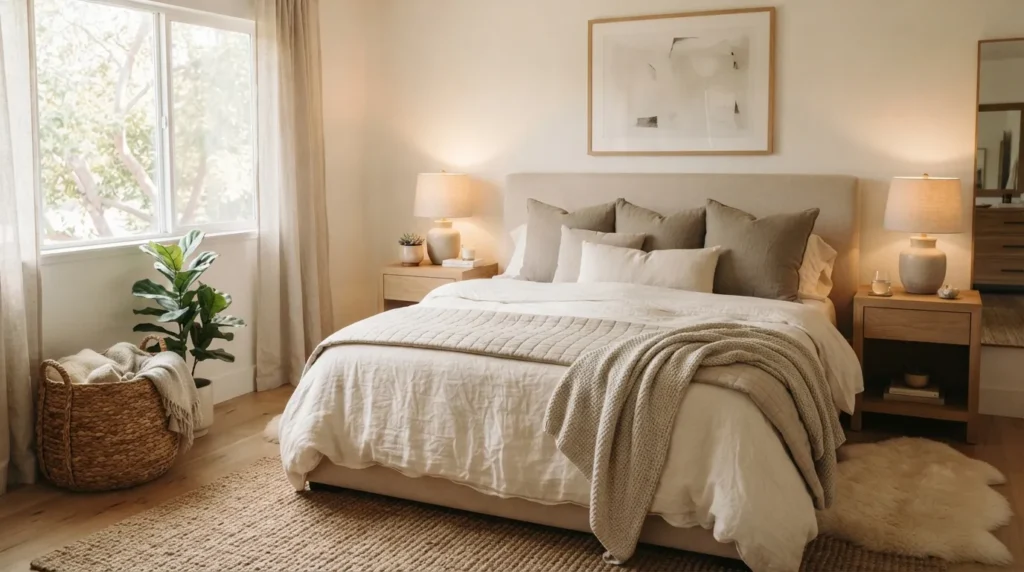
2. Upholstered Headboard
Quick Benefits
- Adds softness
- Creates a strong focal point
- Makes the bed feel substantial
- Introduces texture
- Works beautifully with neutral colors
Why It Works
An upholstered headboard can instantly make a bedroom feel more refined.
Because the color can remain understated, the texture and shape become the focus.
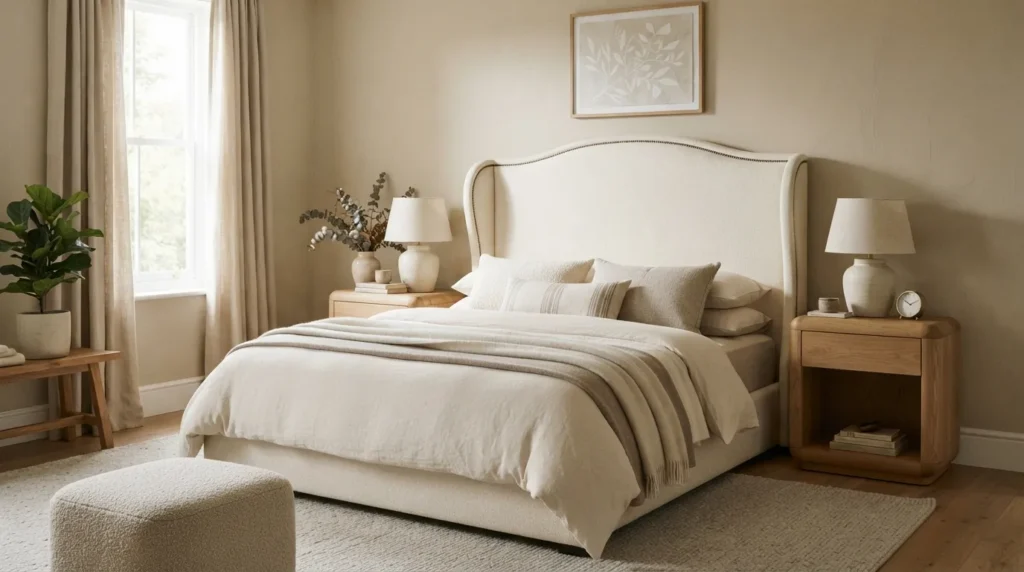
A tall cream, beige, or taupe headboard creates a soft backdrop for layered bedding and decorative pillows. Curved silhouettes feel gentle and contemporary, while clean rectangular designs create a more tailored appearance.
This is particularly effective in neutral rooms because the headboard adds visual structure without introducing a competing color.
How To Style It
Choose upholstery in a durable, easy-care neutral fabric.
Bouclé, linen, cotton, velvet, and textured woven materials can each create a different mood.
For a sophisticated appearance, pair a light upholstered headboard with darker wood nightstands.
For a softer bedroom, combine cream upholstery with warm white bedding and pale oak.
Keep the wall behind the headboard relatively simple so the shape remains visible.
Add one or two decorative pillows rather than filling the bed with accessories.
3. Warm Wood Accents
Quick Benefits
- Adds warmth
- Prevents a neutral room from feeling flat
- Introduces natural texture
- Creates visual contrast
- Works with modern and traditional interiors
Why It Works
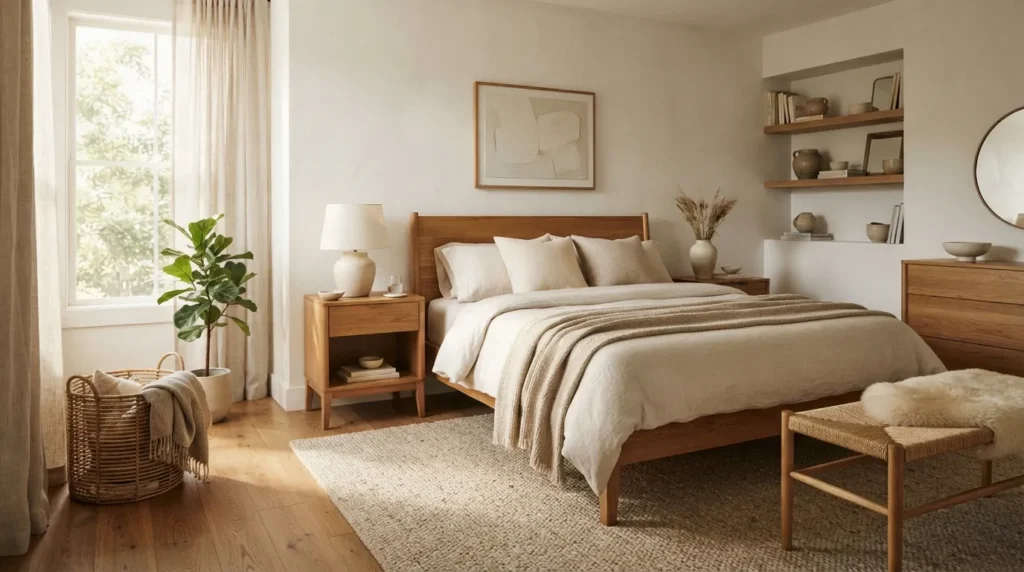
Natural wood is one of the easiest ways to warm up a neutral bedroom.
Cream and beige can sometimes look visually similar across large surfaces. Wood breaks up those surfaces while maintaining a natural palette.
The grain itself provides variation, meaning the room gains character without needing a strong decorative color.
Light oak creates an airy Scandinavian feel. Medium walnut creates a richer, more sophisticated appearance.
How To Style It
Choose one dominant wood tone for the larger furniture pieces.
A wooden bed frame, nightstands, dresser, or bench can establish the foundation.
You do not need every piece to match perfectly.
Mixing related wood tones can actually make the bedroom feel more collected.
Pair wood with cream bedding, woven baskets, ceramic accessories, and soft textiles.
Keep glossy finishes limited if your goal is a warm, relaxed atmosphere.
4. Textured Neutral Walls
Quick Benefits
- Adds architectural interest
- Prevents blank walls from feeling boring
- Creates depth without bold color
- Enhances natural light
- Makes the bedroom feel more finished
Why It Works
A neutral bedroom does not have to mean completely plain walls.
Subtle wall texture can become the decorative feature while preserving the peaceful palette.
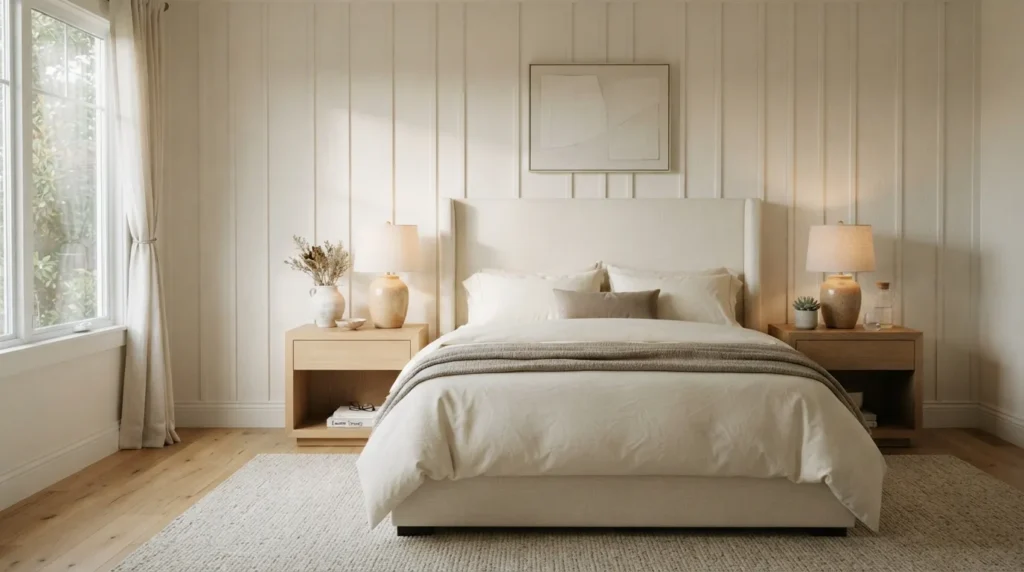
Vertical wall paneling can add architectural structure. Limewash-style finishes can create gentle movement. Textured wallpaper can introduce a quiet pattern without overwhelming the room.
The important distinction is subtlety.
Neutral wall treatments work best when they create shadows, depth, or tactile interest rather than demanding attention.
How To Style It
Choose one primary feature wall rather than covering every surface with a dramatic treatment.
Behind the bed is often the most effective location.
For a modern bedroom, consider simple vertical panels in warm white or beige.
For a softer look, use a subtle textured wallpaper.
Keep the bedding and furniture relatively restrained so the wall treatment can provide the visual interest.
Warm lamps placed near the headboard can emphasize the wall texture in the evening.
5. Soft Taupe Palette
Quick Benefits
- Creates a sophisticated monochromatic look
- Adds warmth
- Works with many materials
- Feels calm and refined
- Makes layering easier
Why It Works
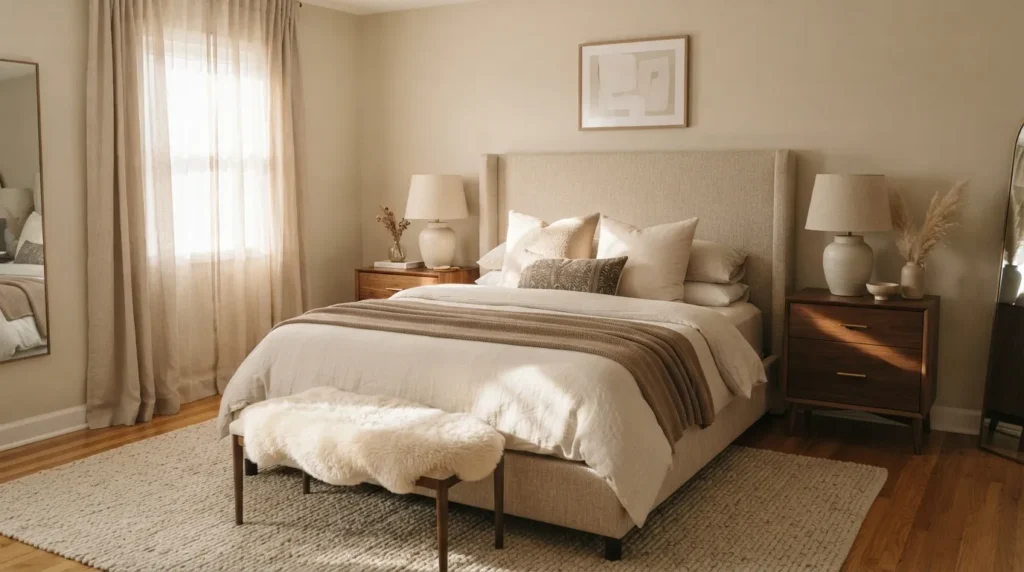
Taupe sits comfortably between gray and beige, making it particularly useful in elegant neutral interiors.
Instead of choosing one beige shade for the entire bedroom, create a tonal palette using warm white, cream, taupe, mushroom, oatmeal, and light brown.
The slight differences between these colors create depth.
This approach is especially effective when the bedroom contains several large surfaces, such as walls, bedding, curtains, and rugs.
How To Style It
Choose the lightest neutral for the walls or largest background surface.
Use cream and ivory for bedding.
Introduce taupe through an accent chair, throw, rug, or decorative pillows.
Add medium brown through wood furniture.
Keep metallic accents subtle.
Brushed brass, aged bronze, or matte black can provide small points of contrast without taking over the room.
6. Natural Linen Layers
Quick Benefits
- Creates relaxed elegance
- Adds organic texture
- Keeps the room visually soft
- Works across seasons
- Complements neutral colors
Why It Works
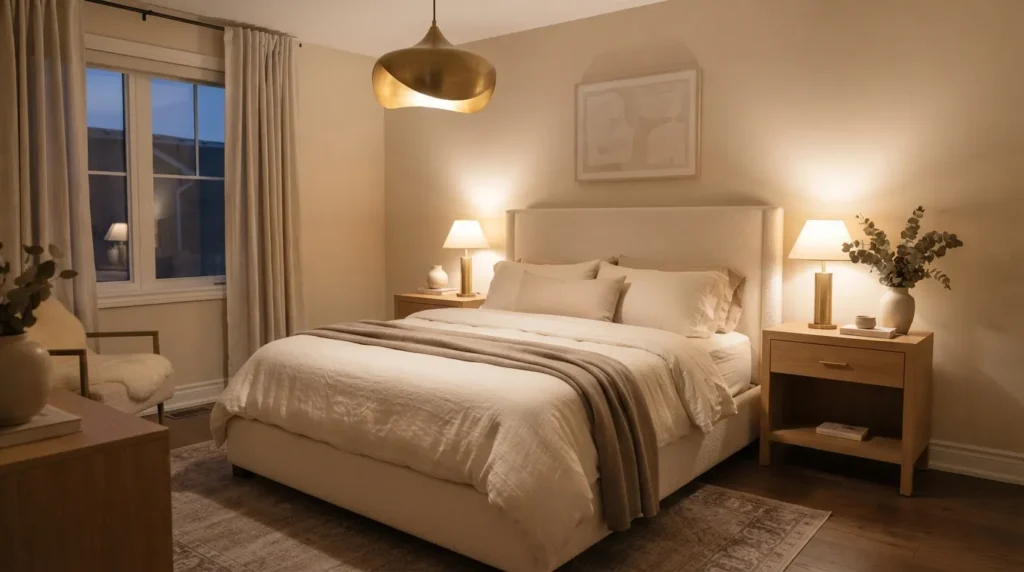
Linen has a naturally relaxed appearance that prevents neutral bedrooms from feeling overly formal.
Its subtle wrinkles and woven texture create visual movement.
Linen curtains can soften windows, while linen bedding can make the bed look inviting without excessive decoration.
This material also pairs naturally with wood, stone, ceramic, and woven accessories.
The result is a bedroom that feels elegant but still comfortable enough for everyday living.
How To Style It
Use linen in one or two major areas rather than everywhere.
A linen duvet combined with cotton sheets creates enough variation.
Alternatively, use linen curtains with a cotton or textured bedding arrangement.
Choose natural shades such as ivory, flax, oatmeal, and soft beige.
Avoid excessive matching.
Let the material differences provide the interest.
A slightly rumpled linen duvet can actually enhance the relaxed quality of the room.
7. Statement Lighting
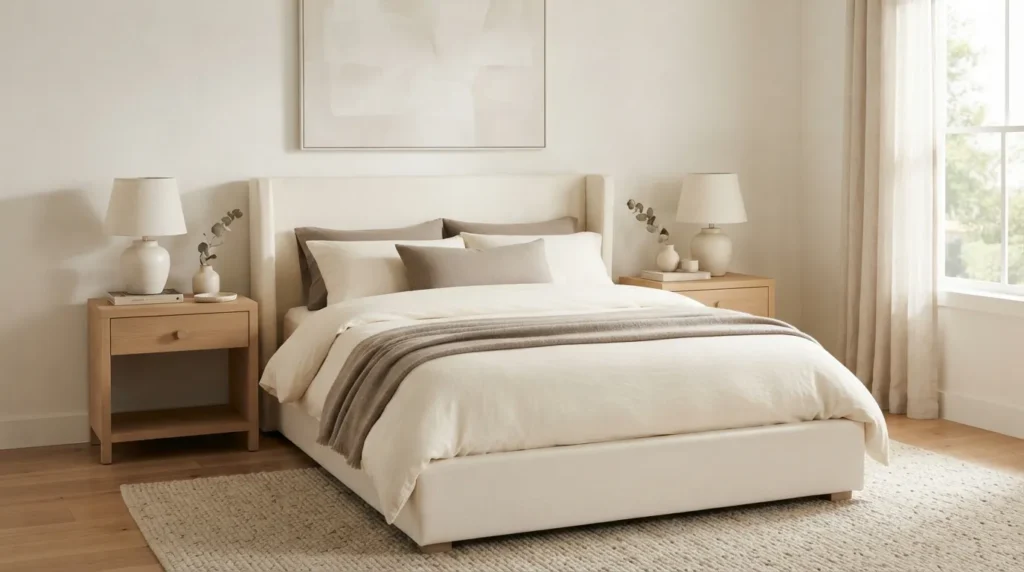
Quick Benefits
- Creates a focal point
- Improves nighttime ambiance
- Adds decorative character
- Highlights textures
- Makes the room feel finished
Why It Works
Lighting has a major influence on how neutral colors appear.
Warm lighting can make cream, beige, and wood tones feel richer and more inviting.
A sculptural pendant, elegant chandelier, oversized table lamp, or pair of wall sconces can also become a decorative feature.
Because the surrounding palette is restrained, lighting has room to make a statement without competing with colorful decor.
How To Style It
Use multiple lighting levels rather than relying on one ceiling fixture.
Combine ambient lighting with bedside lamps or sconces.
Choose warm-toned illumination for evening use.
For the main fixture, look for a shape that complements the bedroom architecture.
Glass, linen, ceramic, metal, and natural fiber fixtures can all work beautifully.
Keep bedside lighting balanced if using matching nightstands.
If the bedroom already contains many textures, choose a simpler fixture.
8. Minimal Nightstands
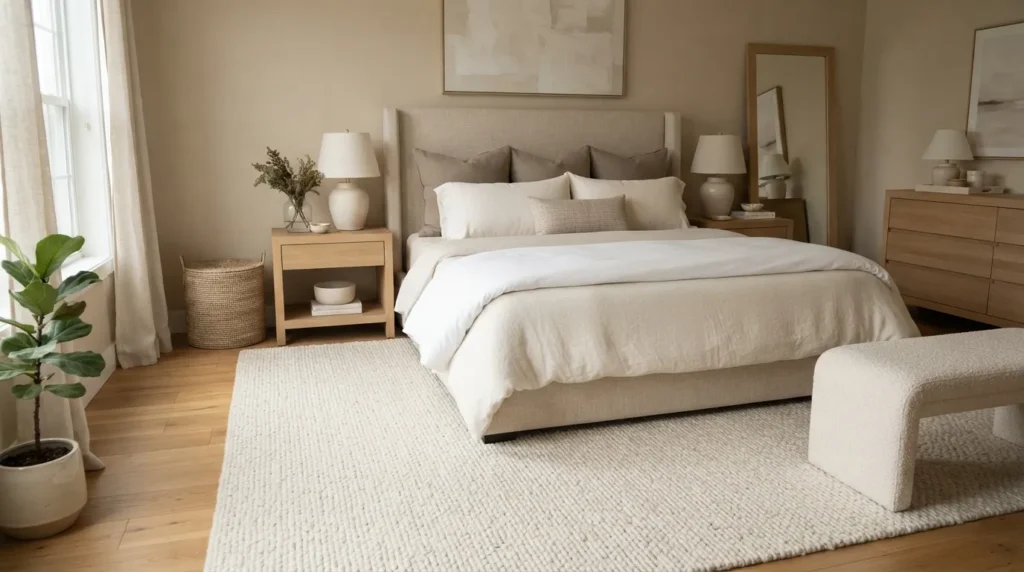
Quick Benefits
- Keeps the bedroom visually calm
- Reduces bedside clutter
- Improves functionality
- Creates symmetry
- Makes decorative details more noticeable
Why It Works
Nightstands are small surfaces, but they can quickly become cluttered.
A neutral bedroom looks more elegant when these areas remain intentional.
You do not need to remove everything.
Instead, choose a few objects that are useful and visually pleasing.
A lamp, small tray, book, ceramic vase, or small piece of greenery can create a finished look without overwhelming the surface.
How To Style It
Start with practical necessities.
Add a lamp for reading and a small tray for loose items.
Then include one decorative object.
If you have matching nightstands, they can create symmetry.
For a more relaxed appearance, use slightly different accessories on each side while keeping the overall scale similar.
Keep charging cables managed and hidden where possible.
The empty space is part of the design.
9. Textured Area Rug
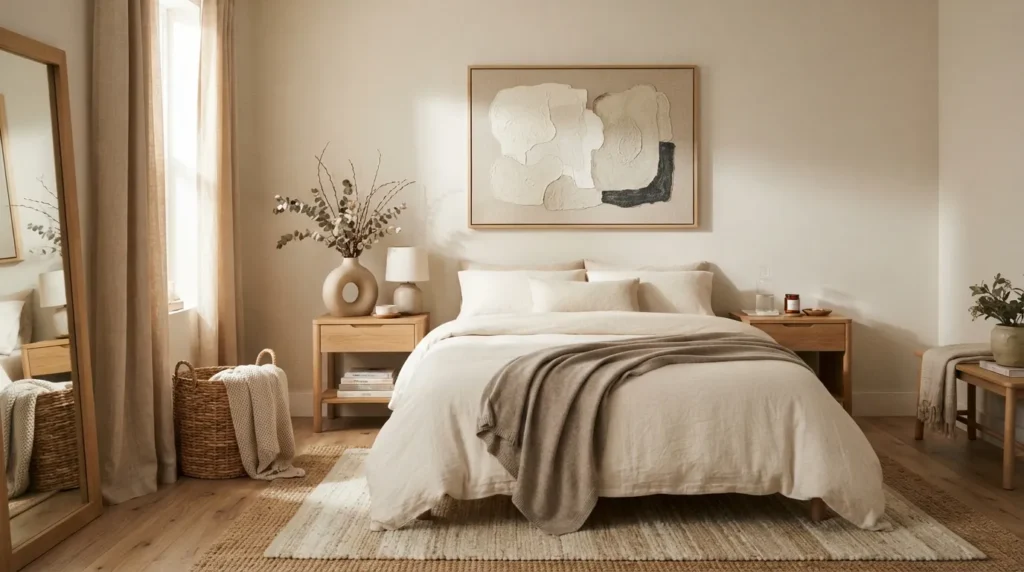
Quick Benefits
- Adds warmth underfoot
- Defines the sleeping area
- Introduces texture
- Softens hard flooring
- Makes the room feel complete
Why It Works
A rug can connect the different neutral elements in a bedroom.
It also introduces another layer of texture, which is particularly valuable when color is intentionally restrained.
A cream wool rug can create softness. A woven natural-fiber rug can add an organic feel. A subtle patterned neutral rug can introduce visual movement without becoming a focal point.
How To Style It
Choose a rug large enough to extend beyond the sides of the bed.
Position it so that your feet land on a comfortable surface when getting out of bed.
For a cohesive look, coordinate the rug with the bedding rather than trying to match it exactly.
If the room contains several soft textures, a simple rug can balance the space.
If the bedroom feels too plain, choose a rug with subtle variation or pattern.
10. Curated Decor
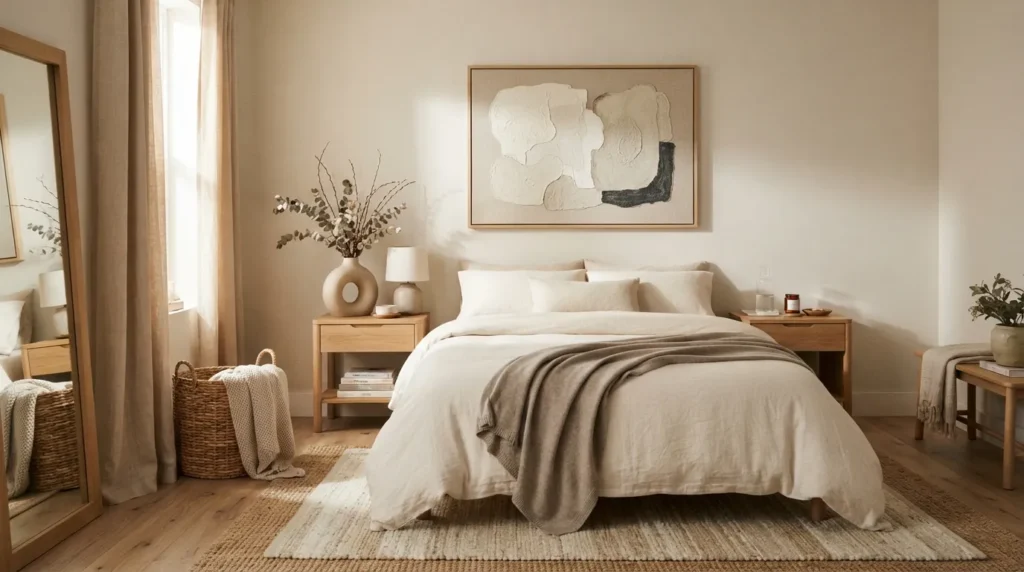
Quick Benefits
- Adds personality
- Prevents the room from feeling generic
- Creates visual balance
- Highlights favorite pieces
- Completes the overall design
Why It Works
A neutral bedroom still needs personality.
Without thoughtful accessories, even beautiful furniture can make a bedroom feel unfinished.
The key is curation.
Instead of filling every shelf and surface, choose a small collection of objects that relate to the room’s materials and palette.
Ceramic vessels, framed artwork, books, woven baskets, sculptural objects, dried branches, and small plants can all work beautifully.
How To Style It
Choose accessories in complementary neutral tones.
Vary their height and shape.
For example, place a tall ceramic vase beside a smaller object and a horizontally oriented book.
Use artwork with soft abstract forms, architectural photography, botanical imagery, or simple line work.
Keep decorative objects grouped rather than scattered randomly.
One larger statement piece often creates more impact than many small accessories.
How To Make A Neutral Bedroom Feel Elegant
The easiest way to make a neutral bedroom feel elegant is to combine color consistency with material variation.
Use a restrained palette, then introduce interest through linen, wood, wool, ceramic, woven fibers, upholstery, and subtle metal finishes.
Proportion also matters.
A large upholstered headboard can become a focal point. A substantial rug can anchor the bed. Tall curtains can emphasize ceiling height.
Avoid filling the room simply because you have empty surfaces.
Elegance often comes from restraint.
Best Neutral Colors For A Bedroom
A successful neutral palette can include:
- Warm white
- Ivory
- Cream
- Oatmeal
- Beige
- Taupe
- Mushroom
- Greige
- Soft brown
- Light caramel
Warm neutrals generally create a softer atmosphere than stark white or cool gray.
You can also introduce a very subtle accent color such as muted sage, dusty blue, or soft clay if the room needs additional dimension.
Keep the accent restrained so the neutral foundation remains dominant.
How To Add Warmth To A Neutral Bedroom
Use natural materials first.
Wood furniture, linen bedding, woven baskets, wool rugs, ceramic accessories, and warm lighting can make neutral colors feel significantly richer.
Another useful trick is layering different shades of the same color.
Instead of using one beige everywhere, combine ivory, oatmeal, taupe, and light brown.
Lighting also makes a major difference.
Warm lamps and soft evening illumination can emphasize the depth of creamy and earthy tones.
Neutral Bedroom Ideas For Small Rooms
A small bedroom benefits from visual simplicity.
Choose furniture with a clean silhouette and avoid unnecessary pieces.
Use a light neutral palette to maintain an airy appearance.
A large mirror can help reflect light, while curtains mounted high above the window can create the impression of greater height.
Keep the floor relatively open.
Instead of multiple small decorative pieces, choose one or two larger elements.
A streamlined upholstered headboard, light bedding, and warm wood nightstands can create a complete bedroom without overwhelming the available space.
Common Neutral Bedroom Decorating Mistakes
One common mistake is using only one shade of beige.
Without tonal variation or texture, the room can feel flat.
Another is choosing cool white lighting that makes warm neutrals look dull or gray.
Too many matching furniture pieces can also make the bedroom feel like a showroom.
Instead, introduce subtle variation through wood tones, fabrics, shapes, and finishes.
Finally, avoid adding excessive decor simply to fill empty areas.
Negative space gives elegant rooms room to breathe.
FAQ
How do you make a neutral bedroom look elegant?
Use a restrained color palette and create interest through texture, proportion, and quality-looking materials. Layer cream and taupe bedding, add natural wood, choose an upholstered headboard, use warm lighting, and keep decorative accessories intentional. The combination of simplicity and material variation creates a refined appearance without relying on bold colors.
What colors work best in an elegant neutral bedroom?
Warm white, ivory, cream, beige, taupe, oatmeal, mushroom, greige, and soft brown are versatile choices. Combining several related shades creates depth while maintaining a calm appearance. Warm neutrals often feel more inviting than stark white or cool gray.
How do you keep a neutral bedroom from looking boring?
Use texture instead of adding lots of color. Combine linen, wool, wood, ceramic, woven fibers, upholstery, and subtle metal finishes. Vary the shades within your neutral palette and use interesting silhouettes in furniture and lighting.
How do you add warmth to a beige bedroom?
Introduce natural wood, warm lighting, textured fabrics, woven accessories, and deeper neutral accents such as taupe or soft brown. Layering several warm shades prevents beige from looking flat while creating a more inviting atmosphere.
Can a neutral bedroom still have personality?
Absolutely. Artwork, vintage pieces, sculptural accessories, books, plants, and meaningful objects can add personality without disrupting the neutral palette. Choose fewer pieces and display them intentionally rather than filling every available surface.
What bedding looks best in a neutral bedroom?
Layered bedding in cream, ivory, oatmeal, beige, and taupe works especially well. Combine different materials such as cotton, linen, quilted fabrics, and knitted throws. Slight variations in color and texture create a sophisticated bed without requiring bold patterns.
How do you decorate a small neutral bedroom?
Keep the palette light and use furniture with clean proportions. Choose a focal point such as an upholstered headboard, use a properly sized rug, and keep nightstands relatively uncluttered. Mirrors and high-mounted curtains can also help the room feel more open.
Conclusion
An elegant neutral bedroom does not have to be complicated.
Start with a calm foundation of cream, ivory, beige, or taupe. Then build depth through texture: linen bedding, a soft rug, natural wood, woven accents, upholstery, and ceramic details.
From there, focus on proportion and restraint.
A beautiful headboard can establish the focal point. Warm bedside lighting can make the room feel inviting at night. A carefully chosen rug can anchor the furniture. A small collection of meaningful accessories can give the bedroom personality without creating visual clutter.
The most successful neutral bedrooms are not necessarily the ones with the most expensive furniture or the most decorative pieces. They are the rooms where every element feels connected.
Choose materials that feel good, colors that create calm, and furniture that supports the way you actually use the room.
Then leave some space for the room to breathe.
That balance between warmth, simplicity, texture, and restraint is what turns a neutral bedroom into a peaceful retreat that feels elegant today and remains easy to live with over time.
Related Articles
- 10 Modern Bedroom Ideas That Feel Warm and Peaceful
- 10 Bedroom Wall Decor Ideas That Add Elegant Texture
- How to Decorate a Bedroom with Elegant Decor
- 10 Modern Neutral Aesthetic Bedroom Ideas
- How to Make a Small Bedroom Feel Bigger with Light Colors