Concrete Post Holes for Fences Directly Behind Retaining Walls: Sleeve Pipes
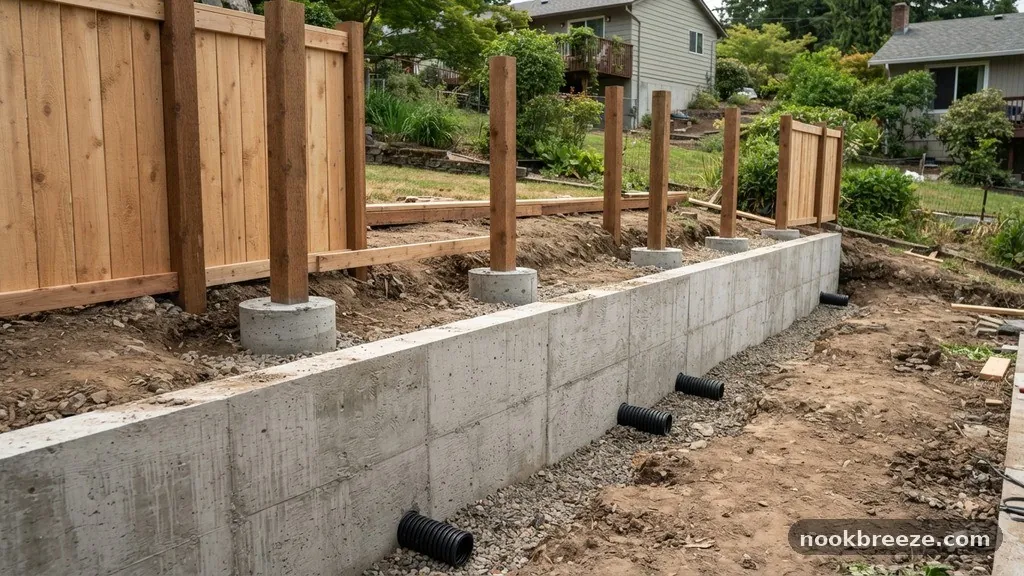
Installing concrete post holes for fences directly behind retaining walls requires careful planning to avoid compromising the structure’s stability. When you place a fence post too close to the back of a wall, the weight and vibration of the post hole can increase lateral earth pressure, potentially leading to wall failure.
Using a PVC sleeve pipe allows you to isolate the post from the surrounding soil and structural backfill, protecting the wall’s integrity. This article explores how to safely execute this installation, manage drainage, and ensure your fence remains upright without causing damage to the masonry or concrete wall below.
The Importance of Structural Setback
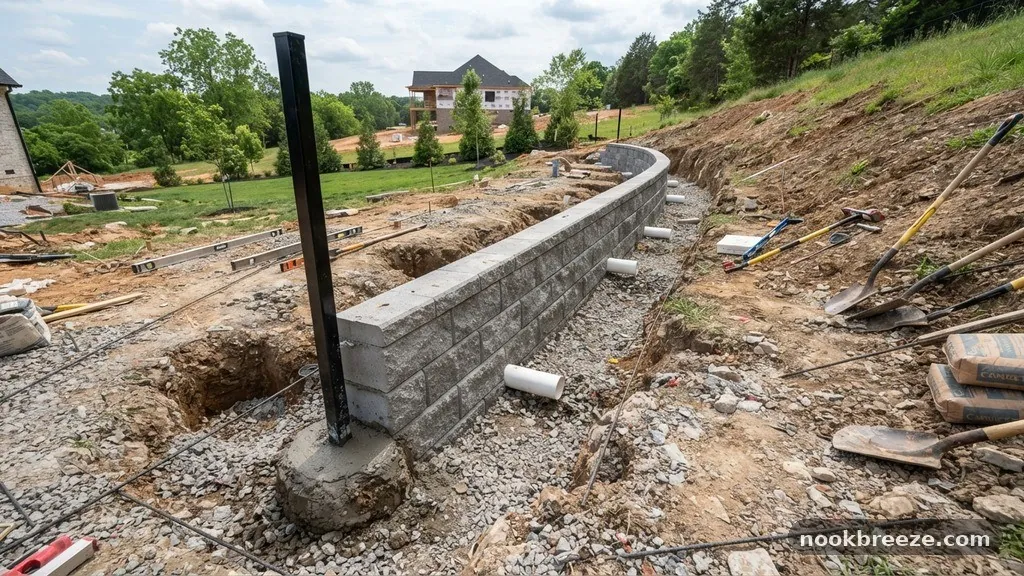
The primary risk when digging near a retaining wall is the disruption of the surcharge zone. A retaining wall is designed to hold back a specific amount of soil, and that soil exerts pressure against the wall face.
When you excavate a post hole directly behind the wall, you remove the material that provides counter-pressure. This can lead to a shift in the wall’s footing or cause the wall to bow outward over time.
Structural engineers typically recommend a post-to-wall setback of at least 12 to 24 inches. If you cannot maintain this distance, the fence post must be engineered as part of the wall system.
This often involves extending the fence post deep into the ground, well below the wall’s base footing. Failing to account for this interaction can lead to severe structural damage during heavy rain or seismic events.
Role of PVC Sleeve Pipes in Fence Installation
A PVC sleeve pipe acts as a protective barrier between your fence post and the concrete or soil around it. By sliding a length of PVC pipe into the excavated hole before pouring concrete, you create a dedicated void.
This technique is particularly useful when you need to replace a damaged post in the future without disturbing the surrounding ground. It also prevents the post from bonding directly to the surrounding structural backfill.
Using a sleeve pipe also helps manage moisture around the base of the post. If you use a pressure-treated wood or galvanized steel post, the sleeve keeps the wood from sitting in constant contact with damp soil.
This simple addition significantly extends the lifespan of your fence posts. Ensure the sleeve is slightly wider than your post to allow for minor adjustments during the installation process.
Managing Lateral Earth Pressure
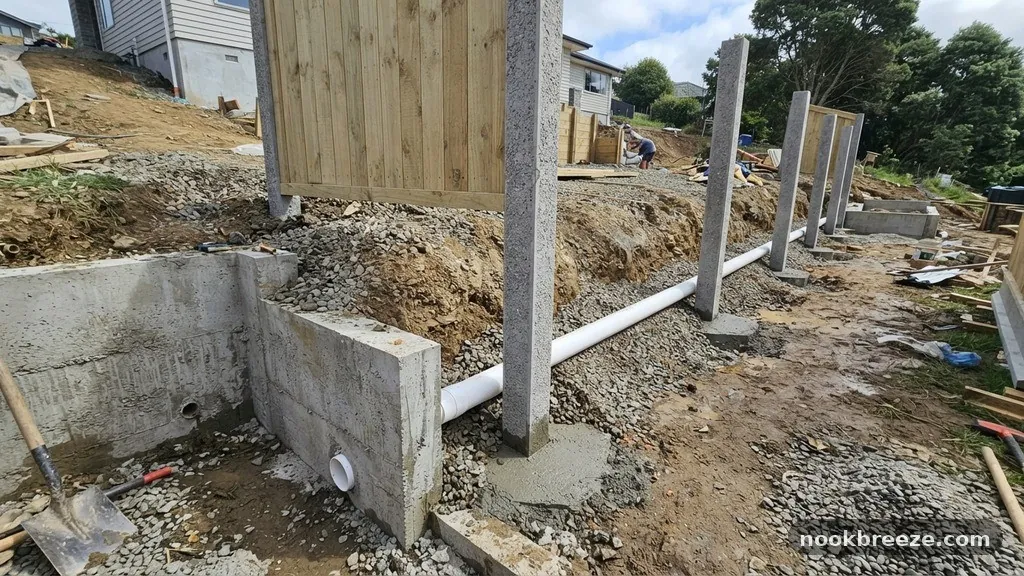
Lateral earth pressure is the force exerted by the soil against the back of the retaining wall. Any excavation behind the wall changes the distribution of this pressure.
If you dig a large, deep hole, you are essentially creating a localized point of weakness. This is why it is critical to use a post hole auger rather than heavy excavation machinery when working in tight quarters.
You must also consider the surcharge load created by the fence itself. A fence acts like a sail, catching wind and transferring that force into the ground.
If that force is transferred directly into the soil immediately behind a masonry wall, the wall may experience rotation. By anchoring the post deeper and using a sleeve, you shift the load-bearing requirements away from the wall’s immediate backfill zone.
Determining Correct Footing Depth
Footing depth is the most critical factor in preventing fence lean. In regions with freezing temperatures, you must dig below the frost line to prevent the ground from heaving and pushing the post upward.
If your retaining wall is shallow, you might be tempted to stop digging at the base of the wall. This is a common mistake that leads to unstable fencing.
Consulting a licensed structural engineer is the best way to determine the safe depth for your specific soil type. They will calculate the soil bearing capacity and ensure your post foundation doesn’t interfere with the wall’s drainage system.
Generally, a post hole should be at least one-third to one-half the height of the fence above ground. This ensures that the post has enough leverage to resist high wind loads.
Soil Compaction and Drainage Aggregate
The area behind a retaining wall is usually filled with drainage aggregate to prevent water buildup. When you dig a post hole, you break through this layer of clean stone and potentially introduce finer soil particles.
This can clog the drainage path, causing water to pool behind the wall. Pooling water leads to hydrostatic pressure, which is the leading cause of retaining wall collapse.
To mitigate this, always backfill the bottom of your post hole with clean, washed stone. If you are using a sleeve pipe, ensure the pipe is perforated at the base or sits on a bed of gravel to allow for proper drainage.
This ensures that water doesn’t get trapped inside the sleeve, which would otherwise rot a wooden post or rust a steel one. Proper site drainage is the difference between a long-lasting fence and a structural liability.
Comparing Installation Methods
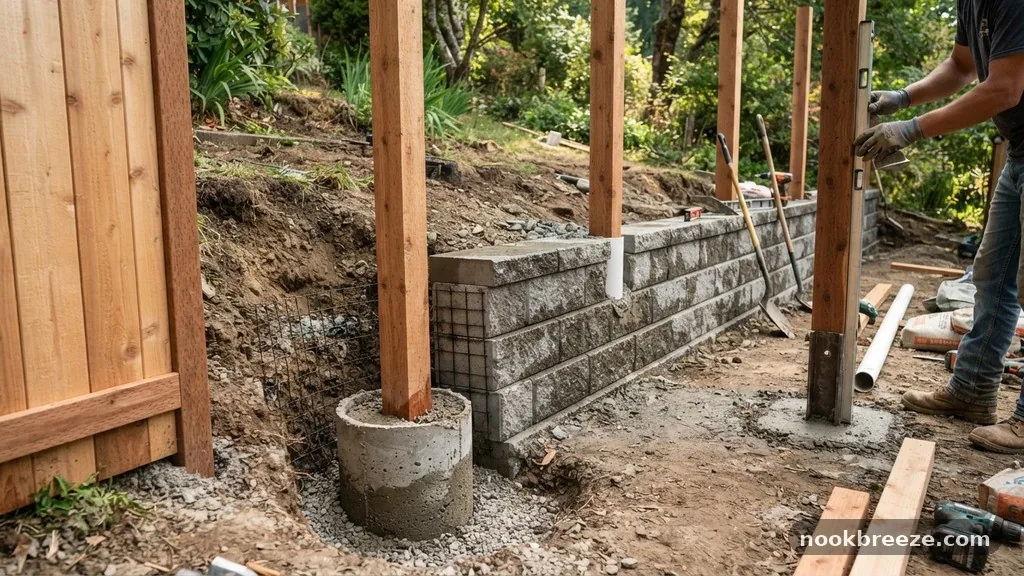
Choosing the right method depends on your wall type and soil conditions. Some installations require a pile foundation, while others can rely on simple concrete footings. The following table compares common approaches for fence posts near walls.
| Method | Best For | Risk Level |
|---|---|---|
| Direct Burial | Non-structural fences | High |
| PVC Sleeve | Standard residential | Low |
| Steel Pile | Heavy wind/Large walls | Very Low |
| Concrete Pier | Cantilever walls | Medium |
Geotextile Fabric and Soil Stability
When you excavate behind a wall, you often disturb the existing soil profile. Using geotextile fabric can help separate the clean drainage aggregate from the surrounding native soil.
This prevents the fine particles from migrating into your drainage layer. Without this separation, your drainage system will eventually fail, leading to increased pressure on the wall.
Wrap the sides of your post hole with geotextile fabric if you are digging into loose or silty soil. This keeps the hole dimensions stable while you pour your concrete.
It also prevents the concrete from leeching into the soil, which ensures the full strength of the pour. A little extra effort in preparing the hole pays off in the long-term stability of the structure.
Concrete Slump and Rebar Reinforcement
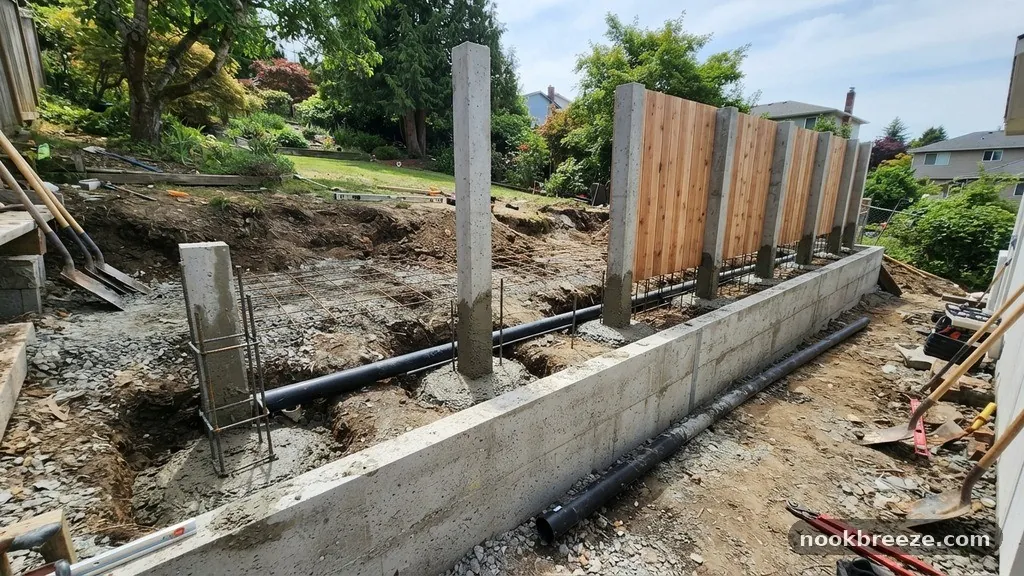
The concrete you pour for your post holes must have the correct consistency. A lower concrete slump is preferred for fence posts because it provides better structural support and sets up more firmly.
If the mix is too wet, it will be weak and prone to cracking under wind loads. Always follow the manufacturer’s recommendations for water-to-cement ratios.
For added strength, insert rebar reinforcement into the concrete hole. This is especially important if the fence is tall or located in a high-wind area.
The rebar should be tied to the post or held in place with spacers so it stays centered in the concrete. Proper concrete curing is also essential, so avoid attaching the fence panels until the concrete has reached at least 75% of its design strength.
Common Installation Mistakes to Avoid
Many DIYers make mistakes that compromise the wall’s integrity. One of the most frequent errors is digging too close to the wall face. This can undercut the wall’s footing and cause immediate tilting.
Another common issue is failing to consider the wall’s drainage pipes. Piercing a drainage pipe while digging a post hole can cause major water damage to the wall foundation.
* Digging without checking for underground utilities.
* Failing to use a level to ensure perfect vertical alignment.
* Adding concrete before the post is properly braced.
* Ignoring the manufacturer’s instructions on post-to-wall setback.
* Using low-quality, non-galvanized steel posts that will corrode.
Frequently Asked Questions
How far from a retaining wall should a fence post be?
You should aim for a minimum distance of 12 to 24 inches. If you must go closer, you need to consult a structural engineer to ensure the post doesn’t put excessive pressure on the wall.
Can I pour concrete directly against the retaining wall?
No, you should never pour concrete directly against a masonry or concrete wall. This creates a rigid connection that can cause the wall to crack as the ground shifts or expands due to frost.
Why use a sleeve pipe instead of just pouring concrete?
A sleeve pipe creates a buffer zone that protects the post from soil moisture. It also makes future post replacement significantly easier, as you won’t have to break up old concrete.
Does digging a post hole affect my wall’s drainage?
Yes, if you dig through the drainage aggregate behind the wall, you can disrupt the flow of water. Always backfill with appropriate drainage material to maintain the wall’s integrity.
What if I hit the wall’s footer while digging?
Stop immediately. If you have damaged or exposed the footer, you need to repair the area with high-strength concrete or consult a professional before proceeding with the fence installation.
Ensuring Long-Term Fence Stability
Successfully installing concrete post holes for fences directly behind retaining walls is entirely possible with the right approach. By utilizing sleeve pipes, maintaining proper setbacks, and respecting the drainage requirements of the wall, you can build a secure fence that lasts for decades. Always prioritize the structural health of your retaining wall over the convenience of the fence placement.
If you are unsure about the soil conditions or the structural load, it is always safer to seek professional advice. Following these best practices ensures your property remains both beautiful and structurally sound for years to come.