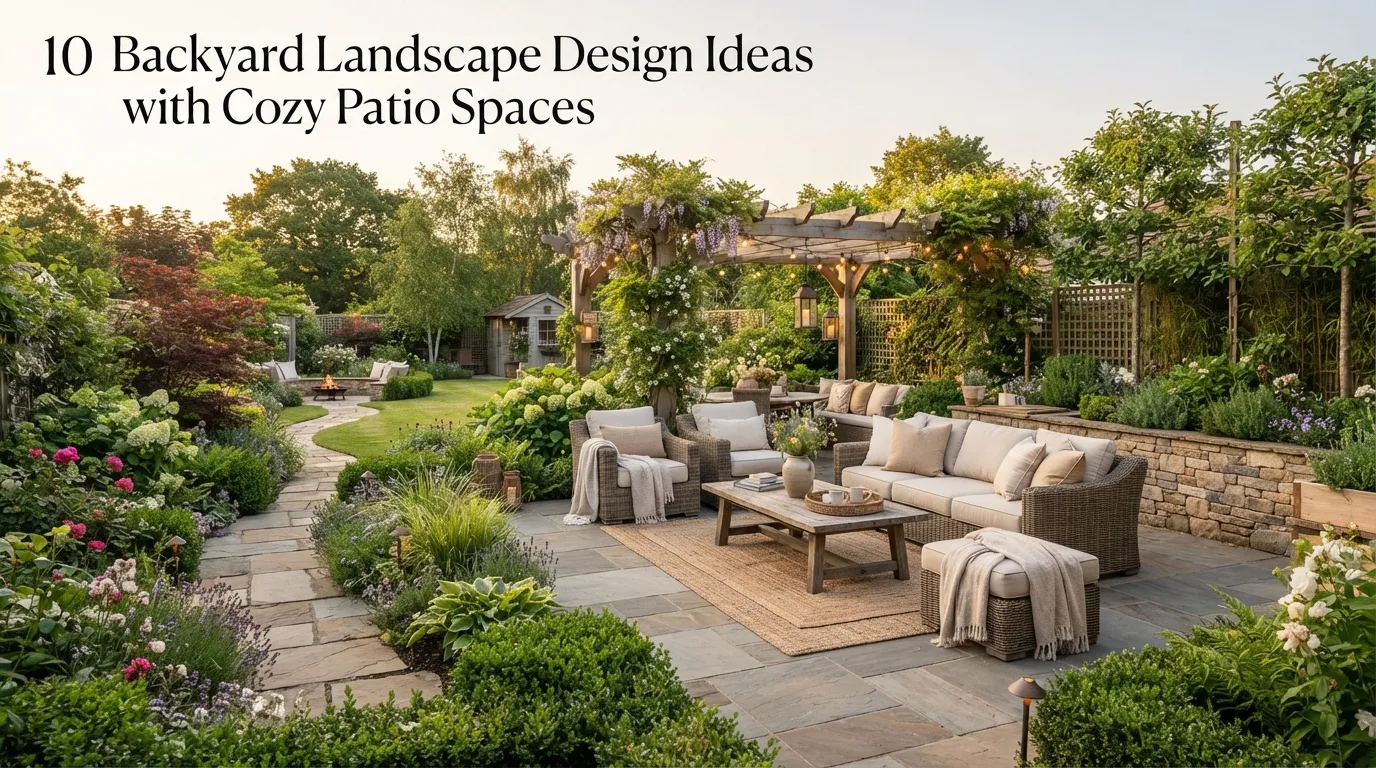
10 Backyard Landscape Design Ideas with Cozy Patio Spaces
A backyard can become one of the most enjoyable parts of a home when the landscaping and patio are designed to work together. Instead of treating the patio as a separate slab surrounded by grass, think of the entire backyard as one connected outdoor living space.
The most inviting yards usually combine practical areas with softer landscaping. A comfortable seating arrangement, a few well-placed plants, warm lighting, natural materials, and a clear path through the garden can make an ordinary backyard feel much more intentional.
You don’t necessarily need a large property or an expensive landscape renovation. Small patios can feel surprisingly comfortable when furniture is scaled correctly and plants are used to create a sense of enclosure. Larger yards can benefit from dividing the space into zones for dining, lounging, gardening, or gathering around a fire feature.
I’ve noticed that outdoor spaces feel especially welcoming when they have some of the same qualities as an indoor room. Think about comfortable seating, layered lighting, texture, greenery, and a defined focal point. A patio with these elements tends to feel less like an empty outdoor surface and more like an extension of the home.
Whether you’re starting with a blank backyard, updating an existing patio, or simply looking for affordable ways to make your outdoor area more inviting, these landscape ideas can help you create a space that feels comfortable and visually cohesive.
From natural stone patios and lush borders to pergolas, outdoor rugs, and cozy seating areas, these ideas combine practical landscaping with the relaxed atmosphere homeowners want from an outdoor retreat.
Table of Contents
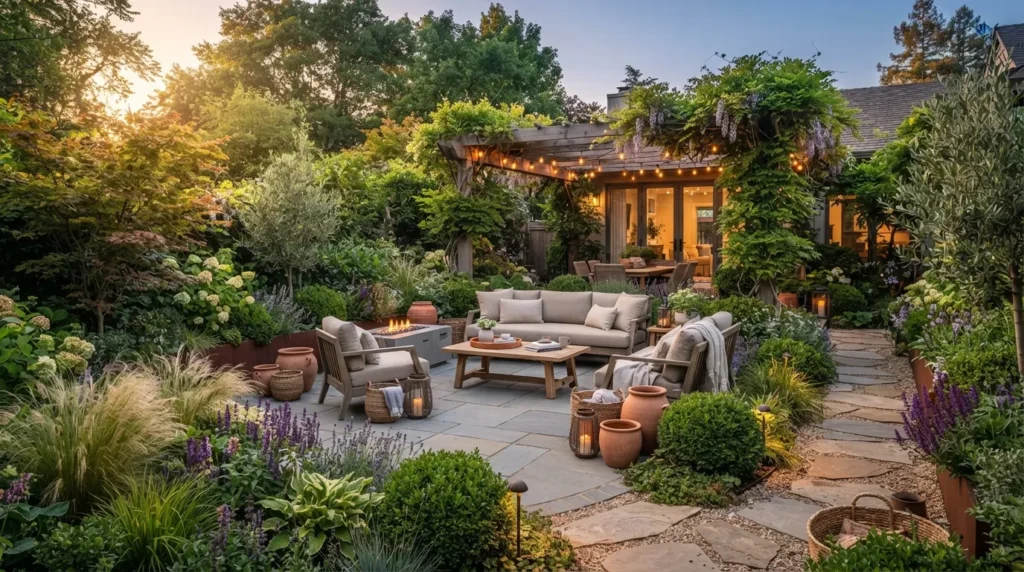
1. Natural Stone Patio
Create a timeless outdoor foundation with stone surfaces surrounded by layered greenery.
2. Layered Garden Borders
Soften patio edges with plants arranged at different heights, textures, and colors.
3. Pergola Lounge Area
Add structure and shade while creating a defined outdoor living room.
4. Outdoor Fire Feature
Create a natural gathering point with a fire pit or built-in fire feature.
5. Cozy Dining Patio
Combine practical dining furniture with landscaping that makes outdoor meals feel special.
6. Gravel Patio Retreat
Use affordable gravel and comfortable furnishings to create a relaxed backyard seating area.
7. Lush Privacy Planting
Create a sense of enclosure with layered trees, shrubs, grasses, and climbing plants.
8. Garden Path Connection
Use pathways to connect the patio with gardens, lawns, and other backyard areas.
9. Outdoor Rug Styling
Define the patio seating area with weather-friendly textiles and coordinated furniture.
10. Warm Patio Lighting
Use layered outdoor lighting to make the backyard comfortable and inviting after sunset.
1. Natural Stone Patio
Quick Benefits
- Creates a durable outdoor foundation
- Blends naturally with landscaping
- Works with many architectural styles
- Adds texture and visual interest
- Can define the main outdoor living zone
Why It Works
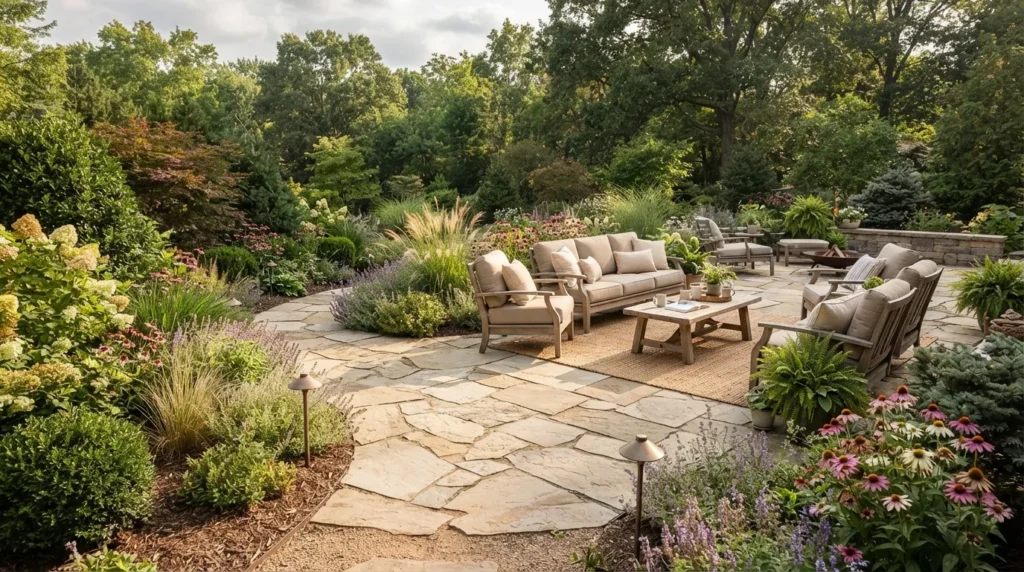
Natural stone can give a backyard an established, timeless appearance. Materials such as flagstone, slate, bluestone, and other suitable landscape stone can create a patio surface that feels connected to the surrounding garden rather than looking like a separate structure.
The irregular shapes of some natural stones are particularly useful for relaxed backyard designs. Their organic edges can transition naturally into planting beds, gravel, or lawn.
For a more formal look, regularly shaped stone or large-format pavers can create clean lines. The choice depends on the architecture of the home and the atmosphere you want outdoors.
A mistake many homeowners make is selecting the patio material without considering the rest of the yard. A patio should relate to the home’s exterior, garden colors, fencing, and other hardscape materials.
How To Style It
Start by determining how the patio will be used. A dining table needs enough clear space for chairs to move comfortably, while a lounge area can use a smaller footprint.
Choose stone that complements the home’s existing colors. Warm beige and brown tones can work well with traditional brick or warm siding, while cooler gray stone may complement contemporary architecture.
Surround the patio with planting beds rather than leaving a hard edge everywhere. Ornamental grasses, shrubs, flowering perennials, and groundcovers can soften the transition.
Add comfortable weather-appropriate furniture, a few large planters, and warm outdoor lighting.
For major installations, proper base preparation, drainage, grading, and local construction requirements are important. A professional landscape contractor can help ensure the patio is built appropriately for the site.
2. Layered Garden Borders
Quick Benefits
- Softens hard patio edges
- Adds color and texture
- Creates seasonal interest
- Supports a natural backyard feel
- Can improve privacy
Why It Works
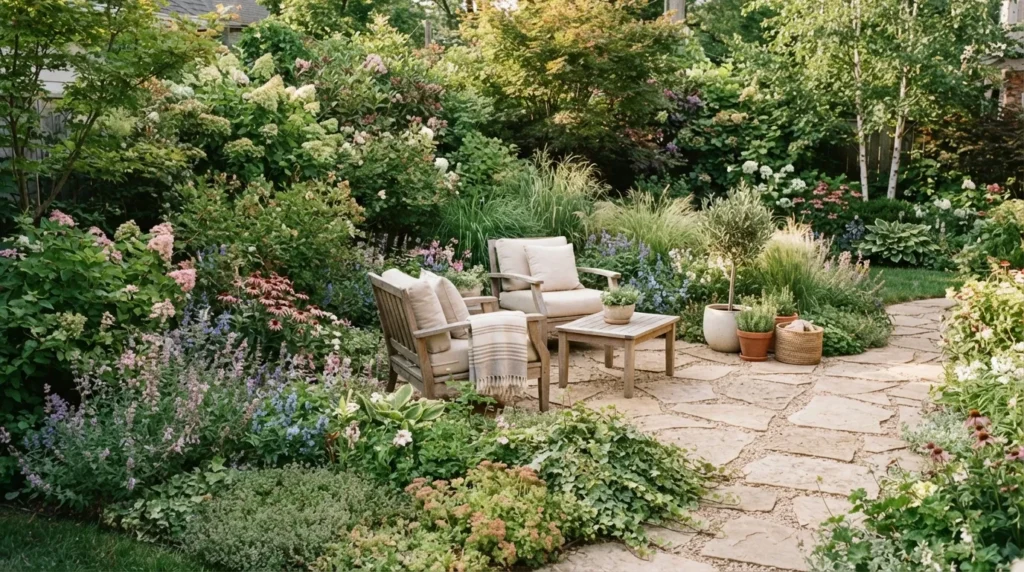
Planting around the patio can make the entire space feel more established. Instead of looking directly from a hard patio surface onto an empty lawn, you see layers of greenery that create depth and visual transition.
The most effective borders usually include plants at several heights. Low groundcovers can sit near the patio edge, medium-height perennials can fill the middle, and taller shrubs or ornamental grasses can create a background layer.
This layered approach also creates more visual interest throughout the year. Evergreen shrubs can provide structure during colder months, while flowering plants and ornamental grasses add seasonal changes.
When selecting plants, consider your local climate, sunlight, soil, mature size, and water requirements rather than choosing purely based on appearance.
How To Style It
Begin with the tallest plants at the back of the border and work toward shorter plants near the patio.
Repeat a few plant varieties throughout the garden instead of choosing a completely different plant for every section. Repetition creates visual continuity.
Use ornamental grasses for movement, flowering perennials for seasonal color, and evergreen shrubs for structure where appropriate.
Leave enough space for plants to reach their mature size. Planting everything too close together can create maintenance problems later.
For a cozy atmosphere, allow some greenery to visually overlap the patio edges. The transition should feel natural rather than perfectly rigid.
3. Pergola Lounge Area
Quick Benefits
- Defines an outdoor room
- Provides partial shade
- Creates a strong focal point
- Supports climbing plants
- Makes seating feel more private
Why It Works
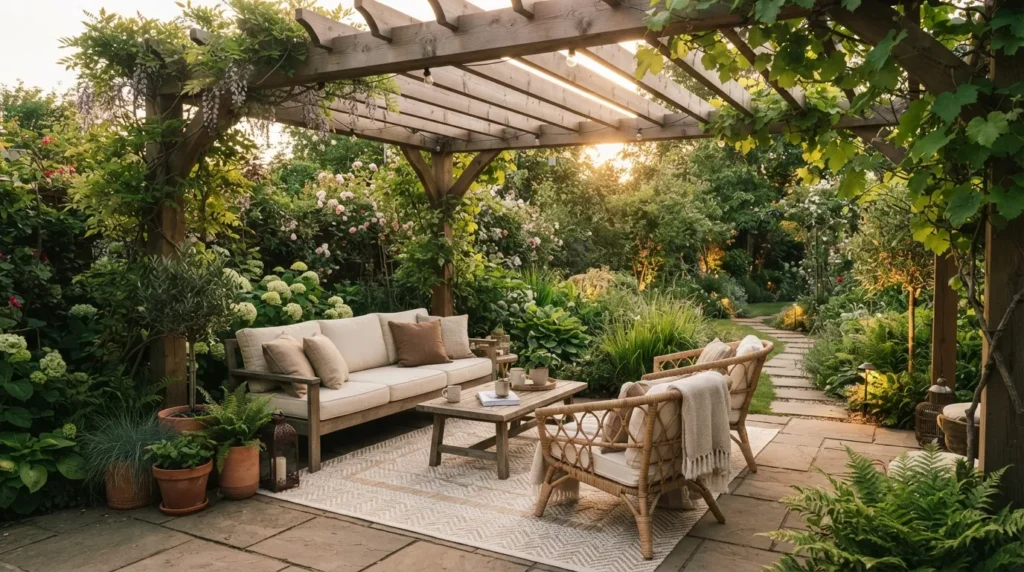
A pergola can transform an open patio into a more defined outdoor living area. The vertical posts and overhead structure create a sense of enclosure without completely closing off the backyard.
This is particularly helpful when the patio feels exposed. Adding a pergola above a seating area can make the space feel more intimate and visually connected to the home.
A pergola can also become a framework for greenery. Climbing plants can soften the structure over time, while hanging baskets or outdoor curtains can provide additional visual softness where appropriate.
Keep in mind that a pergola does not necessarily provide complete protection from sun or rain. Its performance depends on the design, roof treatment, location, and local weather.
How To Style It
Position comfortable seating underneath the pergola and create a simple conversation area. A compact outdoor sofa paired with two chairs can work well for larger spaces, while two lounge chairs and a small table may be enough for a smaller patio.
Use weather-appropriate cushions in neutral or earthy tones. Add an outdoor rug if the surface and product are suitable for outdoor use.
For greenery, consider climbing plants appropriate to your climate and the structure’s capacity. Avoid planting aggressive vines without understanding how they grow.
Outdoor curtains can create softness and some privacy when conditions permit. Secure them properly so they don’t become a hazard in wind.
Keep the surrounding planting slightly lower than the seating area where possible so the pergola remains visually connected to the rest of the backyard.
4. Outdoor Fire Feature
Quick Benefits
- Creates a natural gathering point
- Extends outdoor use into cooler evenings
- Adds warmth and atmosphere
- Provides a strong landscape focal point
- Works with different patio styles
Why It Works
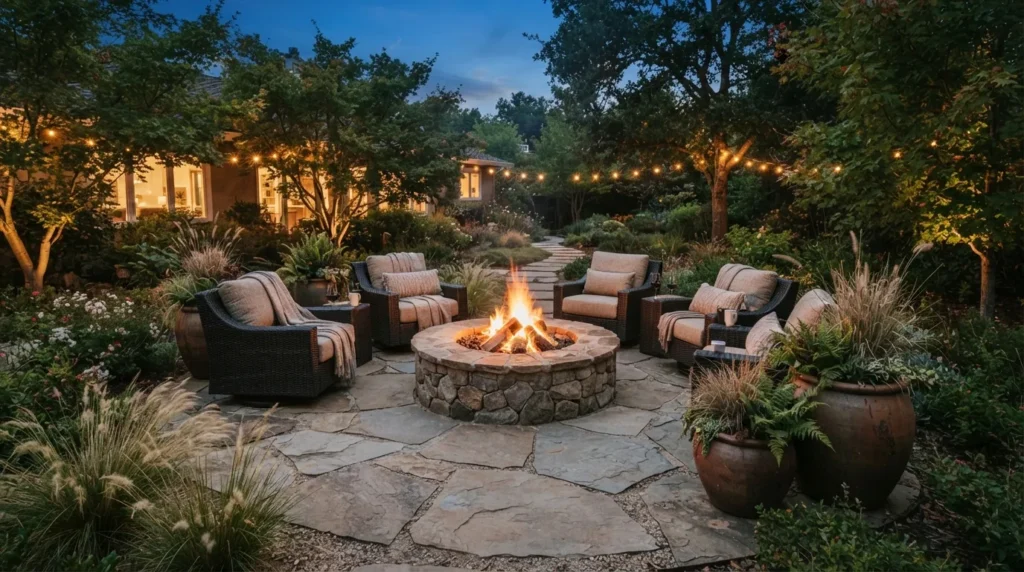
A fire feature can give the patio a clear purpose after sunset. Rather than having seating scattered around an open yard, chairs can be arranged around a central point where people naturally gather.
Fire pits can be freestanding or built into the landscape. The best choice depends on the size of the patio, local regulations, fuel source, and how frequently you plan to use it.
A built-in fire pit surrounded by stone can blend beautifully with natural landscaping. A portable unit can provide greater flexibility for renters or homeowners who don’t want a permanent installation.
Safety should always be part of the design. Maintain appropriate clearances from structures, trees, fences, and combustible materials, and follow local fire regulations and the manufacturer’s instructions.
How To Style It
Create enough clearance around the fire feature for comfortable seating and safe movement.
Use weather-resistant chairs arranged in a loose circle rather than pushing furniture directly against the fire pit.
Surround the area with gravel, stone, or another appropriate noncombustible surface where suitable.
Keep nearby landscaping low and avoid placing dry vegetation close to the fire feature.
For a softer appearance, combine the fire area with large planters, ornamental grasses positioned at a safe distance, and warm low-level landscape lighting.
The fire feature should feel integrated into the patio rather than appearing as an unrelated object placed in the middle of the yard.
5. Cozy Dining Patio
Quick Benefits
- Creates a dedicated outdoor dining area
- Encourages entertaining
- Makes use of otherwise unused backyard space
- Combines hardscape and landscaping
- Works for everyday family meals
Why It Works
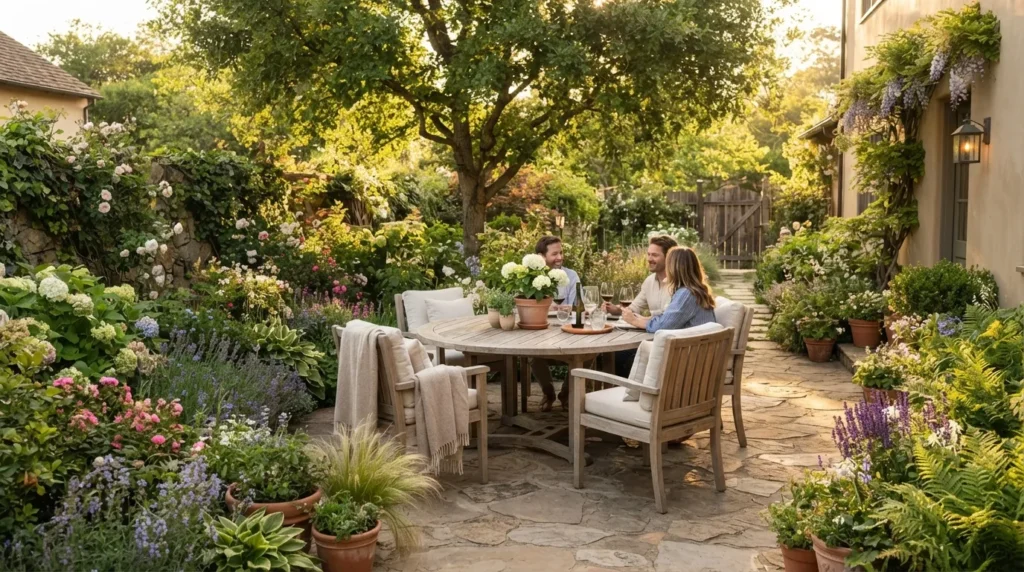
A patio doesn’t have to be reserved for lounging. A dedicated dining area can turn the backyard into a practical extension of the kitchen and dining room.
Even a relatively small patio can accommodate a compact table and chairs if the furniture is appropriately scaled.
Landscaping around the dining area can make meals feel more private and inviting. Low hedges, potted plants, flowering borders, or a nearby tree can provide a sense of enclosure without blocking the entire yard.
Consider the relationship between the dining area and the house. A location close to the kitchen can make carrying food and drinks easier, while a more distant garden setting can create a destination-style experience.
How To Style It
Choose a table size based on how many people regularly use the space rather than planning only for occasional large gatherings.
For smaller patios, consider a round table because it can make circulation around the seating area easier.
Use weather-appropriate seat cushions and a simple centerpiece such as a planter, lantern, or outdoor-safe decorative object.
Place the dining area near attractive landscaping so the view becomes part of the experience.
If shade is limited, consider an appropriately designed umbrella, pergola, shade structure, or nearby tree. Make sure any structure is suitable for local wind conditions and properly secured.
Keep a clear path from the home to the table to make everyday outdoor dining practical.
6. Gravel Patio Retreat
Quick Benefits
- Can be more budget-friendly than some hardscapes
- Provides a relaxed garden appearance
- Works well for informal seating
- Allows flexible shapes
- Blends naturally with planting
Why It Works
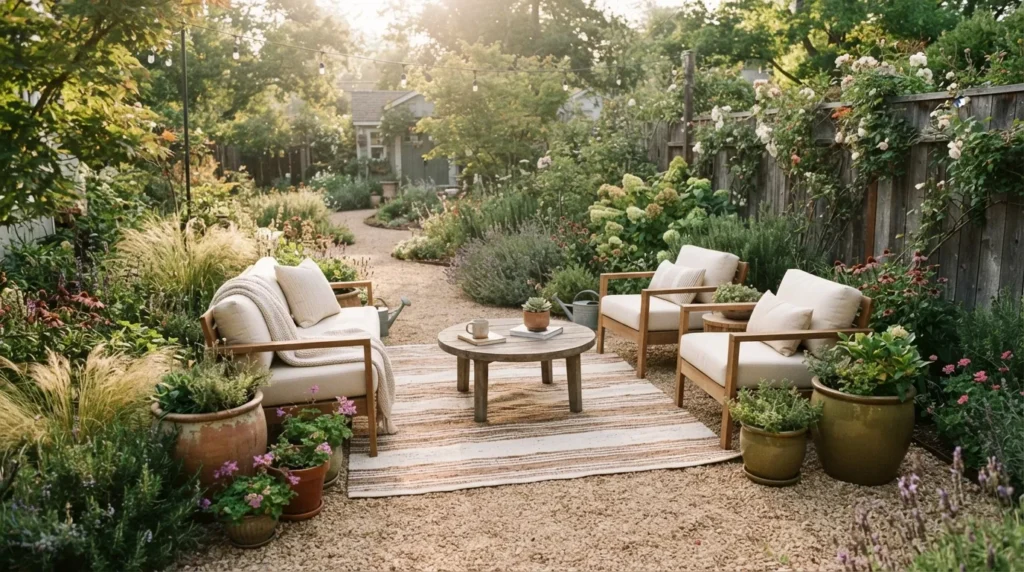
Gravel patios can create an attractive outdoor retreat without the formal appearance of a fully paved terrace. The loose texture works particularly well with cottage, Mediterranean, farmhouse, and relaxed contemporary landscapes.
Because gravel can follow curved shapes, it gives you flexibility when working around existing trees, planting beds, or irregular yard boundaries.
It can also create a visual transition between lawn and patio furniture. The soft sound and texture underfoot contribute to a casual outdoor atmosphere.
However, gravel requires proper preparation and edging to remain stable and contained. The right gravel type also matters. Small rounded stones can shift more under furniture than compactable angular aggregate.
How To Style It
Define the gravel patio with edging so the material stays contained and the boundary remains visually clear.
Place a compact outdoor sofa, lounge chairs, or dining set in the center. Use furniture with stable legs and appropriate bases for gravel surfaces.
Surround the area with low planting beds and a few larger shrubs. The contrast between loose stone and greenery can create a beautiful garden atmosphere.
Choose warm neutral furniture and natural materials such as wood or woven outdoor finishes.
A small fire feature, appropriately installed and safely positioned, can turn a gravel patio into an inviting evening retreat.
7. Lush Privacy Planting
Quick Benefits
- Creates a more private atmosphere
- Softens fences and property boundaries
- Adds greenery and texture
- Can reduce the feeling of exposure
- Creates a garden-like retreat
Why It Works
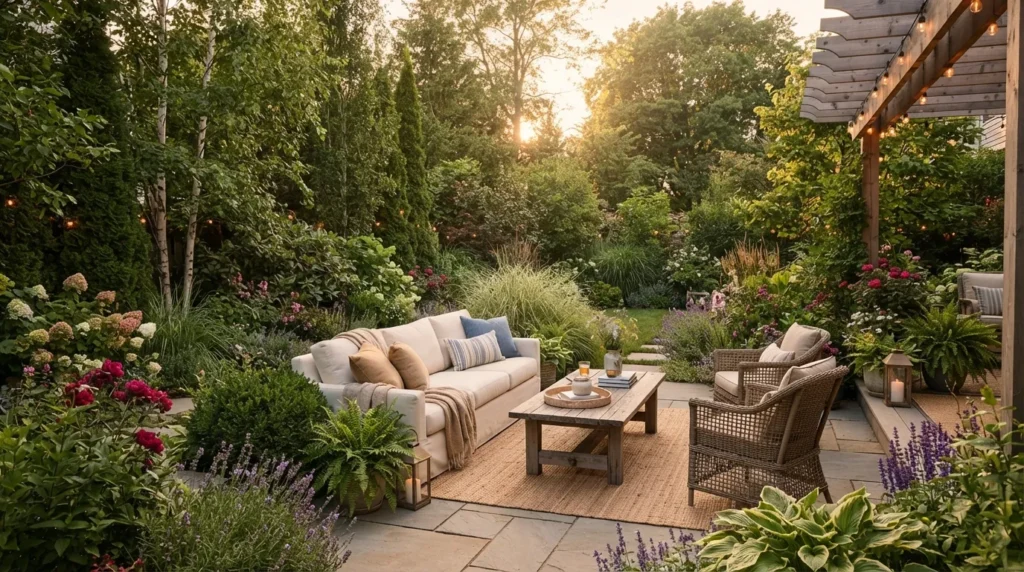
A patio can be beautifully furnished but still feel uncomfortable if it is completely exposed to neighboring properties or busy streets.
Strategic planting can create privacy without making the backyard feel enclosed by a solid wall. A mixture of trees, shrubs, ornamental grasses, and climbing plants can form a softer living screen.
The key is layering. One row of identical plants can look rigid, while several plant heights create depth and a more natural appearance.
Always consider mature plant size and local conditions. Some fast-growing species can become difficult to maintain or may not be appropriate for certain properties.
How To Style It
Use taller plants toward the property boundary and gradually reduce the height as you move toward the patio.
Evergreen shrubs can provide year-round structure in suitable climates. Deciduous trees can offer seasonal change and, depending on placement, shade.
Ornamental grasses can soften fence lines, while flowering plants can add seasonal color closer to seating areas.
Avoid blocking important views or creating dense planting directly beside the house without considering airflow, maintenance, and moisture.
For smaller yards, large containers with carefully selected plants can provide a similar sense of enclosure without permanently changing the landscape.
8. Garden Path Connection
Quick Benefits
- Connects different backyard zones
- Creates visual movement
- Makes the garden easier to explore
- Adds structure to landscaping
- Can make the yard feel larger
Why It Works
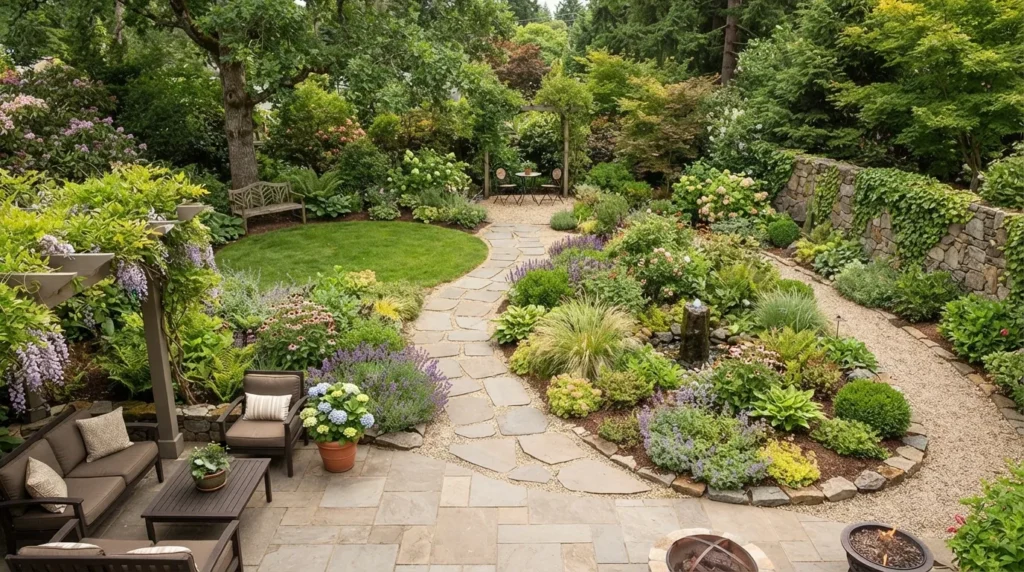
A pathway does more than help people move from one area to another. It gives the eye a route through the landscape.
A path connecting the patio to a garden, lawn, fire pit, shed, or seating nook can make the backyard feel like a series of connected spaces rather than one open area.
Curved paths can create a more relaxed garden appearance, while straight paths tend to feel more formal and architectural.
The material should relate to the patio. Matching stone creates continuity, while contrasting gravel or stepping stones can add visual interest.
How To Style It
Design the path around actual movement patterns first. Don’t create a beautiful walkway that leads somewhere nobody needs to go.
For a natural garden, use irregular stepping stones surrounded by low groundcover or gravel.
For a modern backyard, large rectangular pavers with consistent spacing can create clean geometry.
Add planting along the edges to soften the hardscape. Low grasses, flowering plants, or groundcovers can make the transition more natural.
Consider subtle lighting along the path for evening visibility. Low-level fixtures should be positioned to illuminate the walking surface without creating excessive glare.
9. Outdoor Rug Styling
Quick Benefits
- Defines a seating area
- Adds color and pattern
- Makes patio furniture feel cohesive
- Creates an outdoor-room effect
- Adds softness underfoot
Why It Works
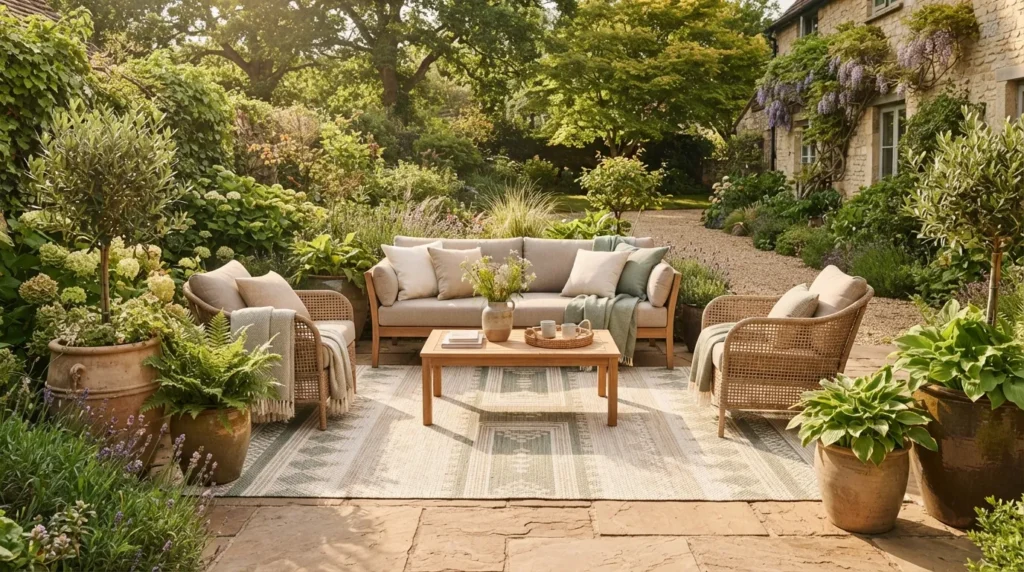
An outdoor rug can visually connect separate pieces of patio furniture. Without one, a sofa, chairs, and coffee table may feel like individual objects scattered across a hard surface.
A rug creates a visual boundary around the seating zone, much like it does indoors.
Outdoor rugs are available in many patterns and neutral textures designed for exterior conditions. Choose one appropriate for your climate and intended use, and follow care instructions to prevent moisture and mildew problems.
A simple neutral rug can reinforce a natural landscape, while a subtle pattern can add personality to a minimalist patio.
How To Style It
Choose a rug large enough for at least the front legs of the main seating pieces to sit on it. For larger conversation areas, placing the entire seating arrangement on the rug can create a stronger sense of cohesion.
Coordinate the rug with cushions and nearby landscaping rather than matching everything exactly.
For a natural patio, consider cream, tan, muted green, or soft brown.
Keep the surrounding patio relatively simple so the rug doesn’t compete with plants, furniture, and architectural details.
Clean the rug according to the manufacturer’s instructions and allow it to dry thoroughly after heavy rain or cleaning.
10. Warm Patio Lighting
Quick Benefits
- Extends outdoor enjoyment after dark
- Highlights landscaping
- Creates a cozy atmosphere
- Improves pathway visibility
- Adds depth to the backyard
Why It Works
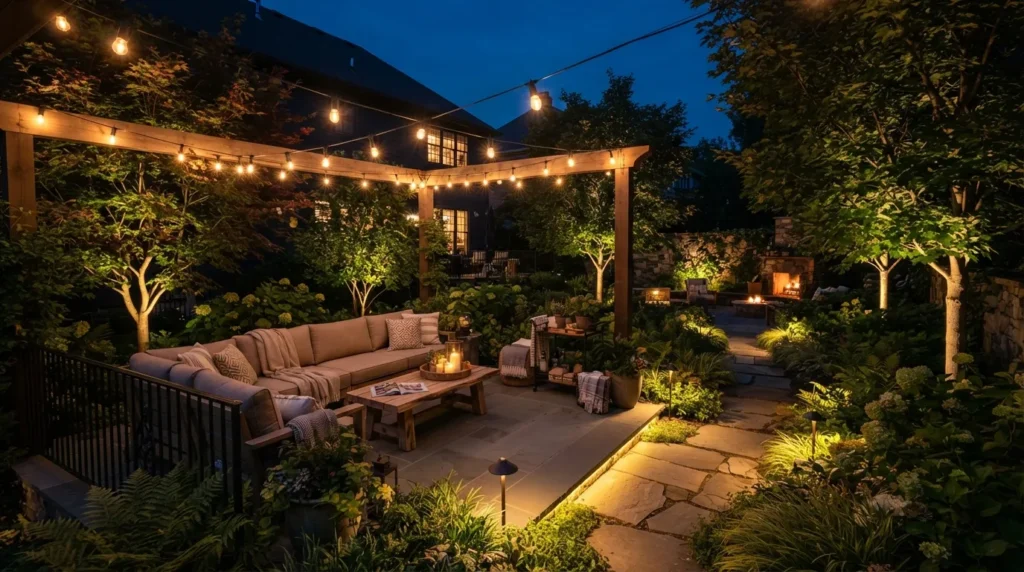
Outdoor lighting can completely change the character of a backyard after sunset. During the day, landscaping provides color and texture. At night, carefully placed lights create highlights, shadows, and layers.
Instead of relying on one bright fixture, combine several lower-intensity sources. Path lights can define walkways, uplights can highlight trees or architectural features, and small fixtures can illuminate seating areas.
Warm-toned lighting often creates a more inviting atmosphere for patios, although the appropriate choice depends on the fixture, landscape, and personal preference.
Lighting should serve safety as well as appearance. Paths, steps, changes in elevation, and frequently used areas deserve particular attention.
How To Style It
Start by identifying the areas you use after sunset. Illuminate the main path, patio, steps, and seating area first.
Then add accent lighting to one or two landscape features, such as a mature tree, textured wall, or large planting bed.
String lights can create a relaxed atmosphere over a seating or dining area when installed securely and according to the manufacturer’s instructions.
Avoid placing bright lights everywhere. Too much illumination can flatten the landscape and reduce the cozy effect.
Use a mixture of heights. Low pathway lights, mid-level patio lighting, and carefully positioned tree or architectural lights create more depth.
Related Articles
- Backyard Patio Ideas for Cozy Outdoor Living
- Small Backyard Landscaping Ideas for Beautiful Outdoor Spaces
- Backyard Privacy Ideas for a More Peaceful Yard
- Outdoor Fire Pit Ideas for Cozy Family Evenings
- Backyard Garden Ideas for a Relaxing Outdoor Retreat
Frequently Asked Questions
How can I make my backyard patio feel cozy?
Create a defined seating area with comfortable outdoor furniture, layered lighting, greenery, and soft textiles such as an outdoor rug and cushions. Adding a pergola, privacy planting, or fire feature can make the space feel more enclosed. The key is creating a clear outdoor room rather than leaving furniture scattered across the yard.
What is the best landscaping around a patio?
The best plants depend on your climate, soil, sunlight, and maintenance preferences. A layered combination of low groundcovers, medium perennials, ornamental grasses, and shrubs can soften patio edges while creating visual depth. Choose plants based on mature size and site conditions rather than selecting only for appearance.
How do I make a small backyard look bigger?
Use clear zones, consistent materials, and pathways that visually connect different areas. Avoid filling every part of the yard with furniture. Vertical planting, mirrors where appropriate, layered greenery, and furniture scaled to the space can also help. Keeping sightlines open between the patio, garden, and lawn can make the entire property feel more connected.
Is a gravel patio a good idea?
A gravel patio can be an attractive and relatively flexible option for informal outdoor spaces. It works particularly well with garden-style landscaping and can accommodate curved layouts. Proper base preparation, edging, drainage, and suitable gravel are important for stability and long-term maintenance.
How can I add privacy to a backyard patio?
Layered planting is one of the most natural approaches. Use appropriately sized trees, shrubs, ornamental grasses, and climbing plants to create a living screen. Fences, pergolas, outdoor curtains, and privacy panels can provide additional screening where needed. Always consider mature plant size and local property requirements before planting or building.
What lighting is best for a cozy patio?
A combination of warm, low-level lighting usually creates a comfortable atmosphere. Use pathway lights for navigation, subtle accent lighting for plants or trees, and string or fixture lighting around seating and dining areas. Avoid excessive brightness and follow installation and electrical safety requirements for outdoor equipment.
How do I landscape around a patio without making it look cluttered?
Use repetition and leave breathing room between plant groups. Choose a limited number of plant varieties and repeat them around the patio. Keep taller plants toward the back of borders and lower plants near seating areas. A few large, well-placed plants usually create a stronger design than many small decorative containers.
Conclusion
A cozy backyard doesn’t happen simply by adding more furniture or planting more flowers. The most successful outdoor spaces combine landscaping, hardscape, lighting, and furniture so every element supports the way you want to use the yard.
Start by defining the main purpose of your patio. Do you want a place for outdoor dinners, quiet morning coffee, family gatherings, or evening conversations around a fire? Once you know that, the layout becomes much easier to plan.
Natural stone, gravel, or pavers can establish the foundation. Layered planting can soften the edges and create privacy, while a pergola or carefully placed trees can provide structure and shade. Comfortable furniture, outdoor rugs, and warm lighting then make the patio feel like a true extension of the home.
You don’t need to complete everything at once. Begin with the area you use most and build outward gradually.
A well-designed backyard should feel beautiful during the day and inviting after sunset. With thoughtful landscaping and a few comfortable patio details, even an ordinary outdoor area can become a place you’ll genuinely want to spend more time in.