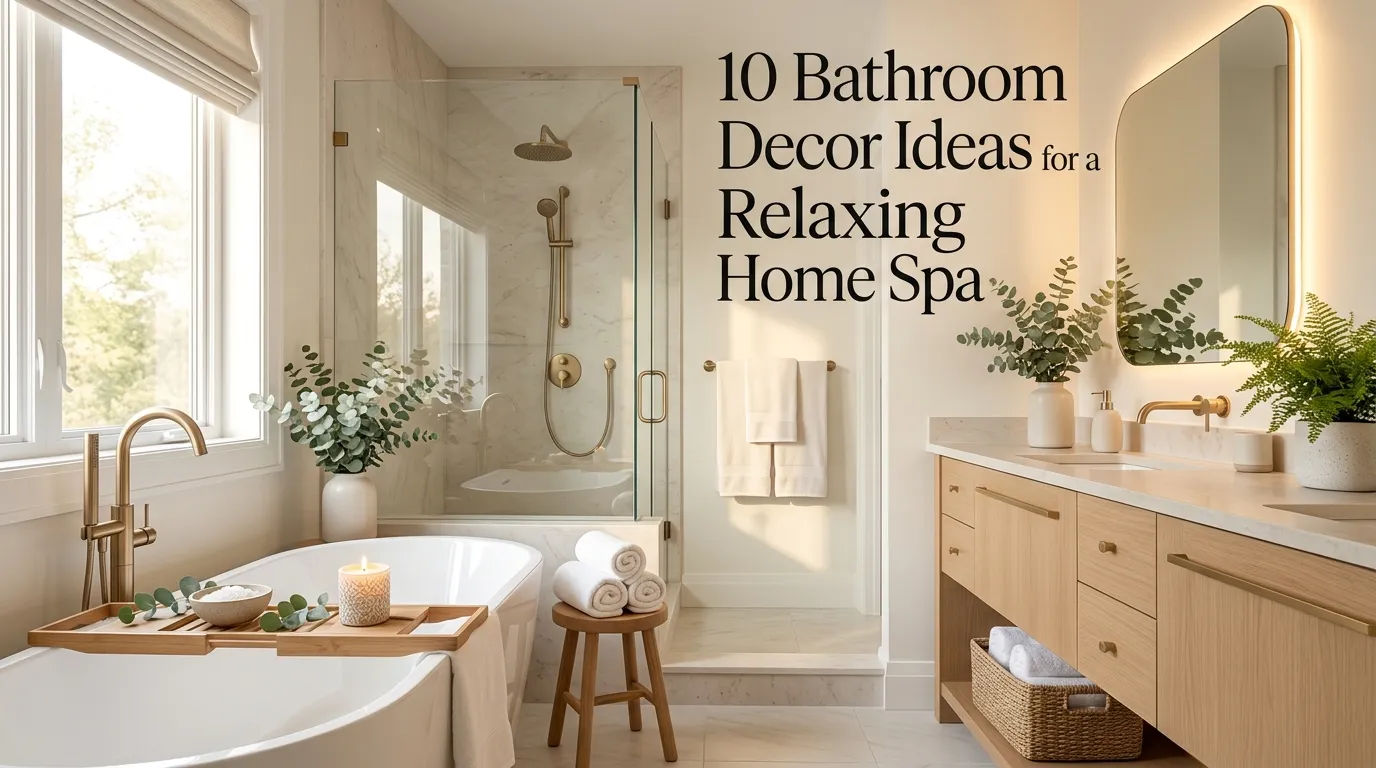
10 Bathroom Decor Ideas for a Relaxing Home Spa
A bathroom can be much more than a purely practical room. With the right colors, lighting, textures, and small decorative details, even an ordinary bathroom can become a calm retreat where you can slow down at the beginning or end of the day.
You don’t need a huge soaking tub, expensive renovations, or a hotel-sized bathroom to create that feeling. In fact, some of the most relaxing bathrooms rely on simple choices: warm lighting instead of harsh overhead bulbs, plush towels, natural materials, an uncluttered vanity, and a few carefully selected accessories.
The secret is creating a sense of visual calm. When countertops are crowded, colors compete, and storage is difficult to manage, the bathroom can feel more like a utility room than a place to unwind. By contrast, a thoughtful combination of soft neutrals, organic textures, greenery, and spa-inspired details can make the same square footage feel noticeably more inviting.
I’ve noticed that the most successful bathroom makeovers don’t necessarily add more decoration. They edit what is already there and make everyday essentials look intentional. A beautiful soap dispenser, a folded stack of towels, a wood stool, or a simple tray can sometimes have more impact than a shelf filled with accessories.
Whether you’re decorating a primary bathroom, guest bath, apartment bathroom, or small powder room, these ideas can help you create a more peaceful atmosphere without making the space feel overly styled.
From natural wood accents to layered lighting and soft textiles, these bathroom decor ideas focus on practical changes that make everyday routines feel a little more relaxing.
Table of Contents
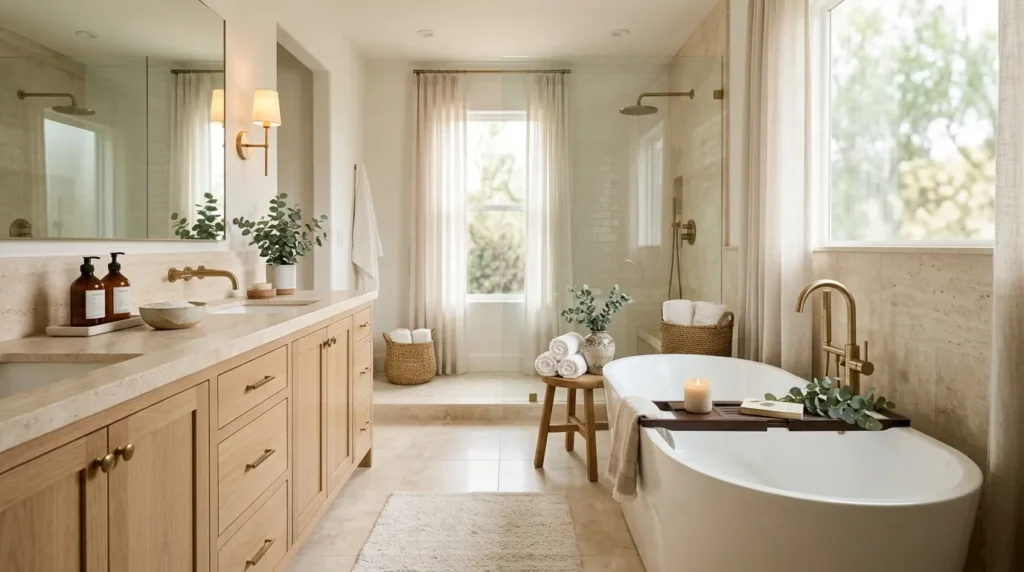
1. Warm Neutral Palette
Create a calming foundation with soft whites, beige, taupe, and natural earthy tones.
2. Natural Wood Accents
Bring warmth and organic character into the bathroom with wood stools, trays, shelves, and accessories.
3. Plush Towel Layers
Make everyday essentials feel luxurious by choosing coordinated towels and displaying them thoughtfully.
4. Spa Style Lighting
Use multiple sources of soft lighting to create a relaxing atmosphere throughout the day.
5. Minimal Vanity Styling
Keep the vanity clean and organized while adding a few beautiful details that feel intentional.
6. Greenery And Plants
Introduce natural shapes and refreshing color with plants suited to the bathroom environment.
7. Woven Storage Baskets
Hide everyday clutter while adding texture and warmth through baskets and natural fibers.
8. Freestanding Bath Stool
Add a useful spa-inspired surface for towels, toiletries, candles, or decorative accessories.
9. Soft Shower Details
Turn the shower area into a more inviting retreat with thoughtful textiles, storage, and finishes.
10. Relaxing Finishing Touches
Complete the atmosphere with candles, artwork, ceramics, scents, and other carefully selected details.
1. Warm Neutral Palette
Quick Benefits
- Creates a calm visual foundation
- Makes the bathroom feel more cohesive
- Works with many design styles
- Makes natural materials stand out
- Provides flexibility for seasonal updates
Why It Works
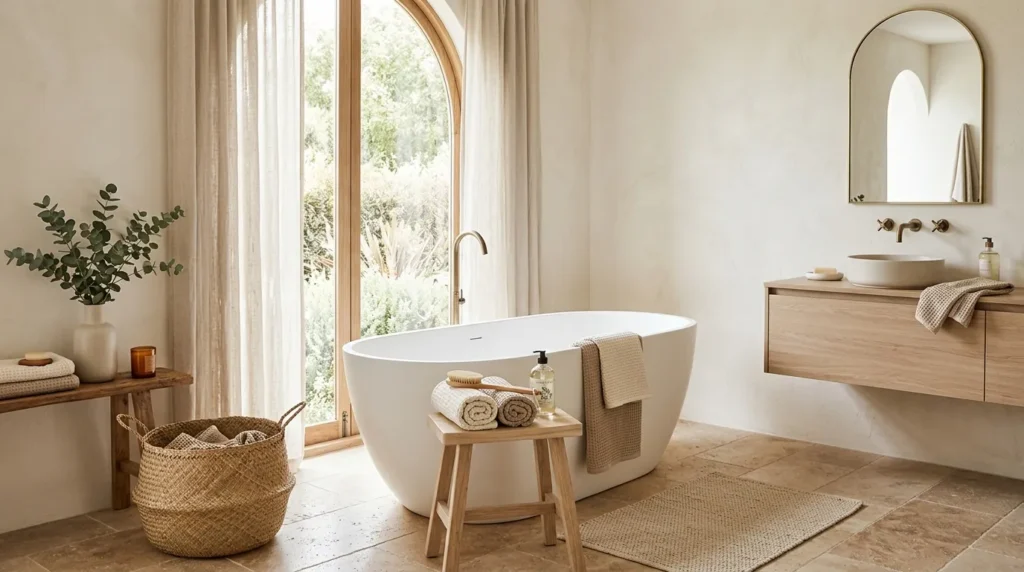
Color has a major influence on how a bathroom feels. A palette built around warm whites, cream, beige, taupe, sand, and soft brown can create the visual calm associated with many spa-inspired spaces.
The important distinction is between warm neutrals and a completely flat beige room. A relaxing bathroom usually benefits from several related tones rather than one repeated color. For example, creamy walls can work with an oatmeal shower curtain, warm beige towels, pale wood accessories, and slightly deeper brown accents.
Natural neutrals also pair easily with existing bathroom finishes. If replacing tile or flooring isn’t practical, you can introduce the palette through towels, rugs, curtains, storage containers, artwork, and accessories.
A mistake many homeowners make is choosing too many competing colors in a small bathroom. Because the room is often compact, visual changes are immediately noticeable. Limiting the palette can make the space feel more organized without requiring a complete renovation.
How To Style It
Choose one main neutral and two supporting shades. Warm white can serve as the base, while beige and natural wood provide contrast.
For example, use cream towels with a sandy-colored bath mat and light oak accessories. Add a few white ceramic pieces to maintain continuity.
If the bathroom already has cool gray tile, introduce warmer elements gradually through towels, baskets, wood, and artwork. You don’t necessarily need to replace the existing finishes.
For a slightly more luxurious appearance, introduce a small amount of darker contrast through black, bronze, or dark wood. Keep these accents limited so they don’t overpower the soft palette.
The goal is to create a room where the colors visually flow together rather than compete for attention.
2. Natural Wood Accents
Quick Benefits
- Adds warmth to hard surfaces
- Creates an organic spa feeling
- Softens contemporary bathrooms
- Provides useful surfaces
- Works with neutral color schemes
Why It Works
Bathrooms contain many hard surfaces: tile, glass, stone, porcelain, metal, and mirrors. While these materials are practical, too many smooth surfaces can make the room feel cold.
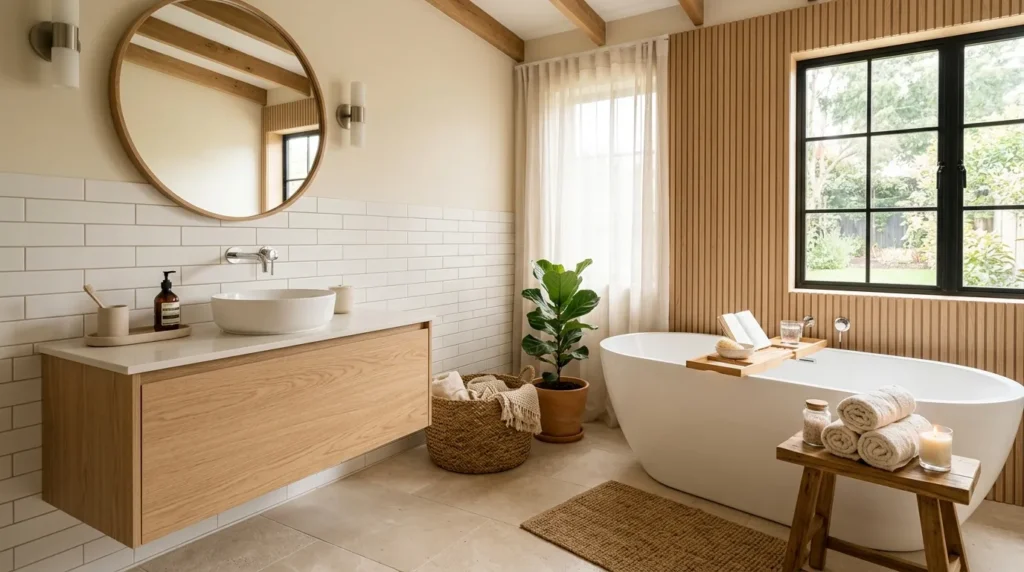
Wood introduces an immediate sense of warmth and visual softness. Even a small wood stool beside the tub or a simple wooden tray on the vanity can create contrast.
Natural wood is especially effective when paired with white or cream tile. The combination feels clean without becoming sterile.
You don’t have to use large pieces. Small additions such as a teak bath mat, bamboo storage container, oak tray, wooden soap dish, or floating shelf can provide enough warmth to change the overall character of the room.
Because bathrooms are humid environments, choose materials and finishes appropriate for moisture exposure. Some woods and wood-look materials are better suited to bathrooms than untreated decorative furniture.
How To Style It
Start with one functional wooden item, such as a small stool beside the bathtub. Use it to hold folded towels, a book, or a simple ceramic container.
A narrow wooden tray can organize skincare products and other frequently used items on the vanity. This keeps the countertop practical while giving everyday objects a more intentional presentation.
For bathrooms with white tile, pale oak or teak can create a light, relaxed appearance. Darker walnut-style accents can work beautifully in bathrooms with cream or stone-colored finishes.
Avoid mixing too many unrelated wood tones. If you use a wood stool, tray, and shelf, try to keep them within a similar warm family.
Natural wood should complement the bathroom rather than become its dominant feature.
3. Plush Towel Layers
Quick Benefits
- Adds softness and comfort
- Makes the bathroom feel more luxurious
- Introduces color and texture
- Provides practical everyday value
- Creates an attractive visual display
Why It Works
Few things change the feeling of a bathroom faster than better towels. Since towels are large textile surfaces, they contribute significantly to the room’s color, texture, and overall atmosphere.
For a spa-inspired look, coordinated towels in white, cream, oatmeal, soft beige, or muted earth tones create an especially calm appearance. You don’t need every towel to match perfectly, but keeping the colors within one palette makes the room feel more intentional.
Texture also matters. A plush bath towel can make an ordinary daily routine feel more comfortable, while waffle or ribbed hand towels add visual interest without requiring additional decoration.
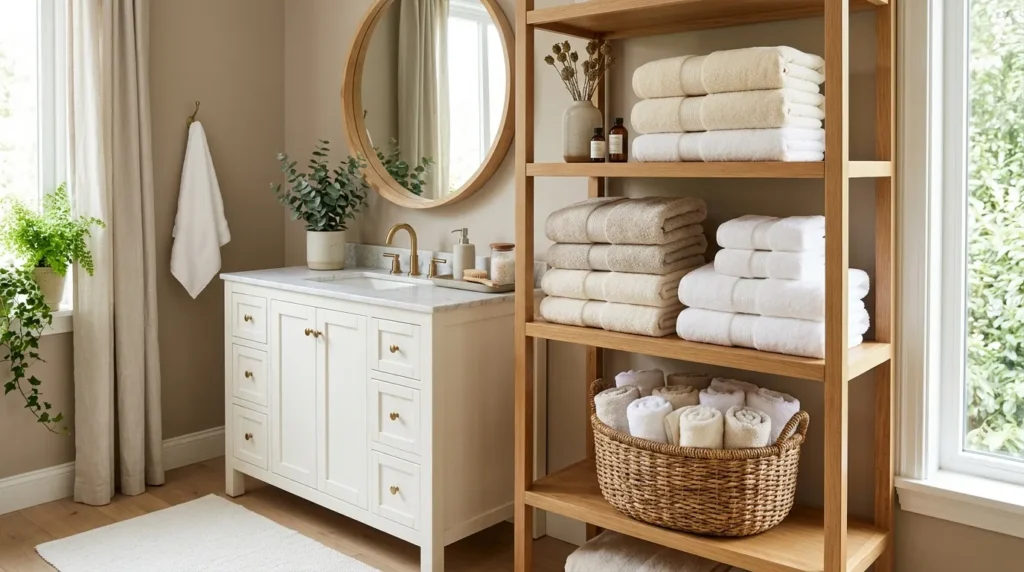
Displaying towels thoughtfully can make the bathroom feel finished. Rolled towels in a basket, neatly folded towels on an open shelf, or a single towel draped over a wood ladder can all create a relaxed spa-like impression.
How To Style It
Choose two or three towel shades that coordinate with the rest of the bathroom. If your room is mostly white, cream and beige towels can add subtle warmth.
Fold larger bath towels consistently and stack them on an open shelf or in a basket. Keep the stack modest rather than creating an oversized display that becomes difficult to maintain.
For a more relaxed look, roll a few hand towels and place them inside a woven basket.
A heated towel rack can add comfort if your bathroom and electrical setup allow it, but it isn’t necessary. Simply keeping clean towels accessible and beautifully presented can make a difference.
Wash towels regularly and allow them to dry thoroughly between uses. A spa-inspired bathroom should feel fresh as well as attractive.
4. Spa Style Lighting
Quick Benefits
- Creates a softer evening atmosphere
- Reduces harsh shadows
- Makes the room feel more relaxing
- Improves vanity functionality
- Adds visual warmth
Why It Works
Lighting is one of the most overlooked elements of bathroom design. A single bright ceiling fixture can make even a beautifully decorated bathroom feel harsh.
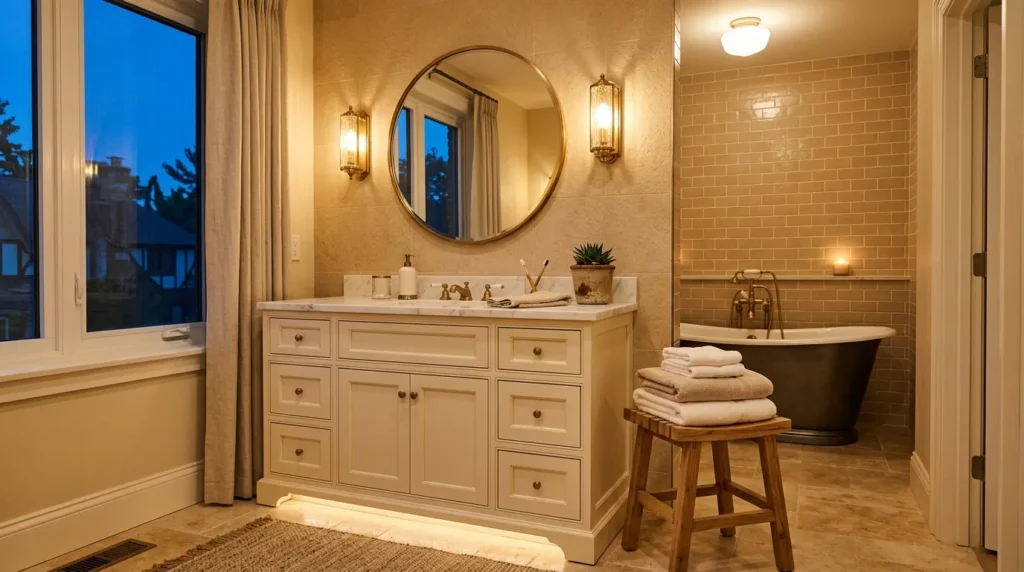
Layered lighting creates more flexibility. Bright task lighting around the vanity is useful when shaving, applying makeup, or getting ready, while softer ambient lighting can create a calmer atmosphere when you’re relaxing in the evening.
Wall sconces, pendant fixtures, recessed lights, under-cabinet lighting, and dimmable fixtures can all contribute to different lighting layers.
The fixture style also affects the room’s personality. Simple brass sconces can make a traditional bathroom feel warmer, while minimalist black fixtures can complement a contemporary space.
The goal is not simply to make the bathroom brighter. It is to make the lighting appropriate for different activities.
How To Style It
If possible, combine overhead lighting with vanity lighting and one additional softer source.
Sconces placed on either side of the mirror can provide more even illumination than a single fixture positioned directly above it. Make sure electrical work is completed by an appropriately qualified professional when installation is required.
Choose warm-toned bulbs for relaxing areas while maintaining sufficient brightness for practical tasks.
A dimmer can provide useful flexibility where compatible with the fixture and electrical setup.
For a rental, small rechargeable lamps or decorative battery-operated lights can add atmosphere without permanent wiring changes. Keep all electrical products away from water and follow the manufacturer’s safety instructions.
When selecting fixtures, coordinate their finish with other bathroom hardware so the lighting feels integrated into the design.
5. Minimal Vanity Styling
Quick Benefits
- Reduces visual clutter
- Makes cleaning easier
- Creates a calmer appearance
- Keeps daily products accessible
- Highlights decorative details
Why It Works
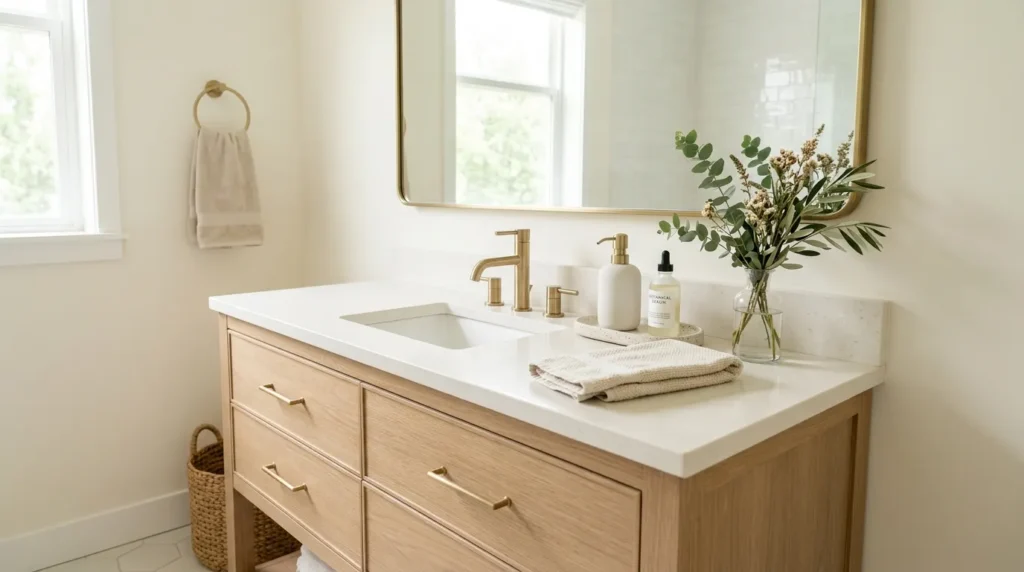
A crowded bathroom vanity can instantly destroy a relaxing atmosphere. Even beautiful products can look messy when dozens of bottles, brushes, cosmetics, and containers compete for attention.
The solution isn’t necessarily hiding everything. Instead, separate the items you use every day from those that can be stored elsewhere.
A small tray can group frequently used skincare or hand-washing essentials into one visual area. Matching dispensers can replace mismatched commercial bottles and create a more cohesive appearance.
The countertop should still look lived-in. A relaxing bathroom isn’t a showroom. The goal is simply to make everyday necessities feel organized.
This is particularly helpful in small bathrooms where there may be very little counter space. A clear surface can make the room feel larger and easier to maintain.
How To Style It
Start by removing everything from the countertop and returning only the items you use daily.
Place hand soap and lotion on a small tray. Add one simple decorative object, such as a small ceramic vase or plant, if there is room.
Use matching refillable dispensers for liquid soap and shampoo where practical. Neutral ceramic, glass, or stone-look containers can help create a cohesive appearance.
Keep backup products, cleaning supplies, and rarely used items in drawers or cabinets.
If storage is limited, use a small tiered organizer inside the vanity rather than adding more objects to the countertop.
The best vanity styling combines beauty with convenience. You should be able to use the things you need without dismantling a carefully arranged display.
6. Greenery And Plants
Quick Benefits
- Adds natural color
- Softens hard bathroom surfaces
- Creates organic visual interest
- Can fill empty corners
- Complements neutral decor
Why It Works
Plants can make a bathroom feel more connected to nature. Their organic shapes provide a welcome contrast to the straight lines of tile, mirrors, cabinets, and fixtures.
However, not every bathroom provides the right environment for every plant. Consider natural light, humidity, temperature changes, and your own maintenance routine before choosing what to bring into the space.
If the bathroom has a sunny window, certain plants may thrive there. In darker rooms, choose varieties that tolerate lower light or consider realistic faux greenery.
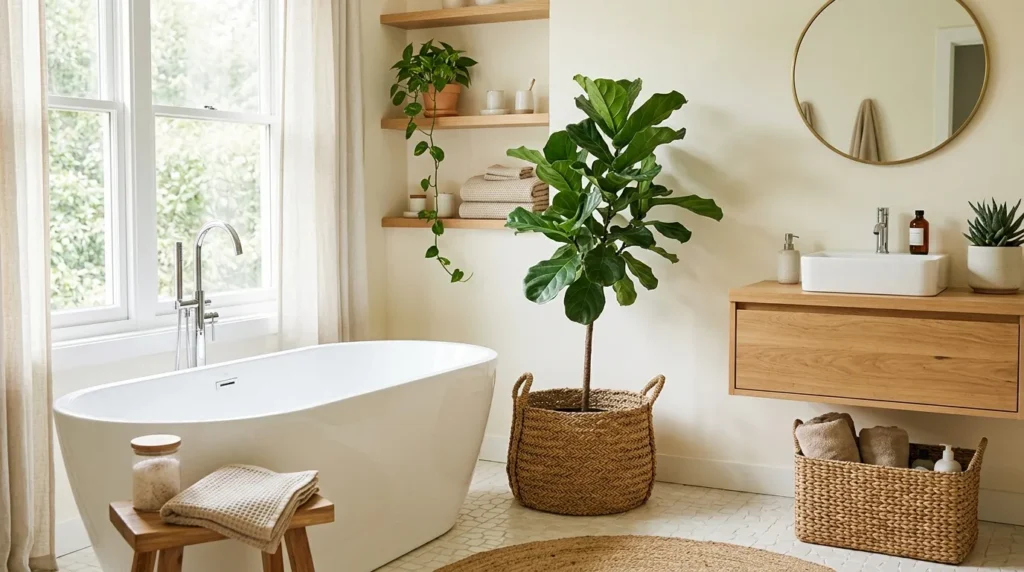
One large plant can have more impact than several tiny plants scattered around the room. A tall plant in an attractive basket can fill an empty corner without requiring another piece of furniture.
Small plants can also work on shelves or window ledges where conditions are suitable.
How To Style It
Choose containers that coordinate with the bathroom’s palette. Woven baskets, matte ceramic pots, stone-look planters, and simple white containers can all work beautifully.
Place a larger plant near a bathtub or in an unused corner if the available light is appropriate. Keep leaves away from areas where they could interfere with movement or become constantly splashed with water.
For a small bathroom, use one compact plant on a shelf or vanity rather than filling every available surface.
If natural light is limited, realistic faux greenery can provide the same decorative benefit without adding maintenance.
The most convincing arrangements look slightly effortless. Avoid creating a collection of plants that makes the bathroom feel crowded.
7. Woven Storage Baskets
Quick Benefits
- Conceal everyday clutter
- Add natural texture
- Provide flexible storage
- Make open shelving look finished
- Work in many bathroom styles
Why It Works
Storage is essential to creating a relaxing bathroom because clutter tends to accumulate quickly. Towels, toilet paper, toiletries, hair tools, and cleaning supplies all need designated homes.
Woven baskets provide storage while contributing texture. Their natural fibers can soften the hard finishes found in many bathrooms.
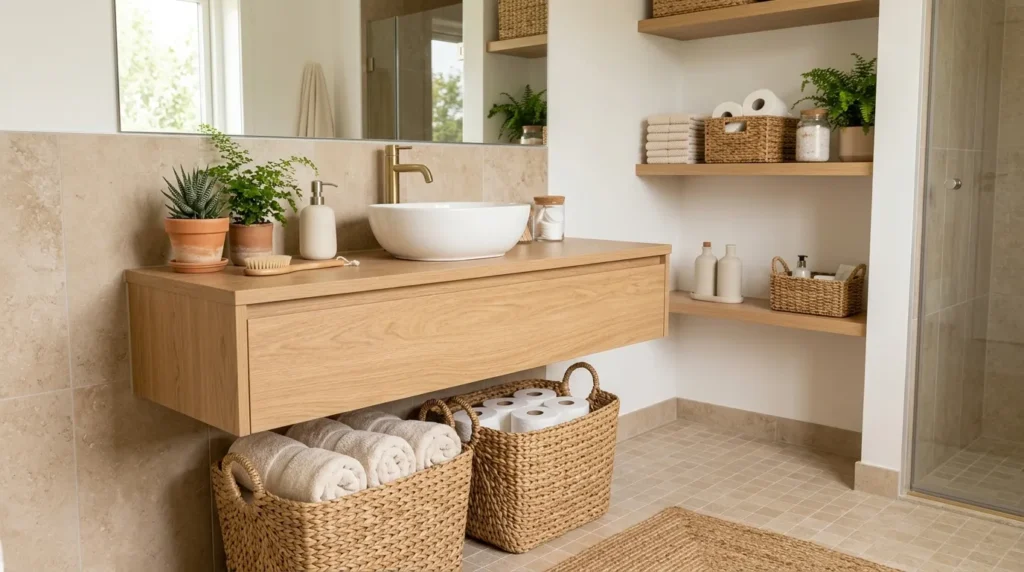
They’re also flexible. A small basket can hold hand towels, while a larger one can store extra linens. Open shelves can use matching baskets to hide less attractive items while leaving a few spaces open for decorative objects.
The most important consideration is choosing baskets suitable for the bathroom environment. Some natural fibers can be sensitive to prolonged moisture, so keep them away from areas where they will regularly become wet.
How To Style It
Use baskets in a few consistent shapes or materials rather than collecting many unrelated styles.
Place a large basket beneath a floating vanity or beside a cabinet for towels. Smaller baskets can sit on open shelves and hold toiletries or extra toilet paper.
For a neutral spa-inspired bathroom, choose natural beige, tan, or light brown fibers.
Avoid overfilling baskets. A slightly relaxed appearance feels more attractive and makes items easier to retrieve.
If the bathroom has limited floor space, wall-mounted shelves with baskets can provide storage without taking up valuable room.
Storage should make the room easier to maintain. If you find yourself constantly moving decorative baskets out of the way, reconsider their placement.
8. Freestanding Bath Stool
Quick Benefits
- Adds a spa-inspired touch
- Provides practical surface space
- Works beside tubs and showers
- Introduces natural materials
- Can be moved when needed
Why It Works
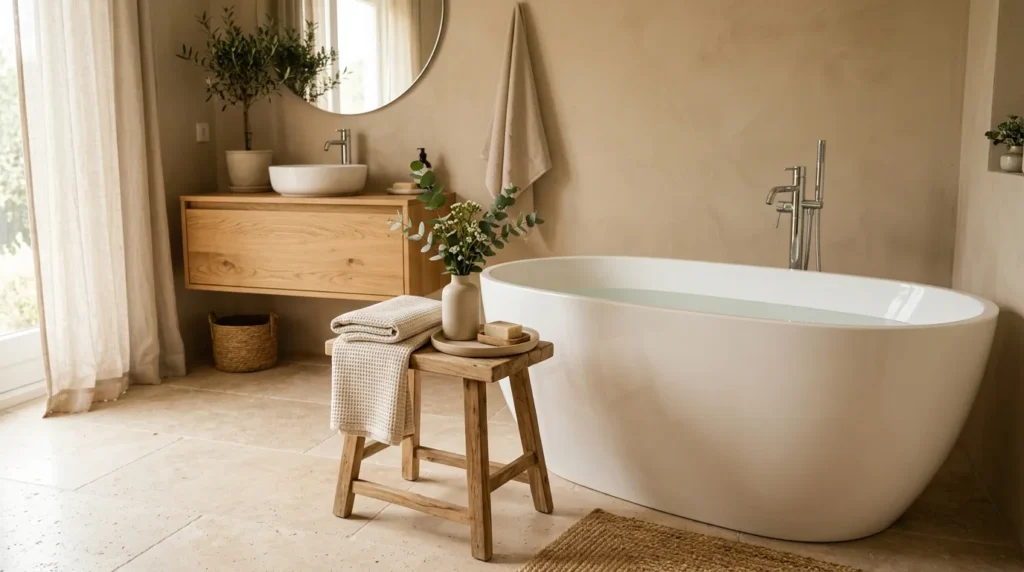
A small stool is one of those bathroom accessories that can be both decorative and genuinely useful. Positioned beside a bathtub, it can hold folded towels, a book, skincare products, or a simple tray.
Wooden stools are particularly effective in spa-inspired bathrooms because they introduce natural warmth alongside tile and porcelain.
The stool also adds another visual level. Bathrooms can contain many large horizontal surfaces, such as vanities and countertops. A small stool creates a lower, lighter layer that helps the room feel more thoughtfully styled.
In compact bathrooms, choose a narrow design so it doesn’t interfere with circulation. A stool that can easily be moved is often more practical than a permanent bulky table.
How To Style It
Choose a stool made from a material appropriate for the bathroom environment. Teak and other bathroom-suitable woods are popular choices because of their durability in humid spaces.
Place it beside the tub rather than directly in a wet area unless the product is specifically designed for that use.
Add one folded towel and a small tray. You could include a ceramic container, a book, or another simple accessory, but avoid turning the stool into a crowded display.
For a more contemporary room, choose a simple stool with clean lines. For a rustic or organic bathroom, a slightly more natural wood finish can work beautifully.
Keep the styling easy to move and clean. Practicality is what makes this small detail genuinely useful.
9. Soft Shower Details
Quick Benefits
- Makes the shower area more inviting
- Adds texture
- Improves organization
- Creates a cohesive look
- Works without major renovation
Why It Works
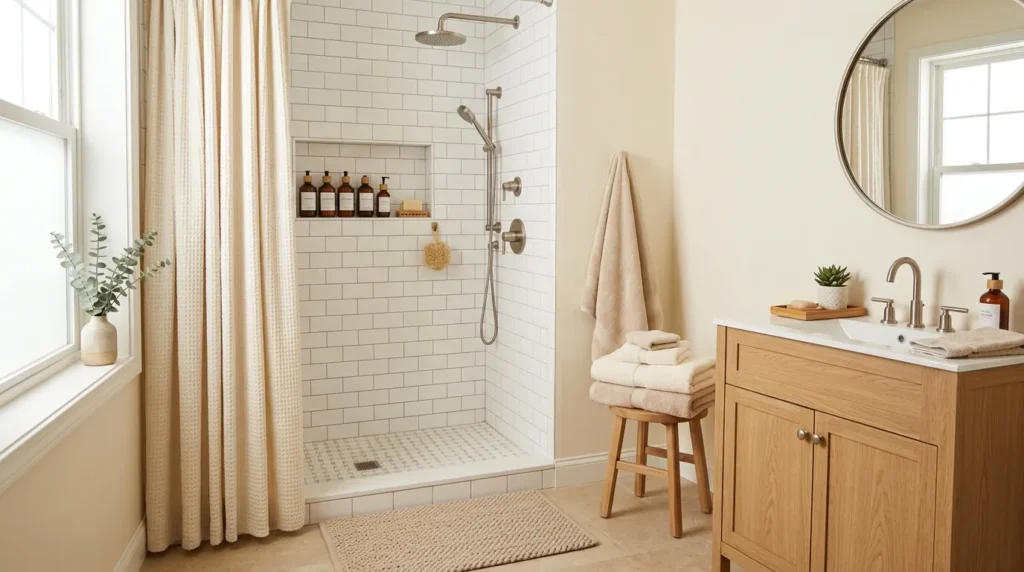
The shower occupies a significant visual area in many bathrooms, yet it is often overlooked when decorating. Small changes here can help the entire room feel more coordinated.
Start with practical elements. A well-organized shower reduces the visual clutter created by bottles, razors, sponges, and other products.
Matching containers or a simple shower caddy can create order. Outside the shower, a soft bath mat and coordinated curtain can introduce warmth and texture.
For bathrooms with glass enclosures, keep the surrounding area visually simple. For shower-tub combinations, a fabric shower curtain can become an important design feature.
A shower curtain with a subtle stripe, botanical pattern, or textured neutral finish can add personality without dominating the room.
How To Style It
Choose a shower curtain that connects with the room’s existing palette. Cream, oatmeal, white, soft gray, or muted botanical patterns can support a spa-inspired atmosphere.
Use a washable bath mat in a coordinating shade rather than choosing a completely unrelated color.
Keep shower products organized on a stable shelf or caddy. If you use refillable containers, choose designs that are easy to identify and maintain.
For a glass shower, consider a simple wooden stool or narrow teak accessory if it is designed for bathroom use and can be kept safely away from slippery areas.
Avoid placing unnecessary objects inside the shower. The goal is to create calm through organization rather than decoration.
10. Relaxing Finishing Touches
Quick Benefits
- Adds personality
- Creates a finished appearance
- Makes routines feel more enjoyable
- Allows inexpensive updates
- Helps the room feel personal
Why It Works
The final layer of a spa-inspired bathroom comes from small details. These are often the things you notice when everything else is already in place.
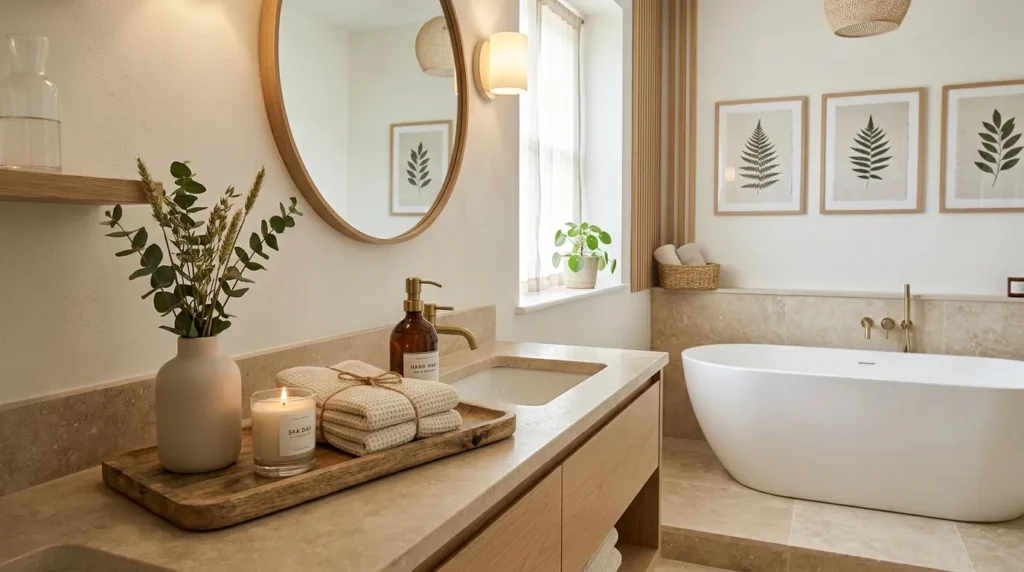
A ceramic vase, framed artwork, candle, decorative tray, small sculpture, or attractive soap dispenser can give the bathroom a sense of personality.
The key is restraint. A relaxing bathroom should not require constant dusting or rearranging. Choose a few pieces that genuinely contribute to the atmosphere.
Artwork can be especially effective. A botanical print, simple abstract piece, landscape, or black-and-white photograph can add interest to an otherwise plain wall.
Scent can also contribute to the experience, although preferences vary. If you use candles or fragrance products, follow the manufacturer’s safety directions and never leave an open flame unattended.
How To Style It
Choose two or three finishing details that connect with the room’s existing materials.
A small ceramic vase with greenery can sit on the vanity, while a framed botanical print adds interest to an empty wall.
Place a decorative tray near the bathtub with only a few useful items. Avoid creating an elaborate arrangement that gets in the way of cleaning or everyday use.
If you enjoy candles, choose a container that complements your decor and place it on a stable, heat-resistant surface away from towels and other flammable materials.
For a rental bathroom, focus on removable details such as artwork, towels, baskets, shower curtains, and countertop accessories.
The best finishing touches are the ones that make the bathroom feel like your space rather than a generic showroom.
Related Articles
- Spa Bathroom Ideas for a Calming Home
- Small Bathroom Decor Ideas That Make a Big Difference
- Cozy Bedroom Ideas for a Relaxing Retreat
- Neutral Home Decor Ideas for a Warm Interior
- Bathroom Organization Ideas for a Clutter-Free Space
Frequently Asked Questions
How can I make my bathroom feel like a home spa?
Focus on the senses and the visual environment. Use a calming color palette, soft towels, warm layered lighting, natural materials, organized storage, and a few relaxing decorative details. Keeping countertops and shower areas uncluttered is equally important because visual simplicity can make the room feel calmer.
What colors make a bathroom feel relaxing?
Warm whites, cream, beige, taupe, soft gray, muted green, and earthy brown tones are popular choices for a relaxing bathroom. The best color depends on the existing finishes and natural light. Using several closely related shades rather than one flat color can add depth while maintaining a peaceful appearance.
How do I decorate a small bathroom like a spa?
Keep the color palette simple, minimize countertop clutter, and use wall space for storage and artwork. Add plush towels, a small wood stool, a mirror, greenery suited to the available light, and warm lighting. In a small bathroom, choosing fewer but more useful accessories usually creates a better result than adding lots of decoration.
What materials work best for spa-inspired bathroom decor?
Natural-looking materials such as wood, stone, ceramic, linen, cotton, and woven fibers can create a warm spa-inspired appearance. Because bathrooms are humid, choose products designed for appropriate moisture exposure. Use natural materials strategically so the room feels warm without compromising durability or maintenance.
How can I make my bathroom look expensive without remodeling?
Focus on details that have a strong visual impact. Coordinate towels, replace mismatched dispensers, improve lighting where practical, declutter the vanity, add a quality-looking mirror, introduce natural textures, and display a few carefully selected accessories. Consistency and restraint often make a bathroom look more polished than adding expensive decorative items.
What should I put on a bathroom vanity?
Keep only frequently used essentials on the vanity. A coordinated soap dispenser, hand lotion, small tray, and one decorative element such as a plant or ceramic vase can be enough. Store backups, cleaning supplies, and rarely used products in drawers or cabinets to keep the countertop visually calm.
Are plants good for bathroom decor?
Plants can be excellent bathroom decor when the room provides suitable light, temperature, and humidity conditions. Choose varieties based on the actual environment rather than assuming every tropical-looking plant will thrive. For bathrooms without adequate natural light, realistic faux greenery can provide an attractive alternative.
Conclusion
Creating a relaxing bathroom doesn’t require a complete renovation. Often, the biggest difference comes from changing how the room feels rather than changing its structure.
Start with the foundation. A warm neutral palette can create visual calm, while natural wood and woven materials soften hard bathroom surfaces. Plush towels add comfort, layered lighting changes the atmosphere after sunset, and organized storage keeps everyday clutter under control.
From there, add a few personal details. A small stool beside the tub, a plant in an attractive container, a framed botanical print, or a simple tray can make the bathroom feel intentional without overwhelming it.
The most important principle is balance. A spa-inspired bathroom should still function well for everyday life. Keep frequently used products accessible, choose materials that can handle the environment, and avoid decorative arrangements that make cleaning difficult.
You can start with something as simple as new towels and a better-organized vanity, then gradually introduce lighting, natural textures, greenery, and artwork.
A relaxing bathroom is ultimately about creating a space that feels comfortable when you walk into it. With a few thoughtful changes, your everyday routine can take place in a room that feels calm, warm, and distinctly yours.